
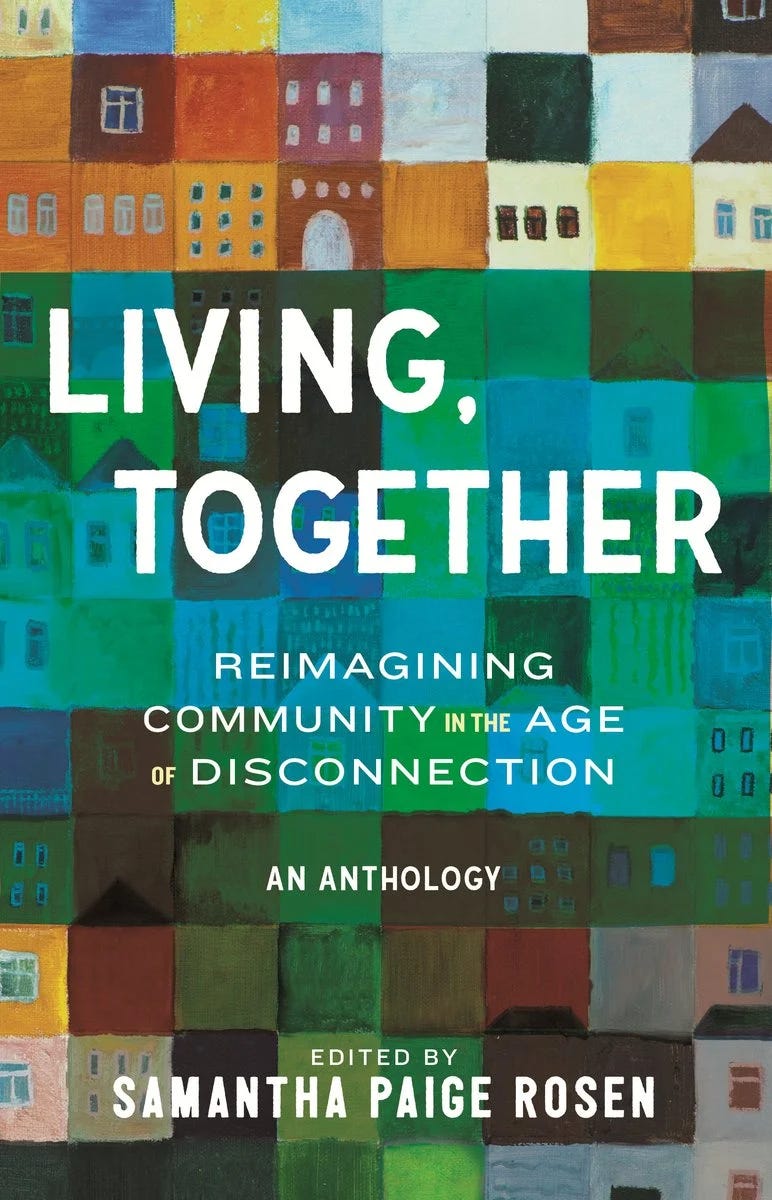
As promised, here is Dani McClain’s beautiful essay, “Renovations and Rebirths,” from the new anthology, Living, Together.
The house where I grew up had been my mom’s childhood home before it was mine, the place where my maternal grandparents raised their eight daughters. I had lived with my mother in apartments in Cincinnati before moving as a toddler to the ranch home in Camp Dennison, a community of a few hundred people located northeast of the city. Built in 1928 by my grandfather’s maternal grandparents, the four-bedroom, two-bathroom house had always felt like home, even when it was a destination for weekend overnights and holiday parties. My aunts, uncles, cousins, other extended family, and neighborhood kin had gathered there long before I was born.
When I was eight, my Aunt Pam joined us. My grandmother had recently died at fifty-eight from lung cancer and my grandfather had been gone five years, killed at barely sixty by a heart attack. The grief surrounding their early deaths hung heavy in the rooms I shared with my mother. When my aunt came, she brought with her a lightness, a sense of possibility. Together, she and my mom set about the work of creating an updated, contemporary version of the house that reflected who they were and aspired to be as women in their thirties. They painted the spacious front room and dining room in a pale lemon yellow and put down similarly colored rugs, choices that reflected a sleek sophistication and their relentless commitment to spotlessness. They bought new furniture, including a white couch, for the living room and painted its brick fireplace white, further elevating the space from its cozy but lived-in feel. One of the four bedrooms was transformed into a family room with a cream-colored tiled floor, a wall of windows, and a skylight. Off that sunroom they built a deck overlooking the spacious backyard and in-ground pool. Two single professional Black women in-vested their time and money in their family home, and in doing so achieved a Black elegance much like what the Huxtables brought to the TV world every Thursday night. And they accomplished it all without a husband in sight.
This was the two-parent family with whom I lived until I was eighteen, and who I claimed as my innermost unit of blood relations until my aunt’s death in 2015. Growing up in a house with two women at the head shielded me from a patriarchal domestic framework and provided me with a different model for adulthood and family making. I remember very little tension in that home. There were no displays of domination, only expressions of sharing power. The culture was collaborative, respectful, and kind. I learned over the course of that decade how two people can join efforts to create a refuge for themselves and each other. They did yard work together, planting flowers and mowing the lawn in the warm months, and raking leaves and shoveling snow when the temperature dropped. They cleared the gutters when it was time to ready the house for winter. They vacuumed the pool, vacuumed the floors, dusted, cooked. Domestic work wasn’t gendered. I picked up some chores as I got older, but mostly I was encouraged to focus on my school-work and the extracurriculars I got involved with over those years. I knew I could expect to see my mom and aunt at my soccer games and track meets, the school plays and awards ceremonies. I never lacked the assurance of their love and support.
Twenty-five years after departing this often-idyllic childhood home for college, I came to know it in a new and different light. Late in the morning of January 12, 2021, I picked up my daughter from preschool and drove her the half hour from central Cincinnati to that house in the suburbs, as I did most weekdays. When I arrived, I found my youthful and athletic sixty-seven-year-old mother col-lapsed on the floor of her bedroom, unresponsive. The paramedics took her to the nearest hospital, and it was there I learned she had suffered a brain bleed and would need to be airlifted elsewhere for an emergency surgery to relieve the pressure in her skull. It was not clear during these fear-filled hours whether she would survive the operation. She did.
Thus began the long road of my mother’s recovery from a hemorrhagic stroke that nearly claimed her life. She would stay in the neuro ICU for just shy of two weeks and then move to an inpatient rehabilitation program for almost a month. In those frigid January and February weeks, I shuttled between the apartment where I lived with my child and those rooms where my mother mostly slept, suspended somewhere between this world and the next. I made the commute between my home and her temporary homes, places where first a ventilator aided her labored breathing and then where she began the arduous tasks of learning again how to speak and how to move through the world without full use of her left limbs.
On February 19, my mother went home. Or, I should say, she came home to my daughter and me. In the weeks following her stroke, I made arrangements to move from our apartment into her house, where she’d lived by herself since my aunt’s death. The lightning-fast consolidation of two households into one was chaotic and grueling. It could not have happened without the support of family and friends near and far who packed and moved boxes, organized and brought meals, provided childcare, and gave of their time and resources in ways I still haven’t understood how to properly ac-knowledge. Perhaps there is no appropriate expression of gratitude. But I now know that mutual aid is real. Selflessness is real. Community can be real, a set of actions, not just a buzzword. My mother, daughter, and I survived those winter months because we are loved, and that network of beloveds formed a circle of warmth and support around us while the winds of circumstance whipped about, threatening to undo us.
Once those winds died down a bit, there we were: three generations in a house that had held my family for three generations prior. It had provided refuge for my recent ancestors and now it would provide refuge for my mother, my daughter, and myself. Because the house is one level, it was accessible to my mother, who was confined to a wheelchair in those months before she learned how to walk with the help of an orthotic brace and quad cane. A carpenter friend and his architect father donated their time and built a wooden ramp to the front door, allowing my mother to bypass the several steps from ground level into the house. In addition to that external modification, we made small changes inside: Grab bars were installed in the bathroom and at the entryway to the sunken kitchen. My daughter’s daybed, which had been my own as a child, was moved into a larger bedroom to allow more space for her to play. A display cabinet filled with antiques was emptied and transported out of the house to make room for my daughter’s play kitchen. My mother had new required accessories as well. A bedside commode made using the toilet easier. I stored her shower chair in a corner of the smallest bedroom, which is where two of my mom’s sisters stayed on and off during those first months as we struggled to find and orient to the new normal.
I decided not to sleep in that smallest bedroom, a choice I knew would not please my mother. For one thing, my aunts who stayed overnight to help were in their seventies and needed a comfortable place to rest. But there was another reason behind my decision. The three bedrooms were clumped together in the back of the house, and I felt strongly that when the day was finished, I needed as much space around me as possible. Once I had my daughter and my mom tucked comfortably in their beds, and I had cleaned the kitchen and taken care of whatever final tasks needed tending to, I needed to be alone with my thoughts and my TV shows and my phone calls and my scrolling. I was desperate for whatever privacy I could find in that hour or two or three before I went to sleep and then got up and did it all over again.
So when that same friend who also built the ramp agreed to help move my bed from my apartment to my mom’s house, I had him assemble it in her living room. I took over that spacious front room—the jewel of the house that I’d watched my mom and aunt transform with its pristine lemon-yellow and the white brick fire-place over which hung a signed, original Gilbert Young graphite drawing. I moved into storage the white couch and the tchotchkes that had long lined the room’s glass shelves. I made space for my queen-size bed, a desk, two bookshelves, my own photos and knick-knacks, and a folding screen that did little to shield my makeshift bedroom from the sight line of anyone entering the front door. I didn’t care. It was what I could do to create my own little apartment within this house to which I’d returned under less-than-ideal circumstances.
My mother and daughter resting on the other side of the house, my endless to-do list paused for the night, I could try to return to myself as a woman in her early forties, the me who had been a writer and thinker in the midst of what felt like a fulfilling career. If I needed to stay up late working or get up early to sit at my laptop, I could do so without fear of disturbing either of my charges and losing what little I could cobble together of the precious silence. I could return to myself as someone with friends I could call and a life outside these domestic and caregiving demands. I could peruse the apps and try to reclaim the me who wanted to date, or binge prestige or trash TV. I could dream of writing another book. I could simply catch my breath. I knew my mother hated that I’d taken over a room that she and her sister and their own mother before them had deco-rated with such pride. But I felt I deserved it. And so I enjoyed what little solitude I created there.
My mother’s recovery remained at the center of our joint efforts, but other aspects of our lives were in progress. There were new routines and practices to establish, existing ones to tweak given the new environment. I was, after all, parenting a four-year-old. Making sure her life was filled with joyful, rich, and developmentally appropriate experiences was a priority as well. After six months in our new home, she started kindergarten. Overall, the transition seemed to be smooth for her. She’d had overnights and weekends at the house since she was a baby, and it had long been a second home to her, just as it had been for me before I moved in as a toddler.
I became mother to a school-age child just as my workload on the domestic front morphed into something new and significant. I had been the only adult in our rented two-bedroom walk-up since soon after my daughter’s first birthday. Now I was the only able-bodied adult in a hundred-year-old house on a quarter acre lot. The house had many demands, including a raccoon that had nested in the attic for the winter, a significant plumbing issue, a washer/dryer that needed moving from the unfinished basement—which was only accessible from outside—to the ground level of the house. I’d grown up watching two people collaborating to take care of such things. Now, here I was mostly alone, although my friends were there to chip in when I called on them. One drove down from Yellow Springs to clear the gutters with me that first fall. I’ve had help raking leaves and shoveling and salting walkways. But it has largely been me, urging my mom toward decisions and marshaling forces, placing calls and managing plans.
That first year, friends would comment on how commendable I was, and I’d stare at them blankly, unsure what to say. I just did the next thing in front of me, the thing that had to be done. At forty-two, I felt firmly middle-aged but also too young to be faced with the challenges of caregiving. Two years after my mom’s stroke, I read a New York Times Magazine article headlined “The Agony of Putting Your Life on Hold to Care for Your Parents” by Jaeah Lee. The story echoed some of my experience and placed it in a broader con-text. In it I learned that my “sandwich generation” experience was less unique that I’d thought. In fact, “the share of caregivers who are under forty-five quintupled over the past two decades, to nearly 66 percent from 16 percent,” Lee writes. Our boomer parents are living longer, but with more disabilities and less financial stability than their own parents.
Like me, the woman profiled in the article was a single mother living with her children and her father as she helped him recover after a traumatic event. Like me, her career felt tenuous as caregiving moved to take a central role in her life. Like me, she spent her days doling out medication, monitoring blood pressure, ferrying her dad to doctor’s appointments, and peppering clinicians with questions. The article and its comments section, full of the testimonies of exhausted and overwhelmed caregivers, filled me with anxiety as I came to better understand the structural failures that shift the work of tending to ailing elders and disabled kin to family members. The health insurance system offers little support, and many of us can’t afford professional caregivers, who are themselves underpaid and vulnerable to exploitation by employers. But reading the article also highlighted the ways I wasn’t quite so bad off as the thirty-four-year-old Cleveland woman who had let the reporter peer into her family’s life.
For one, my mother is a homeowner, and I moved in with her, not the other way around. In doing so, I stopped paying rent and utilities. I covered groceries and picked up other household expenses. Some of these have been significant, particularly in the early weeks and months when my mother was still convalescing, her brain too fragile to do much beyond repair itself. I also paid the aides who cared for my mom in those first years so that I could get time to work or otherwise be away from the house. It would be nice to receive pay for the caregiving I provide, and I know such an arrangement is possible in some circumstances. But I haven’t pursued compensation. My mother and I have had a loving relationship, and I’ve felt it’s been my duty to show up for her. Perhaps more importantly, the arrangement isn’t ruining me financially, and I am likely breaking even. This adds to the feeling that my mother and I are supporting each other, a faint echo of the support I watched my aunt and her offer each other.
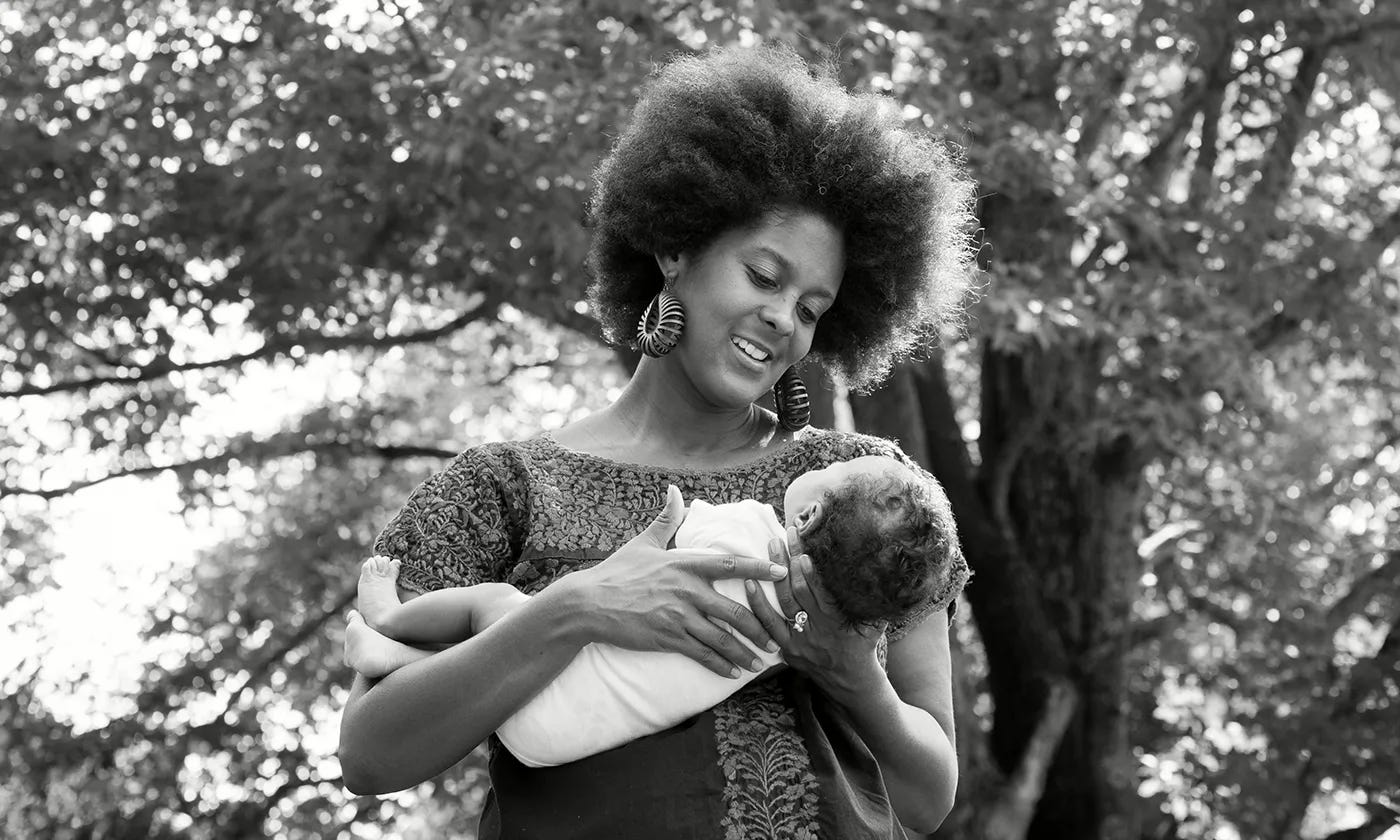
My daughter and mother were thick as thieves in those infant and toddler years before my mom’s stroke, and I believe my daughter’s presence has hastened my mother’s recovery. I’ve seen it in the way my daughter has insisted on rambling, fast-paced conversations in spite of the aphasia that often makes my mother’s words falter. My child is undeterred by the verbal stops and starts, motivated as ever to laugh and joke with her grandmother. I’ve seen the healing potential in the way they cuddle in my mom’s bed, and I’ve watched my mother strive to gain more mobility so she can be present with my daughter. They can no longer go on lengthy walks, or take drives together, chase each other around the yard, or roll around on the floor. But even the ability to walk into my daughter’s room, to sit beside her bed, and to read with her brings my mother joy. She is rarely so happy as when on the sidelines at my daughter’s soccer games or in the audience at her dance recitals. As we near four years since that January day when everything changed, my mom can again care for my daughter while I’m out or otherwise engaged. I never expected we’d be here again.
This intimacy benefits not just them but me as well. While I am often hungry for privacy, I rarely suffer from loneliness or feelings of isolation. I enjoy the simple but comforting ritual of eating dinner together most nights, and the stress-reducing practice of sharing expenses. But the biggest benefit of living with my mom over these years has been that it’s given me a front row seat as she’s clawed her way back from the brink of death. I have gotten to watch the woman who guided me as I learned to walk, talk, feed myself, and venture out of the house on excursions learn again how to do these things herself. I have been given the opportunity to watch—and perhaps even midwife—a rebirth.
I understand that I am one of the lucky ones. For many caregivers, their loved one’s health and well-being could be represented by a line that generally trends downward. My mother is aging, of course, and there will be more decline. But these past few years have also been marked by significant improvements. She has committed herself to physical, speech, and occupational therapy. Her words come more fluidly now, with less halting as she scans her mind for what she wants to say. She works tirelessly to build strength in her legs and improve her gait.
She is steadfast and determined, and has gained more independence than I thought possible. When my resentments run high, I remember this: I am learning to see the honor in providing care, understanding that it costs me relatively little to open that jar, retrieve that fallen object from the floor, sweep, rake, shovel, arrange the refrigerator so she can find what she needs—all things she would love nothing more than to be able to do on her own. She is and has been working doggedly at recovery. I help and observe and learn. Meanwhile, my daughter gets to grow up in a family that is rooted in collaboration, respect, and kindness, just as I did.
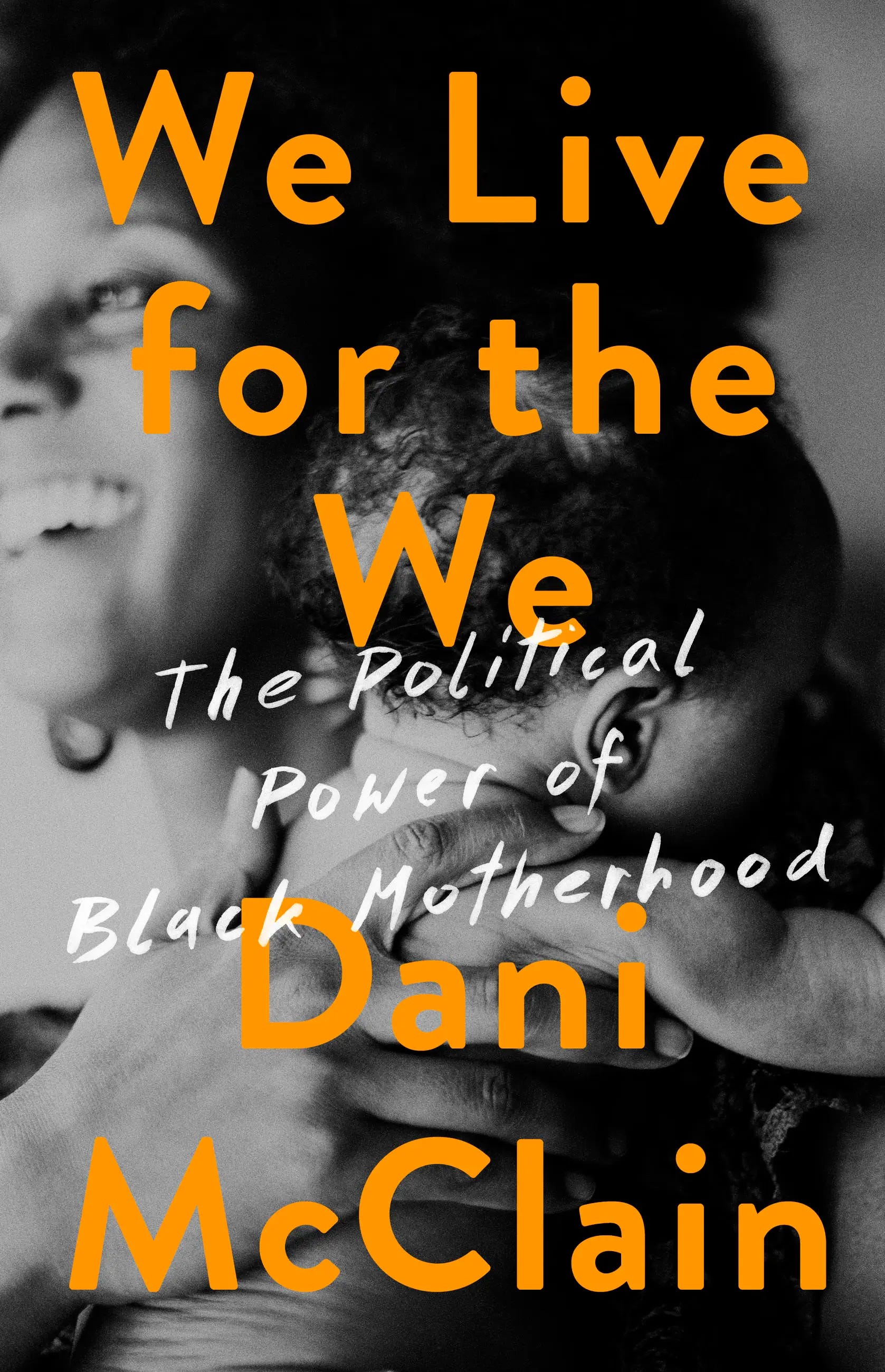
Buy the anthology that this wonderful essay it is featured in, along with so many other great meditations on imaginative living. Check out my interview with the anthology’s editor. Buy Dani’s book, We Live for the We, here. And read more of her work here.
And by all means, tell us about your multigenerational living seasons in the comments below. When did non-nuclear parenting benefit you? When did health crises lead to more interdependence? How did you struggle and benefit from it?
Comments
Nothing yet. Say the first thing.
Sign in to join the conversation.