
Several civil rights groups filed class action lawsuits against the Trump administration’s executive order which was set to suspend birthright, these lawsuits once again froze the Trump administrations executive order. This post was written before the outcome of these cases was known.
On January/20/2025 Donald Trump issued an executive order suspending birthright citizenship, meaning babies born in the United States would only be citizens if at least one parent was a citizen. By February/10/2025 multiple lower circuit judges had issued injunctions which stopped the executive order from taking effect. One week ago, on June/27/2025 the Supreme Court ruled on the procedure of the filing of injunctions declaring that lower circuit courts only had the jurisdiction to file injunctions within their own states thus resuming Trump’s executive order in the vast majority of the United States. The Supreme Court has yet to rule on whether Trump’s executive order is constitutional.
The Constitution of the United States of America creates three branches of government. The legislative, executive, and judicial.
The legislative branch:
Sets the laws
Is elected by people
Is made up of the house and senate
The executive branch:
Does what the legislative branch says to do
Is made up of one president who is semi democratically elected,
Is made up of many career employees,
and is made up of political appointees chosen by the president
The judicial branch:
Handles disputes about how the executive branch is carrying out the laws
Is appointed by the executive branch and ratified by the legislative branch
The president of the United States (executive) has the power to issue executive orders. These executive orders act as pseudo amendments to the legal code, filling in the grey areas left by congress. A helpful way to think about them is as temporary laws until congress can figure out what the real laws are. They are superseded by laws passed by Congress (legislative), and kept in check by the courts (judicial).
If an executive order (or a law) is thought to be unconstitutional a plaintiff can (with the help of a lawyer) sue the government. In cases like these state’s attorney’s general will take the case before a federal circuit judge. This judge can issue an injunction which could either: a) suspend the executive order from effecting the plaintiff until a ruling is heard, or b) suspend the executive order from effecting anyone until a ruling is heard.
The idea behind injunctions is that an unconstitutional law or executive order could cause damage to individuals if allowed to persist. Therefore it makes sense to pause a law or executive order until a sufficiently powerful court rules whether or not the law or executive order is constitutional or not.
When Trump first signed the executive order suspending birthright citizenship (a constitutional right) several lower circuit judges representing Washington, New Jersey, and Massachusetts among others issued injunctions because the order was so blatantly unconstitutional. This froze the executive order for everyone across the nation meaning it did not take effect.
In Trump v. CASA the Supreme Court ruled that universal injunctions cannot be issued by lower circuit judges and that they may only be issued by the Supreme Court. This means that judges only have the power to stop a law from taking effect in their own state and that the only way lower circuit judges can achieve a ‘universal injunction’ is if 50 judges from 50 states issue an injunction in their state.
Currently birthright citizenship is set to expire for babies born in the US on or after July/29/2025 in the states colored dark red, but is protected in the states colored light red. This means the requirement for citizenship will vary based on what state you are born in for the first time since the civil war era.
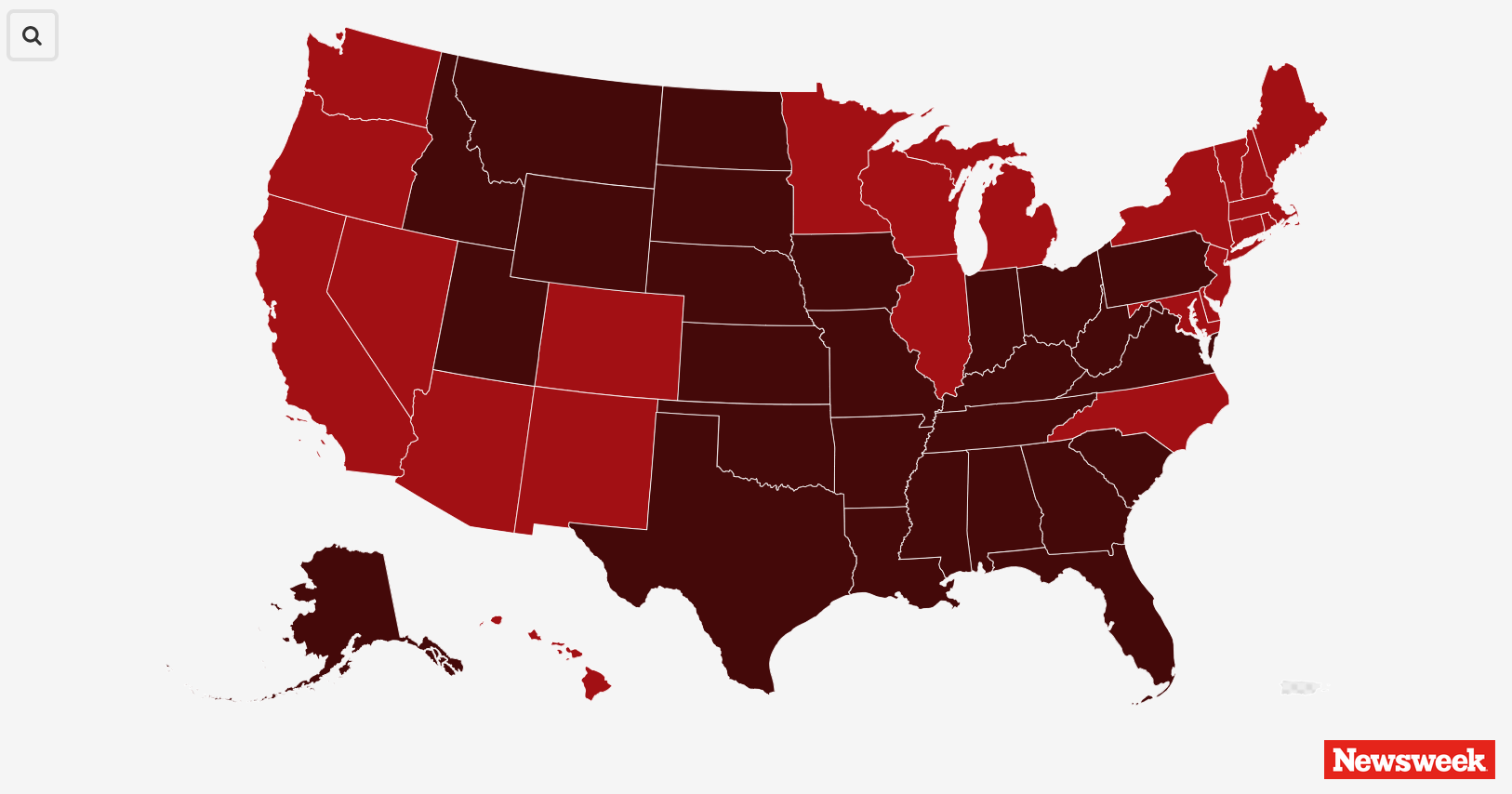
Technically speaking the Trump v. CASA ruling doesn’t strip people of their right to birthright citizenship it just mandates the states colored dark red to not give citizenship to babies born in the dark red states who’s parents aren’t US citizens. This means in theory one could sue the United States for their child to be a citizen, however in practice the percentage of people who would be able to sue the government is slim to none.
Executive orders just got a lot more powerful, and the divide in governance between states has also gotten wider. Trump now has more power than before to set laws in the majority of the states in the nation and many executive orders he signed in his first few weeks that were blocked by injunctions are likely to return in the next few months.
By not ruling on the substance of the Trump v. CASA case the Supreme Court is effectively dodging their responsibility to uphold the constitution of the United States which clearly states that birthright (being born in the United States) is one path to citizenship. The implication here is that the Trump administration has free rein to ignore the constitution and laws of the United States, and if states have a problem with this they must file their cases and issue their injunctions individually.
“Surely, they need not be told, how slow every good system of laws must be in consolidating; and how easily the rashness of an hour may destroy, what ages have scarcely cemented in a solid form.” - Joseph Story, Justice of the U.S. Supreme Court (1812–1845) writing in defense of the universal injunction.
On top of the impending expiration of birthright citizenship in half the country, the Trump Administration issued a memo urging the Department of Justice to pursue denaturalization (stripping of US citizenship) in criminal cases involving newly naturalized citizens and they will surely not stop here.
If the Trump administration continues to issue unconstitutional executive orders that go unblocked by half the lower circuit judges and unchallenged by the Supreme Court there will likely be many Americans who find their citizenship called into question.
Because enforcement of these executive orders will vary based on state it is likely there will be new groups of domestic refugees—people fleeing from states where they are not citizens to states where they are citizens. Already, the impending variance in birthright will be a major factor for people deciding which state to immigrate to.
What is already being done is as follows: states with sympathetic judges are continuing to file injunctions. Civil rights groups are filing class action lawsuits against trump’s executive orders and, in theory, these lawsuits can win universal injunctions because they are meant to represent all people of the United States. To help them win these cases and fight for immigrant rights the easiest thing you can do is donate donate donate (this last link is not a class action suit).
If these class action lawsuits fail to win injunctions then it is possible that the legal definition of citizen will become even more varied state to state. People in states with judges who are sympathetic to immigrant rights will need to prepare for refugees seeking to live in a place where they are still a citizen. People in states with judges adhering to the Trump regime will need to work extra hard to keep their communities safe from immigration raids and may lose friends and neighbors who flee to states where they are citizens.
Trump v. CASA has changed two key things. The first is the text of the ruling which makes executive orders more powerful and injunctions less powerful. The second is a blatant ignorance of the constitution by the Supreme Court, which is a dangerous president to set especially during an administration that has so little respect for laws.
Still, there are always avenues for resistance. Civilian non-cooperation is a powerful tool that can slow down a government’s ability to enforce its policies. Lawsuits are another powerful tool we can use to slow down unjust arrests whenever possible. There are also electoral routes to change, individual towns and cities in states with injunctions can create programs to cover costs for people fleeing persecution in other states. Meanwhile towns and cities in states without injunctions can alter local policy to make it harder for federal agencies to identify people who’s citizenship is now in jeopardy.
“Now more than ever” feels like the only thing I’ve heard anyone say this year, but that is only because it is true. Now more than ever the evils of the American Empire are on display. Now more than ever our rights are being eroded at a rapidly increasing pace. Now more than ever your people need you to have their backs. Now more than ever you need your people to have your back.
No posts
Comments
Nothing yet. Say the first thing.
Sign in to join the conversation.