
Ẹ káàbọ̀ and welcome to Afri-tectural Digest, as I re-launch this space for thinking deeply about Black interiors, architecture, and home-life.
I begin with the foundational question, what makes a Black home? It is a question far more difficult to answer than it first appears, yet it sits at the heart of everything I explore here, and lies at the core of my forthcoming book, The Black Home: Across Centuries and Continents (September 2026).
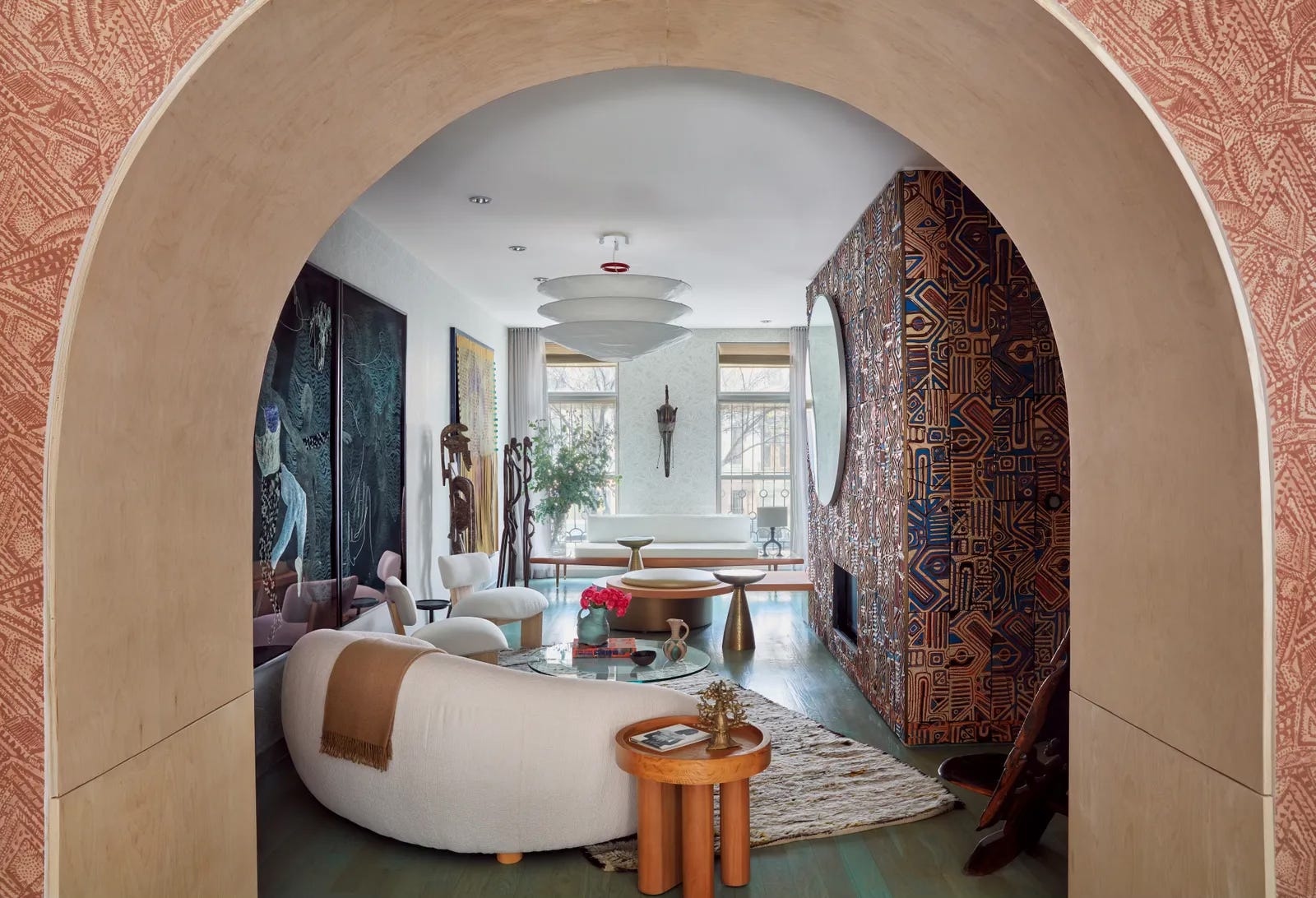
Let me illustrate my point with the Brooklyn home of the artist Malene Barnett, shown below. This is undoubtedly a Black home, but what makes this so evident?
It is actually far more straightforward to identify what a Black home is not than to describe what it actually is. So let’s begin by ruling out a few options:
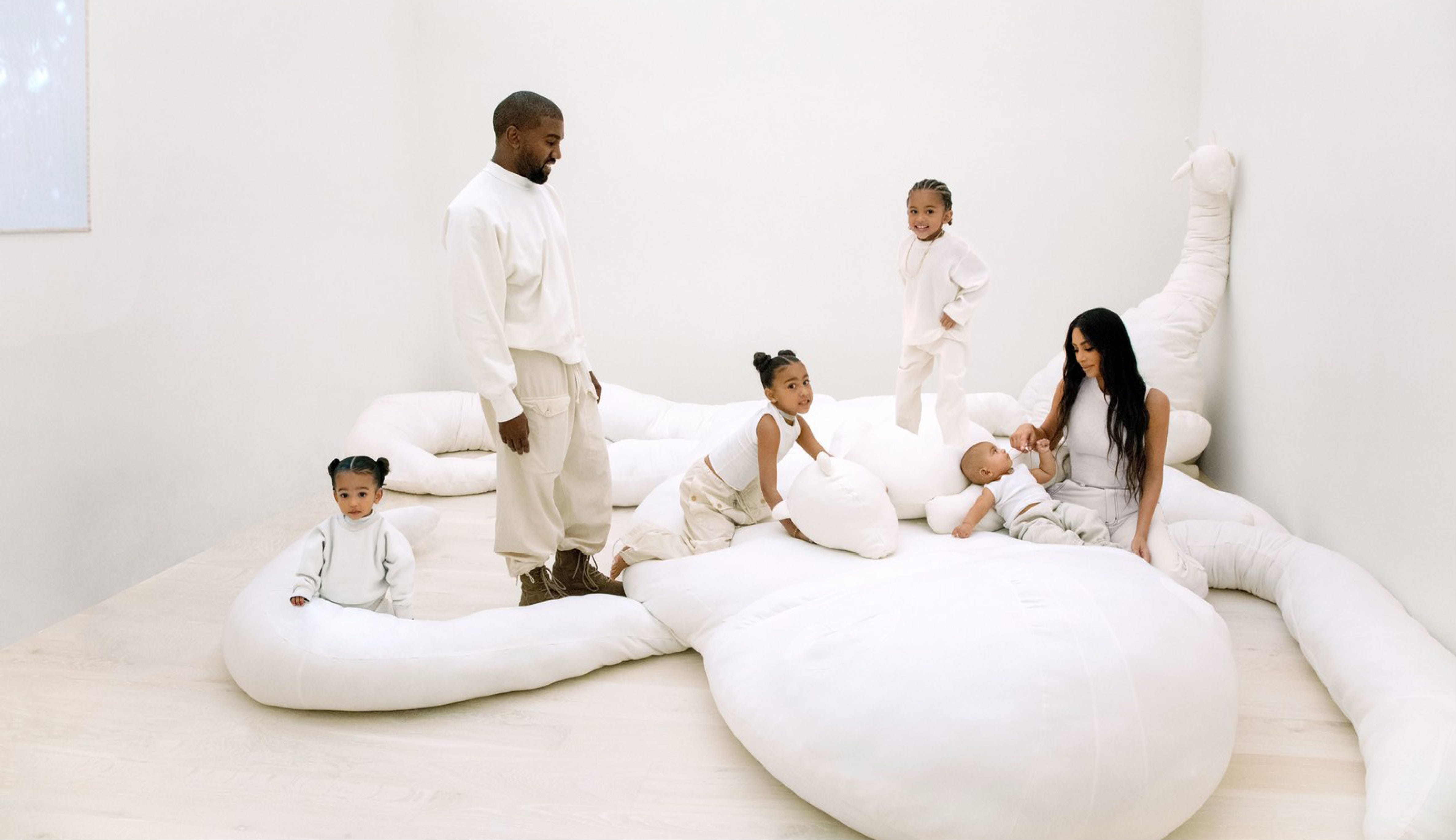
A Black home is not simply a home lived in by people of African or African-diaspora heritage. For instance, it goes without saying that the Los Angeles home pictured below is not a Black home!
You do not have to be Black to live in a Black home. In my book, I have included the homes of a white Austrian artist and a white British architect — both iconic Black homes.
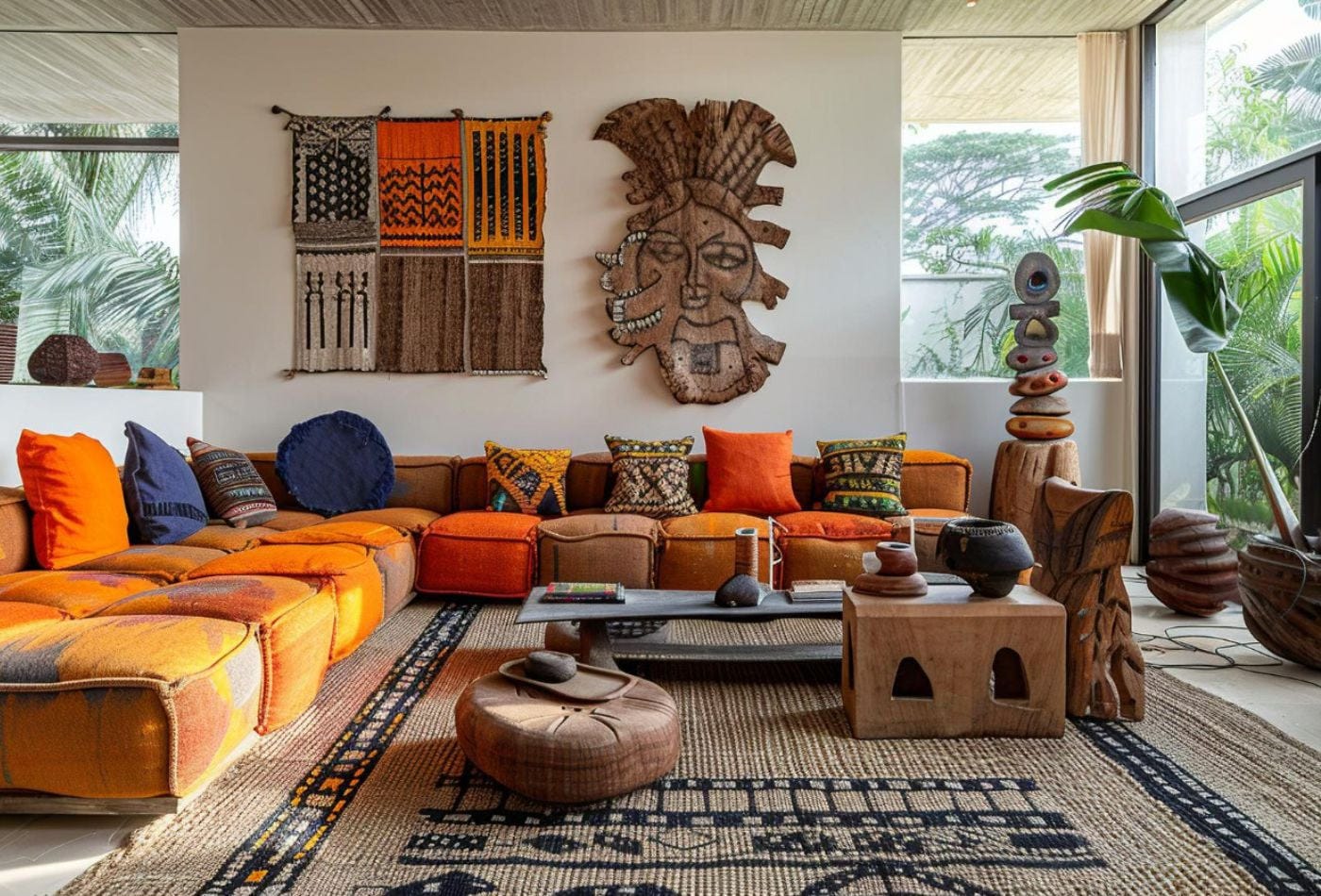
A Black home is not about a specific aesthetic. Black homes are not marketable or shoppable interiors trends, and one trend a Black home certainly is not is “safari chic” or tribal.
And finally, Black homes exist without reference to any specific historical era or period. The much-maligned yet technically genius “mud hut” could be considered the roots of the traditional Black home, but that — as Chimamanda Ngozi Adichie warns us — is the danger of the single story.
In writing my book, I explored the diversity of homes across Africa and the diaspora. Homes of kaleidoscopic colour and homes that were strictly monochrome; maximalist homes full of prized possessions and ultra-minimalist ones with nothing on display; contemporary homes and ancient cottages. All of these were indisputably Black homes — but what made them so?
I began to consider that perhaps there was no framework or philosophy to the Black home at all, and that it was simply a matter of my individual prejudices and preferences playing out. However, the answer began to unveil itself as I saw common threads uniting all these disparate homes. I called these common threads Ancestral Intelligence, and they are the key to understanding Black homes. In the process, I realised I was not performing interiors and architecture research, I was undertaking deep ancestor work.
A Black home is one that seeks and nurtures a connection to ancestral intelligence. Ancestral Intelligence is the wisdom our ancestors used in making home encompassing spiritual knowledge, collective living, applied technology, and intense creativity.
The Ghanaian Adinkra symbol of the Fihankra is what I use to symbolise ancestral intelligence of the home. It represents an enclosed compound house and is a symbol of brotherhood, safety and completeness.

Below, I share these four distinct elements of ancestral intelligence. Each one is an essay in its own right, so here I will simply outline and illustrate. Know that each is a building block for all our conversations in Afri-tectural Digest.
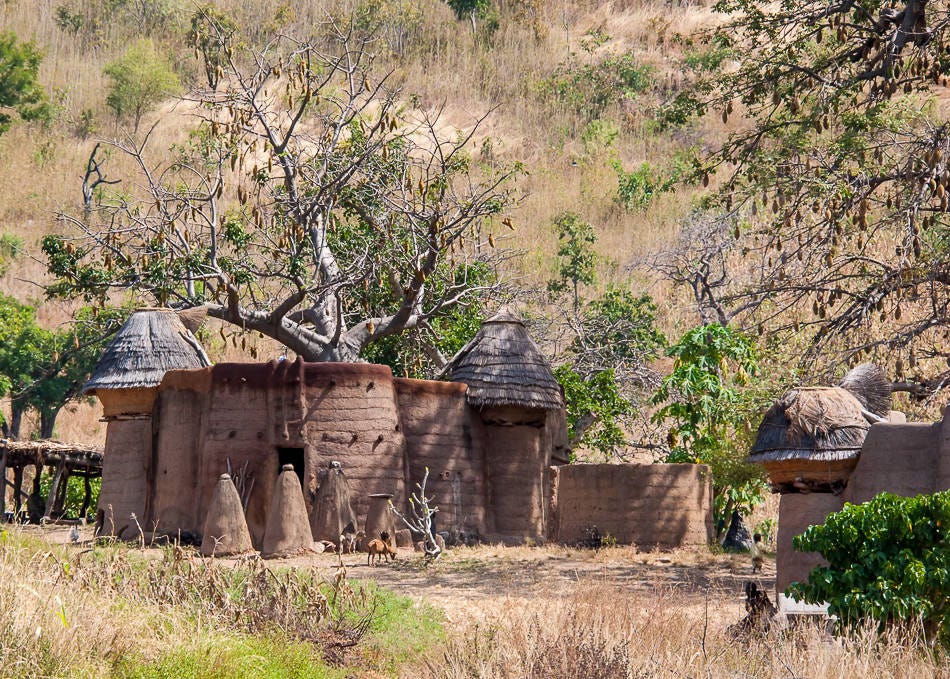
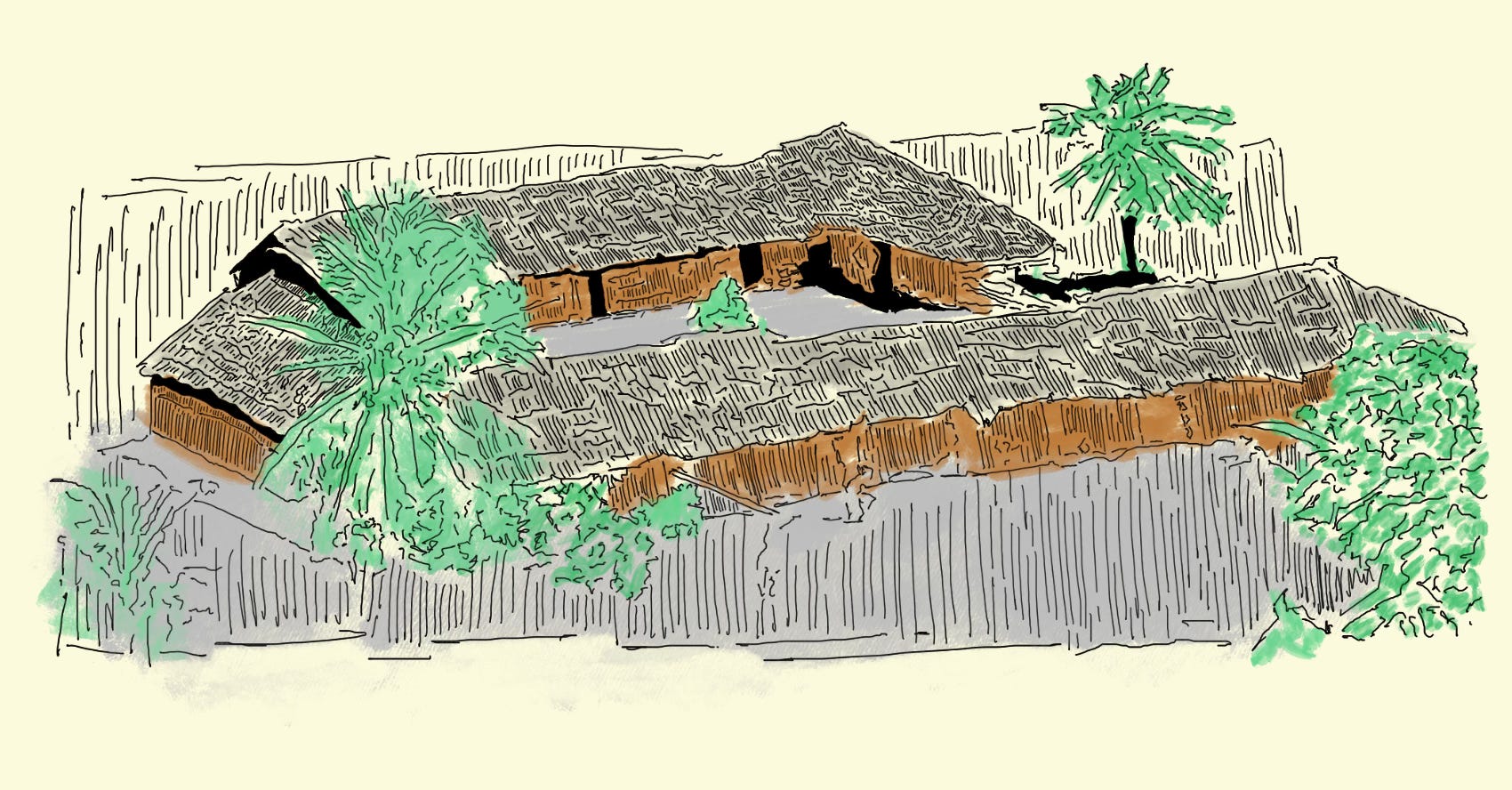
A Black home exhibits a connection to the natural world and, where possible, seeks to work with nature rather than against it. Think of it as the ultimate contrast to the concrete homes with air-conditioning belting out of every room that we aspire to across modern Africa. In traditional homes, such as the one below, nature is an elemental part of the home, where the building seems to be of the earth, not placed on top of it.
Homes are not only spaces for life with a nuclear family comprising mum, dad, and 2.4 kids. Home life is far more expansive, including extended family, chosen friends, and the wider community, who share the rhythms, joys, and challenges of daily life. The Yorùbá compound house (illustrated below) is an example of how my ancestors lived communally, with the open courtyard forming the heart of the home.
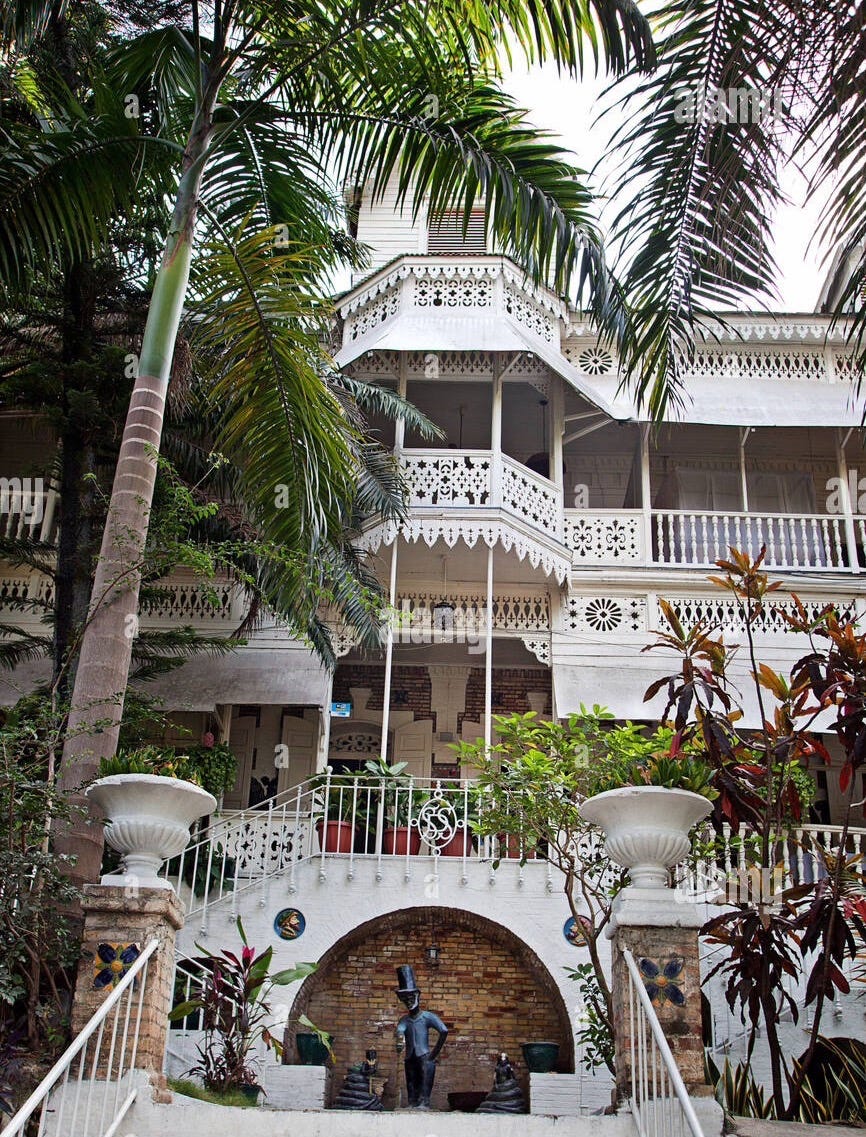
These are two integral elements of the Black home. The homes may differ in colour, materials, and aesthetics, but their designs all share the same vibrant, unmistakable rhythmic energy — an energy also found in Black music, textiles, and dance. And where there is rhythm, there is its close cousin: joy…
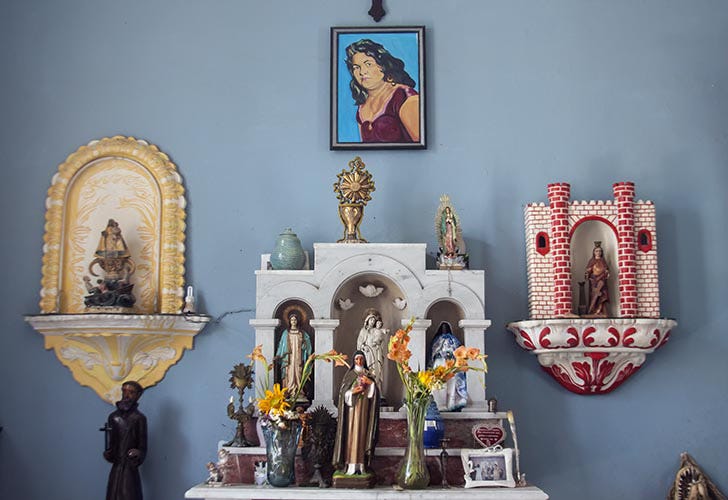
Spirituality is the core of ancestral life and is reflected in the Black home too. Spirituality is present not only intangibly, in terms of ritual and ceremony, but also in physical form, as the spirits of the ancestors and gods are venerated within the home through altars such as the one below.
Ok, before you start thinking, I am not building an altar in my living room, or moving in with my in-laws, so this is not relevant to me, I want to make something very clear. I am not celebrating ancestral intelligence from a nostalgic point of view — dreaming of going back 300 years to the village compound, sitting under the moonlight listening to a elder tell Anansi stories by the fireside (although that does sound beautiful!). I am completely aware of the medical, scientific, and cultural advances modern life has brought. However …
…the sweet spot lies in considering how ancestral intelligence can be incorporated into modern-day life — making it bolder, happier, and ultimately more revolutionary.
What makes a Black home is not a look, a period, or a set of objects, but a way of living in relation to community, to joy, and to the natural and spiritual worlds. Ancestral intelligence has shaped Black homes across centuries and continents, sometimes quietly, sometimes defiantly, but always with intention. I believe there is a need for it now as much as there ever was.
For instance, let’s be inspired by the innumerable examples of slave rebellions that occurred across Africa and the diaspora. These arose from people living communally, sharing revolutionary ideas, and drawing courage from the spiritual beliefs they carried from the Motherland. The joys and rhythms that united them in prayer and celebration where what fuelled them in revolt.
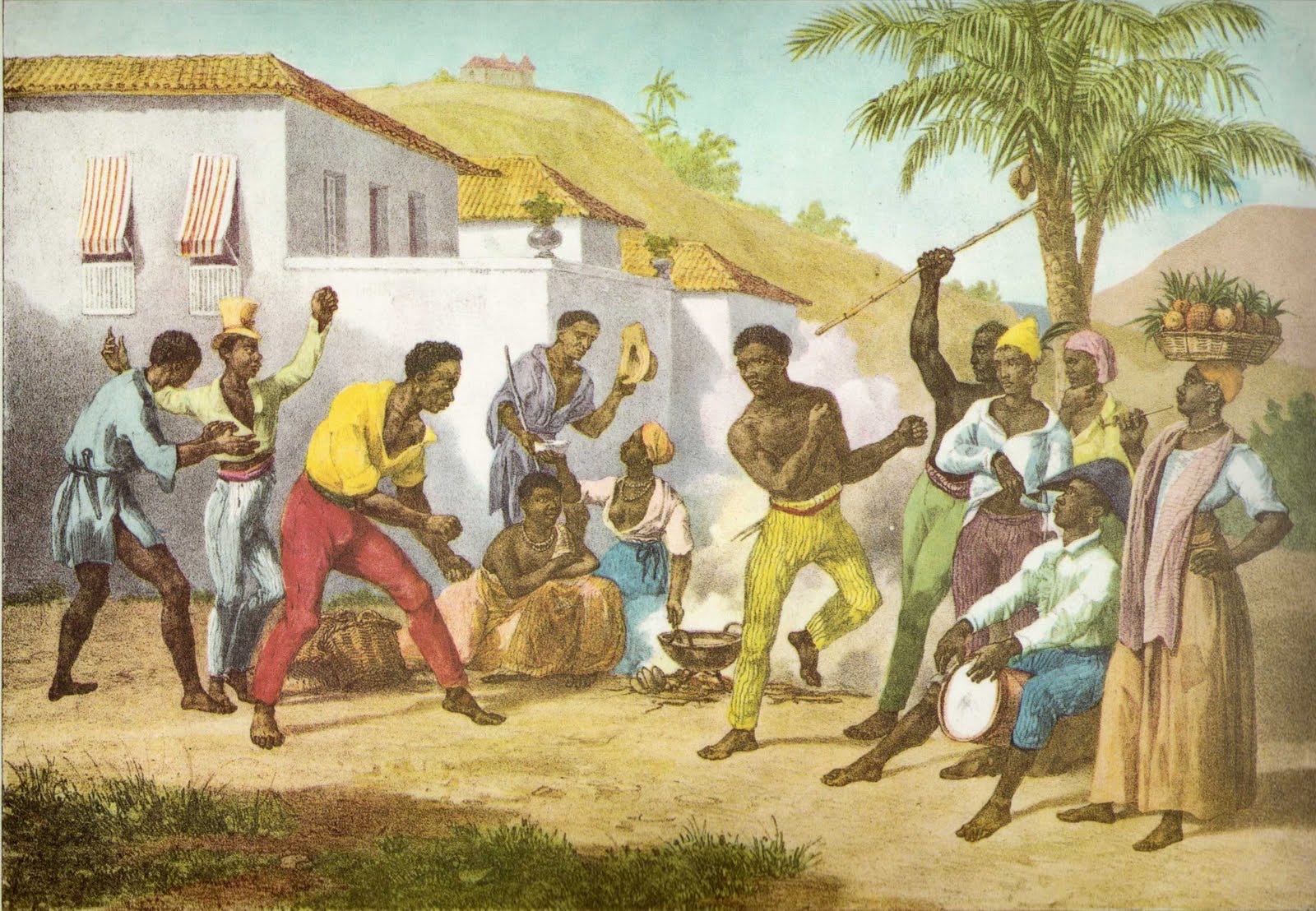
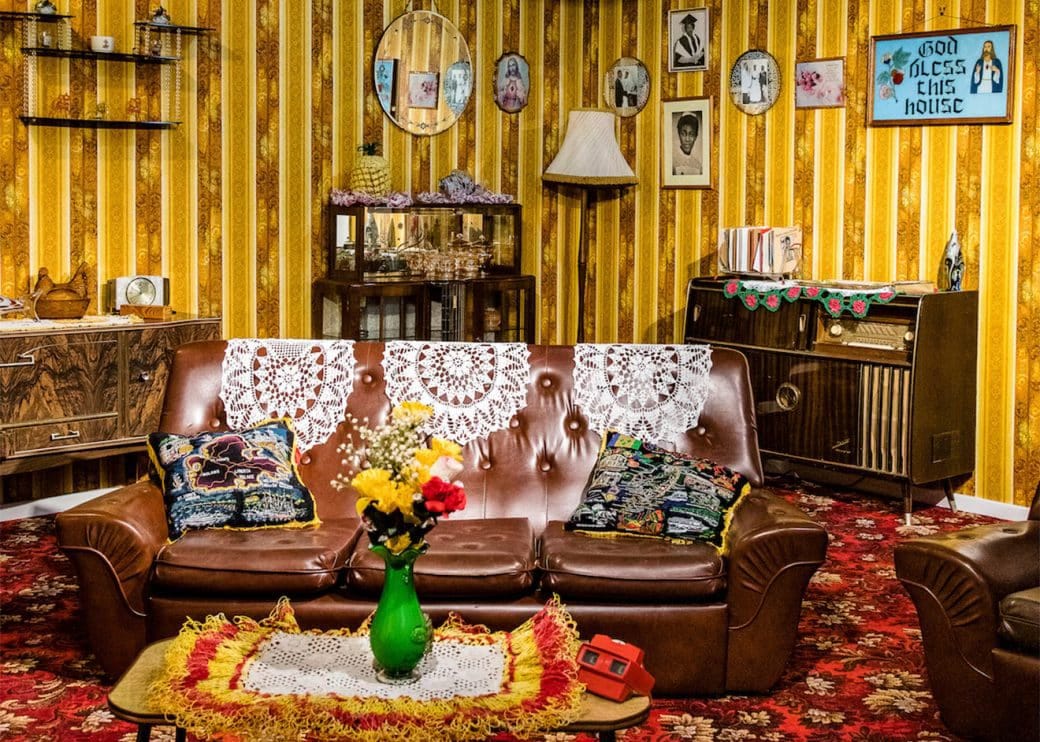
In more recent history, it was the ancestral intelligence embedded in the interiors of joy and rhythm in the West Indian front room. Our grandparents and great grandparents created their own design language which gave then the energy, vitality, and pride to survive in hostile environments in the UK.
The Black home is more than shelter or style. It is a site of knowledge. A place where memory is held, resilience is practised, and life is made meaningful. In my home Cottage Noir, I constantly seek to explore and deepen the ancestral intelligence within its walls. This is the subject of my next essay.
A whole world opens up once you consider the question of what makes a Black home. I hope you will enjoy exploring this world with me on Afri-tectural Digest .
With warm wishes
Kemi
Subscribe for future essays on Black interiors, architecture and ways of making-home.
If you know someone who would enjoy this newsletter, do feel free to share
No posts
Comments
Nothing yet. Say the first thing.
Sign in to join the conversation.