
The Golden Age is costing Patrick Taylor $6,000 a week.
Patrick is a Wisconsin trucker driver driving long haul freight across the Midwest. The miles pile up and so does the bill.
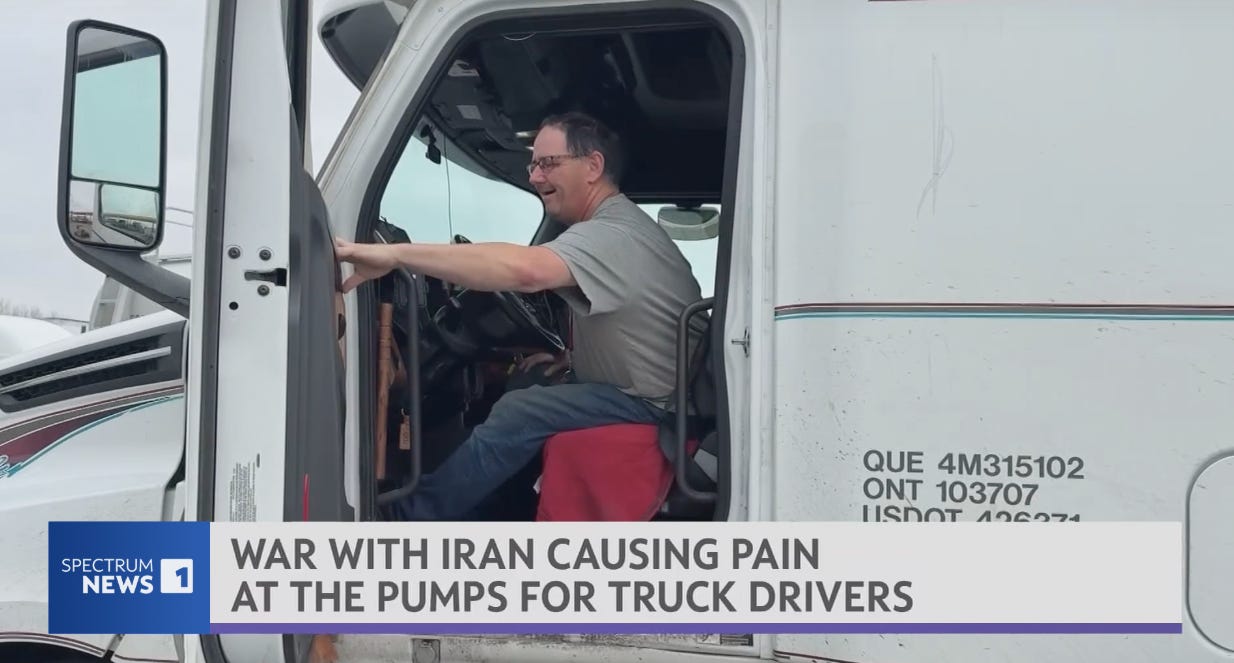
“I stop almost once a day, like a $1,000 minimum in fuel. I’m on the road like six, seven days in a week. So, it adds up… like you’re talking about $5,000, $6,000 in a week,” he said.
He’s one of the lucky ones. He’s a company driver. Stephanie Thomas isn’t.
Thomas is an independent contractor — what the industry calls an owner-operator. She buys her own fuel, negotiates her own loads, and shoulders the risk on her own. When fuel spikes, she doesn’t have a large company trying to hedge the costs. It comes directly from her bank account.
“Most company drivers, they just fuel up. But for us, for independent contractors, it’s different,” she said.
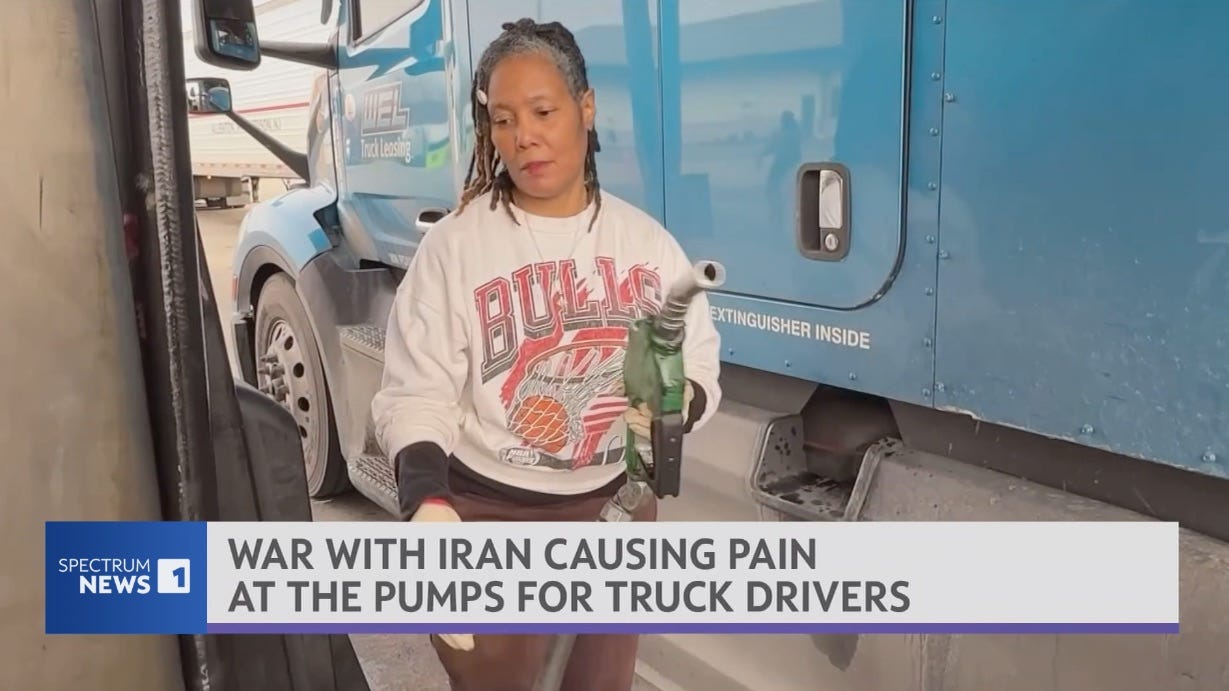
The costs are hitting the bottom lines of independent truckers first, but all truck drivers are paying more to travel the same miles.
And that cost will eventually hit every one of us.
This isn’t simply a trucking story. Diesel powers nearly every industry — from the tractors plowing fields to the machinery erecting buildings to the semitrucks, trains, and buses that move goods and people coast to coast. Fuel costs are the trucking industry’s second-largest operating expense after driver pay, according to the American Trucking Associations.
At $5 per gallon, farming, trucking, and construction companies combined will spend $6.1 billion on diesel this week — versus $4.5 billion before the war started. That’s a 35% increase. The price tag on everything that arrives by truck is about to get a lot higher.
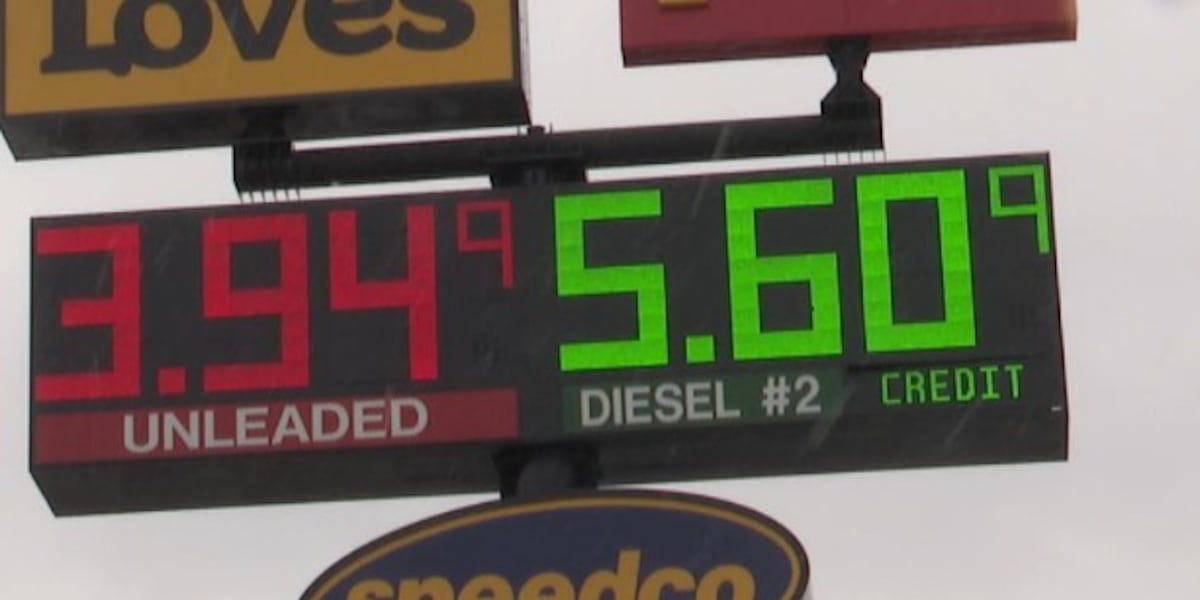
The only question is how soon?
In El Paso, Jorge Perez drives fuel supply for clients. Last week, a full tank cost him $375 and got him over 1,200 miles. Today that same tank costs nearly $800. He can only transport half what he used to.
“It’s impacting drastically, completely,” he said. “It’s a big change from one week to the other.” His biggest fear isn’t the price. It’s that the whole industry stops moving.
“Without that, I’ll be out of a job pretty soon if this keeps going the way it is.”

Near Corpus Cristi, Sergio Trego is paying the costs of the Iran war with a different type of currency. To keep the business alive with high fuel costs, he’s spending more time on the road — which means less time at home. He’s missed birthdays and other important milestones in his family.
He’s been adding fuel surcharges to his loads, but customers don’t want to pay them. When they push back, they pull the load entirely. “It definitely cuts into profit,” he said. And when his truck stops rolling, it’s not just his problem: “I have two drivers under me, so if my truck stops rolling, it doesn’t just affect me, it affects their livelihood as well.”

Charles Millious owns Millious Trucking in Selkirk, New York with a fleet of 24 working trucks all running on diesel. That cost is $12,000 daily now, compared to just over $7,000 a few months ago. Forty thousand dollars a week just to keep the fuel flowing.
Driver Don Millious knows how difficult it will be to lower prices: “There’s a threat of something and immediately the price skyrockets. Once everything is done, it takes weeks, months, if not years, for the price to get back down to normal.”
In New Hampshire, Roger Conner runs RC Conner Enterprises, a firewood company. Diesel powers every step of his supply chain — the trucks that haul logs, the machines that process them, the vehicles that deliver them. In a normal year, he spends roughly $6,800 a month on diesel. Now it’s about $11,000.
He’s added a 5% fuel surcharge. Several customers walked away.
“If diesel keeps rising,” he said, “we’re going to have to keep going up on our pricing, but we probably won’t have any sales. This is going to cripple our economy.”

The stark reality of the economy is hitting everyone outside of the Washington Beltway. Inside the White House, they’re telling a different story to themselves.
The economy is booming. The stock market is hitting new highs. “America is back, bigger, better, richer, and stronger than ever before,” the President bragged.
But Patrick Taylor is fueling up once a day in Wisconsin — a thousand dollars a stop, six days a week — waiting to see what the Golden Age feels like at the pump.
Sergio Trego missed another birthday. He was on the road, trying to make ends meet.
Truckers can’t absorb these costs. So we will. The price tag on everything that arrives by truck — which is everything - will be going up.
The bill for this war is already in the mail. You just haven’t opened it yet.
No posts
Comments
Nothing yet. Say the first thing.
Sign in to join the conversation.