
Welcome to Cosmographia — a newsletter uncovering the deep roots of a turbulent world. For the full map of posts, see here.

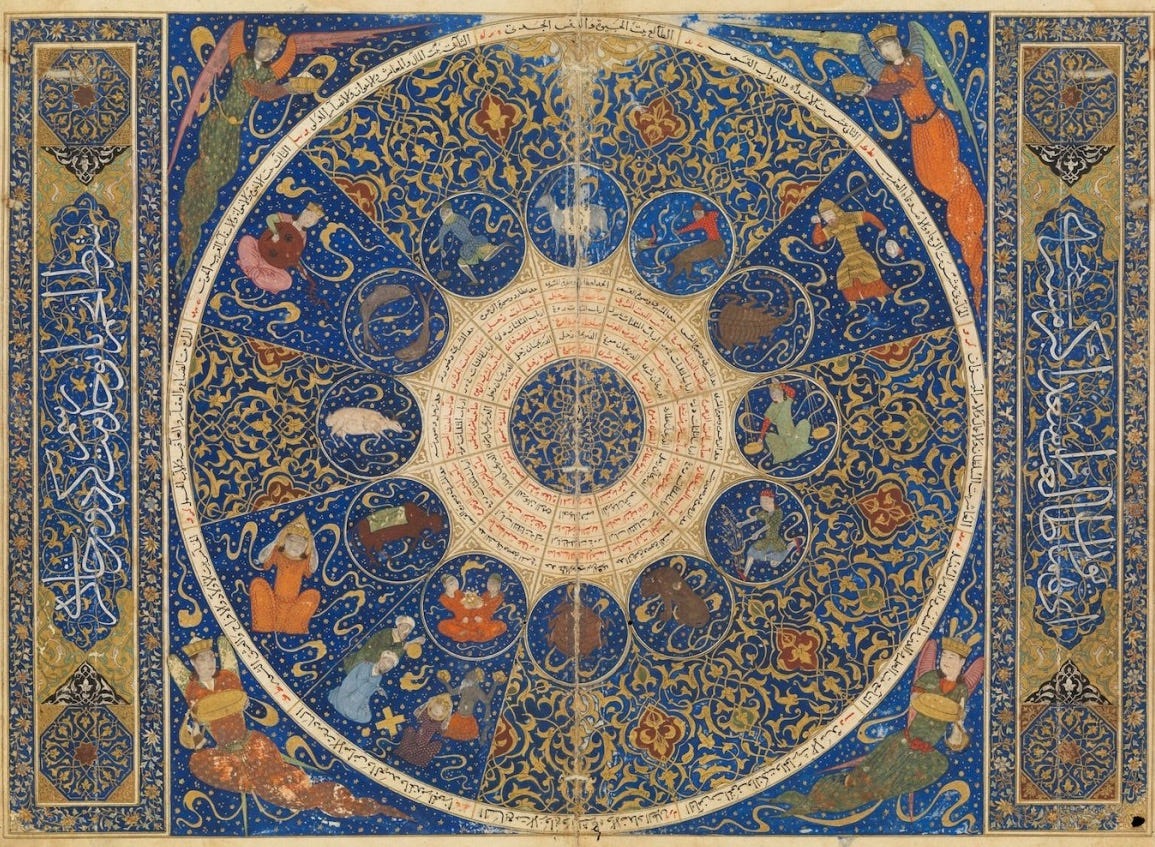
In 331 BC, Babylonian astrologers began to notice strange portents among the stars. First, they watched in horror as the Earth’s shadow passed across the face of the Moon; ill news for an ill time — a total lunar eclipse normally heralded the death of a king. Plague soon broke out in the city. The dead mounted up in the streets. But the heavens showed worse was yet to come: one night a meteor tore through the sky. The scholars checked the records; there could be no doubt — an invasion loomed. The same night lightning flashed twice, one of which killed a dog. Another bad omen. Hurriedly, the astrologers rushed to warn the Achaemenid ruler, Darius III. But the Persians had never cared much for Babylonian superstitions. He sent them away, their advice unheeded. The next month Alexander the Great broke the Persian army upon the plains of Gaugamela, entering Babylon victorious not long afterwards.
If this came as a shock to their erstwhile Persian overlords, the Mesopotamians weren’t surprised. They had long known how to read the language of the gods, how to interpret the heavens. Darius’ demise was written in the stars — he should have listened.
The Akkadian epic known as the Atra-hasis (c. 18th century BCE) purports to tell the story of a primordial cataclysm. Millennia ago, when the earth was still young, humans had grown so numerous that the racket of their living was keeping the gods from their slumber. Enlil, lord of the storms, most powerful of the gods, became so enraged that he loosed a thousand plagues upon the earth. But despite the diseases and famines he set upon the world, the god Enki kept thwarting the apocalypse by helping the humans survive. Enlil decided upon a new plan: he would send a flood to destroy humanity for good. But this time, he would ensure Enki’s compliance by having all the gods swear an oath of silence; no one could now warn the mortals of the coming danger.
A wise man, named Atra-hasis, sensed something was amiss. He turned to Enki, with whom he had a special bond, and asked him for advice. The god of the water remained bound by his sacred pledge not to tell of the coming flood, but he was cunning. He found a way to communicate with Atra-hasis indirectly, by whispering to him through the walls of his reed-hut. This speech is recorded in the Epic of Gilgamesh, and is full of clever puns and double meanings. Atra-hasis understood the coded message and built himself a great ship.
As the deluge washed over the world, the gods realised they had made a terrible mistake. Without humans offering them sacrifices in their temples, they had nothing to eat, and began to go hungry. Fortunately, when the waters receded, Atra-hasis, so grateful for having survived, offered up to the heavens slaughtered goats and sheep in oblation. Half-starved, the gods greedily ate up the sacrifice and promised not to flood the world again.
At the heart of this myth lies the keystone of ancient Mesopotamian belief. The gods need humanity, dependent as they are on sacrifices for sustenance. At the same time, humans are dependent on the gods, subject to their every whim and fickle fancy. It was vital then that they understand the gods’ will, but since the flood no mortal could commune directly with the divine. Instead they must look to omens. They must look to the stars.1
Comments
Nothing yet. Say the first thing.
Sign in to join the conversation.