
University rarely leaves enough uninterrupted time to sit still and think simply. Between lectures, assignments, laboratories, and deadlines, curiosity is squeezed into the margins of a schedule. During the final days of my summer vacation, I found myself at Marina Beach, sitting on the surprisingly cool sand as gentle waves crept ashore, erasing my footprints almost as quickly as I made them. I absentmindedly dug my feet deeper into the sand while rescuing seashells before the retreating tide carried them back into the Bay of Bengal.
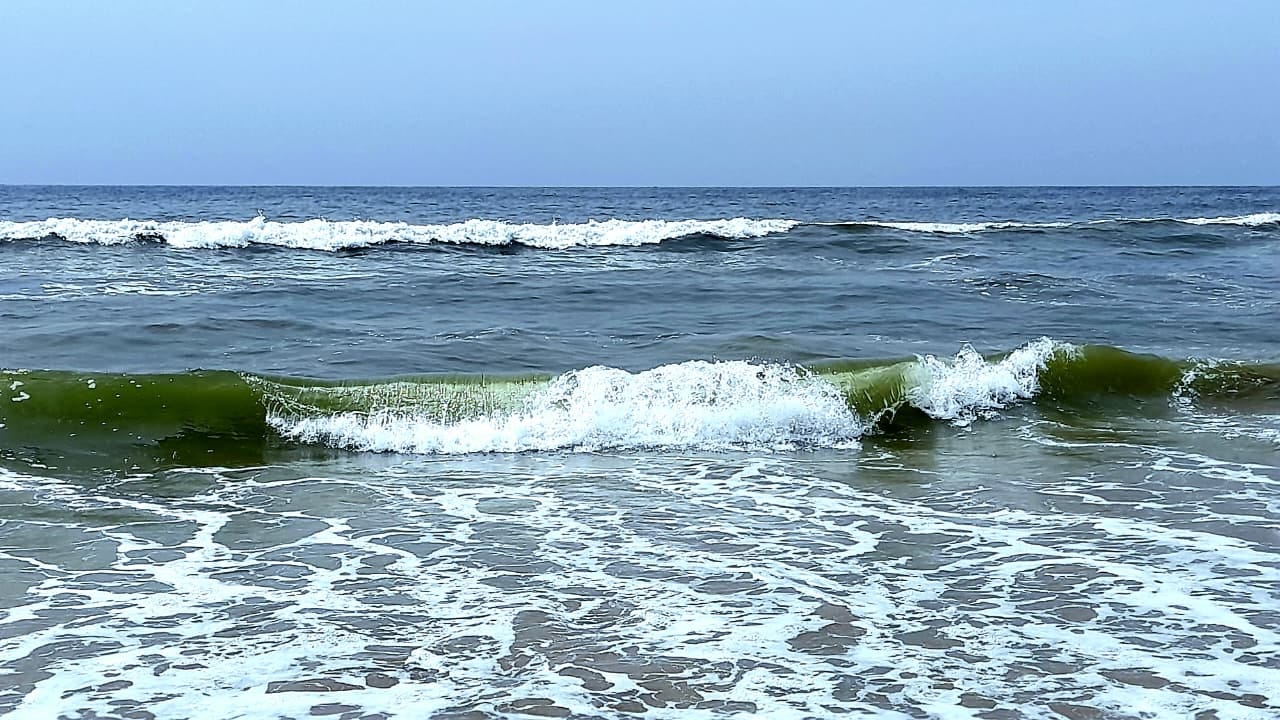
The Bay of Bengal, despite feeling so familiar to millions who live along its coastline, is an extraordinary body of water. It is the largest bay on Earth, covering more than two million square kilometres and supporting an immense diversity of ecosystems, from fascinating microbes such as Ostreococcus bengalensis (a novel photosynthetic picoeukaryote) to some of the planet’s largest marine vertebrates such as blue whales. Standing at its edge, it is straightforward to assume that Earth’s oceans represent the benchmark for what an ocean can ever be.
Yet the longer I watched the waves, the stranger that premise became.
Our oceans are shaped by sunlight, atmospheric oxygen, continental weathering, and billions of years of evolution. They are an incredible product of Earth’s unique history.
Beyond our planet, however, lie oceans that may have never seen sunlight, never lapped against a shoreline dotted by plants and hills, and have remained hidden beneath kilometers of solid ice for billions of years, so if these obscure seas harbor life, it will almost certainly have evolved under physical and chemical circumstances unlike anything our own oceans have ever experienced.
This is why an emerging thought is that Earth’s oceans may not be the standard against which all others should be measured, but may simply be one example amongst many.
The view of oceans on Earth is an invitation to imagine oceans elsewhere, where unfamiliar chemistry, crushing pressures, and perpetual darkness could redefine not only what an ocean is, but what it means for something to be alive. The Indian Ocean is vast by human standards, yet it is almost insignificant when placed beside the oceans hidden elsewhere in our own Solar System.
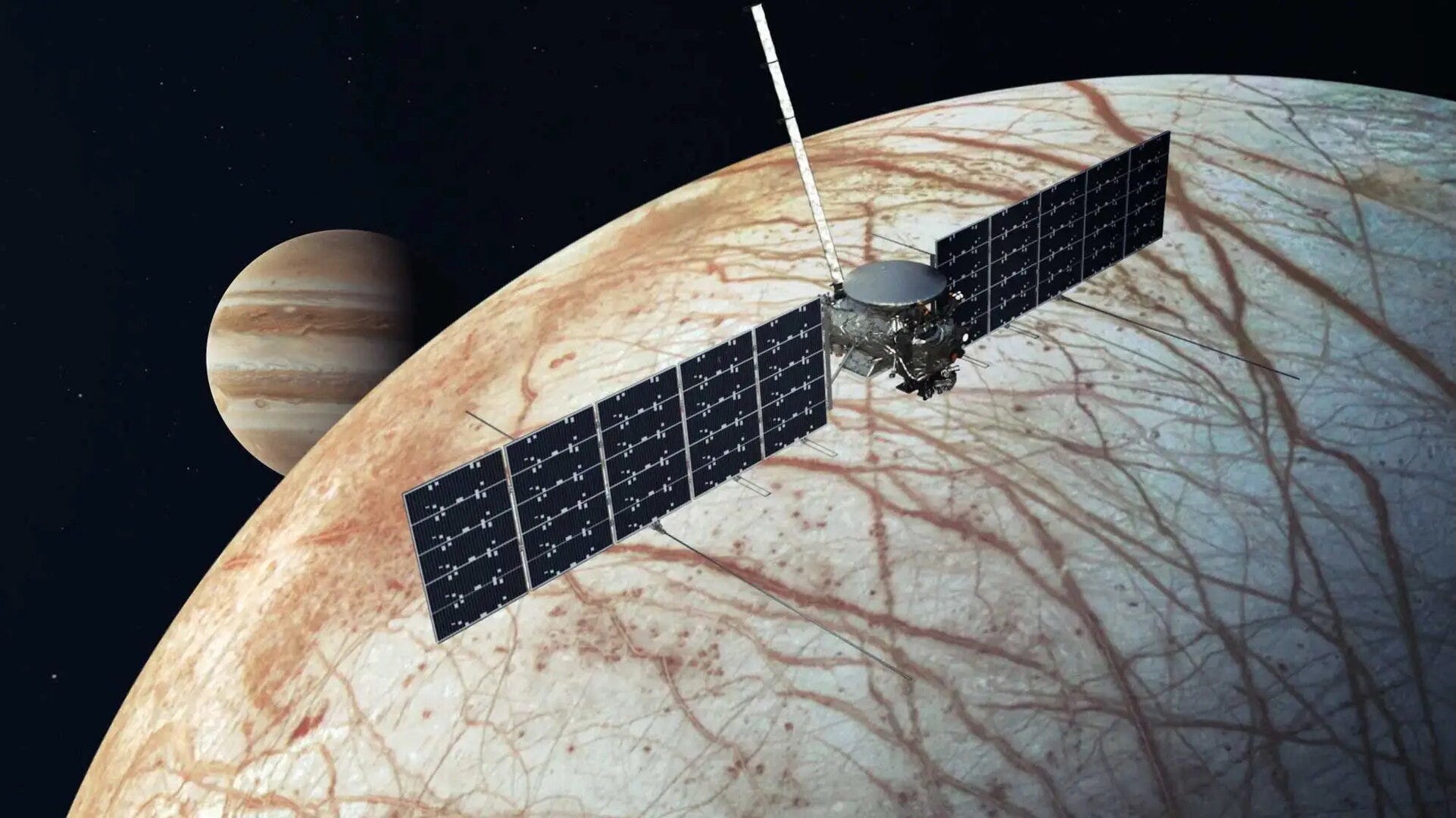
Beneath the fractured shell of Europa lies a global ocean estimated to contain roughly twice as much water as all of Earth’s oceans combined. Enceladus, despite measuring barely 500 kilometres across, conceals a saline ocean beneath its icy crust that continuously vents water vapour and organic compounds into space through towering cryovolcanic plumes. Ganymede, the Solar System’s largest moon, is thought to harbour multiple stacked oceans separated by layers of high-pressure ice. At the same time, even the distant Titan possesses a buried ocean of water beneath its hydrocarbon-rich surface. Together, observations from missions such as NASA’s Voyager, Galileo, and Cassini, along with the ongoing investigations of Europa Clipper and ESA’s JUICE mission, have transformed these icy moons from frozen worlds into some of the most compelling environments in the search for biosignatures and extraterrestrial life.
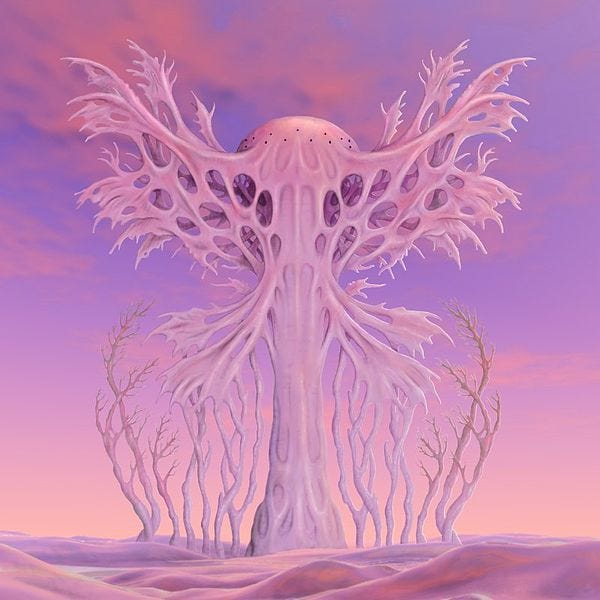
Those discoveries reminded me of a very different ocean I had encountered earlier this year through literature. Reading Stanisław Lem’s Solaris left me fascinated by an idea I had never considered before— that an ocean need not merely support life; perhaps an ocean could be life. The sentient ocean covering the planet Solaris was, apart from being an excellent setting, a challenge to one of humanity’s oldest scientific habits: a propensity to assuming that intelligence must resemble us in form, chemistry, or intelligence. While Lem’s vision belongs to speculative fiction, it touches a topic that is at the heart of astrobiology: If Earth represents only one evolutionary experiment among countless planetary environments, we cannot, of course, expect its biological blueprint to be universal.
I gave a very casual briefing in my last article on the beginnings of life on Earth, a topic I am deeply passionate about. We explored how simple organic molecules, driven by the laws of chemistry, could spontaneously organize into primitive compartments such as vesicles and coacervates. Long before cells, DNA, or complex metabolism existed, these microscopic structures may have created localized chemical environments where increasingly elaborate reactions could occur.
But here’s the catch. Trying to understand life beyond Earth—ocean-borne or otherwise—by studying only Earth’s biochemistry is a bit like standing very close to a mirror and trying to see who’s behind it. You only ever see your own reflection.
Every living thing on this planet, from shrews to elephants to the little dung-beetle I saw at Marina Beach, runs on the same molecular software, inherited from a single common ancestor scientists call LUCA (the Last Universal Common Ancestor). In other words, we have exactly one confirmed example of life in the entire universe to generalize from. Statisticians call this kind of situation a sample size of one, and it sets a trap known as anthropic selection bias.
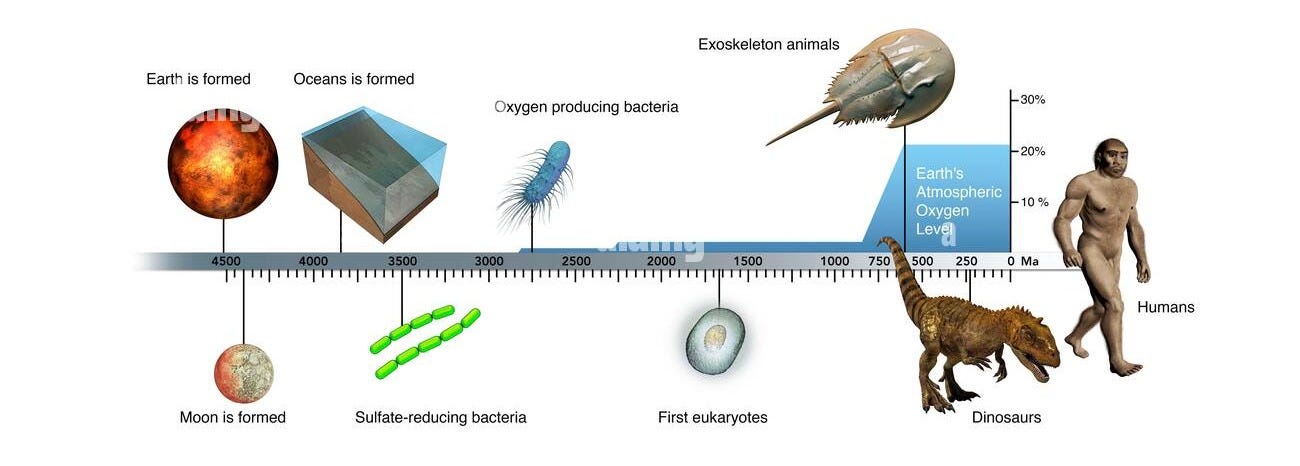
Life on Earth got going remarkably fast within about 3.8 billion years of the planet forming. It’s tempting to read that as evidence that life is easy to create, that it should be common everywhere. But theoretical work by Brandon Carter, David Spiegel, and Edwin Turner shows this reasoning doesn’t really hold up; using Bayesian statistics (a method for updating how confident you are in an idea as new evidence comes in), they demonstrate that fast abiogenesis on Earth tells us almost nothing about how easy or hard it is elsewhere. That’s because of something called an observer filter: only a species that already exists to ask “is anyone else out there?” could be standing on a planet where life happened to succeed quickly enough for complex organisms to evolve before the sun burned out. We are, in a sense, guaranteed to see a success story, whether or not success is actually common.
This single-data-point blind spot creates three real problems for how we search for life elsewhere.
Terran chauvinism: Philosopher Carol Cleland coined this term for a specific mistake, defining life only by Earth’s particular chemistry, such as liquid water, carbon backbones, and the same 20 amino acids every organism on the planet uses.
The paralysis of evolutionary contingency: Without a second, independent tree of life to compare against, we simply cannot know whether major evolutionary leaps such as the invention of complex cells, the origin of photosynthesis that produces oxygen, the emergence of brains capable of tool use, etc were more or less inevitable given enough time, or whether they were vanishingly rare accidents unlikely to happen twice. Scientists sometimes call these turning points Great Filters, and right now we have no way to know how many of them are common bridges versus near-impossible leaps.
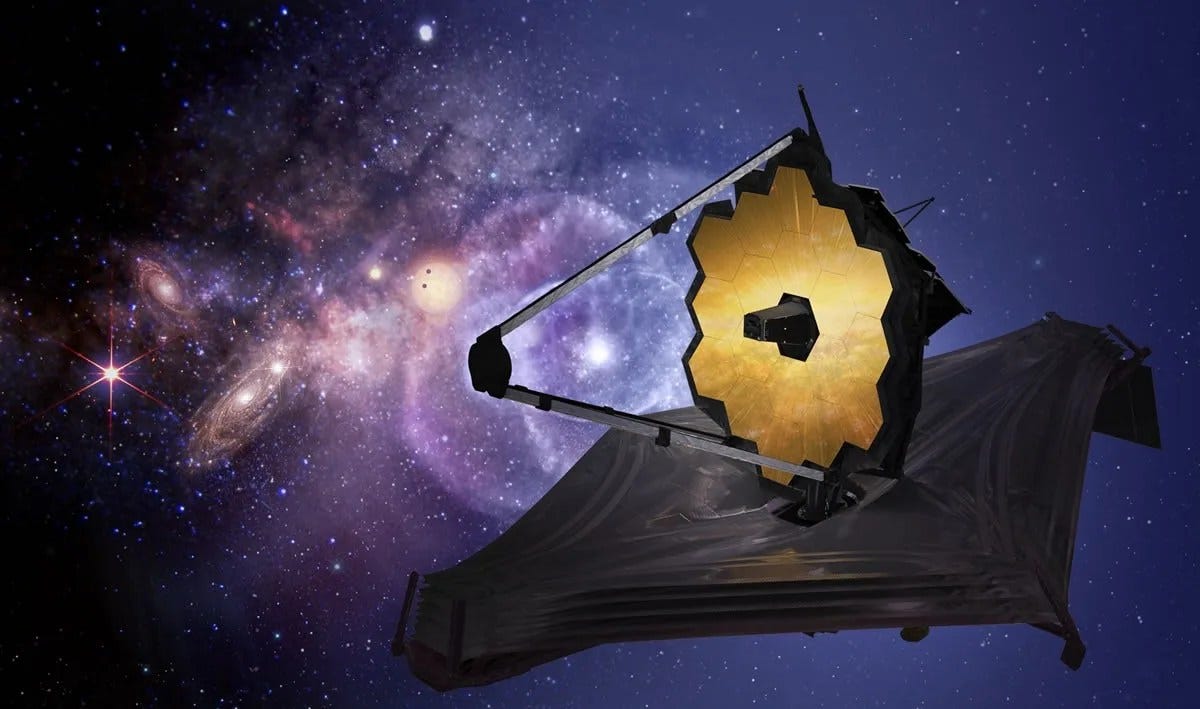
The biosignature dilemma: If a telescope like JWST detects methane, oxygen, or phosphine in the atmosphere of a distant exoplanet, an n=1 dataset leaves us stuck because we still can’t confidently say whether we’re looking at the metabolic products of a thriving alien biosphere, or simply the ordinary geochemistry of an underwater volcano reacting with seawater.
To break out of this bind, astrobiology is currently attacking the problem from four different directions at once.
Planetary scientists are targeting the subsurface oceans of Europa and Enceladus, hoping to catch a pristine, independent origin-of-life event in action. Astronomers, meanwhile, are trading single case studies for statistics using JWST to survey the atmospheres of many exoplanets at once rather than betting everything on one. Researchers like Leroy Cronin and Sara Walker are pioneering something called Assembly Theory, which uses mass spectrometry (a technique that measures the mass of molecules) to gauge how structurally complex a molecule is, regardless of whether it’s built from DNA, silicon, or something we haven’t imagined yet. And microbiologists are chasing the idea of a ‘shadow biosphere’—the possibility that a second, entirely separate origin of life might be hiding, unnoticed, among Earth’s own unsequenced extremophiles.
Crossing the line from N=1 to N=2—confirming even a single extraterrestrial microbe—would be the single most consequential pivot in the history of science. It would transform life from a statistical fluke into something closer to a perhaps repeatable law of the cosmos.
Whatever chemistry it’s built from, any living system has to solve the same handful of physical problems.
It needs a boundary to keep its parts from drifting apart into the environment, called compartmentalization. It needs an energy gradient to keep it from settling into the dead calm of thermodynamic equilibrium. It needs something to speed up chemical reactions before they fall apart on their own, which we call catalysis. It needs a way to store and pass on organizational instructions as information, and finally it needs self-maintenance.
They’re physical constraints that apply to any self-sustaining system, anywhere — a point echoed in frameworks like biochemist Daniel Koshland’s ‘Seven Pillars’ (abbreviated PICERAS).
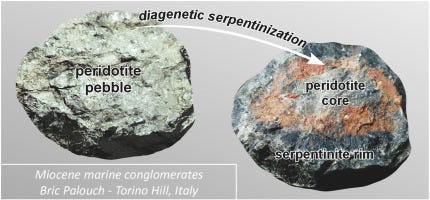
This way of thinking becomes especially useful when we turn to the hidden oceans of Europa and Enceladus. Buried under kilometers of ice, cut off from sunlight entirely, any biosphere there would have to run on the moon’s own internal geochemistry rather than solar energy. One likely source: a process called serpentinization, where seawater reacts with iron- and magnesium-rich rock on the ocean floor. This reaction produces alkaline fluid that mixes with more acidic ocean water nearby, creating a steep chemical gradient across naturally porous mineral structures. That gradient can play the same role that the chemiosmotic gradient plays inside mitochondria, the energy-producing structures in every one of our cells right now. Long before biological enzymes existed on Earth, minerals may have played a similar catalytic role, quietly building up complex reaction chains on their own.
The remaining ingredients of life don’t need to look familiar either. Information could be stored in molecules nothing like DNA or RNA, as long as they can reliably hold, copy, and pass on structure. And instead of judging complexity by chemical composition, researchers can measure something called the Assembly Index. Essentially, it describes how many steps it would take to build a given molecule from scratch. Molecules with a very high Assembly Index are extremely unlikely to arise by chance through ordinary, unguided chemistry, which makes them a promising signature of some structured biology at work, whatever form or type it may be.
Seen this way, chemistry stops being the whole story and becomes just one part of it. Rather than insisting on Earth’s specific chemical toolkit, we lower the odds that some future spacecraft, sampling a plume erupting off an icy moon, flies straight through an alien biosphere without recognizing it for what it is.
I didn’t figure any of this out sitting on that beach, of course. Mostly I just watched the tide erase my footprints and thought about how strange it is that this place with salt water, waves, and a shoreline is perhaps only one version of what an ocean can be. Somewhere out past the edge of our solar system or even our galaxy, under kilometers of ice, in total darkness, another ocean might be tackling the same basic problems life has to solve in an entirely different way.
I don’t know if anything is looking back from in there. But we can never assume the silence means no.
No posts
Comments
Nothing yet. Say the first thing.
Sign in to join the conversation.