
Now that Graham Platner’s campaign has collapsed in scandal, Maine becomes the next state forced to wrestle with a question every Democratic race circles back to: the establishment, a progressive, or someone new?
Today’s New York Times editorial put its finger on the problem, noting that Platner’s appeal wasn’t really his program, but his conviction. But as the editorial concluded, “Personality is not a platform. A fighting posture is not a program.”
Exactly — and that’s the trap.
That’s not just Maine’s question. It’s the same question hanging over Democrats nationally: are they searching for another messenger because they still haven’t decided on the message?
A good start on both would be changing the face of the party in DC.
The Messenger
Which brings me to Senator Chuck Schumer.
I first met Chuck almost four decades ago, during the final weeks of the 1988 New York Democratic primary. Every evening the young congressman stopped by the Dukakis campaign headquarters—energetic, optimistic, never short on free advice.
Thirty-eight years later, here’s mine: Chuck, it’s time.”
Schumer has served in Congress since 1981. That’s an extraordinary career. It’s also forty-five years of representing Washington, and many voters now associate him with an establishment they’ve lost patience with. He should announce now that if Democrats regain the majority, he will step aside as Majority Leader.
That would tell voters something no commercial can: we heard you, we’re preparing another generation, we’re serious about renewal.
The Warning
But renewing the messenger isn’t enough. I learned that lesson from my brother, a lifelong union pipefitter, who told me in 2016 that Donald Trump was going to win—not because he supported Trump, but because he was reading the pressure gauge. He heard something on job sites that professional Democrats largely missed.
Working people weren’t looking for a personality. They were looking for accountability.
Years after the financial collapse, the people who detonated the global economy had never gone to jail. Construction workers, pipefitters, nurses, teachers—they watched Wall Street get rescued while they struggled to rebuild their own lives.
Too big to jail.
Trump didn’t create that anger. He inherited it. Then he redirected it.
That lesson still hasn’t been fully absorbed. Democrats spend enormous energy asking who can communicate better. Millions of Americans are asking something simpler: Will you help me build a life?
The Ladder
John Della Volpe recently described a focus group where one young voter summarized today’s economy in just three words:
“Not living. Surviving.”
That may be the most important political sentence spoken this year.
For thirty years I’ve thought about a metaphor Stan Greenberg and I used in focus groups in the mid-90s—a ladder. We used it to measure where Americans saw themselves in relationship to economic security. People didn’t expect to become rich. They simply believed the rungs existed. If they worked hard, they could climb.
When I repeated that exercise with students at MSU Denver in 2022, the ladder had disappeared. Homeownership, security, retirement—they saw all of it as fantasy.
And something else has changed. The anxiety I hear now isn’t just about billionaires anymore. It’s about AI making the ladder disappear altogether—vaporizing the jobs that used to be the gateway to the middle class.
For working people, the institutional rot simply evolved. Too big to jail during the financial crash became too connected to jail as the public watched well-placed elites shield one another in the Epstein scandal. Now, in the eyes of an increasingly cynical public, Silicon Valley is becoming too important to regulate.
I don’t think AI is the villain here. I think it’s the test. Every technological revolution asks the same question: who benefits? If AI becomes another engine for concentrating wealth while replacing entry-level work, millions of young Americans won’t conclude technology failed them. They’ll conclude democracy did.
Texas State Representative James Talarico captured the shift in a single sentence: “The real fight in this country is not left versus right. It’s top versus bottom.” At the top: a small group able to bend markets, politics, and technology to their advantage. At the bottom: everyone else—people doing what they were told would lead to stability, still struggling to get ahead.
People living in survival mode don’t experience freedom as possibility. They experience it as a permanent scramble—and no one climbs toward self-actualization while they’re still worried about rent.
A New Social Contract for the Age of AI
In 2026, we need a new Social Contract for the Age of AI—an economic framework built on the simple truth that you unlock a citizen’s full potential by securing the rungs beneath them.
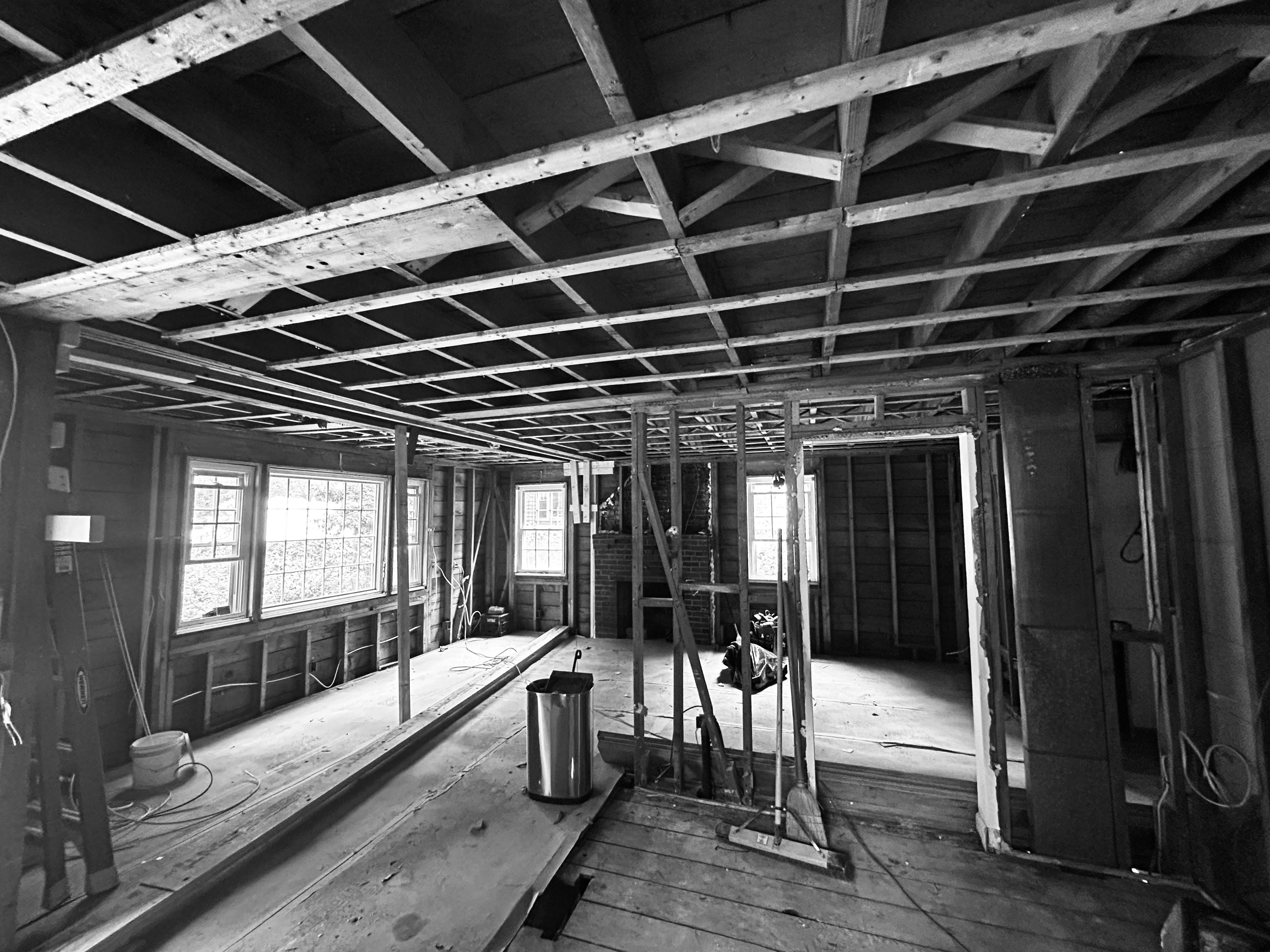
We need to stop asking if the market can absorb these shifts and start asking how we build a path that everyday people can actually walk. That means building visible, tangible rungs people can actually see themselves climbing:
Housing that algorithmic investment firms can’t buy up.
Apprenticeships that retrain workers for roles AI can’t replicate.
Community colleges funded to be the engines of local economic adaptation.
Portable benefits and worker ownership so productivity gains go to citizens instead of servers.
Universal child care, healthcare, and secure retirement to cushion the disruption of a shifting labor market.
That’s the governing agenda Democrats should talk about every day—not because it polls well, but because it answers what Americans are actually asking: How do I stop surviving and start living?
Which is why the ladder matters more now, not less. Not as nostalgia. As preparation. The next Democratic message shouldn’t be “We’re against AI.” It should be this: We’re going to build a new ladder for the age of AI.
America is entering the largest economic transformation since the Industrial Revolution. The Democratic Party can’t enter that debate looking like it’s defending the last era. It has to look like it’s preparing the country for the next one—with a new messenger, a new message, and a clear moral story about whose side it’s on.
That’s what makes Schumer stepping aside more than personal. It’s symbolic. Thirty-eight years ago he walked into campaign offices offering unsolicited political advice. Today I’d offer one piece in return: announce that if Democrats win the Senate, you’ll help usher in a new Majority Leader.
Step back from the podium, Chuck, so you can do what you’ve always done best—count the votes, secure the funds, and build the foundation for the new generation of leaders who have to climb this next ladder.
America doesn’t just need another Democratic leader. It needs proof Democrats understand what millions have been saying for years.
They’re not asking anyone to stop AI. They’re asking how to move from surviving to living again—and for someone to rebuild the ladder before AI does.
Three Ways to Block a Punch is a reader-supported publication. If you value essays like this one, please consider subscribing. You can join for free, or become a paid subscriber for $60 per year or $6 per month.
Watch James Talarico expand on this top-vs.-bottom framing in a recent interview with Joe Rogan — it’s the exact sentiment driving the economic struggle at the center of this essay.

(Gift photo: The Haystacks Rapid and Swimming Hole in the Loyalsock Creek)
Comments
Nothing yet. Say the first thing.
Sign in to join the conversation.