
Episode 9 of Corporate Bodies is all about endings and death. Alongside the wonderful Louise Armstrong, co-founder of the Decelerator, we explore the different ways organisations can end, some of the problems with not talking about endings, and what opportunities endings can offer.
You can listen to the episode here, or wherever you get your podcasts. In this article, I wanted to explore a bit more about our relationship with organisational death.
We are living in difficult times for charities and small businesses in the UK. 80% of charities are saying they will need to cut costs this year to survive, and there has been a dramatic increase in business closures in the first quarter of 2025. Many in the social impact sector are wondering what survival looks like for their organisations.
The work of the Decelerator is squarely addressing this need. Their hotline and tools offer space to think through existential questions, and the attention they are bringing to “tending to endings” is really welcome.
Because, let’s be honest, we are living in difficult times full stop. We are living in a time of endings - not just of beloved shops or well known charities closing, but of extinctions, of war, of the the stability both of our societies and of the climate. As the The Good Apocalypse Guide has it, we are living in liminal times.
Certainly in the UK we don’t have great cultural skills for dealing with death, grief, and endings. Many workplaces offer 5 days compassionate leave when someone close to us dies and we’re kind of expected to “get back to normal” quite quickly.
We have lost many of the rituals and processes that previous generations had, and many other cultures still retain. While there’s a growing movement of those tending to and working with grief, it’s very much not in the mainstream. We get awkward and anxious when around people who are grieving or when thinking about death.
So it’s not surprising that we are unpracticed at thinking about the death of corporate bodies, or their closure. We talk in the episode about some of our different experiences of being part of organisations that would eventually close, and how part of the challenge of that was the potential for closure not being acknowledged. This is something that’s genuinely hard. If you’re running an organisation that is struggling, you, like the Decelerator says, “still have to keep the show on the road and do the job of leading the ‘living organisation’ in parallel with leading the ‘dying organisation’”.

So, if we’re all going to have to face more endings, of one sort or another, over the next few years, what are the skills - or maybe, more likely, the attitudes, that we need?
“Memento Mori” means “remember you must die” - a reminder of the inevitability of death. This walking alongside death runs through many philosophical and religious traditions. Socrates said that the proper practice of philosophy is “about nothing else but dying and being dead”. Montaigne said that “to practice death is to practice freedom”. Maraṇasati, or mindfulness of death, is a core Buddhist practice.
What might it mean to bring an awareness of death and endings more intentionally into our everyday work? Practicing death in an organisational sense might mean holding the possibility that our organisations might end close to us throughout our working lives. To always consider that this particular legal structure might have done its job, might have outlived its purpose.
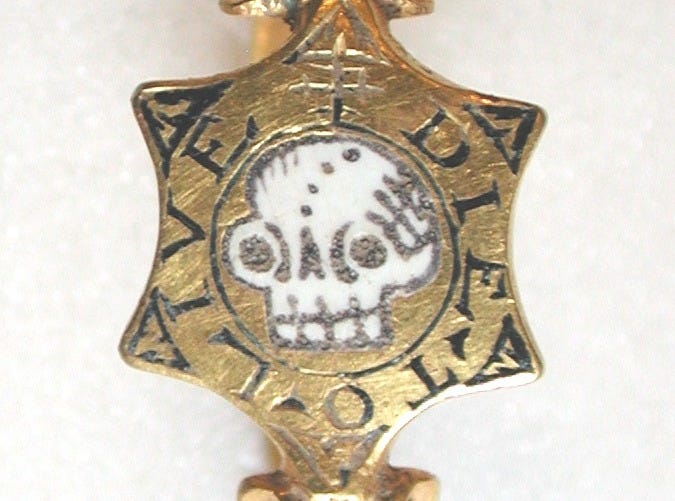
This requires disentangling particular projects or ventures from the wider work of change - which is hard, especially for those of us working on big complex issues. Many small organisations exist to tackle huge problems, and we have to stay alert to the fact that it is the work that’s important, not necessarily the structure it is delivered through.
I know what it’s like to be in a dying organisation, and it can be terrifying, especially when the world is as unstable and as precarious as the one we life in now is. Losing your livelihood is a horrible thing. But I wonder if the inevitable onslaught of organisational closures that I think we will see in the coming years is in part a training ground for broader endings. No matter how reluctant we may be I think we might all end up having to hone important skills for the apocalyptic times we are living in.
One thing we touch on in the episode, and that is something I’d love to explore more, is the idea that all companies should be time limited. That while we need legal structures to be able to achieve things that stretch beyond a single human lifespan, they should not be unthinkingly immortal beings. We should not give them that power.
The original corporations had royal charters for a fixed period of time (to do some useful and some pretty dreadful things). Being able to pool resources and act collectively - and benefit from protection from your actions while you do so - is a privilege, not a right. I know there are some very smart people working on how we might legally restrict how long corporations are allowed to “live”.

But we can fold memento mori practices into our own organisational cultures right now. Could you include a question at your next away day about whether this is still the right structure for the work? Build in a rhythm to your strategy processes - maybe every year? every 7 years? where you deeply question whether you are still in the right vehicle for the work that the world needs. Watch out for conversations that are about maintaining an organisation because it already exists, rather than because it has real work to do.
There is so much energy and life inside our organisations. When they are not working well, or when they have outlived their usefulness - that energy starts to get sluggish, and the work begins to feel harder and harder. Sometimes the best thing you can do is release that energy and allow it to move forward.
Which, not coincidentally, is what we’re talking about next week in Episode 10 - Composting. Sign up now to get that straight into your inbox!
No posts
Comments
Nothing yet. Say the first thing.
Sign in to join the conversation.