
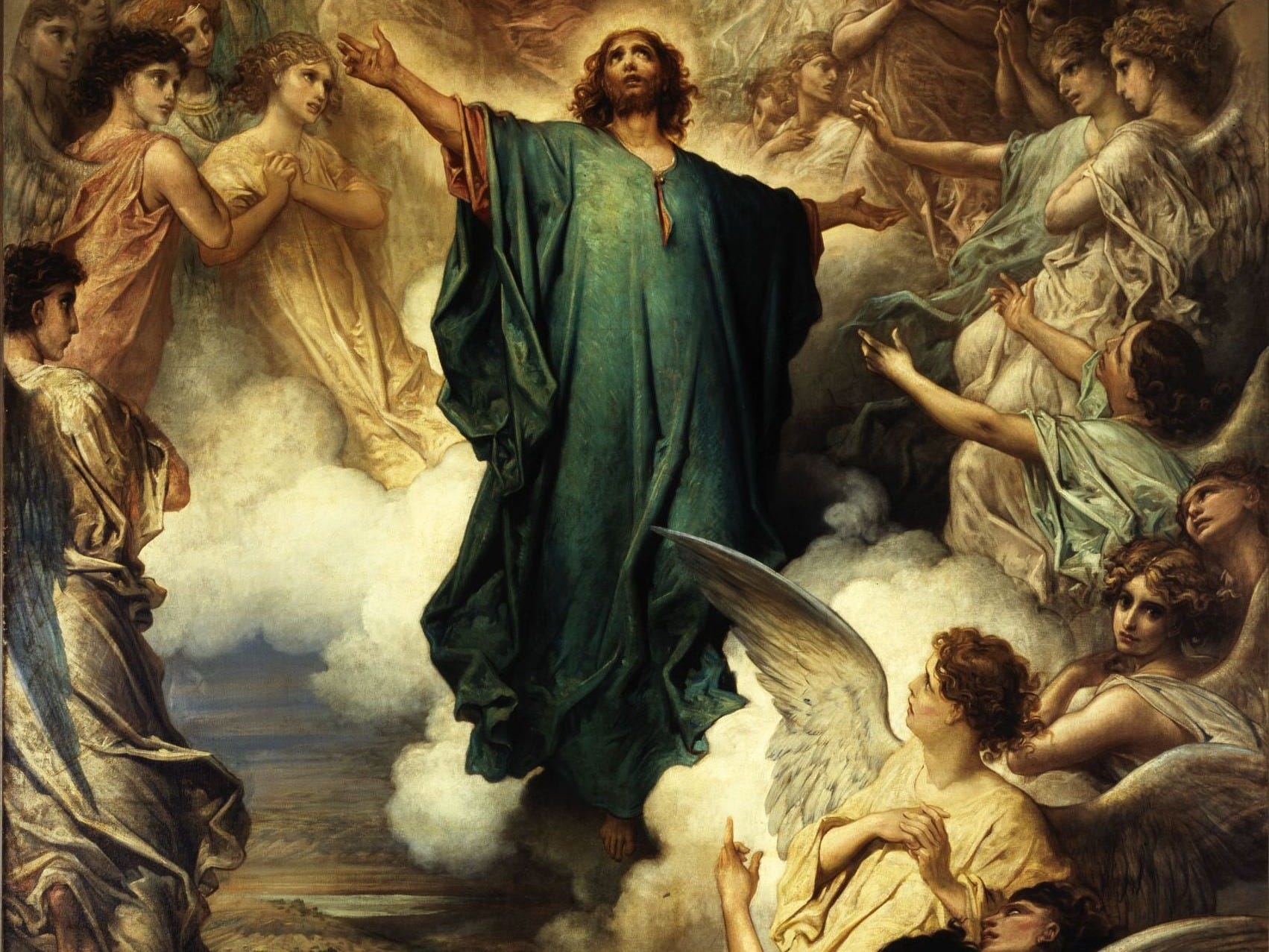
I want to return briefly to before Pentecost. We’re past it now, but a confluence of thoughts and conversations led to the following reflections that won’t wait until next year.
There is something emotionally strange about the Ascension. The Church celebrates it triumphantly, and rightly so, but the scene itself carries an unmistakable tension. Christ blesses His disciples and then departs from them. The One they had followed, eaten with, listened to, argued beside, and watched die and rise again is suddenly taken from their sight. Even after the Resurrection, one imagines that some part of the disciples still hoped things might return to the familiar pattern: Christ walking among them visibly, settling disputes, answering questions directly, remaining physically present beside them. Instead, He leaves.
And yet He says something astonishing:
“It is better for you that I go.”
At first hearing, the statement almost sounds impossible. How could the absence of Christ be better than His presence? The disciples themselves do not appear triumphant at first. St. Luke tells us they stand gazing upward. There is confusion in the moment, wonder certainly, but perhaps also the first sting of what feels like abandonment. The angels almost interrupt their staring: “Men of Galilee, why do you stand looking up toward heaven?” History is not ending. Their task is beginning.
A few literary moments cast a surprisingly similar light on this mystery: the painful transition from external guidance to inward participation, from visible leadership to mature responsibility.
Near the end of The Return of the King, after the great victory has been won and the Ring destroyed, Gandalf prepares to leave the hobbits behind. His role is ending. The age of wizards and guardians is passing. The hobbits must now return home without him. Before they leave, Gandalf tells them:
“You will have to settle its affairs yourselves; that is what you have been trained for.”
And then, with almost fatherly affection:
“I have no longer any fear at all for any of you.”
It is difficult not to feel the emotional weight of that moment. The hobbits are no longer merely small and frightened creatures carried along by greater powers. They have been formed through suffering, sacrifice, temptation, courage, and loss. Gandalf’s departure is not abandonment. It is recognition. They are now capable of acting rightly without his constant visible guidance.
There is something deeply Ascension-shaped in that moment.
I thought of another scene as well, this one from Dante’s Purgatorio. After guiding Dante through Hell and up the mountain of Purgatory, Virgil finally reaches the limit of where he can go. Before departing, he tells Dante:
“I crown and miter you over yourself.”
The line is extraordinary. Dante has reached the point where his desires have been sufficiently ordered that he may now govern himself rightly. Virgil’s task is complete.
Both of these scenes touch something profoundly human because both deal with a fear most of us know well: What happens when the guide leaves? What happens when visible authority withdraws? What happens when we must now act?
The Ascension answers that fear in a way neither Tolkien nor Dante fully can.
Virgil departs because reason reaches its limit. Gandalf departs because his age is ending. But Christ ascends not simply to leave. He ascends in order to become present differently. “It is better for you that I go” only makes sense because of the promise that follows: the coming of the Holy Spirit.
This is the crucial distinction. Christianity is not the story of disciples who finally no longer need Christ. It is the story of Christ so transforming His disciples that His life becomes active within them through the Spirit. The Ascension is not divine absence. It is the transition from external companionship to inward participation.
That transition is frightening precisely because it feels at first like loss. Dante loses Virgil. The hobbits lose Gandalf. The apostles lose the visible presence of Christ. Every movement toward maturity contains some shadow of this experience. Childhood ends. The teacher steps back. The parent can no longer decide for the child. The familiar form of guidance disappears.
Yet healthy authority always desires this kind of maturation. Good teachers do not seek permanent dependency. Good fathers do not wish their sons to remain children forever. Even St. John the Baptist says of Christ: “He must increase, but I must decrease.”
The true guide eventually becomes transparent to the reality he was guiding others toward.
What makes the Ascension so powerful is that Christ does not merely send the apostles back into the world to fend for themselves. He entrusts the world to them while also promising that He will remain with them always. The Spirit does not replace Christ as though Christianity were simply moving on from Him. Rather, the Spirit is the means by which the life of Christ becomes inwardly alive within the Church.
And this returns us, strangely enough, to Tolkien.
One of the reasons the “Scouring of the Shire” matters so much is because the real test comes after the great victory. Evil has been defeated in principle, but home must still be healed in practice. The hobbits return not to escape responsibility but to accept it. They must now restore ordinary life themselves.
So too with the apostles after the Ascension. Christ reigns. Death has been conquered. But now they must return to Jerusalem, then outward into the world. The Christian life is not lived staring upward forever. The angels’ question still echoes through the centuries: “Why do you stand looking up toward heaven?”
The work of love, sacrifice, healing, repentance, forgiveness, and witness still remains.
Perhaps this is why the Ascension feels both joyful and sorrowful at once. Christ departs from sight, but not from reality. The disciples lose one form of presence only to become participants in a deeper one. What appears at first as abandonment becomes mission. What appears at first as absence becomes transformation.
And perhaps that is part of the mystery the feast still places before us now. The Christian is not meant to remain perpetually dependent upon visible consolations or external certainty. There comes a moment when one must return to the ordinary world, to one’s own Jerusalem, one’s own Shire, carrying within oneself the life one has received.
Not abandoned.
Sent.
No posts
Comments
Nothing yet. Say the first thing.
Sign in to join the conversation.