
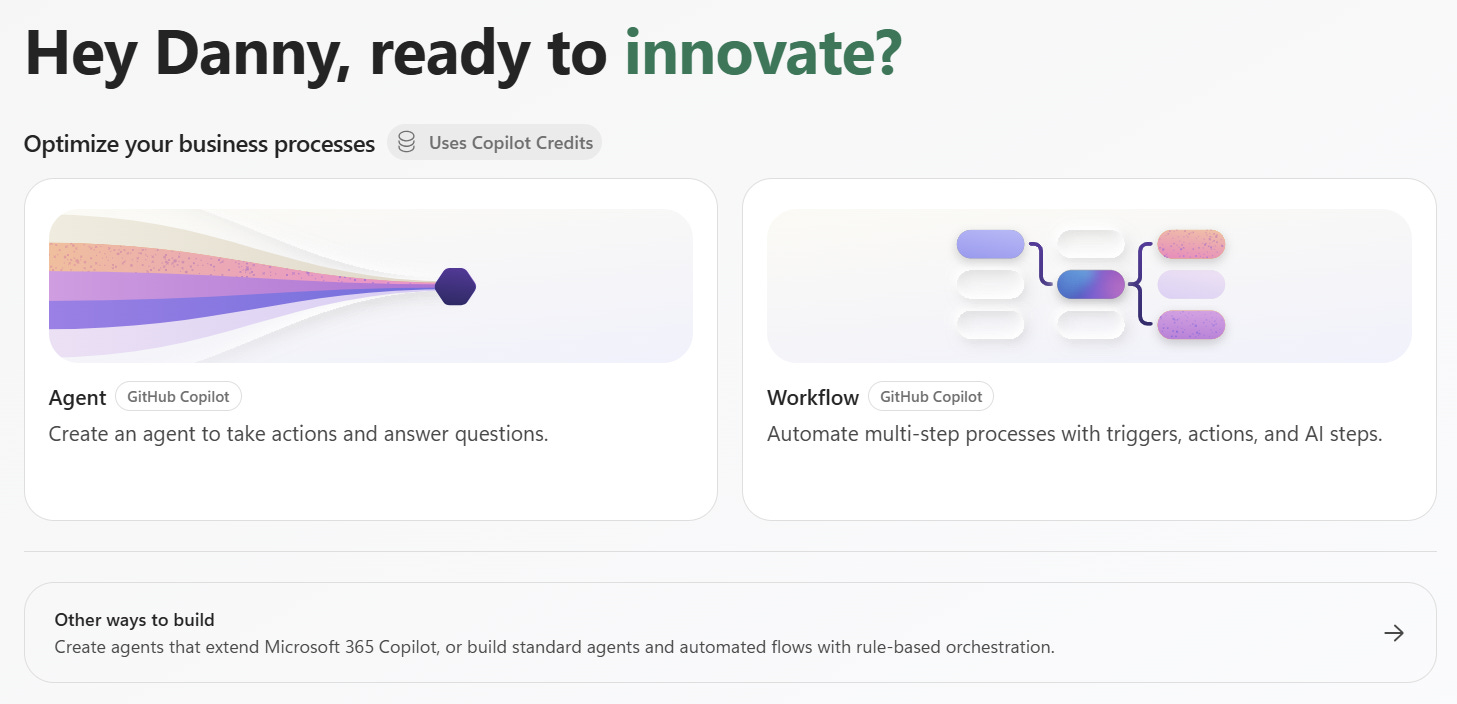
Something quietly significant happened when Microsoft integrated the GitHub Copilot harness into Copilot Studio. For most organisations already running Microsoft 365 Copilot, it looked like a tidy product update, one more capability added to a platform they were still learning to use. But beneath the surface, it introduced a cost dimension that is not yet well understood, even among seasoned practitioners. The central question is no longer simply what Copilot can do. It is what Copilot will cost, under which conditions, and who inside the organisation is responsible for keeping track. Getting that distinction right matters more than most decision-makers currently appreciate.
Prefer to read this article in Dutch?
Copilot Studio now hosts three distinct harnesses: the GitHub Copilot harness, the Standard harness, and the Copilot Chat harness. A harness is the software scaffolding that enables an agent to plan, reason, maintain context, and interact with tools, systems, or other agents to complete tasks. Harnesses can be optimised for different results depending on the desired outcome, and in certain scenarios the selected harness also affects how Copilot Credits are consumed.
The GitHub Copilot harness is designed to optimise end-to-end business processes with an agentic build experience. It is also where credit consumption is most granular, applying to both the creation phase and runtime execution. Importantly, not every activity within the harness triggers a charge. No Copilot Credits are consumed for manual configuration, including work performed in the Build and Monitor tabs. Credits apply specifically to LLM-powered activities such as natural language authoring, preview and evaluation, and runtime execution.
The Standard harness is designed to create rule-based conversational agents with predefined topics and flows. The Copilot Chat harness, by contrast, enables organisations to customise Microsoft 365 Copilot with their own knowledge, for example an employee onboarding agent that answers questions from SharePoint content. Both harnesses are billed through Copilot Credits, with one important exception: these rates do not apply to Microsoft 365 Copilot users in authenticated B2E scenarios. In practice, this means the licensing exemption is specific. It applies when a licensed employee interacts directly with an agent in an authenticated context, not as a blanket rule for all employee-facing interactions.
Copilot Credits serve as the common currency across Microsoft’s usage-based AI model, powering capabilities that span Copilot Cowork, agent solutions built with Microsoft Copilot Studio, AI-powered features in Dynamics 365 and Power Platform, and Work IQ APIs for agent and AI solutions. The number of credits consumed for each response, action, or operation depends on the complexity of the task performed. Credits are pooled at the tenant level, and an organisation’s total cost is based on the sum of credits consumed across all supported experiences. This shared model enables organisations to centrally manage consumption and allocate usage across scenarios.
The practical challenge is that credits create an abstraction layer between actual usage and actual cost. This is not unique to Microsoft. Gaming platforms like Roblox and Fortnite have long used in-game currencies, often several layers of them, precisely because they make it harder for users to track what they are spending in real money. Whether that analogy is entirely fair to Microsoft is debatable, but the structural parallel is worth naming.
The more immediate problem is organisational behaviour. Two distinct failure modes are emerging inside companies deploying Copilot agents. Some teams are so cautious about credit consumption that they avoid complex agent scenarios altogether, leaving significant productivity gains unrealised. Others connect everything without governance, accumulating costs that arrive as a surprise at the end of the billing cycle. Neither posture reflects deliberate strategy, and both are avoidable.
The first practical step is clarity of categorisation. Before deploying any agent, teams need to answer two design questions: which harness is right for this use case, and who will interact with it? Agents built through the Standard and Copilot Chat harnesses are billed through Copilot Credits, unless used by Microsoft 365 Copilot users in authenticated B2E scenarios. Mapping those boundaries explicitly before deployment prevents billing surprises and keeps stakeholder conversations grounded in fact.
The second priority is governance. Copilot Credit usage is centrally managed through the Microsoft 365 admin center, giving administrators the tools to govern AI consumption across workloads, services, and agents. Administrators can monitor spend and usage, configure spend policies, define usage thresholds, and manage credit allocation across the organisation. A useful frame is to treat Copilot Credits the way a cloud infrastructure team treats compute or storage: set budgets, assign owners, and build alerting before usage scales.
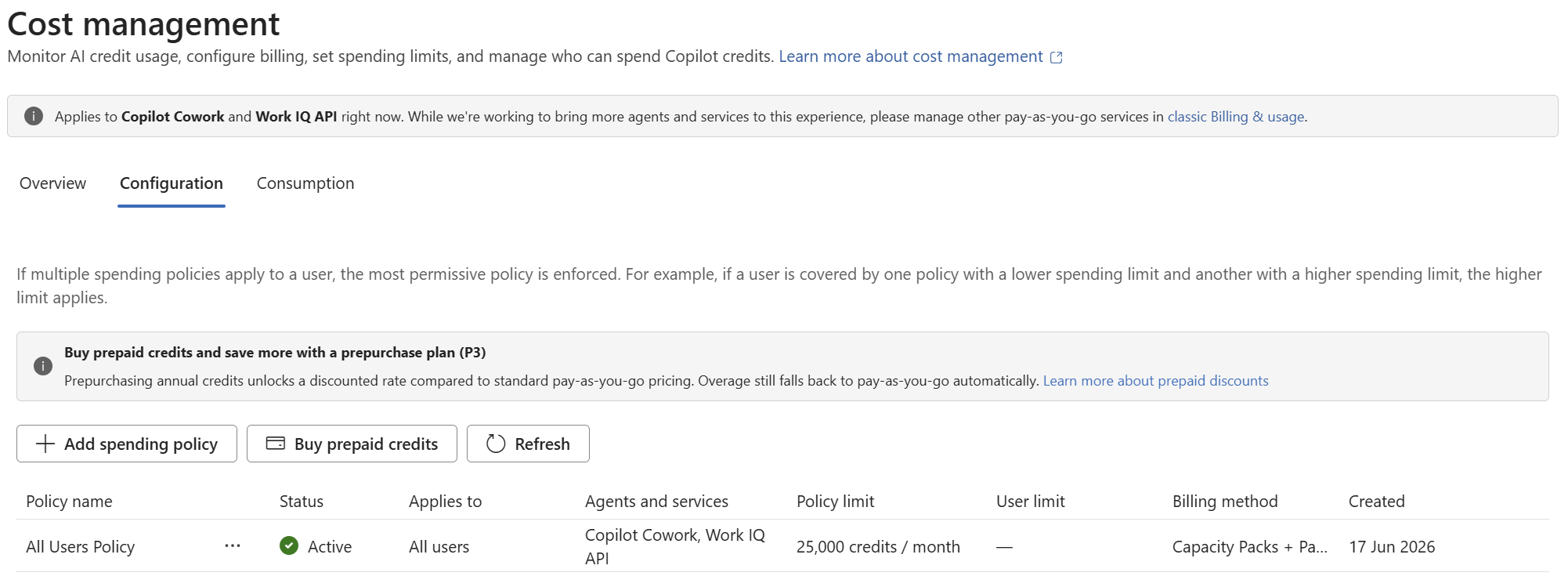
The third implication concerns platform trajectory. The integration of the GitHub Copilot harness into Copilot Studio is almost certainly an early signal of broader convergence. As AI workloads become more advanced, particularly with multi-step, agent-driven scenarios, the amount of work required to complete a task varies significantly. That variability is best served by a usage-based model that aligns cost to the work performed, complementing subscription-based services with flexible consumption. Practitioners should expect more capabilities to arrive under the credit model over time. Planning for that trajectory now is the more defensible position for any organisation with serious AI ambitions.
The core takeaway is this: Microsoft’s pricing model for AI agents is not opaque by intention, but it does require active interpretation. The three-harness structure, once understood, is internally consistent. The challenge is that most organisations have not yet invested the time to understand it, and the platform evolves faster than internal governance processes typically move.
Three things are worth monitoring in the coming months. First, how Microsoft clarifies the credit model as the GitHub Copilot harness matures and adoption scales. Second, whether organisational demand for cost transparency accelerates the development of native monitoring tooling within Copilot Studio itself. And third, which additional workloads are pulled into the credit economy, given that Copilot Credits are already available through both a pay-as-you-go meter and a pre-purchase plan. That expansion will reshape the total cost of ownership for Microsoft AI deployments more substantially than any single licensing change to date.
The organisations that get ahead of this are not necessarily the ones running the most agents. They are the ones that know exactly what each agent costs, and have decided that cost is worth paying.
Comments
Nothing yet. Say the first thing.
Sign in to join the conversation.