
when people ask me how i manage to balance all of my commitments, i always say it’s through brute force.
but lately, i’m finding myself using this expansiveness as an excuse over and over. for example, “of course this project falls short of my expectations, look at all the other projects i’m pursuing alongside it. of course i’ve neglected cool maps, can’t you see i’m working on so many other things?”
instead of making quality compete with quantity, and depth compete with breadth, i need to coerce them into being partners.
3 inspirations
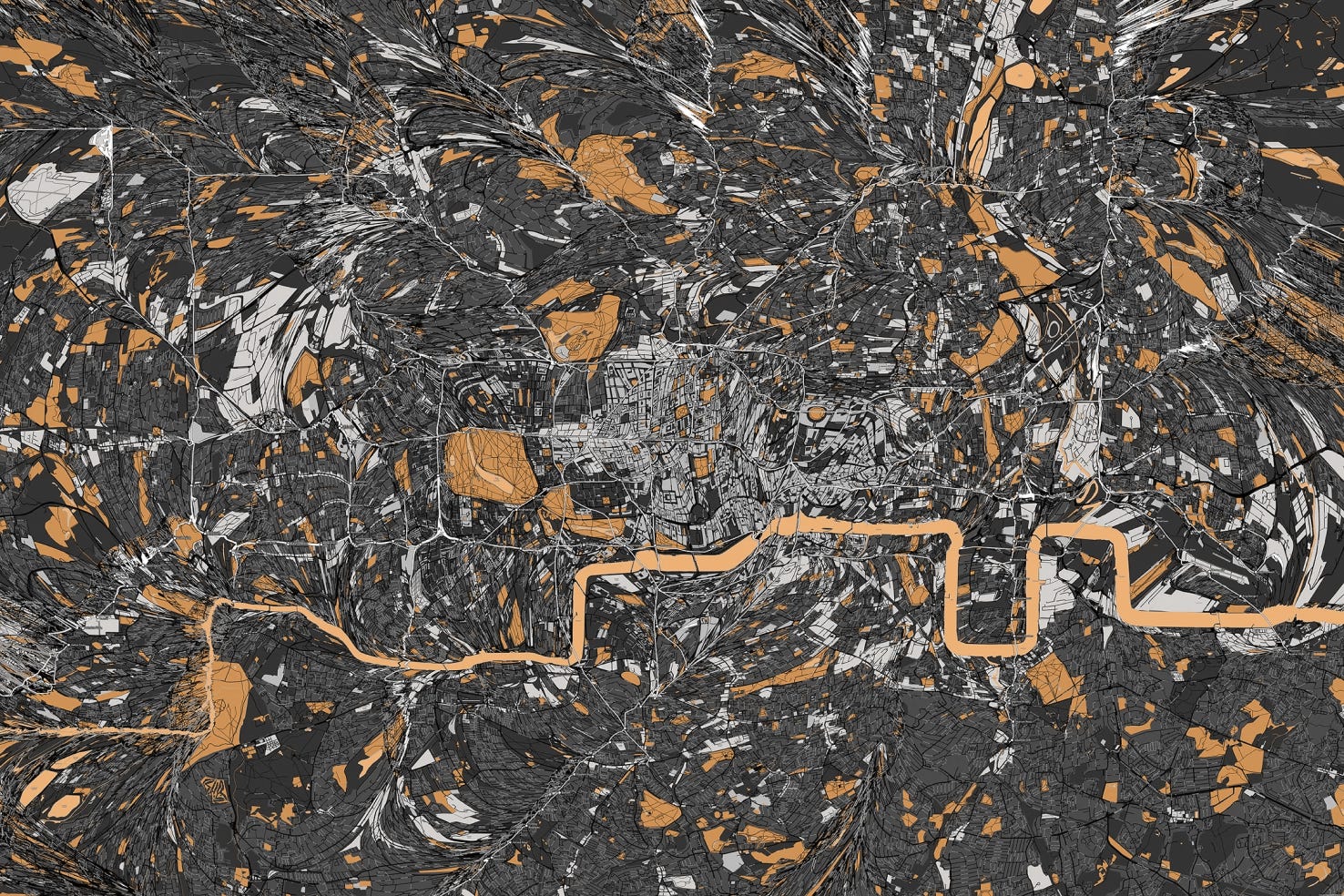
our orientation is rarely based on actual geography. wayfinding artifacts like transit maps, abstract and distort the real world spatial arrangement into more easily comprehensible nodes and lines, and can change how we perceive and navigate the city. even outside of the transit system, these distortions can influence our perception and mental maps of space, and become a collective representation of the city’s real geography.
metrography attempts to explore this phenomenon using the London tube map by applying deformation mesh, translating from its actual geography to match its commonplace poster. it’s interesting to see how spots expand, collapse, and morph into geometric shape.
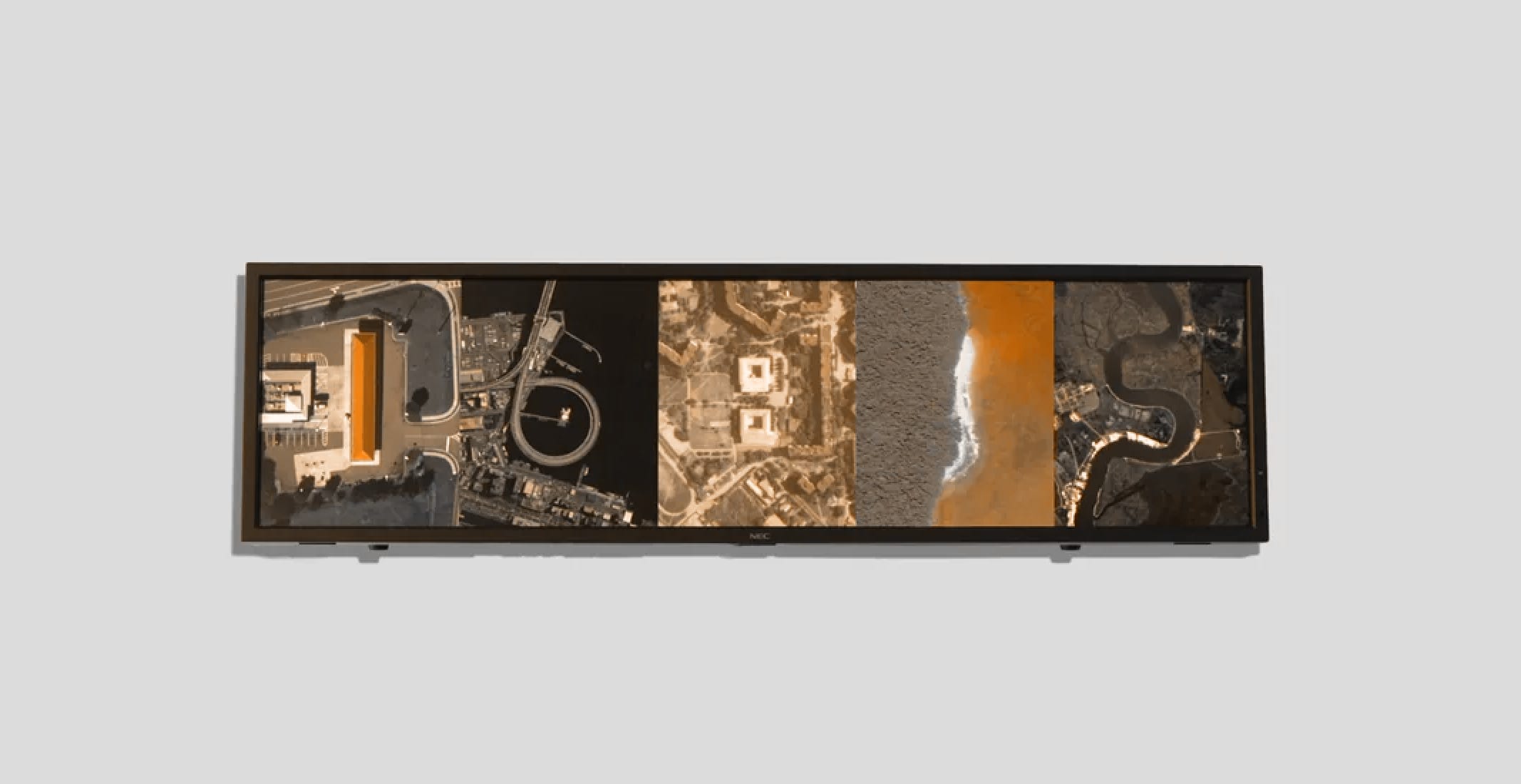
Earth Clock is a web-based digital clock by design studio duo CW&T, put together using views of Earth from above that look like the hours and minutes it represents. every minute, the viewport jumps and zooms to a new location, revealing a digit that might be an unfamiliar riverbend or strange cluster of buildings somewhere around the world, but as it zooms out, we see landscapes, discernible countries, and recognize the location points on our planet and in context to ourselves.
i got the chance to hear more about CW&T’s process during a studio visit, and i’m not only inspired by their projects but also the way they’ve created and integrated a system of making into their personal life and the people around them, through their home, their schedule, and even their kitchen.
surveillance is being used to perpetuate harm in nearly every social issue. where it’s currently the most visible, is surveillance tech being used against immigrants and asylum seekers.
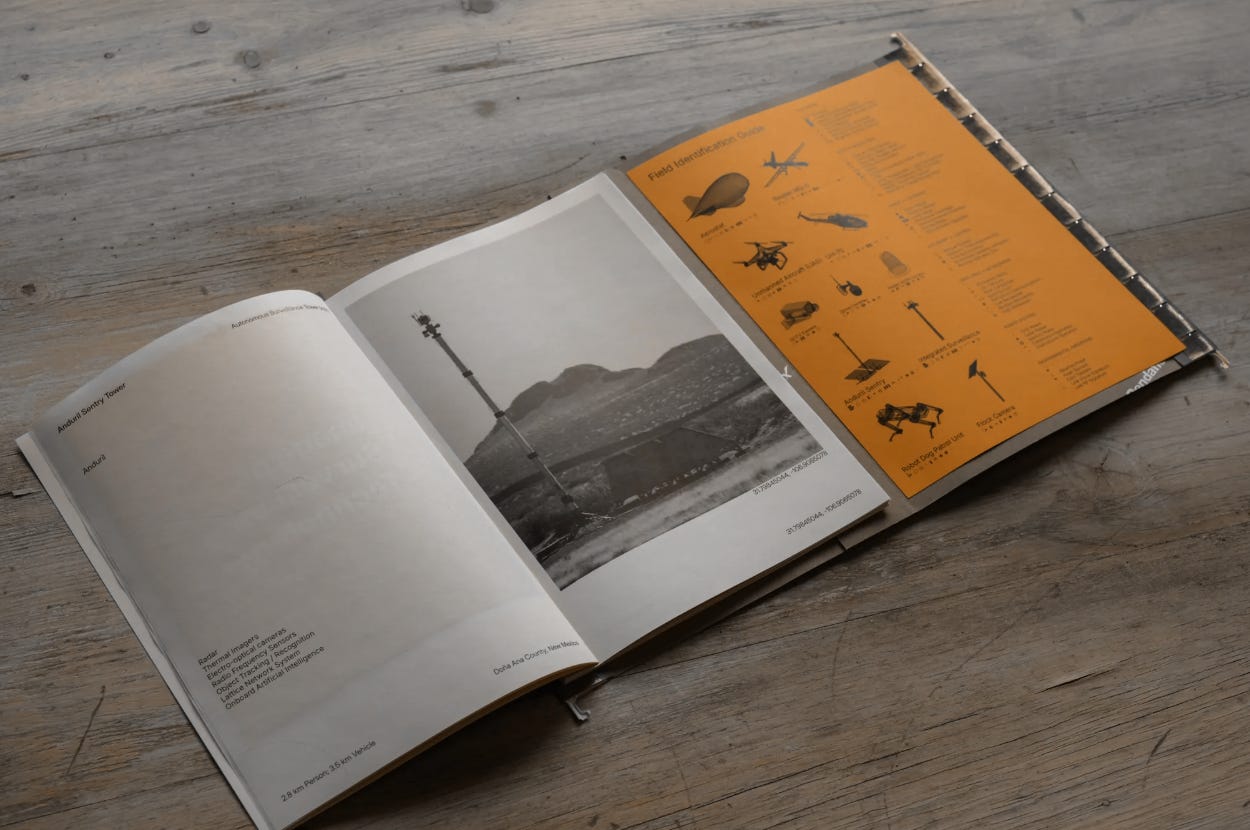
my friend and classmate Ashton Reeder, investigates how the physical landscape is altered due to sociopolitical digital change. in this project, he visited and analyzed existing and new technologies appearing at the southern US border, who may be profiting off it, an how land-use shifts as a result.
starting in Deming and El Paso, he is documenting sightings of border technologies such as cameras, drones, telecommunications, to build a field guide to spotting surveillance infrastructure. the dedication to field research into this month-long project have been inspiring to observe, and brings together a well documented and coaxing artifact. Ashton reminds us that when it comes to the matter of countering the violence and humanitarian suffering perpetuated by ICE activities, everyone is able to step up in little (and big) ways.
1 work in progress
the biggest overarching work in progress is that i’m halfway through grad school now. for the past 7 months, i’ve been immersed in the Interactive Media Arts Low Residency at NYU. i’m grateful for the opportunity to be a part of the program while continuing to work full-time, remaining close to friends in NYC, getting to explore Berlin, & later spend time with family in Shanghai, all while getting to meet an inspiring cohort and set of mentors that challenge me. i feel like it’s a near perfect time in my life to be inside this structure, and build the biblography i’ve been wanting to.
most importantly, i’ve given myself permssion to treat this degree as room to step outside the tidy cartography narrative i’ve built around my practice, and follow whatever piques my interest.
some of my favourite projects so far include:
A browser tab that is devastated about you trying to close it
A rigged claw machine that only functions via manifesting the prize
A mirror that turns away if you’re looking too closely
A keychain that broadcasts to friends your desire to hang out
A haptic installation that lets you feel the vibration of my digestion
for a few years i felt some pressure to make art that fit the creative cartography bill, one that was easy to write about in applications and show in portfolios. i worry that drifting too far from that thesis made my work feel uncommitted or that it couldn’t stand without an obvious throughline. but honestly? letting these interests wander is starting to put that deeper throughline into even sharper focus.
while I will always love using cartography and abstraction as a springboard, i now see my work as using proximity as a communication tool… like browsers crossing your boundaries, or being too far to control the claw machine, too far to criticize the mirror, too far to hang out, all the way to being so close that you’re inside my stomach. following these detours in both concepts and forms keeps leading me down research rabbit holes and literature to dig in.
i’m slowly internalizing that breadth is depth’s best friend.

No posts
Comments
Nothing yet. Say the first thing.
Sign in to join the conversation.