
This essay was originally published in November 2022 at the now-defunct BlueNC website. I’m reposting it here, since the questions raised are still important as we head into the 2024 election.
I’m approaching retirement after living all my sixty years as a North Carolina resident.
Recently, I had a talk with a representative from the company that handles my workplace 401K account. “You’re looking great,” he said, running through the different scenarios in their online tool and giving me his opinions about possible retirement dates.
I’ve been lucky. Having steady employment for the past thirty years, putting a little aside where I can, and recent modest inheritance has put me in a place where I can look forward to a retirement on an adequate income.
Or will it?
I’ve been using the planning tools on the website of my 401K provider for the past few months. It’s comprehensive and helpful, asking you to input information from your Social Security statement and outside savings and investment accounts, along with estimates of what you’ll need as income in your retirement years. I just needed some explanation from the representative about the assumptions the tool was making about markets, inflation, and other factors.
The tool lets you run three different scenarios - an above average market, an average market, and blow average - showing you, year by year, what you could withdraw from savings and investments and where, in the long term, you might come up short.
I still feel uneasy. With the political conditions of the past few years, there are more important factors at play here than the historical performance of the markets and economy.
There’s no option in the planning tool for the scenarios I'm really thinking about - a) the GOP authoritarian “fever” breaks and things actually improve, b) things stay the same, with Republicans shifting in and out of power and not being able to substantially change things, like eliminating Social Security, c) Republicans take control and eliminate Social Security and Medicare, or d) the US devolves into regional conflict - or some combination of the last two.
I thought the 2022 election would give me some clarity on this, but it didn’t. Nationally, the Democrats held their own in most races and most of the GOP election-deniers were defeated. But, here in North Carolina, the opposite happened - the Democrats were able to prevent a veto-proof majority by the GOP in the legislature, but many local races went to fire-breathing Christian Nationalist racists and crackpots. While nationally, the GOP faced a rejection of the election-denying authoritarian GOP, the rhetoric from the violent right continues, with no tamping down of extremist talk by the “mainstream” GOP. Hence, we get a random shooter killing five people and injuring twenty others in a gay nightclub in Colorado Springs on Transgender Remembrance Day.
Some of my friends think I’m just a worry-wart. But, trained as a historian and looking at the big picture. I’m not convinced that things can’t or won't quickly go to hell in a hand-basket in at least parts of the US and particularly here in North Carolina.
Some analysts I’ve seen online back me up here, seeing similarities to “The Troubles" that plagued Northern Ireland for a few decades.
IRA violence hung like a Damocles’ sword, an ever-present threat, a heckler’s veto over northern Irish politics. If the political process didn’t produce outcomes favorable to their cause, it could always pivot to terrorism. In exchange, Sinn Féin gave political representation and ideological legitimacy to the IRA. The Sinn Féin-IRA alliance enabled the republican side to have its cake and eat it too: I tried to play fair, but look what you made me do.
I am reminded of these dynamics when I observe the evolution of the Republican Party. For example, following the FBI’s raid on Donald Trump’s residence earlier this week, right-wing commentators exploded with threats of violence and predictions of civil war. Once beyond the pale, such rhetoric is now almost routine: Those giving it voice were refining a playbook increasingly deployed in the year and a half since the January 6 attack on the U.S. Capitol.
Facing a depressed economy due to GOP policies is easy to imagine and plan for. Something worse than that - the elimination of Social Security and Medicare - is easy to quantify in a retirement planner, and shock most people into realizing they won’t be able to retire at all.
But what if the US or regions of the country devolve into two or three decades of something similar to The Troubles - daily or weekly events of random terrorism - mass shootings, bombings, targeted killings of political leaders or activists, or the occasional armed insurrections to take over a local or state government?
Economists have us covered here. There have been several studies on the economic impact of The Troubles on Northern Ireland’s economy. One summary noted:
Using the ‘value of a statistical life’ (VSL) approach, one suggests that £14 billion has been lost to cover personal injuries, material damages and law and order costs (Birnie and Hitchens, 1999).
Another more narrowly focused study found investment levels far more responsive to violence than employment (Fielding, 2003). The research indicated that a 10% increase in fatalities reduced investment in machinery and investment by about 5.6%; but there was no corresponding relationship between fatalities and employment.
While more recent work suggests that there was a GDP reduction equal to 10%, compared with a ‘no- Troubles’ baseline GDP. If additional grants related to the Troubles are included, then the scale of the reduction associated with violence increases to 15-20% (Dorsett, 2013).
In the retirement planner used on my account, the scenarios it presents for a below average market - the “worst case scenario” typically used for retirement planning - a return of 4% - 5% is assumed during your retirement.
Now imagine what your retirement would look like with a 10% drop (or more) in your returns. That’s what we’re facing if the extremist GOP is allowed to continue random acts of violence and terrorism.
Add to that the costs incurred by businesses, insurance companies, and towns, cities, counties or states for police work, prosecutions, treating the injured or maimed, and terrorist disaster cleanup, the economic damage will really add up.
And, of course, the economics of this potential future are just part of the equation when you’re planning for retirement.
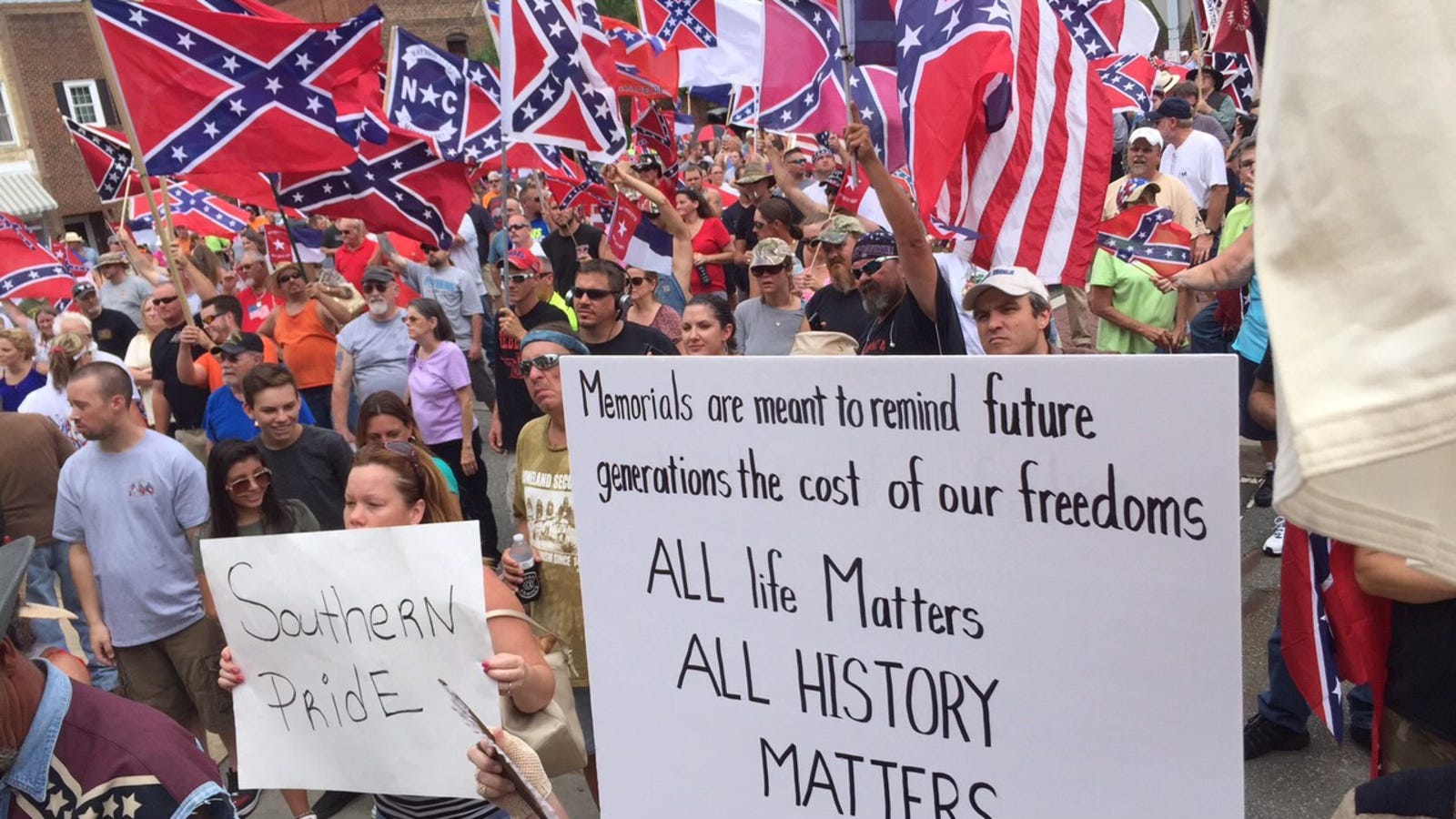
In the county where I live in North Carolina, a right-wing sheriff who has been playing footsie with violent groups like the Proud Boys and Oath Keepers was reelected to office in 2022. This after widely publicized cases where he and his deputies physically harassed and arrested Blacks walking from church to the polls, attacked and detained peaceful protestors calling for the removal of a Confederate statue, and being investigated by the Department of Justice for illegal targeting of Hispanics. Our county’s annual Pride celebrations regularly receives violent threats. Local activists and concerned progressive citizens involved in the Black Lives Matter movement have been doxxed and harassed after posting online.
It’s not difficult for me to imagine, in as few as two or three years, continued control of the NC legislature by GOP extremists, a governorship held by GOP stooge and all-around gun nut and homophobe Mark Robinson, a right wing Attorney General, and a GOP controlled Supreme Court that would simply look the other way if the local Oath Keepers, Proud Boys, or Christian Nationalist group decided to go out pistol-whipping some gays, taking drive-by potshots at Democratic candidates, office holders, or activists or firebombing homes or businesses.
Who the hell wants to retire in an environment like that, let along raise a family and kids or start a business?
So, add to the possible cost of retirement, picking up and moving to another state where random acts of terrorism are less likely to happen or be ignored by authoritarian, power-hungry screwballs in local and state offices.
How likely is this future? I haven’t a clue. But the fact I have to seriously consider it as a scenario for my retirement planning should have all of us worried. The odds, based on what I'm seeing, don't look good.
While the North Carolina Democratic Party and academics go through the motions of analyzing their failures in the 2022 election - failures to motivate young voters and get out the base or the quality of candidates seeking office - the career political analysts and consultants need to just shut the fuck up and take a cold, hard look at what a possible future in North Carolina might look like for those of us “on the ground”.
If some deep pocket donors and businesses are still contributing to Republican candidates or Democratic leaders in the state are just wanting to do the same-old, same-old song and dance as the extremist GOP becomes more entrenched and greedy for power, shove some economic numbers from The Troubles up their ass and ask them what they’re going to do about GOP terrorism.
This is our future if we allow this to continue.
Comments
Nothing yet. Say the first thing.
Sign in to join the conversation.