
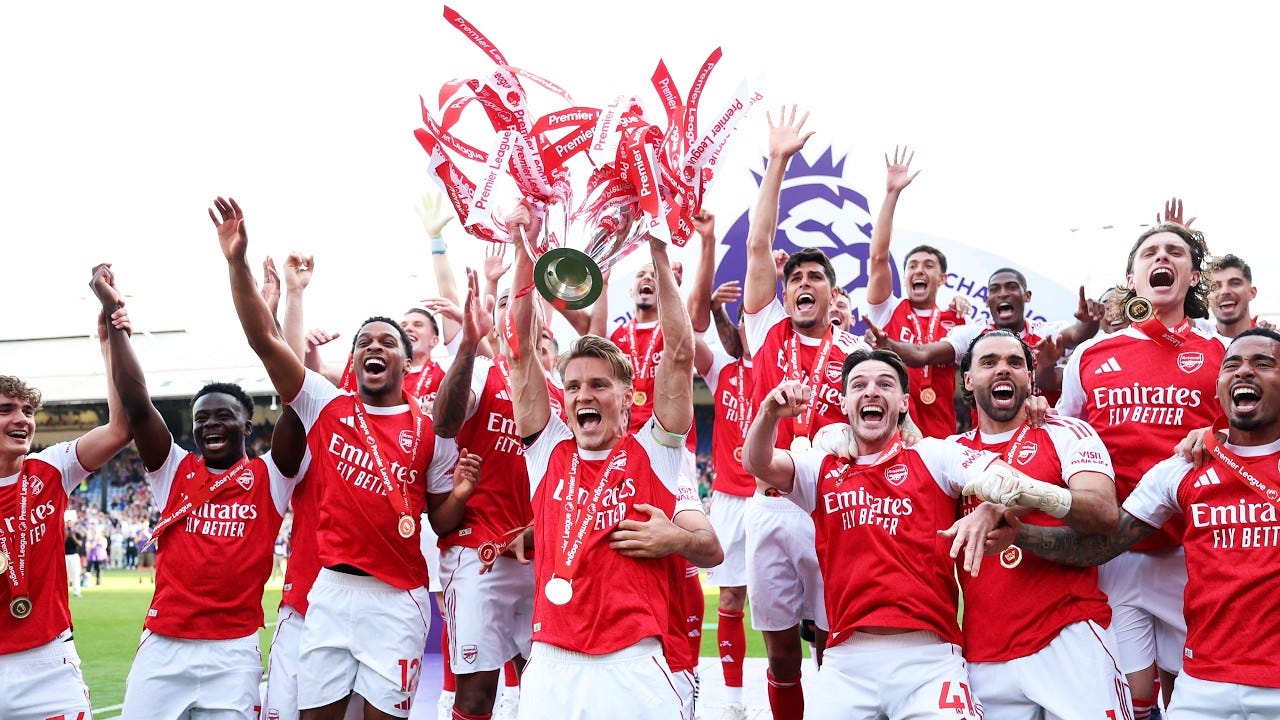
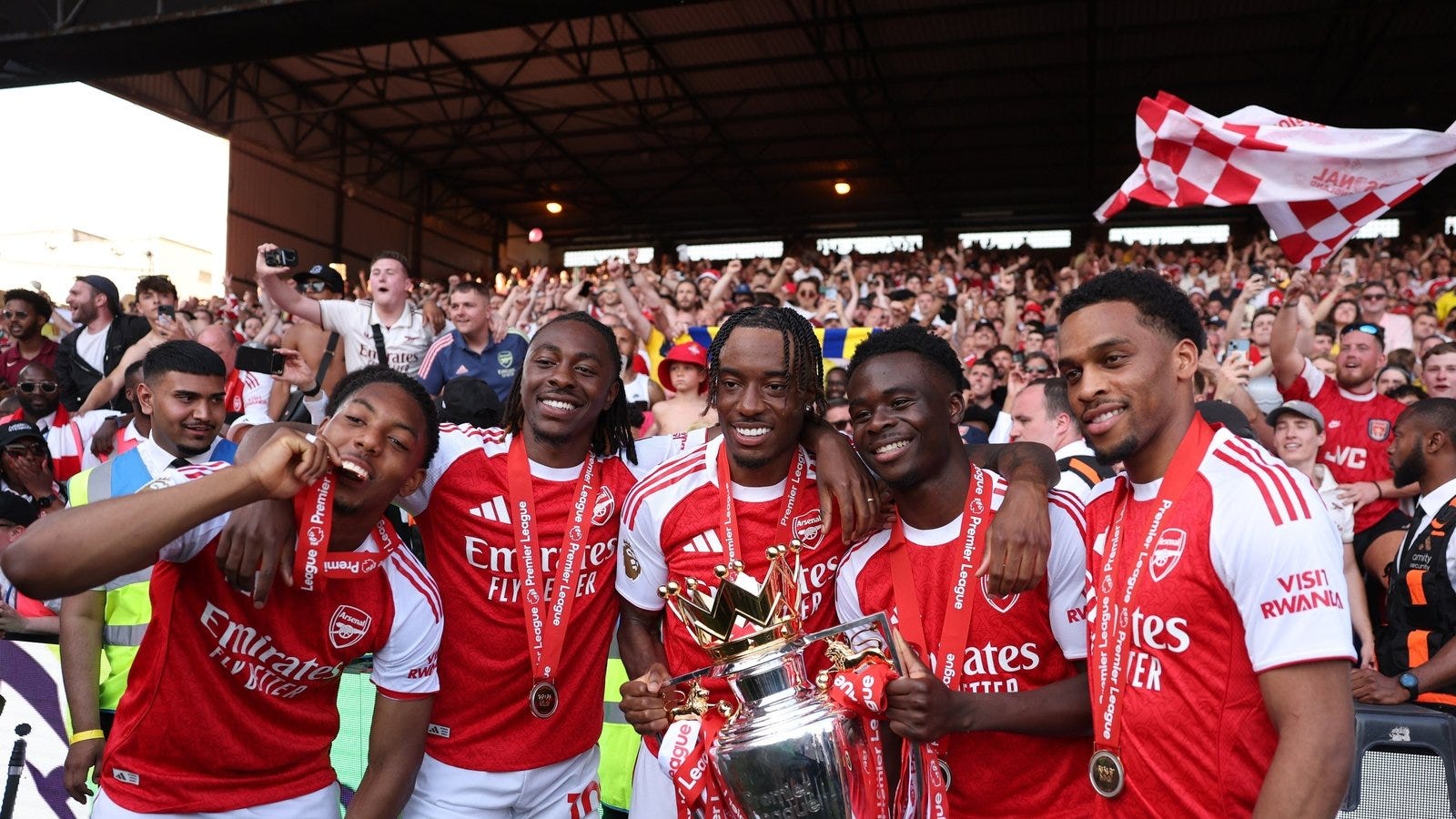
My beloved Arsenal Football Club was crowned the 2025/26 English Premier League champion on May 24 after sealing a remarkable season with a 2–1 victory over Crystal Palace on the final day.
The triumph marked Arsenal’s first league title in 22 years and the first under manager Mikel Arteta, who took charge of the team in 2019.
Arsenal’s victory sparked jubilant celebrations among millions of supporters across the world who had waited decades for this moment.
After three consecutive second-place finishes and years of enduring taunts from rival fans following painful near misses, Arsenal’s 2026 league title unleashed an eruption of joy everywhere from London and Lagos to Mumbai and New York.
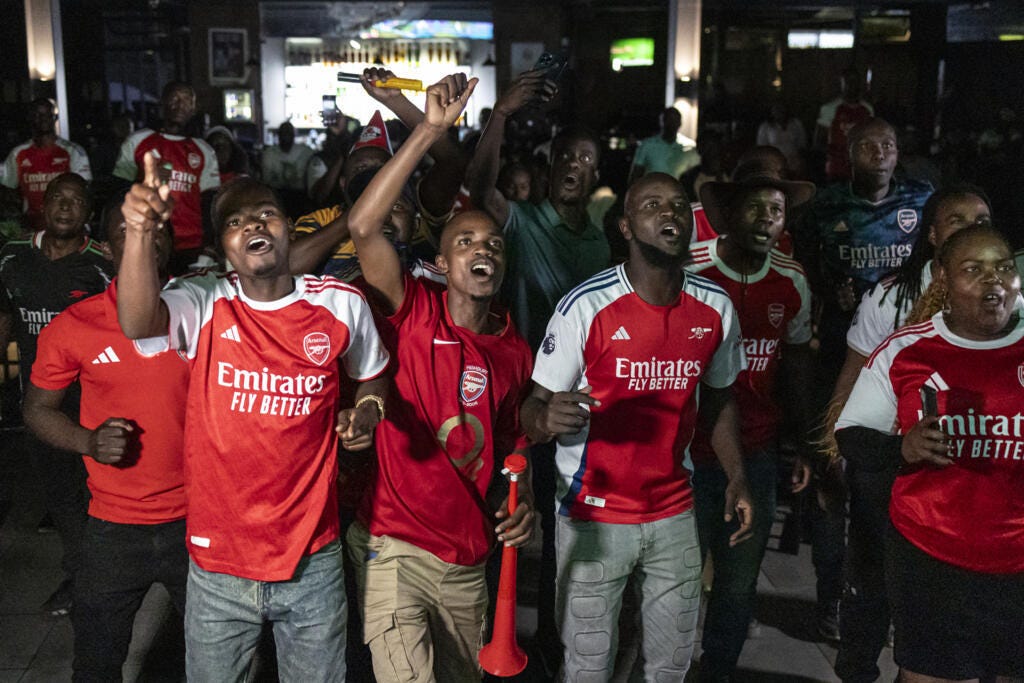
The festival-like celebrations across Africa attracted particular attention. No sooner had Arsenal secured the title on May 19—after rivals Manchester City drew against Bournemouth, making it mathematically impossible for them to overtake Arsenal at the top of the table—than cities such as Addis Ababa, Freetown, Kampala, Lagos and Nairobi erupted in spontaneous celebrations that seemingly continued until May 24, when the team officially lifted the trophy.
In Nigeria, Arsenal supporters organized carefully choreographed celebrations in cities including Lagos, Abuja, Ibadan, Calabar and Enugu.
In Rwanda—where the country’s tourism board, Visit Rwanda, maintained an eight-year partnership with Arsenal from 2018 to 2026—fans gathered in bars, hotels and other venues to cheer on a club many have adopted as their own.
Arsenal supporters in Ethiopia flooded the streets of Addis Ababa as lines of cars blared their horns and impromptu flash mobs emerged across the city.
In Kenya, celebrations were held nationwide including in Nairobi, where the Central Business District (CBD) and major roads in the city such as Thika Road were transformed into seas of red and white. Arsenal’s colors dominated the city as passionate fans sang songs celebrating the championship late into the night.
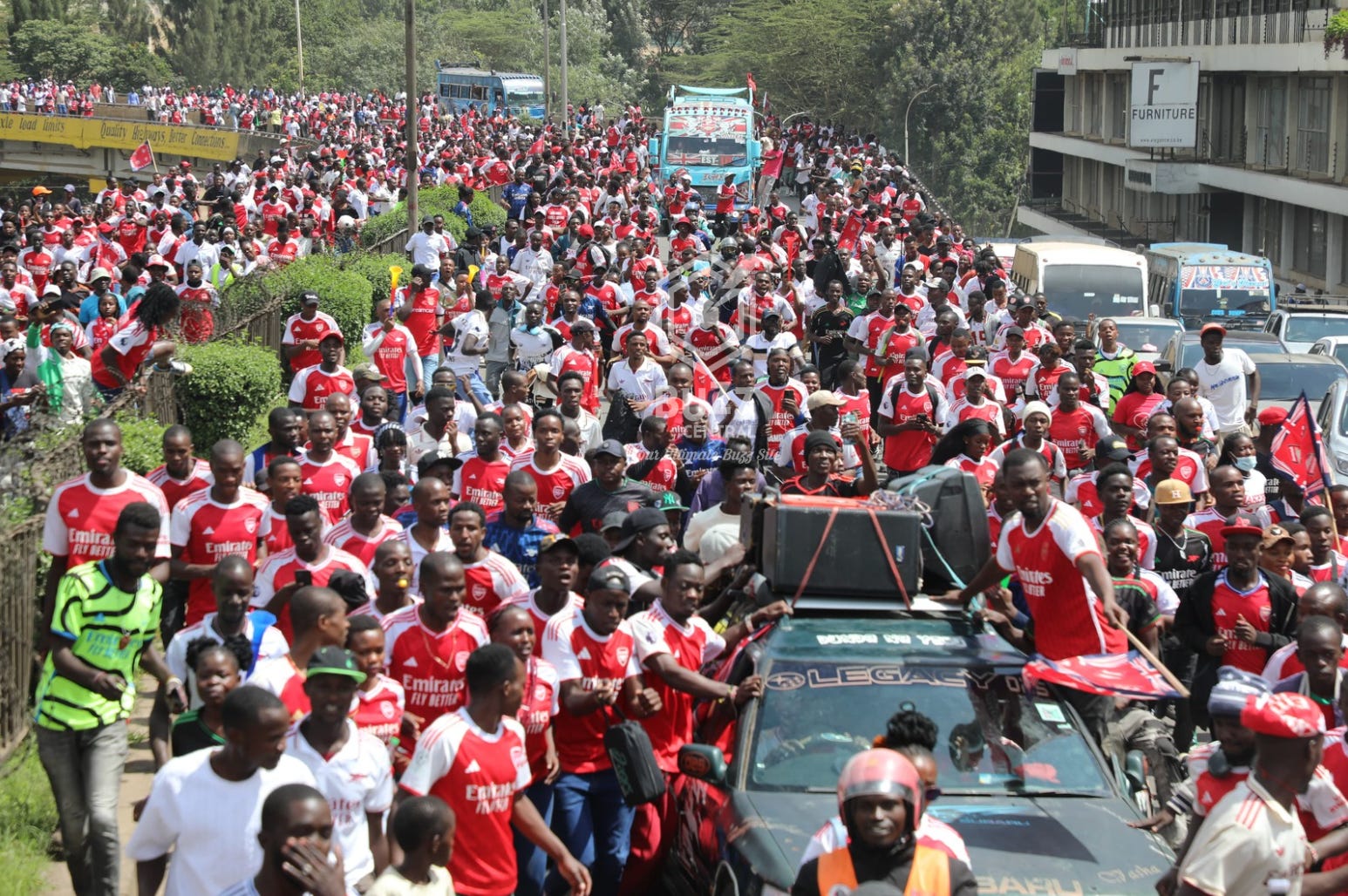
Uganda may possess the most passionate Gooners—a nickname for Arsenal supporters—on the entire planet. In cities such as Kampala, Jinja, Mbarara and Mbale, supporters organized processions, held overnight parties, decorated vehicles in Arsenal colors and jerseys, and conducted thanksgiving services in churches to celebrate the club’s first league championship in more than two decades.
It was perhaps fitting that Arteta later recognized Ugandan supporters as among his greatest inspirations in all his years of involvement with football.
The deep roots of Arsenal’s support within black communities around the world have been explored extensively.
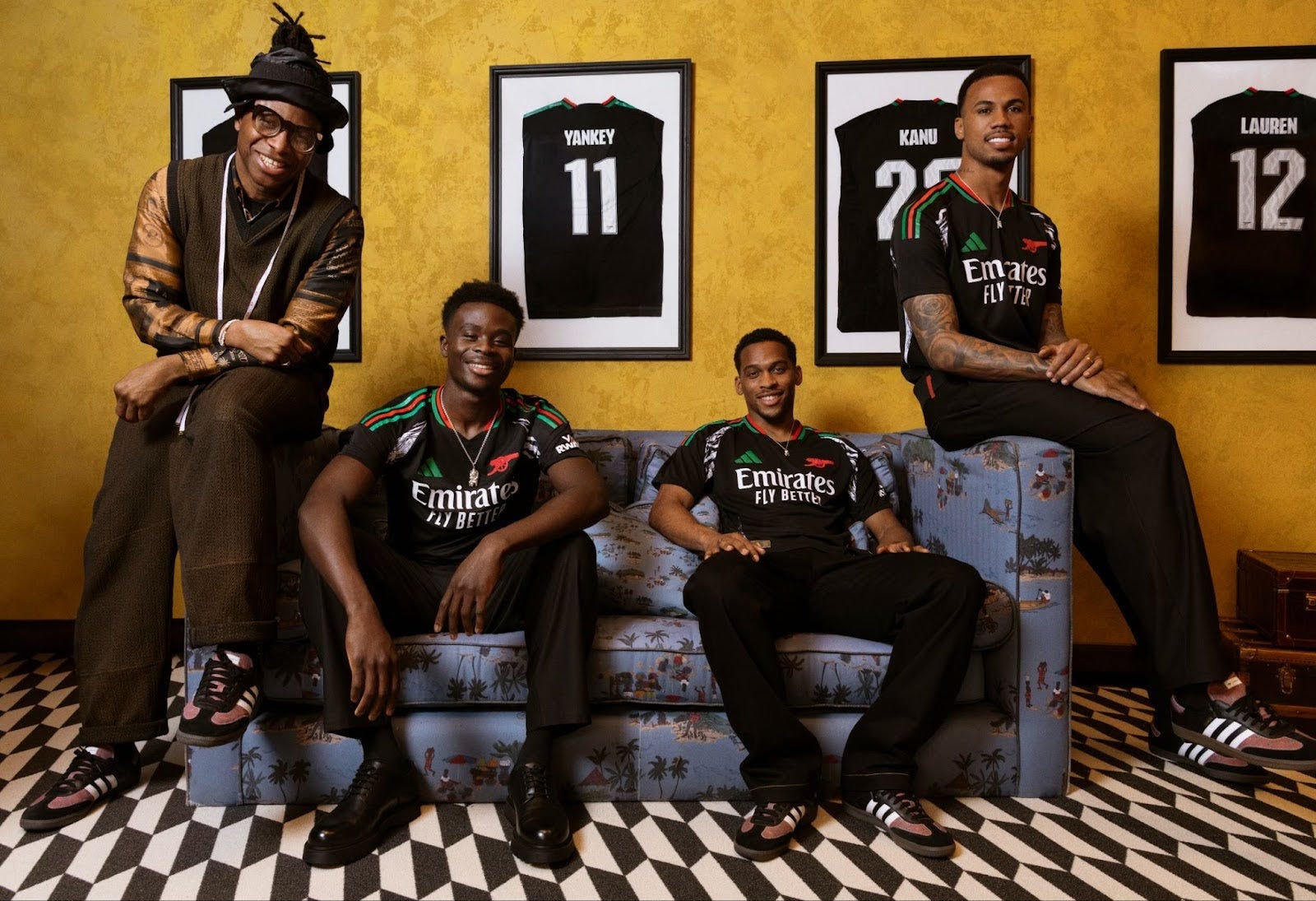
Clive Nwonka, a Nigerian-British academic and co-editor of Black Arsenal, explored the connection between Arsenal and Black British identity in that book, documenting how the club became a symbol of contemporary British society through its racially diverse fanbase and the iconic black players who defined some of the club’s greatest eras, from Paul Davis and Ian Wright to Thierry Henry and Bukayo Saka.
The book, released in 2024, featured on the BBC and Channel 4, and was adapted into a digital film series in collaboration with Arsenal.
On the African continent, particularly in anglophone countries with longstanding links to the United Kingdom, Arsenal’s popularity has often been explained through two main factors.
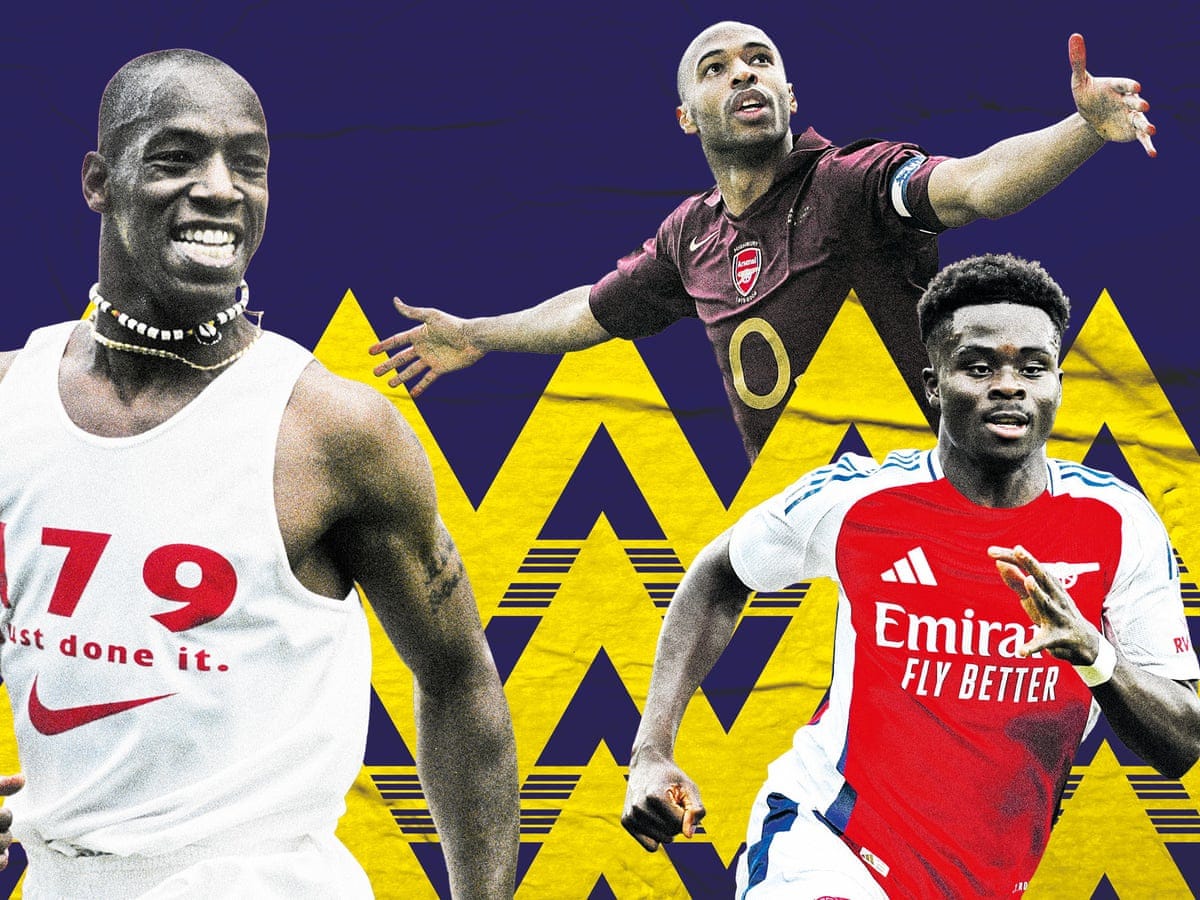
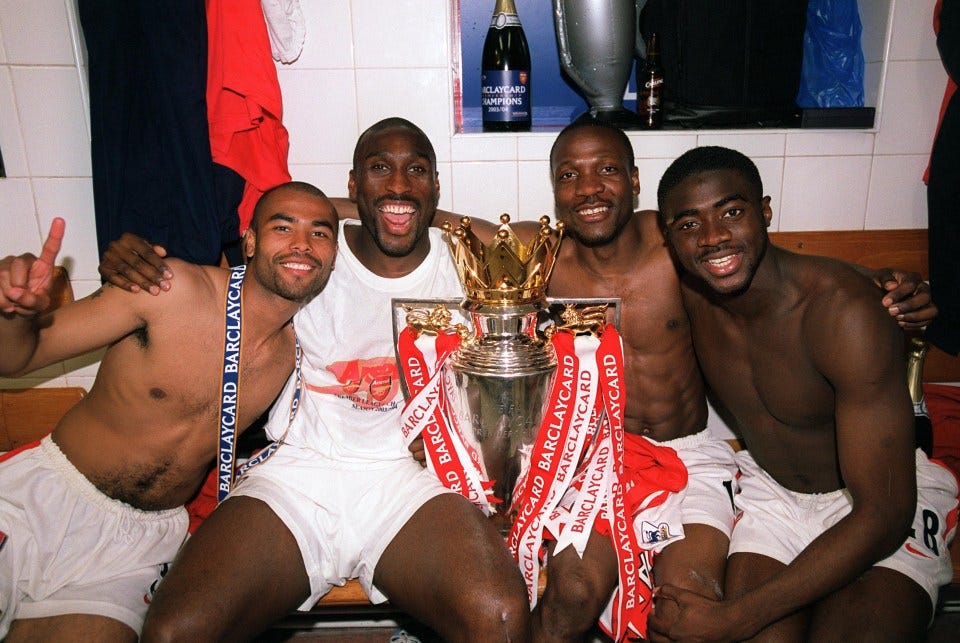
The first is the pioneering influence of Arsène Wenger, Arsenal’s legendary former manager, who fielded black diasporic stars such as Henry, Patrick Vieira, Ashley Cole and Sol Campbell, while also recruiting African players like Nigeria’s Nwankwo Kanu, Cameroon’s Lauren and Côte d’Ivoire’s Kolo Touré.
These players became central figures in the celebrated “Invincibles” side that went unbeaten during the triumphant 2003–04 Premier League season.
The second factor was the rapid expansion of satellite television in the late 1990s and early 2000s—particularly through broadcasters like SuperSport—which coincided with English football’s rise to global popularity and the ascendancy of Wenger’s dominant, entertaining teams that won three Premier League titles and four Football Association cups between 1998 and 2005.
Both explanations are important but insufficient on their own to fully explain the breadth and endurance of Arsenal’s support across Africa. To better understand the club’s extraordinary popularity on the continent, it is necessary to consider two additional factors that help complete the picture.
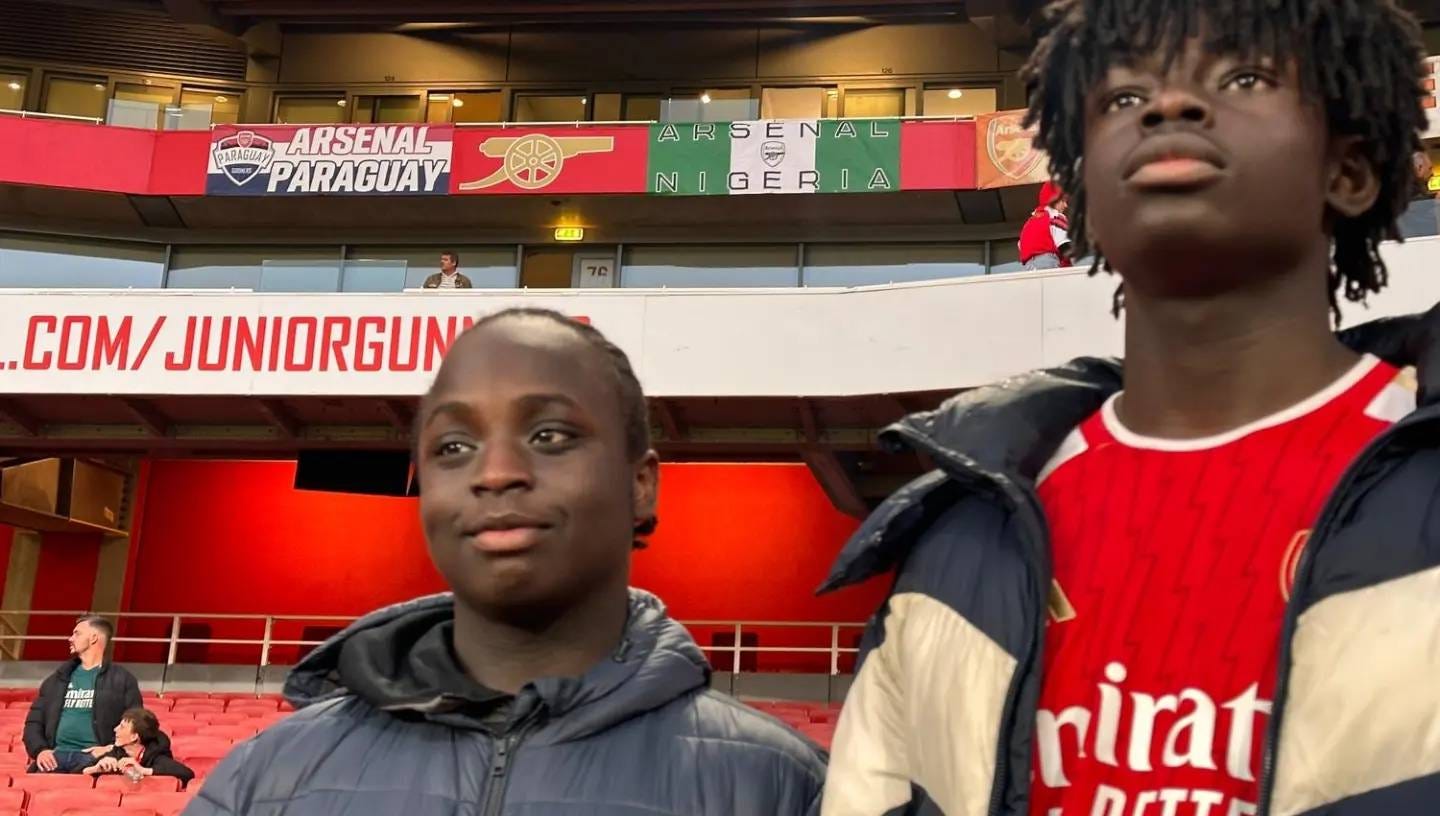
Beginning in the late 1970s, large numbers of people from African nations such as Nigeria, Ghana, Gambia, Sierra Leone, Kenya, Uganda, Somalia and Zimbabwe moved to the United Kingdom and settled in parts of north and east London—areas such as Edmonton, Wood Green, Stoke Newington and Finsbury Park—in close geographic proximity to Arsenal’s historic home at Highbury and, later, the Emirates Stadium.
Arsenal became, in many respects, the “local club” for many of these migrants in London and other parts of the UK. Many carried their loyalties back home through visits, letters, VHS tapes, satellite television subscriptions and, eventually, social media.
This mattered enormously in an era before the internet globalized football fandom, when many Africans first encountered European football through relatives living abroad, particularly at a time in which television ownership on the continent was limited and broadcasts of European football were rare.
A cousin returning from the UK with an Arsenal shirt or magazine could shape the allegiances of an entire neighborhood. Arsenal benefited significantly from this transferred loyalty because, at the time, African migrants in the UK were far more concentrated in London and its surrounding areas than they are today.
Satellite television accelerated this process even further. When MultiChoice DStv expanded coverage of the Premier League across Africa, migrant networks deepened the emotional connection between supporters abroad and those at home.
Families across continents watched the same matches simultaneously. Supporting Arsenal became a means of sustaining transnational family identity. Weekend football conversations linked London to compounds in Lagos and apartments in Nairobi.
As a result, Arsenal became more than simply a football club in many African contexts. It evolved into part of a diasporic communication infrastructure, a shared emotional language connecting migrants and home communities across continents. Supporting Arsenal allowed Africans at home and abroad to participate in the same weekly ritual despite living oceans apart.
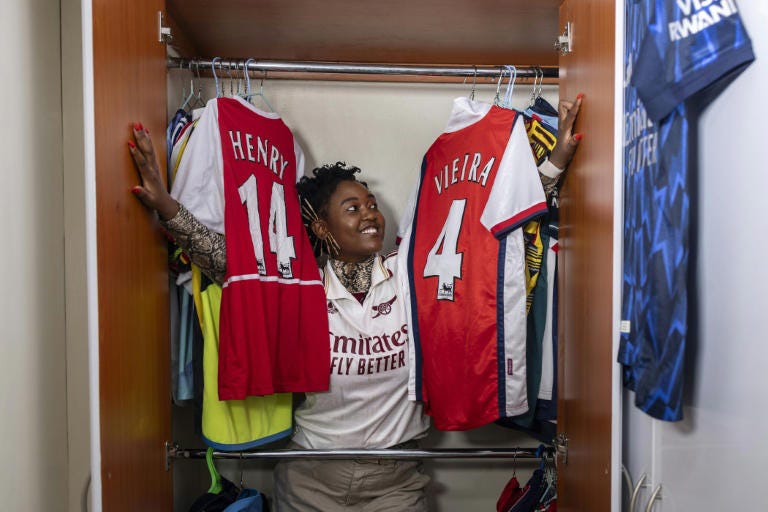
That is why Arsenal support across Africa often feels as inherited as it is chosen. Entire families support the club because of an uncle who emigrated to London in 1997, an aunt who lived in Hackney during the Wenger years, or an older brother who returned from the UK wearing Henry’s iconic number 14 shirt.
Migration transformed Arsenal from a north London football club into a continental cultural institution.
The variable that ties all of these factors together—and one that has, somewhat surprisingly, remained largely underexamined in mainstream discourse—is that Arsenal’s rise in popularity on the continent closely overlapped with the ‘Africa Rising’ era.
Both phenomena were connected to broader processes of urbanization, technological innovation, youth culture, economic growth and globalization that defined Africa for much of the 2000s and early 2010s. Arsenal did not become popular in Africa simply because the club signed African players and won trophies, as evidenced by the remarkable loyalty it retained throughout its prolonged post-Invincibles drought.
Rather, Arsenal’s rise on the continent reflected the vast social and economic transformations unfolding across Africa during that period.
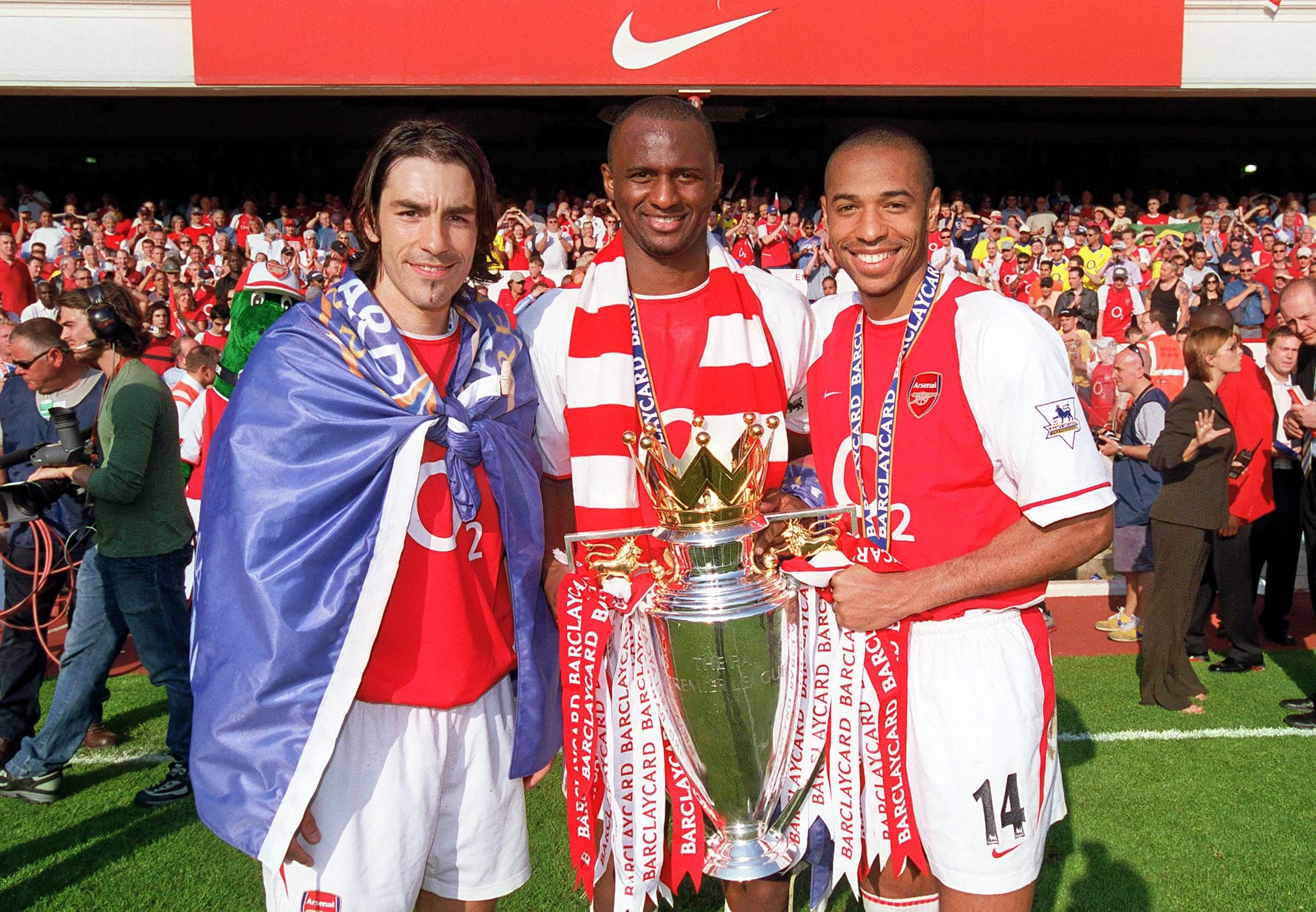
The height of Arsenal’s cultural influence in Africa coincided with political and economic liberalization, rapid urban growth, the rise of an aspirational—if fragile—middle class, and the emergence of globally connected youth subcultures across the continent. As economies in countries such as Nigeria, Kenya, South Africa, Ethiopia and Ghana expanded, more households gained access to cable television, mobile phones, internet connectivity, sports bars and global consumer culture.
During that period, the Premier League became arguably the most important transnational entertainment product among Africans at precisely the moment the continent's societies were becoming more integrated into global cultural and economic networks.
Under Wenger, the first manager in English football history to field nine black players in an Premier League starting 11 in September 2002, Arsenal symbolized sophistication, cosmopolitanism, modernity and the aesthetic flair long associated with the beautiful game by African football supporters.
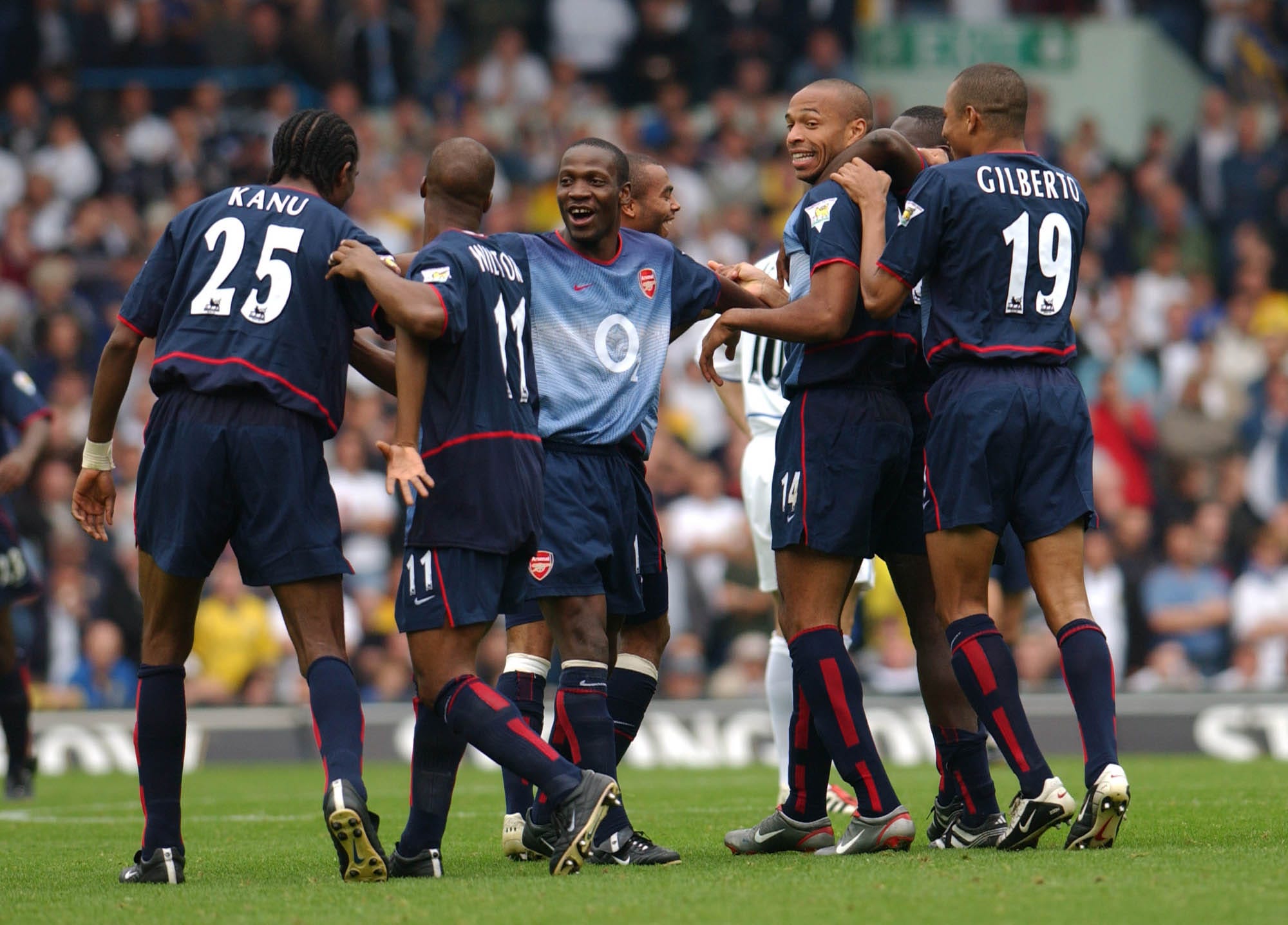
For many young Africans living in rapidly changing cities, Arsenal felt contemporary and aspirational in a way that resonated deeply with the spirit of the era. The club embodied youthfulness, globalization, inclusivity and style, qualities that carried immense symbolic power during the ‘Africa Rising’ period, when many Africans increasingly identified with ideas of progress, mobility and global belonging.
It was therefore unsurprising that Arsenal fandom in Africa spread most rapidly in universities, urban neighborhoods, internet forums and among the broader upwardly mobile youth demographic that defined the ‘Africa Rising’ zeitgeist. The club’s identity mirrored the self-image of many young African professionals of the time: ambitious, educated, digitally connected and globally aware.
In cities from Lagos to Nairobi and Douala to Johannesburg, support for Arsenal became woven into urban social life, expressed through barbershop debates, watch parties, office banter, Twitter communities, jersey culture, sports betting, and church thanksgiving services.
An Arsenal match was no longer merely a game taking place in England, but a synchronized social experience unfolding simultaneously in bars in Nairobi, university campuses in Lusaka, viewing centers in Kampala, salons in Accra and barbershops in Lagos.
Arsenal’s embrace of African players further cemented this connection. Beyond the Invincibles-era stars already mentioned, players such as Côte d’Ivoire’s Emmanuel Eboué, Togo’s Emmanuel Adebayor, Cameroon’s Alex Song—nephew of former Cameroon national team captain Rigobert Song—Gabon’s Pierre-Emerick Aubameyang and Ghana’s Thomas Partey helped Arsenal feel distinctly African in the popular imagination.
Kanu in particular attained an almost mythic status, especially in his native Nigeria where many regard him as the country’s greatest football player. His success at the highest level of European football after surviving a serious heart defect carried enormous symbolic weight, representing resilience, elegance and African excellence on the global stage. It is hardly an exaggeration to say that Kanu alone inspired many Nigerian football supporters—particularly those now between the ages of 35 and 50—to support Arsenal.
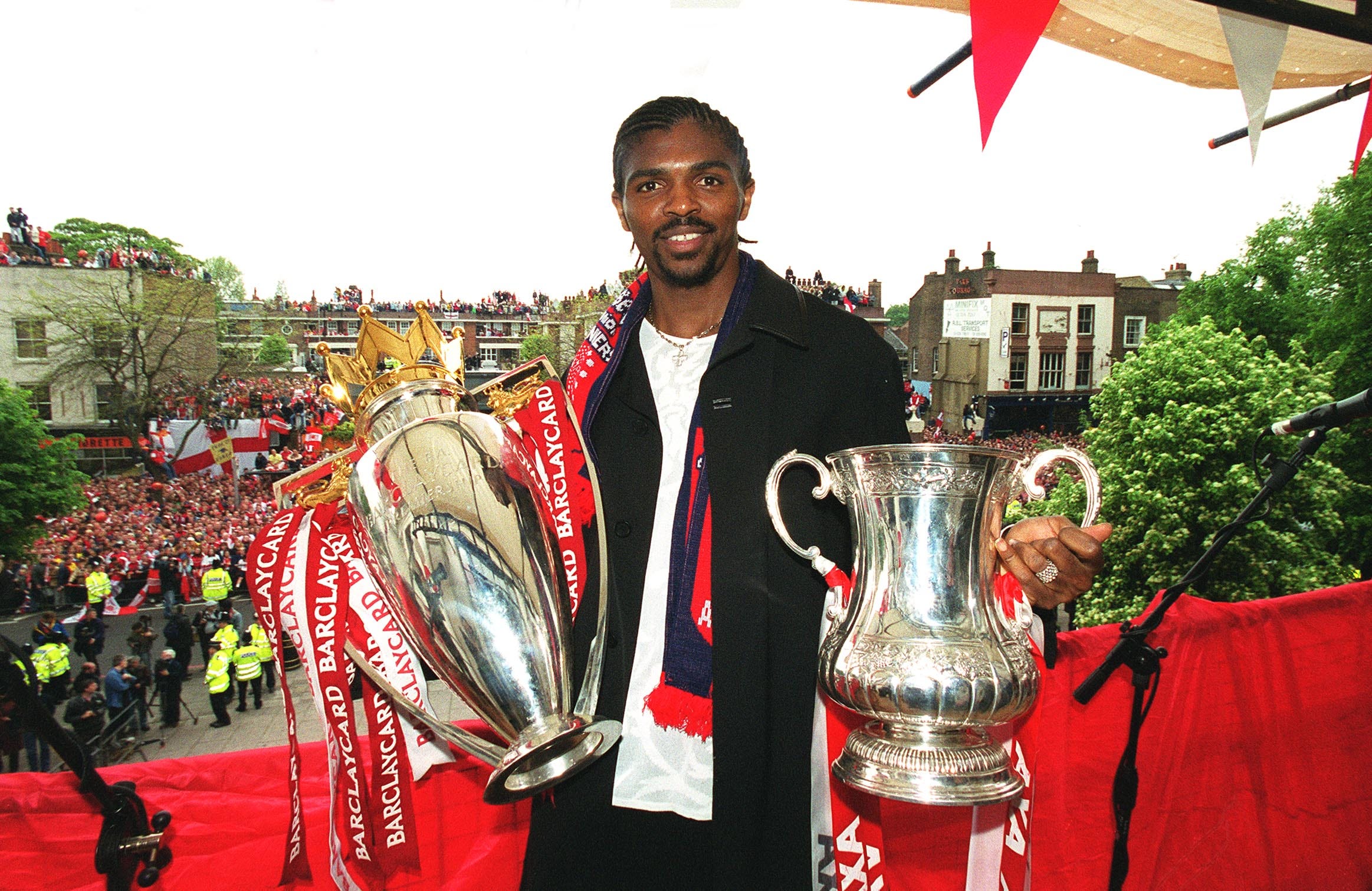
The continuity between Arsenal’s past and present African connections has only deepened the club’s appeal among younger generations. The legacy embodied by Kanu extended through players such as Alex Iwobi—nephew of Nigerian football icon Jay-Jay Okocha— and a contemporary trio of Nigerian-British players that includes Saka, whose prominence has strengthened Arsenal’s emotional resonance among younger Nigerians at home and in the country’s diasporas.
One of the most insightful recent reflections on Arsenal and its relationship with Nigerian supporters appeared in The Bellwether, a Substack newsletter by Afolabi Adekaiyaoja, whose analysis captures the cultural depth of Arsenal Fandom in Nigeria with remarkable clarity.
Arsenal is by no means the only European football club with a massive following in Africa, and its popularity on the continent exceeds its recent competitive success.
Manchester United, which won more trophies than Arsenal during the 2000s, established its own enormous African fanbase through global commercial dominance—notably without relying on a major African star player.
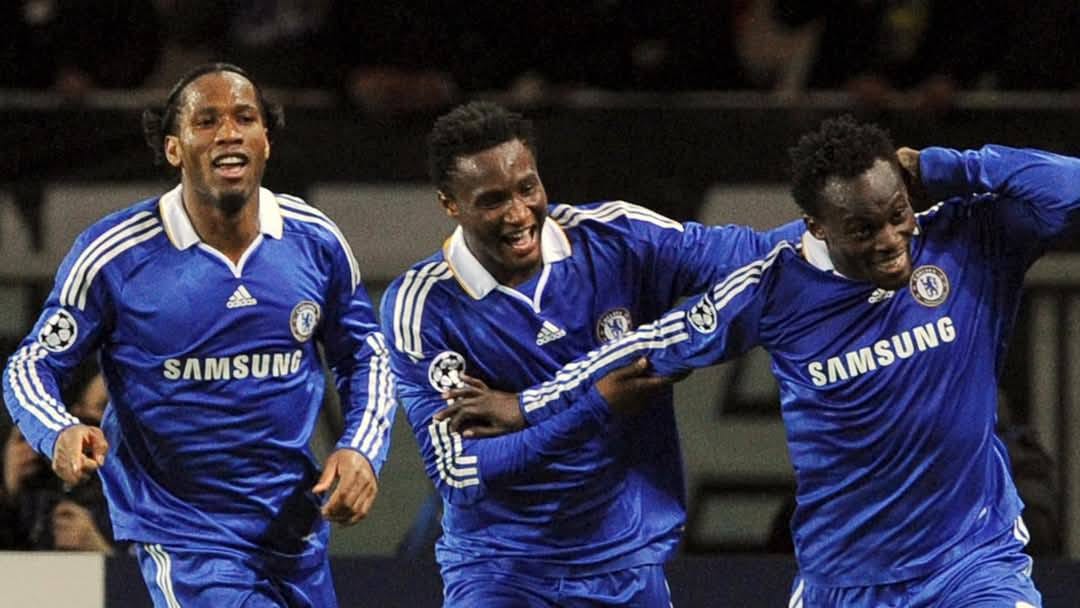
Chelsea emerged in the mid-2000s as a ‘third force’ that disrupted the Manchester United–Arsenal duopoly, propelled by Roman Abramovich’s wealth, the charisma of then-coach José Mourinho and the recruitment of prominent African talents such as Ghana’s Michael Essien, Nigeria’s Mikel John Obi and Ivorians Didier Drogba and Salomon Kalou.
Together, that quartet helped Chelsea cultivate a deep following across West Africa, particularly in Nigeria, Ghana and Côte d’Ivoire, effectively adapting Wenger’s formula albeit with less ideological coherence or intentionality. The African stars of Arsenal and Chelsea alike would play a significant role in what Sky Sports described as “how Africa changed the Premier League.”
In the 2010s and 2020s, Manchester City emerged as the dominant force in English football, largely replicating Manchester United’s model: overwhelming financial power, global commercial expansion and comparatively few Africa-born star players.
Yet Arsenal retained an extraordinary emotional loyalty across much of the continent because the club came to represent something larger than victory alone. Arsenal symbolized flair, hope, possibility and competition in an increasingly globalized world. That emotional connection mirrored the ‘Africa Rising’ ethos itself: optimistic, ambitious and future-oriented, even amid uneven material realities and contested narratives of development.
Research conducted by Twitter in 2015 found that Arsenal was the most popular English football club in eight African countries, particularly in parts of North and East Africa where the club’s support was especially strong. Arsenal also boasts more than 25 official supporters’ clubs across Africa, more than on any other continent.
These are often highly structured organizations with leadership committees, digital platforms, dues-paying members and organized events. The Nigeria chapter, believed to be the largest and oldest in Africa, was founded in 2004 and formally recognized by the club the following year.
Arsenal’s rise to popularity on the continent was interconnected with Africa Rising because both reflected the continent’s integration into a new phase of renewal. The same forces that fueled technological innovation, drove the creation of continental institutions such as the African Union, and propelled cultural exports like Afrobeats, amapiano, Nollywood and contemporary African art, fashion and literature onto the world stage also helped produce African football subcultures organized around a globally recognizable brand such as Arsenal.
In this sense, Arsenal became one of the emotional languages of Africa Rising, a symbol of aspiration, cosmopolitanism, youthfulness and belief in the future.
The growth and consolidation of Arsenal’s black and African fanbase has not been without its critics. Detractors emerged from multiple directions, including critics of corporate multiculturalism as well as continental and diasporic voices who question the unequal political economy of global football itself.
During the latter stages of the Wenger era and especially under Arteta, Arsenal increasingly embraced anti-racist messaging, diversity branding and social inclusion campaigns. Players took the knee in solidarity with anti-racism protests, while the club’s corporate identity became more visibly associated with social justice campaigns, online activism and engagement with African and diasporic audiences.
For critics, Arsenal came to embody what some describe as “woke capitalism” i.e. the use of progressive language, imagery and identity politics by powerful institutions that ultimately remain status-quo, profit-driven corporations.
These critiques intensified following controversies surrounding former Arsenal midfielder Mesut Özil, who alleged that he was marginalized within the club after publicly criticizing China’s treatment of Uyghur Muslims on social media. More recently, a former Arsenal kit manager launched legal action against the club for unfair dismissal after being fired over social media posts expressing solidarity with Palestinians during Israel's ongoing war on Gaza.
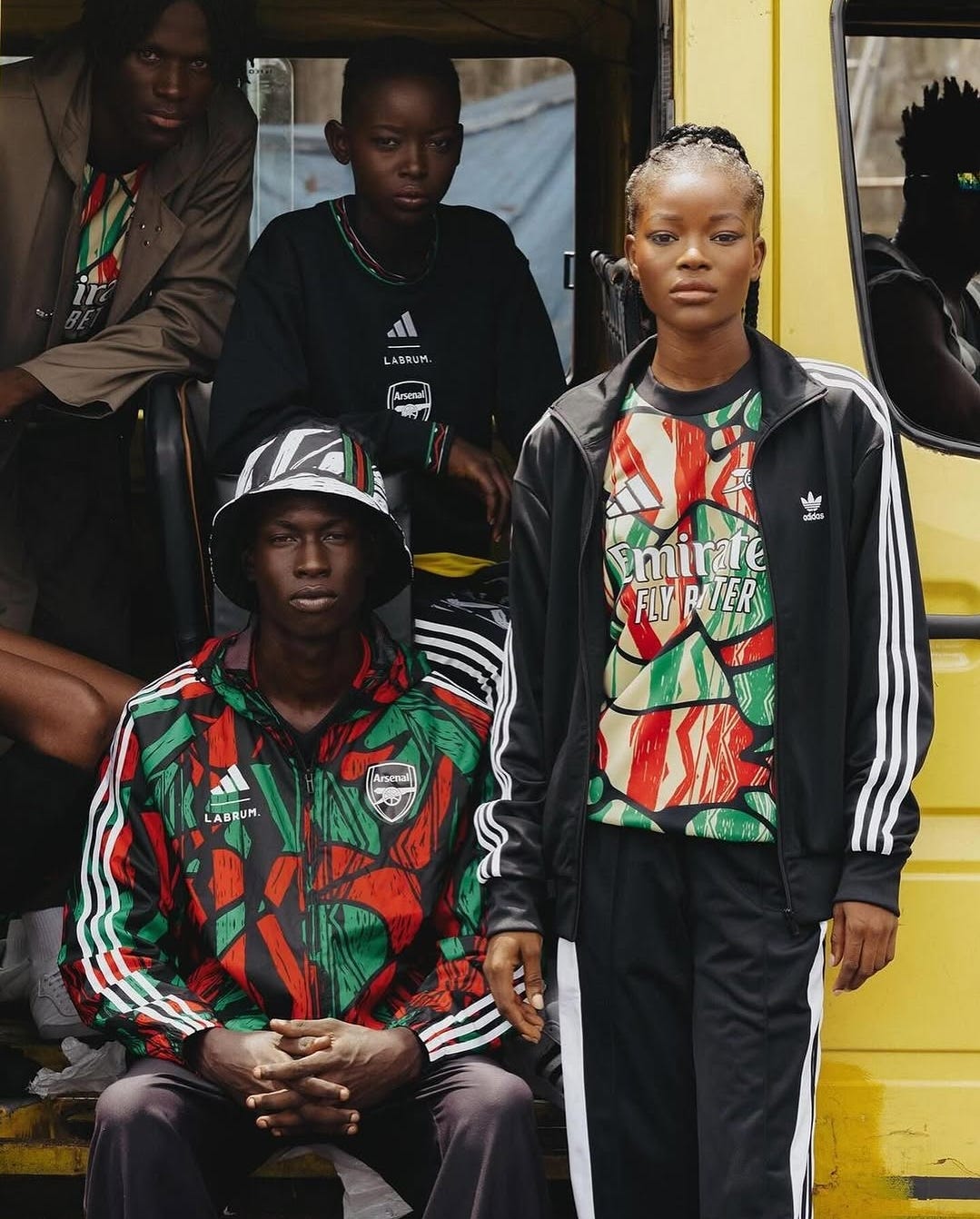
At the same time, Arsenal strategically cultivated a distinctly black cosmopolitan aesthetic. The club became associated with fashion-forward branding, multicultural London identity, grime culture, and later, Afrobeats audiences and other expressions of global black cultures. In cultural terms, Arsenal became influential far beyond football in ways its Premier League rivals did not.
Yet critics contend that the club often celebrates black culture primarily when it is commercially advantageous while avoiding deeper political commitments to black communities in Britain and elsewhere. In this reading, blackness risks becoming less a social reality than a marketable corporate aesthetic.
The criticisms of Arsenal extend beyond questions of representation into the wider economics of global football. Major European clubs—alongside broadcasters, sponsors and betting companies—derive enormous value from African audiences through television subscriptions, merchandise sales, streaming engagement, gambling partnerships and social media traffic.
Yet critics increasingly ask what African societies materially receive in return for their immense emotional and financial investment.
European football clubs including Arsenal have benefitted enormously from recruiting African talent into systems where local academies often receive limited long-term compensation, young players remain vulnerable to exploitation by intermediaries and African domestic leagues function more as feeder systems rather than competitive sporting institutions in their own right.
Even when African players achieve success in Europe, relatively few Africans or African-owned institutions control the institutional capital, media rights or the wealth necessary to sustain robust sports economies on the continent.
African fans passionately follow European football even as many domestic leagues across the continent continue to struggle with deep structural challenges. Stadium infrastructure often remains inadequate, broadcasting and sponsorship revenues are limited, local clubs lose talented players at an early stage, and European leagues dominate the continent’s sporting attention economy.
The result is a form of cultural dependency in which African emotional and financial investment flows outward toward Europe rather than inward toward local football ecosystems. In this sense, Arsenal’s relationship with its African supporters is asymmetrical: Africa provides devotion, viewership and cultural energy, while Europe accumulates capital, prestige and soft power.
It did not escape my attention that Arsenal lifted the Premier League trophy on the same day that the South African football club Mamelodi Sundowns won the 2025-26 CAF Champions League, Africa’s premier club competition organized by the Confederation of African Football.
Two weeks earlier, the celebrated Senegalese coach Lamine Ndiaye had guided the Algerian club USM Alger to the CAF Confederation Cup—Africa’s second-tier continental club competition—becoming only the fifth coach in African football history to win both the CAF Champions League and the CAF Confederation Cup.
Yet outside the committed supporters of those clubs, relatively few Africans likely noticed either achievement. Neither generated even a fraction of the continental attention commanded by Arsenal’s league triumph.
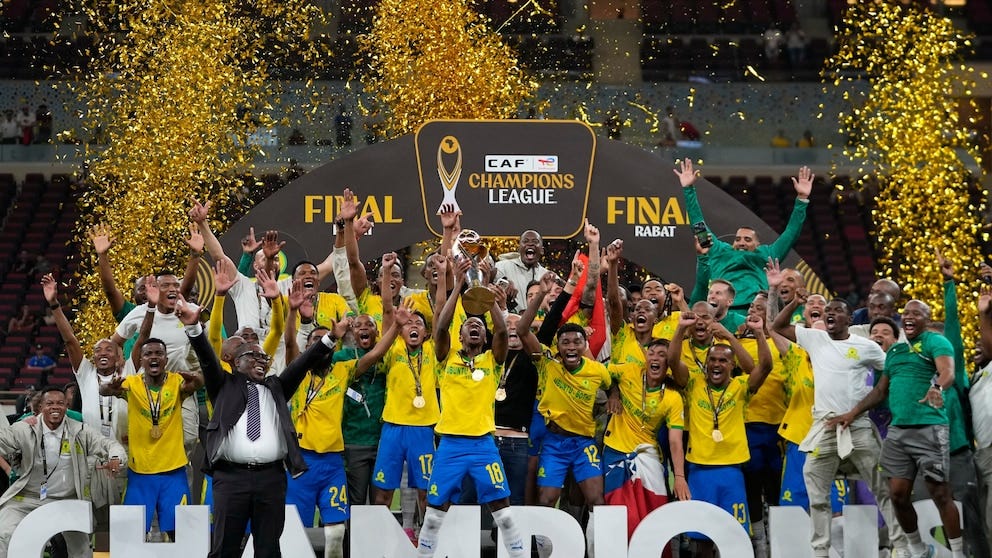
There are, of course, important exceptions. South Africans remain deeply passionate about domestic football, with some of the continent’s strongest league attendances and fiercest club rivalries. South Africa's Premier Soccer League enjoys substantial grassroots support and, in many respects, outperforms numerous European leagues in local television viewership, even as many of those same supporters passionately follow European clubs such as Arsenal.
A similar dynamic exists in North Africa, where historic powerhouses such as Al Ahly, Espérance Sportive de Tunis, Wydad AC and Zamalek continue to dominate domestic and continental competitions while producing many of Africa’s most celebrated players.
By and large, however, these remain exceptions to the pattern of comparatively low engagement with domestic football across much of the continent, despite ongoing efforts of administrators, supporters and football federations attempting to reverse this trend.
Many observers—myself included—have compared these dynamics to wider patterns within the global economy, in which raw materials are exported from Africa and their greatest value realized elsewhere.
In football, the “raw material” is talent itself: African players are developed locally but frequently exported abroad, where their labor, image rights and commercial appeal generate immense wealth primarily for foreign clubs, broadcasters and consumers rather than for the athletes and African sporting economies.
One of the more striking observations surrounding Arsenal’s 2026 Premier League triumph was the eagerness with which African political elites attached themselves to the popular celebrations.
Across the continent, presidents and senior political figures rushed to publicly congratulate Arsenal and associate themselves with the public euphoria surrounding the club’s title victory. Yet in many of those same countries, protests are tightly restricted and large-scale public organizing—especially by young people—is viewed with suspicion by the state.
The same governments that celebrated alongside jubilant Gooners have, in other contexts, surveilled activist networks, cracked down on digitally organized youth movements and criminalized dissent. Yet football fandom itself is one of the largest forms of mass youth assembly on the continent.
Governments often welcome these gatherings when they appear politically harmless—Arsenal fan parades, for example—but grow anxious when similar forms of collective energy are redirected toward unemployment, corruption, police brutality or demands for democratic accountability.
Many African states seem comfortable celebrating mass passion only when it remains commercially profitable and politically non-threatening. Symbolic participation in global entertainment culture is embraced more readily than the difficult work of building responsive public institutions at home.
There is also a deeper postcolonial irony in African leaders—and indeed fans like me!—celebrating European sporting triumphs while domestic sporting institutions struggle. The result is the same asymmetrical spectacle described earlier: African audiences generate enormous emotional energy and cultural cachet, African consumers sustain broadcasting markets, and African players enrich European leagues, yet the overwhelming concentration of football capital and institutional power remains firmly located in Europe.
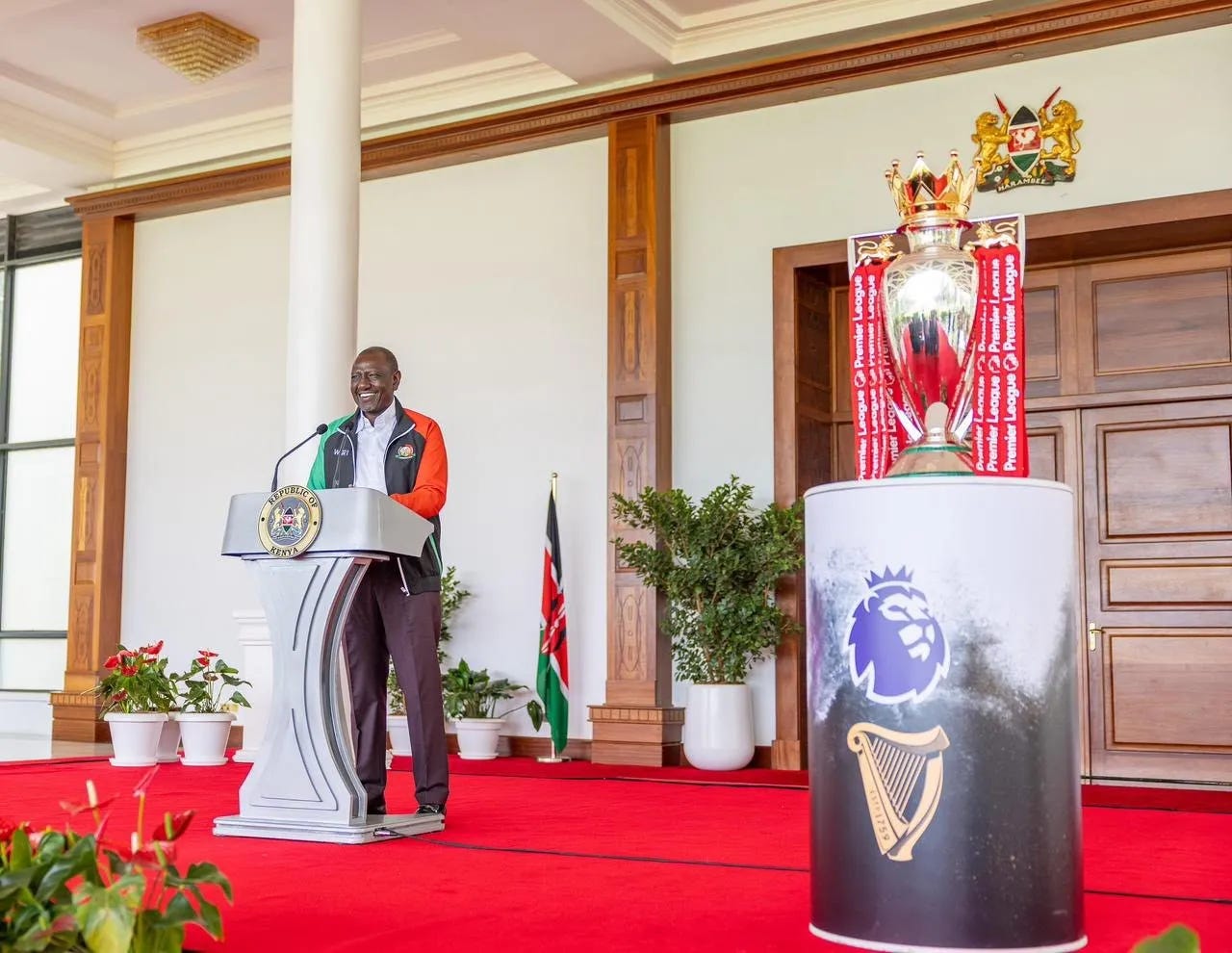
The contradiction becomes even sharper when one considers the relatively limited investment many African governments make in domestic sports infrastructure. Across much of the continent, local leagues remain underfunded, youth academies inadequately supported, coaches unpaid for months at a time, stadiums poorly maintained and school sports systems neglected.
African leaders enthusiastically celebrate Arsenal’s success, yet many have failed to create the conditions necessary for their own domestic leagues to thrive either culturally or economically.
As a result, a teenager in Kinshasa, Lagos or Nairobi may know far more about North London derbies than fixtures in their own national league not because African football lacks talent or passion, but because local football systems have often been politically and commercially neglected.
European football also offers many African governments a relatively inexpensive source of emotional proximity to ordinary citizens. Leaders unable to convincingly articulate pathways toward economic transformation, institutional trust or democratic legitimacy can publicly celebrate Arsenal winning the league and momentarily appear culturally aligned with popular sentiment. In other words, football becomes a shortcut to relatability.
The Kenyan journalist Larry Madowo—himself an Arsenal fan—captured these tensions in a three-part post on X in which he questioned why football fans in Kenya were permitted to gather peacefully in large numbers while anti-government demonstrations frequently encountered violent crackdowns, despite both forms of mobilization relying on similar patterns of decentralized, internet-driven organization.
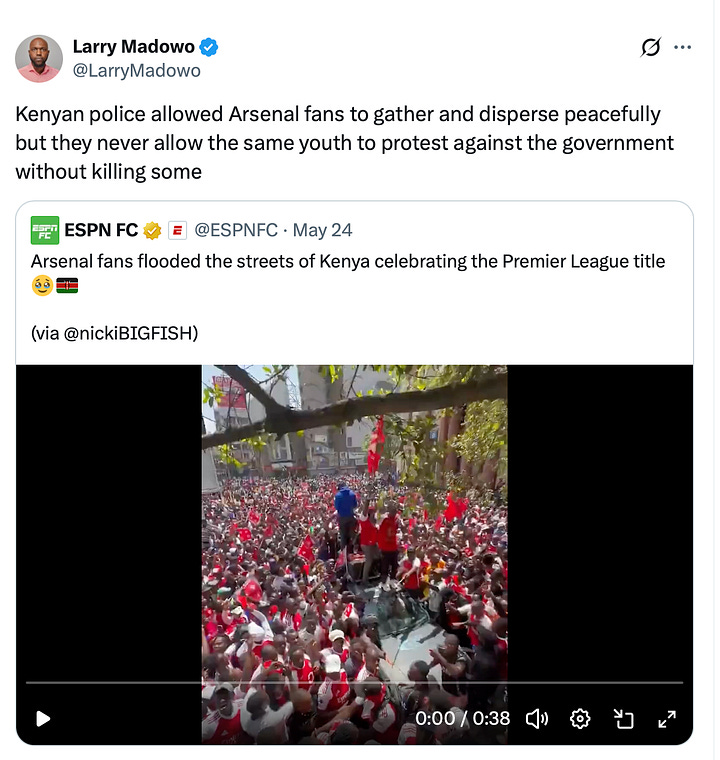
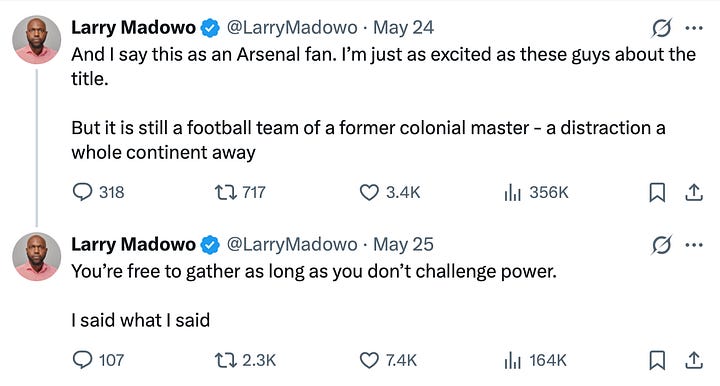
The political logic behind this is fairly straightforward. In many parts of the continent, European football commands more emotional investment among urban youth than numerous domestic institutions, state and non-state alike.
In some cases, people place greater trust in football clubs, fan communities, musicians and online influencers than in political parties, elected officials, police forces or national sports federations. It is therefore unsurprising that political elites seek to appropriate football’s emotional legitimacy without addressing the larger frustrations shaping the lives of young people.
The tensions surrounding Arsenal’s relationship with its black and African global fanbase are perhaps most visible in the club’s former commercial partnership with Rwanda.
On one hand, Arsenal cultivated an image rooted in inclusion, diasporic identity and Pan-African symbolism. On the other, both the club and the Rwandan government arguably exploited the emotional appeal of continental pride, African visibility and the global recognition of African talent and culture for commercial and political branding purposes.
Under President Paul Kagame, Rwanda has projected itself internationally as a model of technocratic efficiency, political stability, investment friendliness and African modernity. This image has appealed strongly to development donors, foreign investors, international financial institutions, and the broader global business community.
However, human rights groups and government critics have pointed to severe restrictions on the political opposition, constraints on press freedom, repression of dissidents and the narrowing of democratic space in the country.
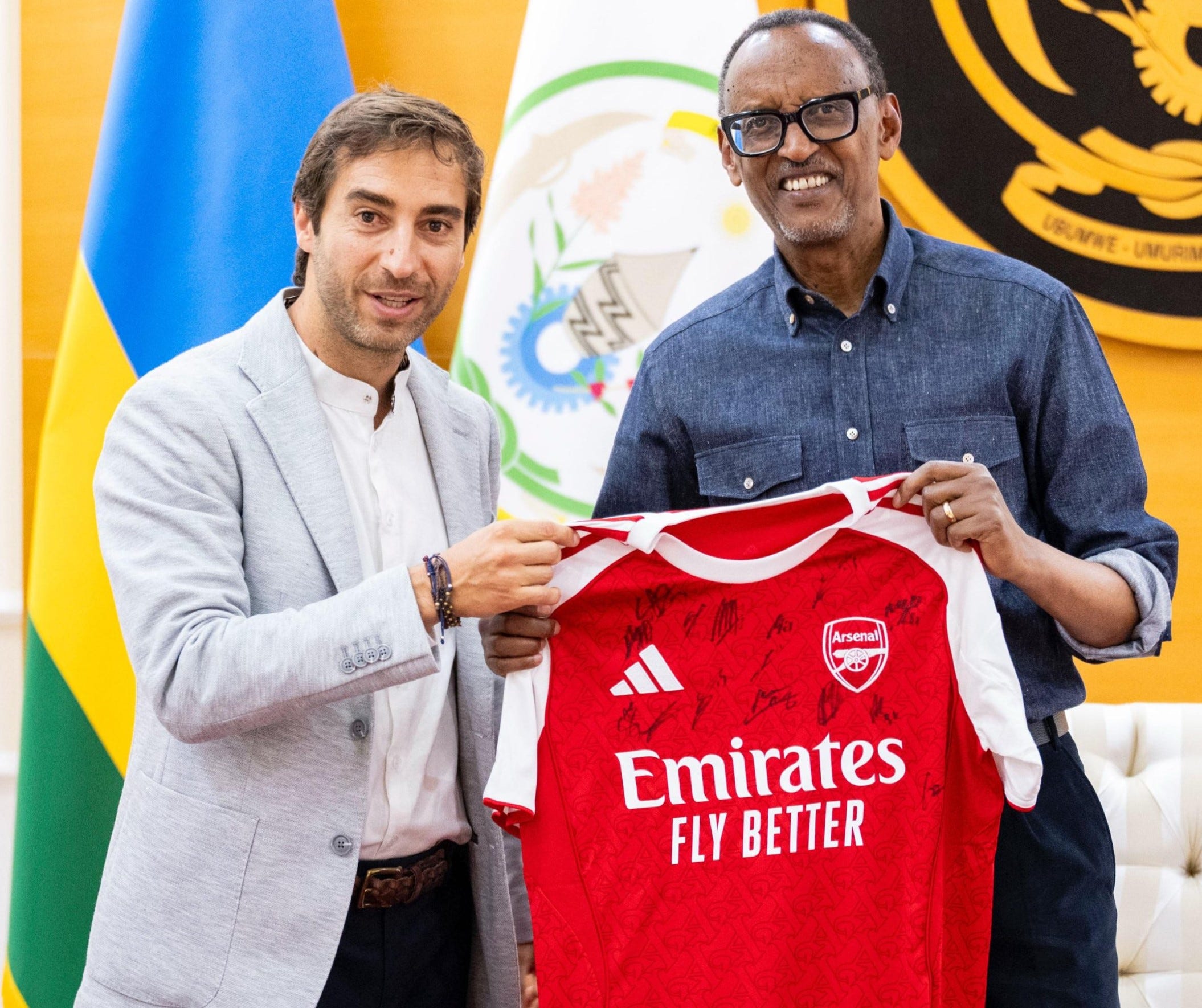
The partnership appeared even more contentious given Rwanda’s continued dependence on foreign aid and the documented evidence of its active involvement in the conflict in eastern Democratic Republic of the Congo.
These contradictions made it difficult to reconcile Arsenal’s branding around diversity, empowerment and Pan-Africanism with its simultaneous partnership with a government widely criticized for its autocratic practices at home and violent adventurism overseas.
Both ‘Visit Rwanda’ and, to some extent, the aesthetics of ‘Africa Rising,’ risked transforming African identity into a sleek global marketing aesthetic detached from deeper questions of political freedom and democratic accountability.
Defenders of the partnership argued that Rwanda successfully used tourism, infrastructure investment and global branding campaigns to reposition itself internationally in the aftermath of the 1994 genocide. From their perspective, the commercial arrangement with Arsenal and other high-profile European football teams represented an example of an African country competing strategically within the global attention economy rather than remaining trapped within the familiar language of aid dependency and humanitarian crisis.
The obvious counterargument is that visibility, branding and economic modernization are not sufficient on their own. Any meaningful vision of an African renaissance must also include political openness, civic accountability and sustained social investment, areas in which the Kagame regime has fallen woefully short.
The paradox at the heart of Arsenal’s relationship with the global black diaspora is that the club became genuinely meaningful to millions of people while simultaneously functioning as one of the world’s most commercialized sporting brands. Both realities coexist.
Arsenal provided unprecedented visibility to African football players, embodied the multiculturalism of contemporary football and fostered emotional belonging among supporters on the continent and in its diasporas.
By the same token, the club remains embedded within unequal global economic systems shaped by European dominance, foreign capital and the commercialization of global fandom.
Yet African supporters are far more than passive or manipulated consumers. Their relationship with Arsenal has been deeply active, creative and participatory. African fandom has transformed Arsenal’s global culture, generated independent supporters’ communities, sustained local football economies, inspired youth participation in sport and produced new forms of digital identity, humor and social interaction.
In cities such as Kampala, Lagos and Nairobi, Arsenal fandom became woven into urban social life in ways the club itself could never fully control. Supporters continually reinterpret Arsenal through local cultures, languages, rivalries, memes and aspirations, turning the club into something simultaneously global and intensely local.
Importantly, supporters themselves are often fully aware of these contradictions. African football culture is intensely political in its humor, satire and social commentary, as I argued previously in my review of the 2025 Africa Cup of Nations. Football spaces frequently function as indirect arenas for political expression through chants, banter, memes, online discourse and forms of coded satire.
For this reason, attempts by political elites to appropriate Arsenal’s triumph remain inherently unstable. The same digitally connected youth culture capable of producing euphoric football fandom can also generate dissent, ridicule and political consciousness.
That tension—joy and frustration existing simultaneously, global entertainment flourishing amid deep institutional dysfunction—is one of the defining features of contemporary African life.
It is also part of what makes Arsenal’s relationship with Africa so interesting. It is not totally reducible either to cynical marketing or pure solidarity. It is a real emotional connection shaped by the realities of globalization, race, capital, empire and migration.
For now, however, Arsenal supporters across Africa—like their counterparts around the world—have turned our attention to Saturday’s UEFA Champions League final against Paris Saint-Germain.
The historical symmetry is difficult to ignore. Twenty years ago, Arsenal reached the tournament’s final in Paris, losing 2–1 to FC Barcelona in a controversial match overshadowed by an early red card for Arsenal’s goalkeeper that fundamentally altered the game’s trajectory.
Gooners would love nothing more than for Saturday’s final to end in another victory for our beloved team, completing what has felt like a long-awaited redemption story.
Comments
Nothing yet. Say the first thing.
Sign in to join the conversation.