
I recently returned from an extensive trip across East Africa, the part of the continent where, after my home region of West Africa, I spend the most time.
I visited large cities, secondary towns and rural communities during my travels, moving through places that offer varying perspectives on East Africa’s political economy often missing from international accounts of the region.
In Kenya, I spent time in Nairobi and neighboring Kiambu, traveled through parts of Ukambani, Mount Kenya and the Rift Valley, and visited Mombasa and Taita-Taveta in the former Coast Province.
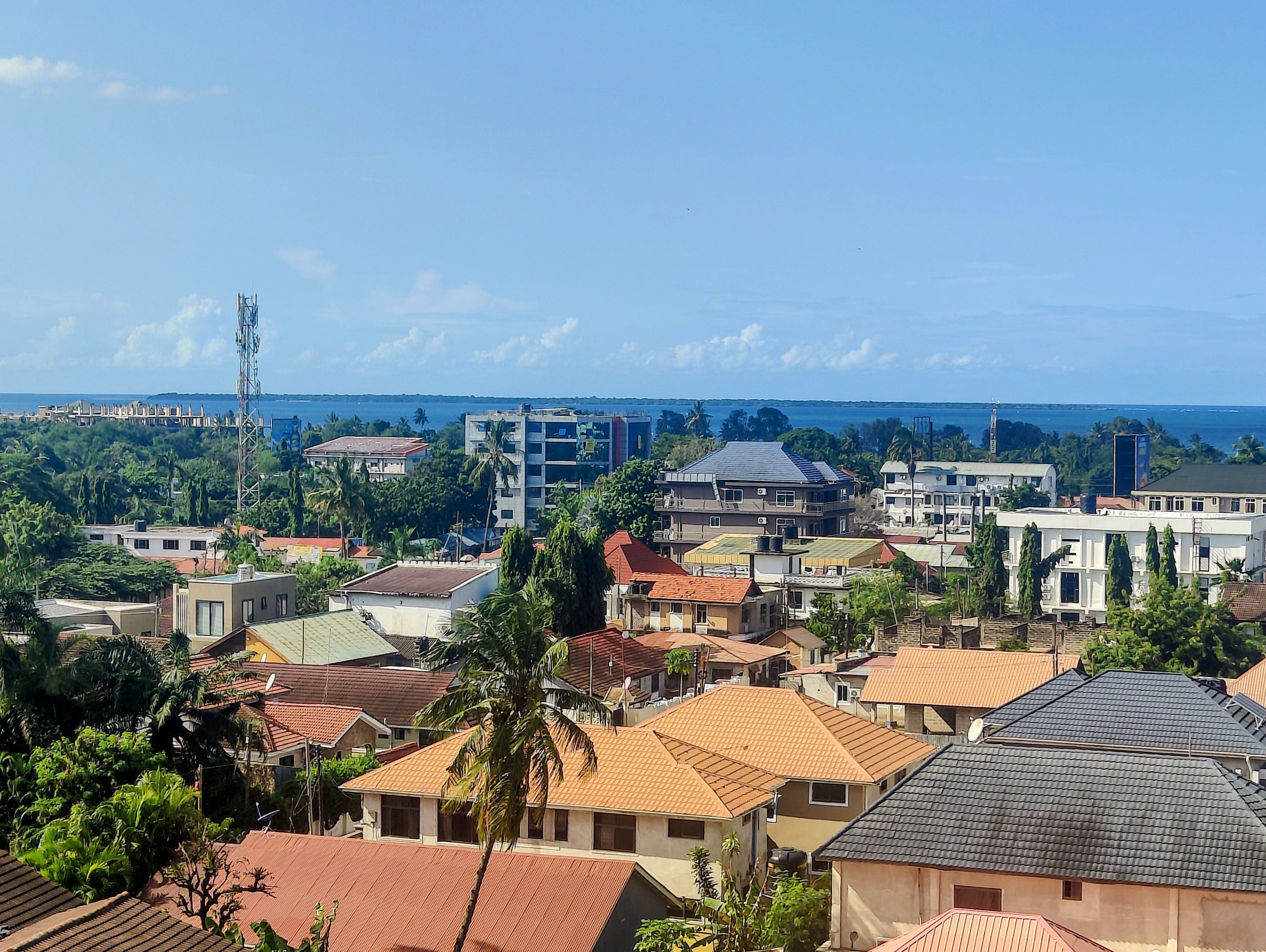
Most of my time in Tanzania was spent in the Dar es Salaam Region, an urban center rapidly emerging as a challenger to Nairobi’s status as East Africa’s economic heartbeat.
In Uganda, I traveled along the long corridor connecting the Central and Eastern Regions, encompassing the shores of Lake Victoria and linking Uganda to Kenya through the Busia One Stop Border Post.
Moving across those locales offered a broader view of East Africa than is possible from afar or even from its capitals and major cities. The region’s story is being shaped not only in Nairobi, Dar es Salaam or Kampala, but also on farms, in market towns, roadside trading centers and rapidly expanding communities far from the capitals.
That broader view also complicates conventional assumptions about East Africa’s trajectory. As tends to be true of other parts of the continent, East Africa is frequently discussed through the lens of national statistics, presidential politics and its major cities—and safari tourism.
Yet the lived experience of economic change is much more uneven. A technology entrepreneur in Nairobi, a trader in Mbeya, a farmer in Nyagatare and a small-business owner in Kampala may all participate in the same regional economy while experiencing it very differently.
That unevenness sits alongside a concentration of opportunity. East Africa has many of the ingredients for a transformative future: a young and increasingly urban population, expanding regional markets, strategic access to major global waterways, entrepreneurial dynamism and a position as one of Africa’s principal engines of growth.
Recent developments have exposed the fragility of that promise. Civic institutions are weakening under authoritarian pressure, governments face difficult fiscal choices and economic opportunity remains unevenly distributed. High-profile uprisings in the region underscore the collision between rising popular expectations and institutions struggling to accommodate them.
My recent travels left me with a strong sense of a region entering a period of immense promise and considerable risk. With the first quarter of the 21st century now behind us, the next one could be transformative for East Africa and the broader continent.
The central challenge for regional leaders and institutions is whether they can reconcile East Africa’s enormous potential with the obstacles standing in its way.
Having spent much of my professional and personal life moving between West and East Africa, I have always been struck by how familiar and divergent the two regions can feel.
Traveling across East Africa as a West African with expanding ties to East Africa offers a useful vantage point: close enough to recognize shared economic, political and social patterns, but distant enough to notice differences that may be invisible to the uninitiated.
The similarities are striking. Both are young, rapidly urbanizing societies with large “informal” economies and populations connected through smartphones, social media and mobile money. Their states face the same basic challenge: rising public expectations amid limited capacity. Citizens want jobs, security and accountability, while governments struggle with debt, corruption, competing priorities and the demands of serving rapidly growing populations.
The similarities mask important differences in political culture and economic organization. Kenya feels in some respects more similar to Nigeria than to its East African neighbors: politically competitive and commercially aggressive, with a formidable private sector and a political class capable of turning virtually every issue into a national contest.
Nairobi’s scale and energy are consequential within East Africa in much the same way Lagos is in West Africa, despite their different histories and physical character. The two countries also share a main-character syndrome that their neighbors do not always appreciate.
Tanzania feels different. Its politics have historically been more centralized and its national identity more cohesive, while Julius Nyerere’s legacy of ujamaa continues to shape how Tanzanians understand the state and nation. Dar es Salaam has the commercial energy of a major African metropolis, but its political atmosphere differs noticeably from Nairobi or even Accra.
Dar’s port ambitions echo those of Abidjan, Cotonou and Lomé, all seeking to become essential gateways for landlocked neighbors. Tanzania’s advantages are geographic scale and relative political continuity, while West Africa’s is a dense concentration of competing ports, creating both competition and duplication.
Uganda occupies another position. Kampala is dynamic, entrepreneurial and overcrowded, but the political system remains heavily shaped by President Yoweri Museveni’s seemingly timeless rule.
For a West African accustomed to the alternation and political volatility of Ghana or Nigeria, Uganda’s political longevity is striking and more reminiscent of Togo. Sit in Kampala and the median age in the room is younger than in almost any West African capital except perhaps Bamako and Niamey.
Uganda’s informal economy absorbs much of that youth for now, much like Ghana’s does, but neither country is creating industrial jobs at the pace and scale its population requires.
Uganda’s political leadership is long-tenured and has staying power, while West Africa’s youth bulge is colliding with the opposite problem—the Sahel’s coup cycle and a younger generation rebelling against both domestic elites and the Economic Community of West African States (ECOWAS), the body charged with overseeing the region’s governance framework.
Ethiopia is harder to place. Its size, population, federal system and conflict-influenced ethnic and regional competition sometimes invite comparisons with Nigeria. Yet tangible differences in geography, state formation and political economy point to divergent trajectories.
Rwanda and Bénin offer another revealing comparison. Despite different histories, both are small nations bordering larger neighbors whose inefficiencies have shaped their state-building strategies.
Bilateral relations between the two deepened during Patrice Talon’s presidency from 2016 to 2026, when the former Béninese president expressed his admiration for his Rwandan counterpart, Paul Kagame, whose policies Talon described as a blueprint for his own administration. Both pursued state-building centered on executive authority, institutional discipline, economic modernization and a more efficient state.
Since the turn of the 21st century, Rwanda and Bénin have sought to position themselves as stable, reform-oriented developmental states capable of attracting investment, promoting private-sector growth and punching above their weight diplomatically. Kigali and Cotonou1 , the administrative capitals of Rwanda and Bénin, have similarly been transformed into showcases of cleanliness, urban modernization, digital innovation and tourism.
Under Talon, Bénin adopted elements of Rwanda’s centralized, security-conscious political model, reflecting a shared belief that African development requires a capable, interventionist and politically dominant state.
Political differences between the two regions are mirrored in their economic geographies. West Africa’s economic imagination is heavily shaped by Nigeria’s enormous market and the commercial networks stretching across the Gulf of Guinea and Sahel. Lagos, Accra, Abidjan and Dakar operate as major commercial centers within overlapping Atlantic-oriented economies.
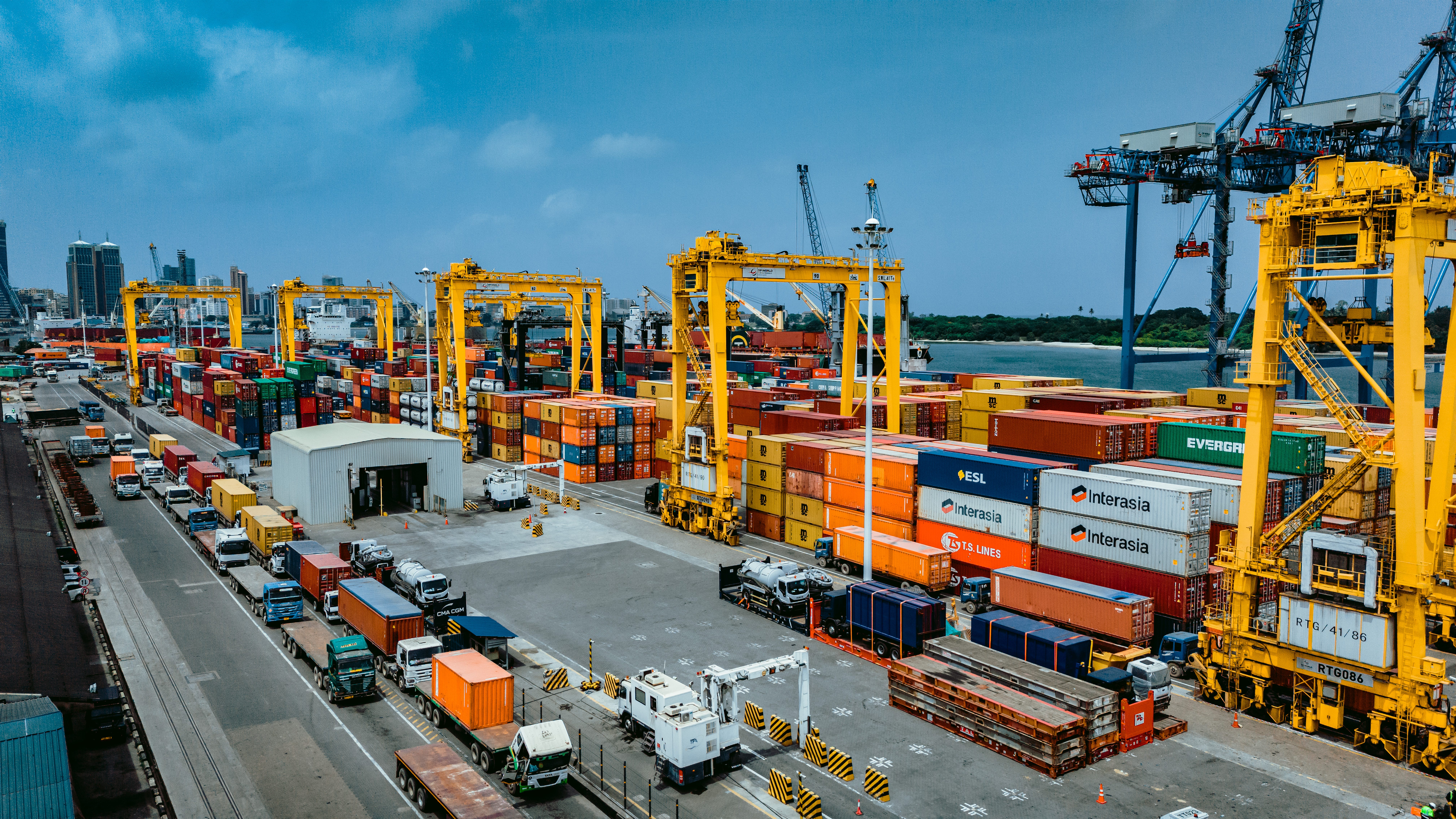
East Africa, by contrast, is more strongly oriented toward the Indian Ocean and corridors linking inland countries to ports in Mombasa and Dar es Salaam. Nairobi, in particular, functions as a regional commercial and financial hub extending well beyond Kenya.
West Africa often projects political and commercial urgency—a region accustomed to volatility, improvisation and competition. East Africa can appear more deliberate and institutionally conservative, although this varies from and even within country.
Neither model is inherently superior. Each has strengths and vulnerabilities. West Africa’s dynamism produces extraordinary entrepreneurship but can also fuel instability. East Africa’s institutional continuity can facilitate long-term planning but preserve political systems resistant to change. Both regions have much to learn from each other.
The comparison matters precisely because neither region fits a simple stereotype. Both are confronting the same fundamental challenge: turning young, rapidly urbanizing populations into engines of prosperity before economic frustration becomes political instability.
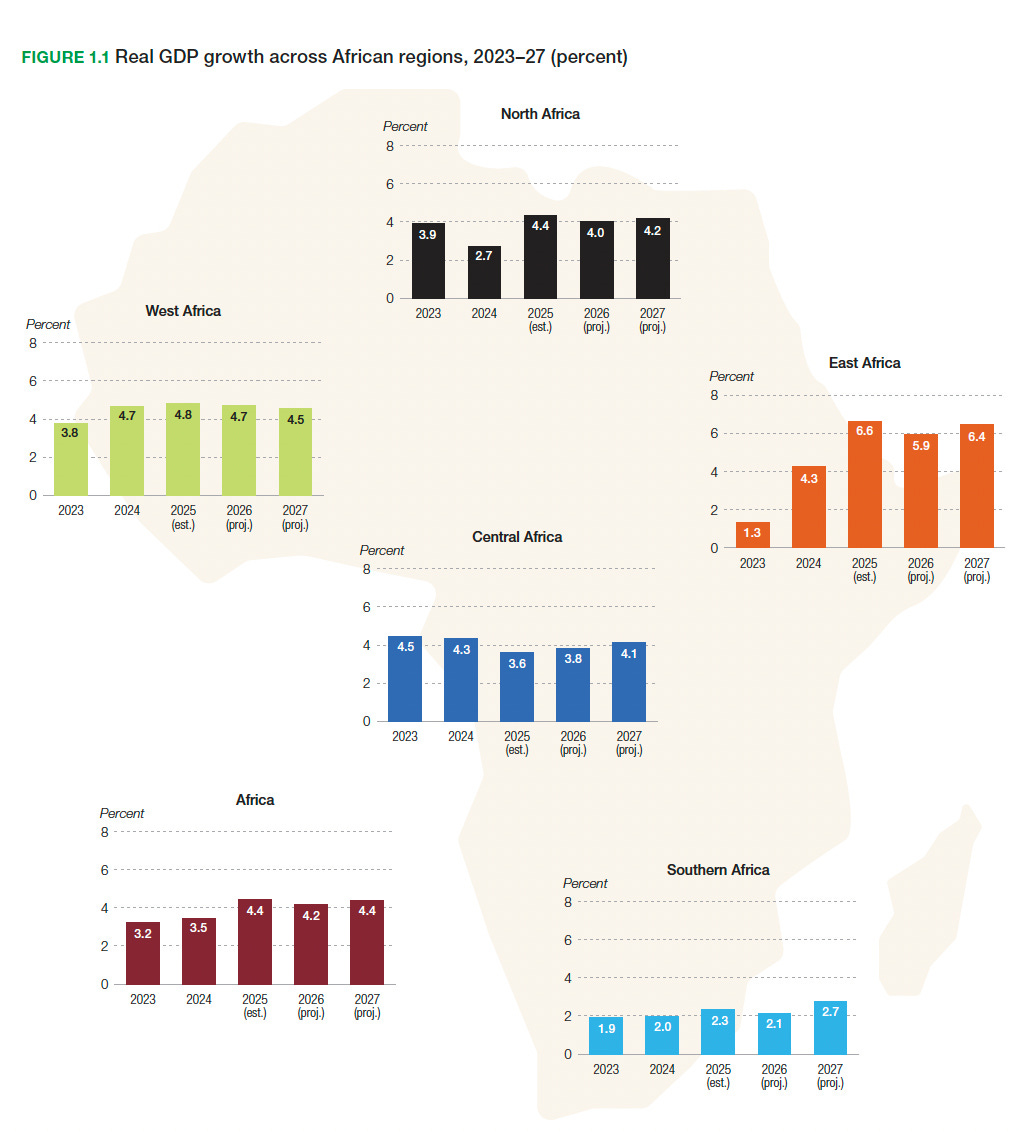
East Africa has consistently been Africa’s fastest-growing region over the past decade, averaging more than 5% annual growth and outperforming the continental average.
The African Development Bank projects 5.9% growth for East Africa in its most recent African Economic Outlook, driven by agriculture, mining, services, and exports. The region has maintained this performance despite global headwinds that have prevailed since the COVID-19 pandemic.
Growth is spread across dynamic markets like Ethiopia, Kenya, Rwanda, Tanzania and Uganda, which have made significant gains in agriculture, construction, infrastructure and telecommunications. East Africa is a hub for technology and finance, with mobile money and vibrant startup ecosystems emerging as mainstays of the economy.
Regional integration is reinforcing that momentum. The East African Community (EAC) and the Common Market for Eastern and Southern Africa (COMESA) have expanded markets and encouraged cross-border investment, infrastructure development, regional value chains and economic cooperation.
Agricultural potential, renewable-energy resources, and expanding transport networks such as the Standard Gauge Railway (SGR), Northern Corridor and Central Corridor further strengthen the region’s prospects.
East African carriers like Air Tanzania, Ethiopian Airlines, Kenya Airways and RwandAir connect Addis Ababa, Dar es Salaam, Kigali and Nairobi to destinations across the globe. Their expanding continental routes are strengthening intra-African tourism, trade and connectivity.
This complements East Africa’s relatively liberal visa regimes: 11 of the top 20 best-performing countries on the 2025 Africa Visa Openness Index were in the broader Eastern Africa region.
The region is also becoming a strategic node in the global scramble for critical minerals as battery manufacturing, electrification and the energy transition drive demand for cobalt, graphite, lithium, nickel and rare earths. Tanzania holds significant graphite and nickel deposits and Kenya is exploring iron ore and niobium reserves, while East Africa’s proximity to the Democratic Republic of Congo positions it as a crucial transit and processing corridor for cobalt.
The creative economy is moving from the margins of policy conversation to the center of economic and cultural strategy in East Africa. Digital storytelling, fashion, film, music and visual arts are becoming recognized for their contributions to employment, innovation, revenue generation and international branding.
Kenya’s fashion industry and Tanzania’s bongo flava and taarab scenes are attracting global attention, while Addis Ababa’s art galleries and Kampala’s comedy and theater circuits reflect a region confident in telling its own stories.
Streaming platforms are also commissioning East African films and music, allowing creatives to bypass traditional gatekeepers and reach diaspora and global audiences directly.

Sports is emerging as another major economic driver. Kenya’s high-altitude training hubs, particularly Iten and Kaptagat, have produced champions such as Eliud Kipchoge and Faith Kipyegon while attracting sports tourism, investment and sponsorship, fueling local economies in the process.
Rwanda has become a major hub for African sports business, investing in infrastructure such as BK Arena and hosting tournaments such as Afrobasket, the African Volleyball Championships, Basketball Africa League and the UCI Road World Championship.
Kenya, Tanzania and Uganda will co-host the Pamoja 2027 Africa Cup of Nations—inshallah, I will be there no matter what—marking the first time in decades that the continent’s premier football tournament will be held in East Africa.
East Africa’s development matters far beyond the region, particularly to the success of the African Continental Free Trade Area and Africa’s broader economic prosperity. The region’s combination of demographics, entrepreneurship, geography and regional integration makes it one of Africa’s most important engines of 21st-century growth.
Beyond economics, East Africa occupies a position of diplomatic and geopolitical importance. Its significance derives from its strategic geography, growing economic weight, political diversity, security challenges, and role in international diplomacy.
East Africa’s proximity to the Red Sea, Indian Ocean and other global trade routes places it at the heart of commerce linking Africa with Asia. Djibouti, Somalia, Kenya and Tanzania exercise influence over maritime corridors carrying substantial volumes of global trade and energy.
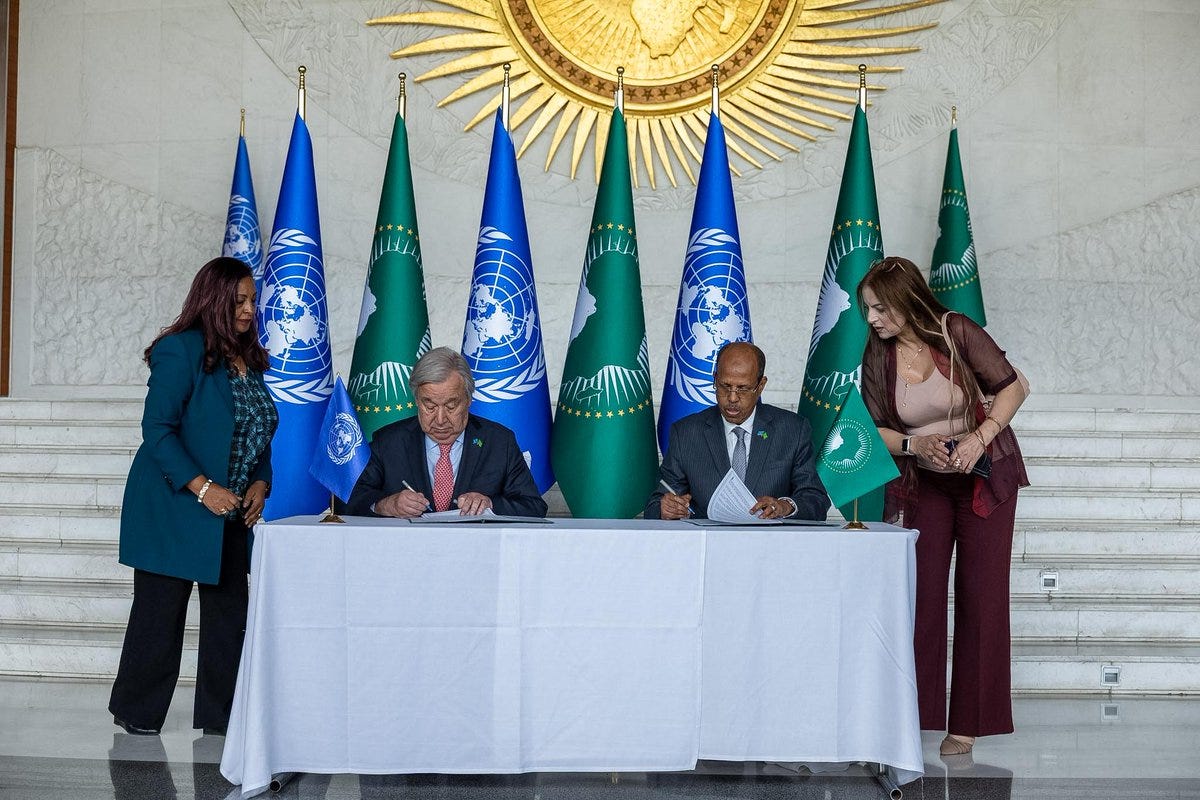
Nairobi, Addis Ababa and Arusha are important centers of international diplomacy and regional policymaking. Ethiopia’s hosting of the African Union (AU) further reinforces the region’s institutional importance, as does the United Nations presence through the UN Office at Nairobi and the Economic Commission for Africa.
East Africa is also an arena for competition among external powers. Regional governments are expanding ties with the likes of China, India and the Gulf states while maintaining strong relations with the United States and European Union.
China has expanded its presence through infrastructure, trade, and development financing. Washington and Brussels remain deeply engaged in security, counterterrorism and diplomacy. Djibouti has become a particularly important strategic hub, hosting foreign military facilities and serving as a gateway to the Horn of Africa.
India, Turkey, Saudi Arabia, Qatar and the United Arab Emirates are expanding their regional footprint through commerce, energy, infrastructure and security cooperation. This competition gives East African governments opportunities to diversify partnerships and pursue strategic interests without excessive dependence on any single partner.
Ethiopia’s planned Bishoftu International Airport and Rwanda’s Bugesera International Airport illustrate how African governments are using major infrastructure projects to leverage external competition in East Africa.
Security challenges further enhance the region’s geopolitical significance. Somalia’s militant insurgency, conflicts in Ethiopia and Sudan, and instability elsewhere in the Horn generate refugee flows, humanitarian emergencies, and cross-border security threats.
These crises require international mediation, peacekeeping, humanitarian operations, and regional diplomacy, giving the AU and the Intergovernmental Authority on Development (IGAD) important roles in conflict resolution and security.
East Africa also sits at the intersection of several overlapping regional institutions. The EAC is concentrated mostly around the Great Lakes, while IGAD spans the Horn. Most East African states belong to more than one of Africa’s eight Regional Economic Communities such as COMESA, EAC and IGAD.2 The region therefore functions as a bridge linking Africa’s central, eastern, northern and southern political theaters.
The global competition for access to East Africa’s mineral resources is adding another layer to this competition. Foreign powers are offering infrastructure investment, mining concessions and processing partnerships, accelerating rail, port and energy projects such as the expansion of the SGR and Mombasa port.
Governments are also pursuing beneficiation policies that seek local processing rather than raw-mineral exports, aiming to capture more value from their resources. Yet governance, environmental and equitable benefit-sharing risks remain as critical minerals reshape the region’s position in global supply chains.
Ultimately, East Africa’s strategic importance lies at the intersection of geography, commerce, security, and diplomacy. Its governments are increasingly shaping great-power competition rather than merely reacting to it.
As global attention intensifies around the Red Sea, Indo-Pacific trade, African markets, and regional security, East Africa is likely to remain a pivotal arena in international affairs.
East Africa’s outlook has long been one of resilience and promise—steady GDP growth, expanding regional integration, and a young, digitally connected population framed as a demographic dividend.
Beneath those headlines, however, lies structural weakness and a political architecture at odds with the region’s development aspirations. The gap between aspiration and reality is widening, while macro-level indicators obscure vulnerabilities that could become more consequential.
The clearest warning is the entrenchment of electoral autocracy, in which elections are held, opposition parties exist, constitutions remain in place and the three arms of government technically remain separate, but the conditions required for genuine competition steadily deteriorate.
Rwanda represents a consolidated version of this model, while Uganda illustrates its longevity. Kagame and Museveni have ruled for a combined 66 years and altered their countries’ constitution to remove term limits.
Their continued dominance, alongside the growing prominence of their sons in the military, underscores the danger of succession becoming a praetorian or familial inheritance rather than an institutional process.
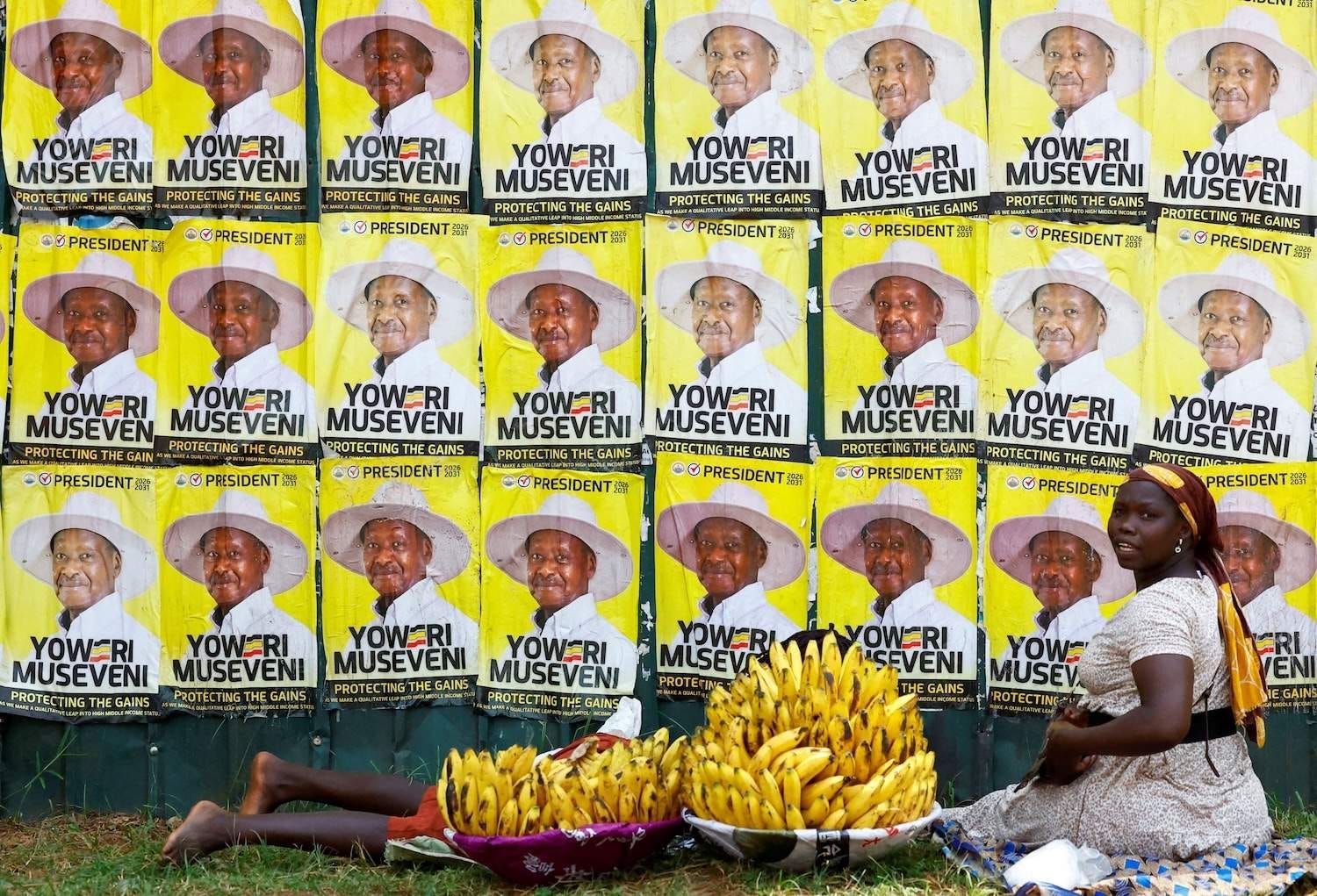
In recent months, Museveni and other leaders in Djibouti, Ethiopia and Tanzania have been reelected with overwhelming majorities against token opposition, amid an intensifying cycle of repression in which opposition figures have been detained, civic space restricted and journalists and activists targeted.
Elections in Tanzania and Uganda were especially grim, taking place against a backdrop of abductions, enforced disappearances and killings of hundreds of citizens during protests before and after the polls.
The scale and normalization of this repression are especially worrisome in a global environment more tolerant of severe human rights violations. Regional governments are coordinating cross-border repression, sharing tactics and engaging in transnational efforts to suppress dissent and civil society.
East African activists, dissidents and opposition figures including Agather Atuhaire, Boniface Mwangi, Kizza Besigye, Tundu Lissu and Victoire Ingabire have faced arrest, deportation, rendition, torture and attempted assassination, including while traveling within the region.
East Africa’s “democratic winter” is particularly striking because it is occurring through elections rather than coups. This helps explain why the region’s political deterioration attracts less international handwringing than West Africa, long portrayed as the continent’s “coup belt.” Yet the erosion of human rights, political competition and institutional succession is creating vulnerabilities that could undermine the stability on which development depends.
The increasing level of autocracy in East Africa is compounded by a gerontocracy that the region shares with the wider continent. Long-serving rulers such as Kagame, Museveni, Djibouti’s Ismaïl Omar Guelleh and Eritrea’s Isaias Afwerki have held power for decades.
Such sit-tight politics hollow out succession planning, discourage institutional adaptation and leave governance systems dependent on leaders disconnected from a restless, youthful population.
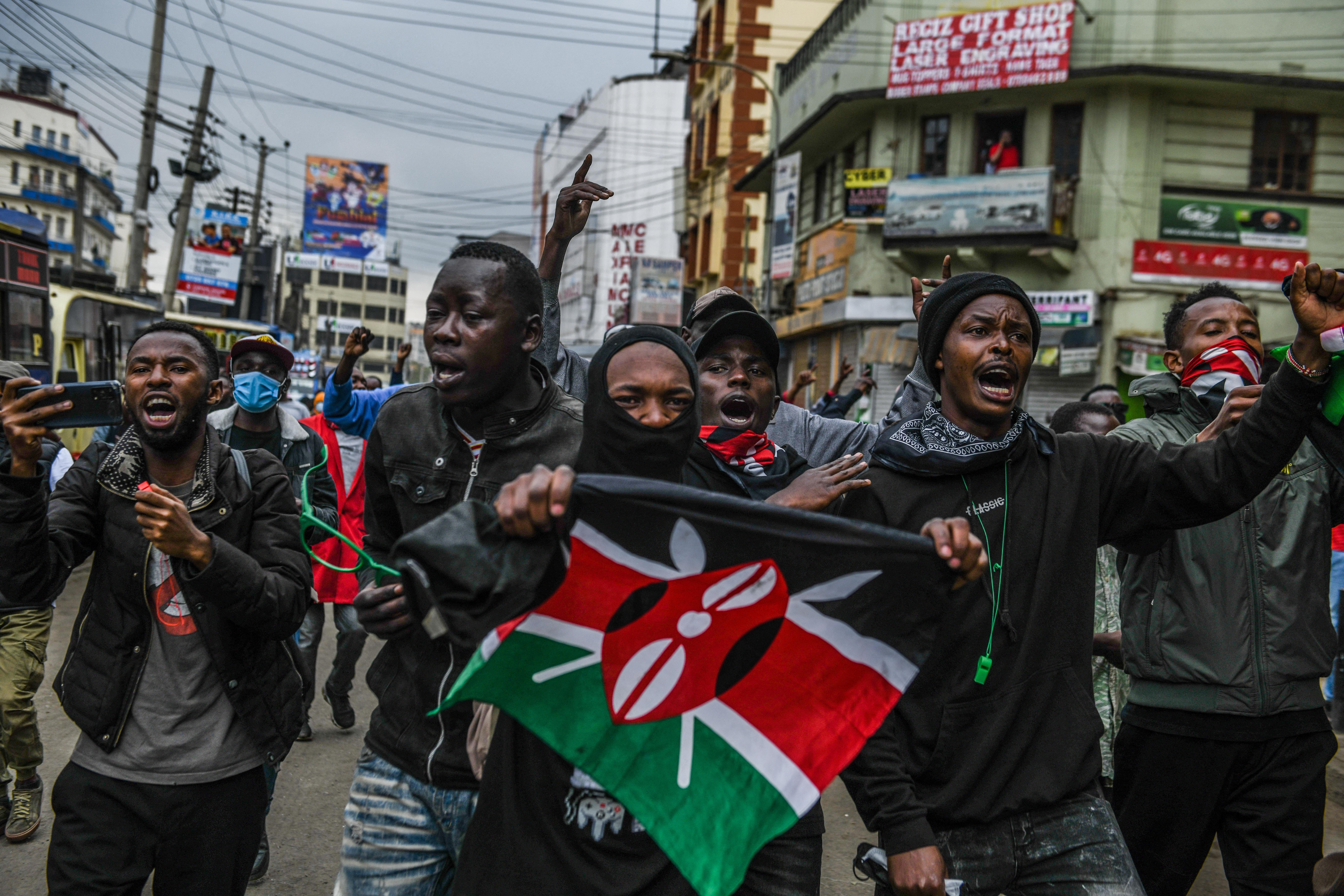
That divergence is the region’s real vulnerability. Frustration over stalled economic opportunity and poor governance has repeatedly spilled into street unrest. Kenya’s 2024 Finance Bill protest, initially driven by proposed tax increases, evolved into a broader movement for systemic reform. The government responded with force rather than good-faith negotiation, suppressing symptoms while leaving underlying grievances intact.
East Africa’s strong growth is blunted by weak job creation, rising debt, limited industrial transformation, poor domestic revenue mobilization, stark disparities within and between countries, and climate change.
Per-capita incomes have not significantly risen despite strong GDP growth, while poverty reduction has stagnated or reversed in parts of the region. Several of the world’s poorest countries, including Burundi, DR Congo, Madagascar and Somalia, are in East Africa.
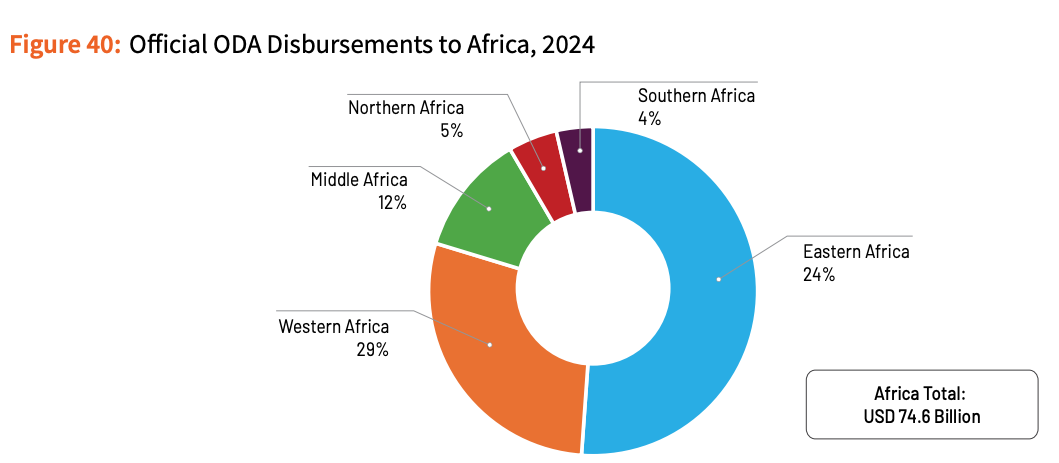
This fragility is compounded by declining Official Development Assistance (ODA) in a region that has received nearly half of Africa’s ODA in recent years. A 2026 UNECA assessment captures the region’s dilemma: East Africa “is performing better than global conditions would predict but not as well as its long-term ambitions require.”
This makes East Africa’s perceived stability illusory. Investment narratives built around macroeconomic indicators and shiny infrastructure projects often overlook the political settlements sustaining them through repression and managed elections rather than institutional legitimacy. Security crackdowns, fragmented opposition and elite bargains can only contain unrest for so long, potentially erasing years of development gains.
East Africa’s seeming stability should therefore be understood less as resilience than as a deferred reckoning. Kenya, for instance, is not inherently immune to the ruptures experienced elsewhere on the continent, despite perceptions of exceptionalism inside and outside the country.
The long-term economic danger is not simply political instability but institutional fragility. Imperfect politics are one thing; weakened courts, arbitrary security forces, constrained civic spaces, unpredictable governments and succession crises are another. Together they bode poorly for sustainable, long-term development.
This produces East Africa’s central paradox: the region can appear politically stable and economically dynamic while its underlying institutions grow more fragile. Its downside scenario may not be economic collapse, but years of 4-7% growth without fundamental economic transformation, leaving governments more indebted, young populations more frustrated and political systems reliant on coercion to preserve a façade of stability. In that scenario, the region’s purported stability would be an artifice that unravels faster than its economic fundamentals can withstand.
East Africa’s future will be shaped by the interaction of four interconnected forces: economics, politics, security and demography. Economically, countries must create enough productive jobs for rapidly growing populations while managing debt, inflation, weak public finances and uneven development.
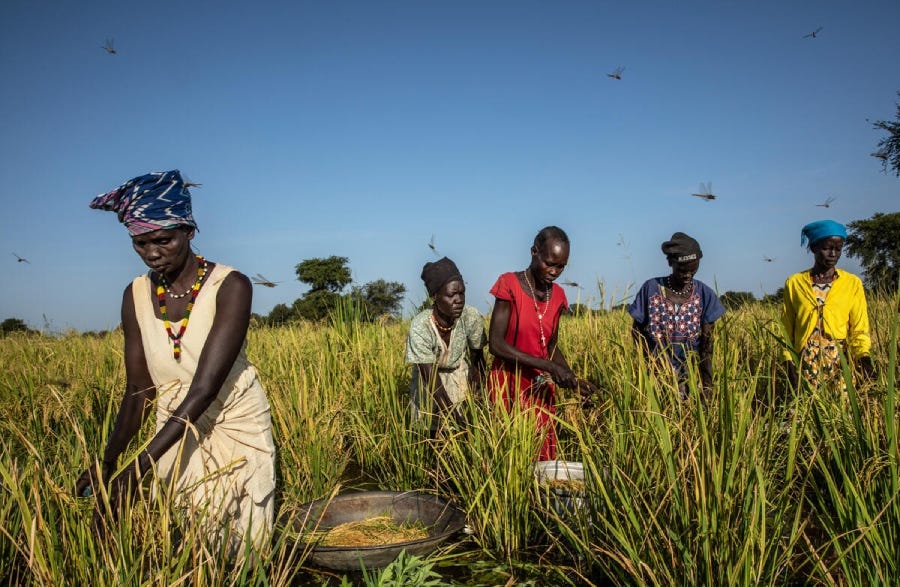
The challenge is not simply generating growth, but ensuring it reaches rural communities and smaller towns where millions of people still depend on agriculture and informal employment.
East Africa’s geopolitical importance is also a vulnerability. Conflicts in Sudan, Somalia, Ethiopia and the Great Lakes can spill across borders, while competition over ports, military access and diplomatic influence can intensify regional rivalries. Governments must therefore leverage external competition for investment and diplomatic support without becoming dependent on competing outside powers.
My travels across West and East Africa have caused me to reflect on how the two regions confront similar problems in isolation, sometimes reinventing solutions the other has already tested or learned the hard way.
The most obvious opportunity to attempt to fix this is through regular institutional peer review between the EAC and ECOWAS, rather than relying on the slower, broader African Peer Review Mechanism.
In fairness, governments and multilateral institutions across the two regions already do some degree of collaboration, and it should happen with more frequency and intensity.
For instance, a regular ECOWAS-EAC learning forum could allow bureaucrats and policymakers to share what worked and what failed in their respective integration efforts.
Nigeria’s experience rolling out the National Single Window Trade System could inform Tanzania, while the EAC’s relatively smooth Common Market Protocol could offer lessons for ECOWAS’s cumbersome free-movement regime.
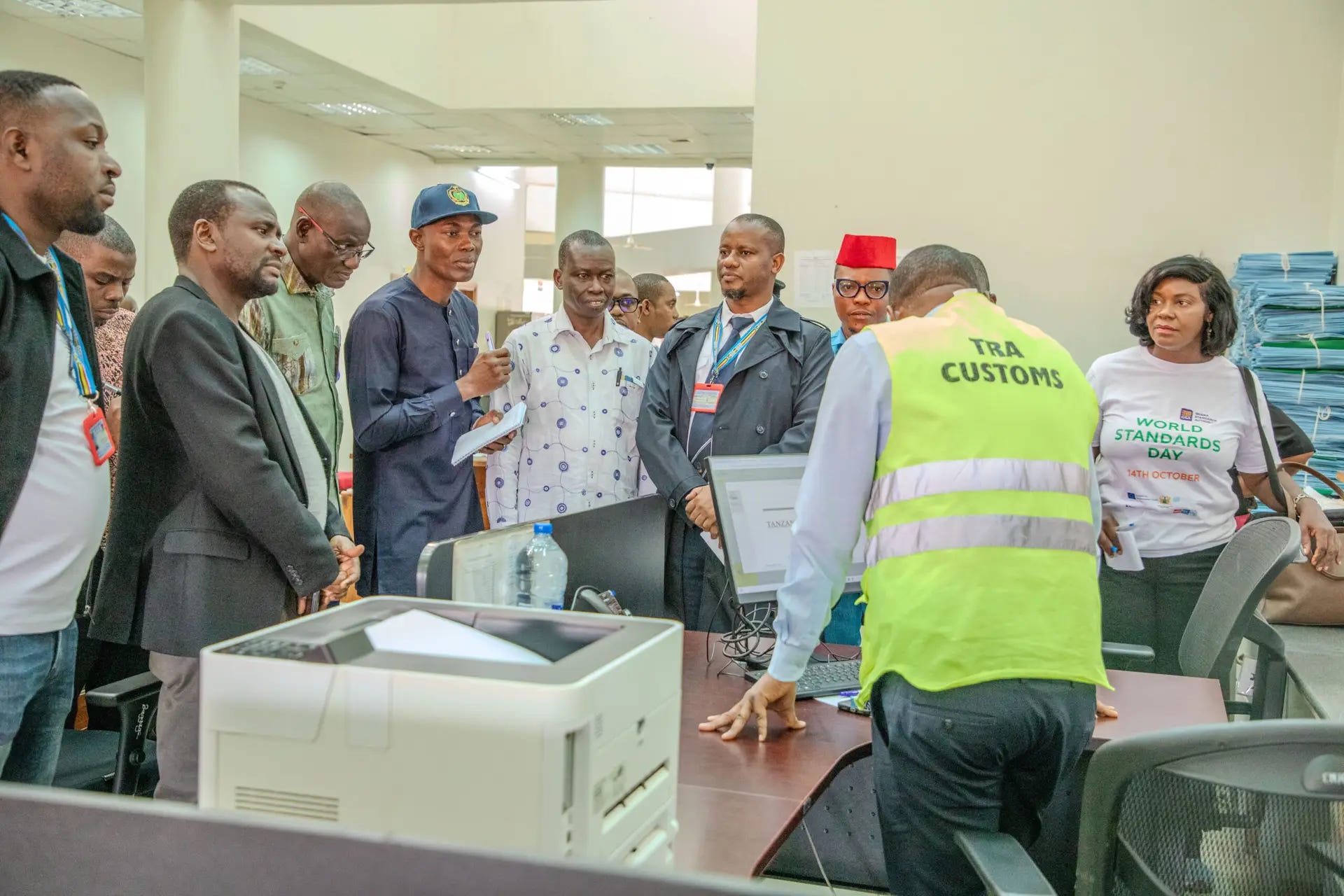
Bilateral learning matters just as much. Rwanda’s e-governance infrastructure offers lessons for Ghana as it pursues digital reform while managing a fragmented civil service. Kenya’s fintech and mobile-money regulatory framework could inform Côte d’Ivoire and Senegal as they expand digital payments.
None of this requires new treaties or reinventing the wheel. Private firms and other non-state actors already conduct this kind of cross-regional learning effectively. Governments and multilateral institutions can do the same.
“African solutions to African problems” should mean African nations comparing notes to solve shared challenges, not repeatedly looking to London, Paris, Washington and Brussels for answers, as they have done for far too long. The problem is often not a shortage of workable solutions, as is commonly believed, but a failure to transfer them across borders and institutions.
Ultimately, East Africa does not lack economic opportunity. Like much of the continent, it suffers from an institutional deficit that prevents opportunity from becoming broad-based prosperity.
The region’s next phase of development will depend less on discovering another resource or announcing another megaproject than on building systems with predictable rules, autonomous institutions and economies in which success depends more on productivity than proximity to state power. That is the foundation for sustainable development in East Africa.
Porto-Novo is technically Bénin’s official capital, but Cotonou is its seat of government where most government departments are situated and foreign diplomatic missions are located.
In addition to Africa’s eight RECs, there are dozens of other intergovernmental organizations across the continent like the Mano River Union and the International Conference on the Great Lakes Region.
Comments
Nothing yet. Say the first thing.
Sign in to join the conversation.