
Friends,
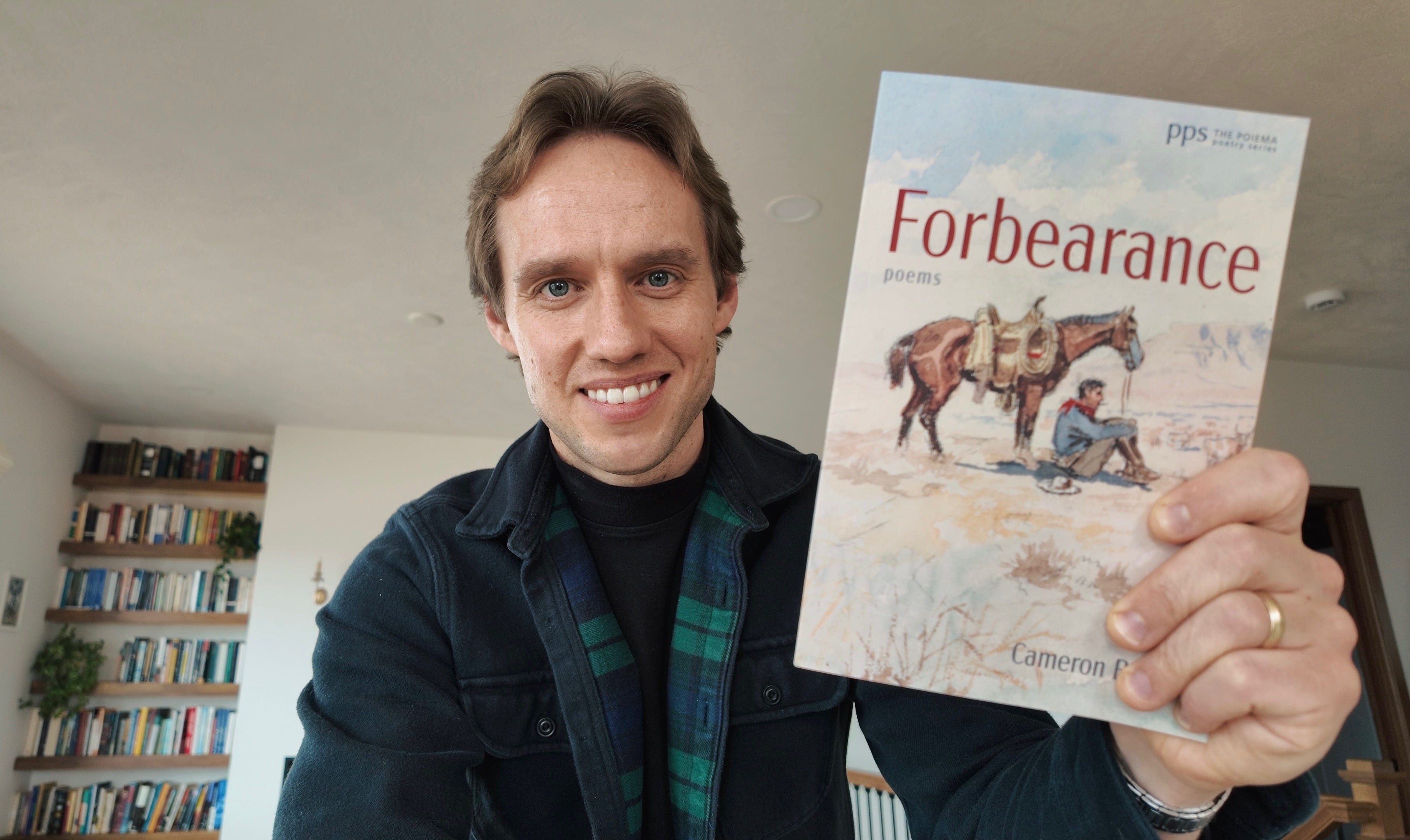
Today marks one year since the publication of my first book of poems, Forbearance. To all who have read it, loved it, loathed it, lost it, lost interest in it, shared photos of it among mountains, lakes, or in the hands of your children—thank you for attending to these words.
Now, some of you have already been asking me what’s next, which is always the question, isn’t it? You only get one debut as an artist, one ex nihio leap from the watery chaos of anonymity. Everything after comes with an asterisk.
I can think of artists whose entire careers seem haunted by the extraordinary success of their early work. The debut sets a precedent, a backdrop against which subsequent work is both created and evaluated, if only in the artist’s mind. Well, “extraordinary success” does not describe my problem, thank goodness, though I confess I feel the pressure of that question: what next…?
Scan the Wikipedia bio of any artist and you will likely find commentary on how his/her style developed over his/her career. The Greats are even given eras—Bob Dylan’s gospel era, Cormac McCarthy’s Southern Gothic novels, etc. This sort of critical classification makes sense in retrospect; however, when artists themselves get preoccupied with the trajectories of their careers, their work can begin to feel overly self-conscious, concerned more with posturing and petty reputation management than the expression of genuine imagination. Taylor Swift is great in her way, but her discography is perhaps the prime modern example of such artistic careerism.1
The danger of artistic careerism is that it subordinates art to artist; art becomes the instrument of ego. Of course, every writer wants to pen something timeless, and we all crave a sense of progress. Personally, I would love to release an album of ambient post-rock bangers one day. The trouble comes when we try to wrangle the spirit of inspiration within the narrow scope of personal ambition. Put differently, trouble comes when we forget we are going to die.
“Write as if you were dying,” says Annie Dillard. “At the same time, assume you write for an audience consisting solely of terminal patients. That is, after all, the case.”2 I have made a practice of rereading Dillard’s The Writing Life every year. Always there is some cold jolt, some fresh revelation. Most recently, I was blithely dreaming of a book of essays I’d like to write one day, perhaps after publishing my next book of poems—which I am only beginning to write—when I read the following:
One of the few things I know about writing is this: spend it all, shoot it, play it, lose it, all, right away, every time. Do not hoard what seems good for a later place in the book, or for another book; give it, give it all, give it now. The impulse to save something good for a better place later is the signal to spend it now. Something more will arise for later, something better. These things fill from behind, from beneath, like well water. Similarly, the impulse to keep to yourself what you have learned is not only shameful, it is destructive. Anything you do not give freely and abundantly becomes lost to you. You open your safe and find ashes.3
Okay, then. No more scheming. No more hedging or hoarding. To hell with your cozy contingency plans. Give! All! Now!
Or that’s how it felt in the moment. Now it is Lent, and I am still reflecting on ashes, mortality, deprivation. The 40 days of the Lenten season hark back to Christ’s 40 days of fasting in the wilderness, which hark back to Israel’s 40 years of wilderness-wandering. In each case the wilderness poses a question: will you trust God to provide? Christ, thrice tempted by Satan, passes the test, revealing his unwavering faith in his Heavenly Father.
But Israel? They flounder.
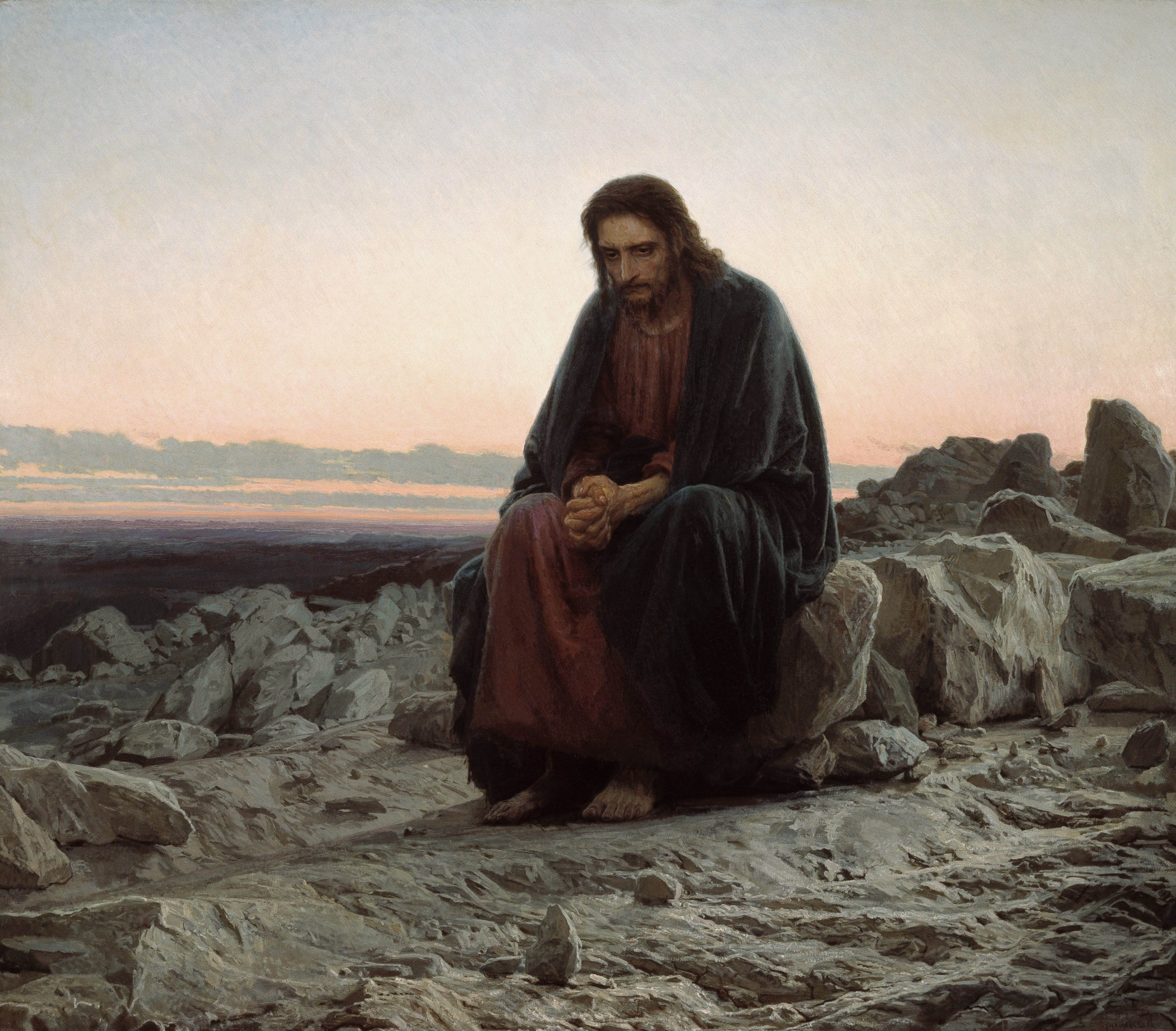
Recall the story with the manna in the wilderness. God promises to send bread from heaven to feed the grumbling Israelites, with two stipulations:
Monday through Friday, they are to gather only the manna they need for each day (leftovers will rot);
on Saturday they are to gather two day’s bread, for none will be given or gathered on Sunday.
True to form, some Israelites hoard more than they can eat in a day (which goes to maggots), and others go looking for manna on the seventh day. Moses gets an earful.
Christ may have had these hungry Israelites in mind when he delivered any number of his parables warning against greed or worldliness. “Fool!” God says to the rich man with many big barns. “This night your soul is required of you, and the things you have prepared, whose will they be?” (see Luke 12.13-21). Surely Christ had these Israelites in mind when he taught his disciples to pray “give us this day our daily bread.”
Dillard wants to apply this ancient wisdom to the writing life. The writer must approach every new work with the absolute abandon of faith. Faith in what? That “something more will arise for later, something better.” The reason “anything you do not give freely and abundantly becomes lost to you” is that the whole business is predicated on grace, which Dillard (nearly) acknowledges in the same chapter: “At its best, the sensation of writing is that of any unmerited grace. It is handed to you, but only if you look for it.”4 Grace shifts art from the realm of ambition to the realm of gratitude.
What I have called artistic careerism is akin to storing up earthly treasure. It is hoarding too much manna; seeking immortality by our own devices. Yet we can smell the falsity. We open our safe and find ashes and maggots.
The alternative? Spend it all, trusting God will continue filling the well. Make ambitious plans, sure, but make them in pencil. Since you are dying, since all your readers are dying, write like you have nothing to lose.
“This is bravery in the life of an artist,” writes Carey Wallace, “not our perfect control as we attempt to scrawl our own mark on the world, but the strength to step into something greater than ourselves, to reach past what we know for what we don’t.”5 In a word: surrender. It is this posture of surrender, of openness, that I admire in artists and non-artists alike.
A.G. Sertillanges once remarked that “Every great work was prepared in the desert, including the redemption of the world.” Despite all appearances, this is what Christ was up to in the desert—preparing a great work, by surrendering his will to God’s.
“Then the devil left him, and behold, angels came and were ministering to him.”
Moonhand
Text within this block will maintain its original spacing when published
We stationed my new telescope on the tailgate
and took turns peering into insatiate reaches
of desert sky over Amarillo’s outskirts, alight
like every other night. Gene focused the dial
on a marble moon, stepped back, and held
his hand five inches from the eyepiece,
catching out of the crisp air a pale bar of light.
Luminous nickel, vatic birthmark, magic
trick tattoo. Rusty motes of desert dust dancing
through the beam, the way snowflakes will
vie for the spotlight of any old street lamp.
Grinning, he slid his hand back into his pocket,
as if to hoodwink the very night. Morning
next it was everywhere and everywhere
at once—the far-flung shreds of the selfsame
sun, violet, aureate, red, flashing over
a fresh plain of hoarfrost atop earth’s crust,
a day’s worth of manna, already melting.
We took in what we could, then went for coffee.
I almost went with “exhibitionism.” You decide.
Annie Dillard, The Writing Life (New York: Harper Perennial, 1989), 68.
Carey Wallace, The Discipline of Inspiration (Grand Rapids, MI: Eerdmans, 2025), 134.
No posts
Comments
Nothing yet. Say the first thing.
Sign in to join the conversation.