
Hi! Here’s your latest tech & startup recap:
🇪🇺 Europe’s Largest Seed Round Ever (Yes, It’s AI)
📝 AI Copies of Real Writers by Grammarly
🖥️ Perplexity’s $200/Month AI That Never Sleeps
📰 + Quick News That Matters
🛠️ + New Tools to Try
📚 + Weekend Picks
Subscribe to receive new posts and support my work.
What’s Happening: Yann LeCun, one of the three “godfathers” of deep learning and a Turing Award winner, has officially launched his post-Meta venture. AMI Labs (Advanced Machine Intelligence) raised $1.03B in a seed round at a $3.5B pre-money valuation — making it the largest seed deal in European history.
The round was co-led by Cathay Innovation, Greycroft, Hiro Capital, HV Capital, and Bezos Expeditions, with Nvidia, Samsung, Mark Cuban, and Eric Schmidt also joining.
AMI Labs is building what it calls “world models” — AI systems that learn from cameras, sensors, and physical environments rather than predicting the next word in a sentence. The architecture behind this is JEPA (Joint Embedding Predictive Architecture), which LeCun developed during his time at Meta.
The Context: LeCun isn’t being subtle about what he thinks is wrong with the current AI wave. He’s said publicly that large language models will never produce human-level intelligence. And he built a billion-dollar company around proving it.
What makes this more than one man’s contrarian thesis is that the money is following. World Labs raised $1B last month. SpAItial pulled in a $13M seed. And now AMI. Three major world-model bets in under eight weeks. LeBrun predicted that in six months, “every company will call itself a world model to raise funding.”
He said it with a smile — but he might not be joking.
What’s Happening: Grammarly launched a paid feature called “Expert Review” last August. For $12 a month, users could upload their writing and receive editorial feedback styled after well-known journalists and authors — including Stephen King, Kara Swisher, and investigative journalist Julia Angwin.
The catch: Grammarly never asked any of them for permission. The AI just used their published work to approximate their editorial voice, then presented the output under their real names.
On March 11, Angwin filed a class action lawsuit against Superhuman (Grammarly’s parent company) in a federal court in Manhattan, alleging the company violated the privacy and publicity rights of hundreds of writers. Grammarly pulled the feature the same day. CEO Shishir Mehrotra posted an apology — but failed to mention the lawsuit. Kara Swisher, upon learning that her AI twin was giving generic advice to strangers, told Casey Newton she planned to “go full McConaughey” on the company.
The Context: This story is almost too on-the-nose: Angwin has spent her entire career investigating how tech companies violate people’s privacy, and Timnit Gebru (one of the most prominent AI ethics researchers in the world) was also in Grammarly’s “expert” lineup.
Grammarly’s defense will likely be that AI suggestions “in the style of” someone don’t constitute impersonation.
What’s Happening: At its first developer conference, Perplexity unveiled Personal Computer — software that runs continuously on a dedicated Mac mini, giving Perplexity’s AI agent persistent access to your local files, apps, and browser sessions. Instead of waiting for prompts, it picks up tasks and keeps working in the background while you’re away. Sensitive actions require approval, and a kill switch lets you shut it down instantly. Available to Max subscribers ($200/month) via waitlist.
The company also rolled out an enterprise version, claiming it completed the equivalent of 3.25 years of work in four weeks in internal testing.
The Context: Personal Computer is Perplexity’s direct answer to OpenClaw — the open-source agent framework that exploded this year and turned Mac minis into always-on AI workers almost overnight.
The concept is identical: a local machine running an AI that operates your apps while you sleep. But Perplexity’s pitch is that its version is safer (audit trails, kill switch) and smarter (orchestrating 19 models instead of one).
The Context Loop is a free newsletter.
If you like what I do, you can support me through a donation.
Cursor Hit $2B ARR: The AI coding assistant doubled its revenue in three months, according to Bloomberg. This happened despite growing chatter about developers switching to Claude Code. Cursor also launched its own in-house model, Composer, to reduce dependence on third-party providers.
The AI coding market went from $500M to over $5B in under a year.
Atlassian Cut 1,600 Jobs “Because of AI”: CEO Mike Cannon-Brookes announced a 10% workforce reduction to “self-fund” AI and enterprise sales investment. The stock went up 2% after the announcement. Weeks earlier, Block’s Jack Dorsey did the same — cutting nearly 4,000 employees with the same explanation.
Atlassian’s stock is down 84% from its 2021 peak, and this is its second round of AI-motivated layoffs in three years.
xAI: 9 Out of 11 Co-Founders Gone: Elon Musk’s AI startup is losing its founding team. This week Zihang Dai and Guodong Zhang departed — following exits by Jimmy Ba, Tony Wu, Toby Pohlen, and Greg Yang since January. Only two of the original eleven remain.
Musk acknowledged it on X: “xAI was not built right first time around, so is being rebuilt from the foundations up.” The FT reported he forced out several founders over frustration with Grok’s coding capabilities, then brought in engineers from SpaceX and Cursor.
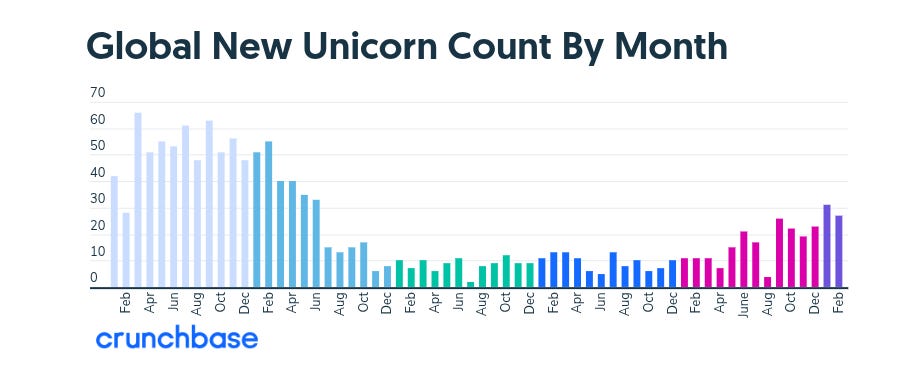
Almost 40 New Unicorns Already in 2026: Crunchbase is tracking every startup that crossed the $1B mark this year — and the count is nearly 40, just ten weeks in. Most are AI-related, but not all. February alone was the largest single month of startup funding ever recorded — $189 billion globally.
Looks Like Someone Jumped the Gun: Remember when BuzzFeed pivoted to AI in January 2023, right after ChatGPT launched? CEO Jonah Peretti promised AI would “replace the majority of static content.” The stock jumped from $3 to $15. Three years later: a $57.3 million net loss in 2025, stock at around 70 cents, and an earnings report with the phrase “substantial doubt” about the company’s ability to keep operating.
The Pulitzer-winning newsroom was shut down to fund AI quizzes. The quizzes were bad.
Share this post if you like it!
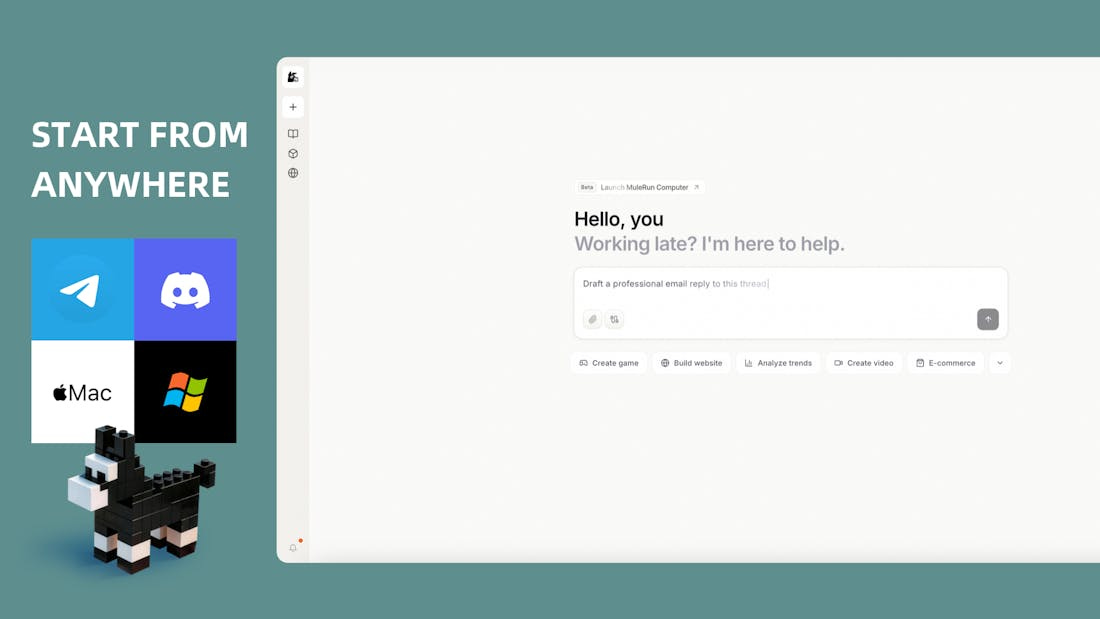
MuleRun — A self-evolving AI that learns your work habits, decision patterns, and preferences — and keeps getting sharper over time. It runs 24/7 on a dedicated cloud VM, works while you’re offline, and proactively prepares what you need before you ask.
No coding, no setup. #1 Product of the Day on Product Hunt today. Free to try.
Replit Agent 4 — Replit’s latest AI agent combines design and code in a single environment: describe what you want, watch it build. 10x faster than the previous version, supports enterprise integrations (Salesforce, Snowflake, Slack), and lets you go from idea to deployed app without leaving the browser.
AFFiNE — An open-source alternative to Notion + Miro that’s been trending on GitHub this week. Combines docs, whiteboards, and databases in one privacy-first workspace. Has built-in AI features and runs locally if you want full data control.
Non-Technical Users Are Shipping Professional Software — Y Combinator
Workers Most at Risk of Being Hit by AI Layoffs Are Well-Positioned to Adapt, Study Finds — Gizmodo
How Pokémon Go is giving delivery robots an inch-perfect view of the world — MIT Technology Review
Comments
Nothing yet. Say the first thing.
Sign in to join the conversation.