
Everyone is talking about The Odyssey right now, and the talk runs hot in both directions. Some love the filmmaking. Others hate the casting. My niece loved the music, mostly because two of her friends play the ancient instruments featured in the score.
People are arguing about the narrative, too — what it means, where the film departs from Homer. We’ll save that for a literature class.
But one scene has stayed with me.
It comes near the end. Calypso sets Odysseus free, and she tells him he must surrender to the gods.
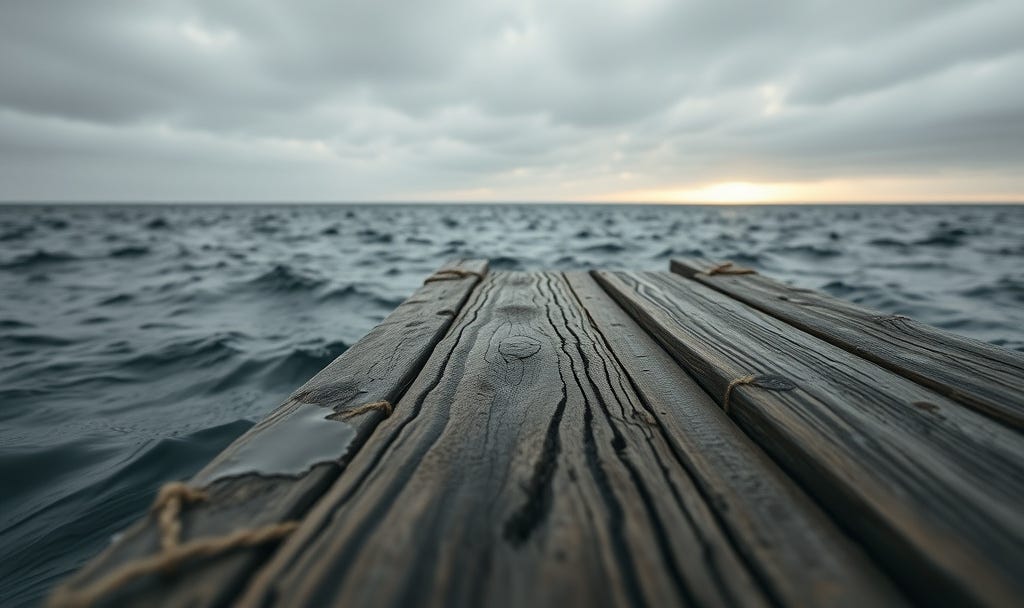
So he does. No rudder. No sail. Just a raft and weather that has no interest in his plans. He floats. Eventually he washes up on the shore of Ithaca.
Think about what that means. The whole story turns on Odysseus steering — choosing the heading, giving the orders, outwitting whatever stands in the water and land between him and home. And at the end, with his men gone and no idea which direction to go, he stops steering. That’s when he arrives.
We live the other way most of the time. We set our heading by our parents’ expectations, by what the culture rewards, by whatever our ego insists it needs. We want to be known. We want to be comfortable. We want someone beside us.
And sometimes we get it. We check every box and end up with a kind of unsettled satisfaction — a life that looks right and still doesn’t feel finished. Some part of us isn’t free. It’s like forgetting something and not being able to name what.
We can read another book about it. We can pay for the luxury retreat, sign up for the workshop. But those are someone else’s route home. They’re human design, not divine.
The other option is the raft. No motor, no rudder, no sail. You let the current take you, however treacherous it looks from where you’re sitting. Through the uncertainty of that path — and the trials that meet you on it — you slowly remember what you had forgotten.
You also remember what actually matters.
I’m not suggesting you build an actual raft.
But contemplative practice works much the same way. You prepare the raft by clearing out the parts of your life that keep dragging you under. You prepare your mind by letting go of any expectation of favor or grandeur — no visions promised, no rewards guaranteed.
Maybe you bring a few words with you. Something short. They work like the grips on a raft, something to hold when the water gets rough.
You may feel brave at the launch. That rarely lasts. Somewhere past the sight of land, fear turns up as a stowaway and starts making suggestions — that you should paddle, that the current has it wrong, that any direction would be better than this one.
Faith says otherwise. Let go. Trust what moves underneath you.
It has carried others. Faith will carry you, too.
Comments
Nothing yet. Say the first thing.
Sign in to join the conversation.