
Flowers, believe it or not, are nature's greatest revolutionaries. In this episode of Constant Wonder, biologist David George Haskell and host Marcus Smith discuss how flowers turned enemies into allies and used ultra-precise adaptations to survive an intensely competitive natural world.
By exploring the floral connections that draw him closer to his mother and great-great-grandfather, David also examines how flowers have changed in just a few short decades. He makes the case for following a single bloom's growth and decay over the course of several months, and describes the benefits of keeping a floral diary—an easy way for anyone to become more attentive to the subtle turning of the seasons.
Guest: David George Haskell, author of "How Flowers Made Our World: The Story of Nature's Revolutionaries"
David George Haskell is a writer and biologist. His next book, How Flowers Made our World: The Story of Nature’s Revolutionaries was published in March 2026 (US, UK). Elizabeth Kolbert says of the book, “Haskell’s great strength as a writer is that he is open to surprise. He regards the planet as a strange and beautiful place. How Flowers Made Our World is at once closely observed, richly reported, and mind-blowing.”
Haskell holds degrees from the University of Oxford (BA) and from Cornell University (PhD). He is Adjunct Professor in the Department of Environmental Sciences at Emory University in Atlanta. He previously was William R. Kenan Jr. Professor of Biology and Environmental Studies at the University of the South, where he served as Chair of Biology and Director of the Environmental Arts and Humanities major. He is a Fellow of the Linnean Society of London, a 2014-2015 Fellow of the John Simon Guggenheim Memorial Foundation, a Fellow of the American Council of Learned Societies, and an Elective Member of the American Ornithologists’ Union. His scientific research on animal ecology, evolution, and conservation has been sponsored by the National Science Foundation, the Environmental Protection Agency, the Fish and Wildlife Service, the World Wildlife Fund, among others.
You can find him here on Substack: David George Haskell newsletter.
Marcus Smith: I’m Marcus Smith, and this is Constant Wonder. Join us as we quest for the awe and wonder of knowing we are part of something infinitely larger than ourselves.
David Haskell: As a child, I loved to put tiny little seeds in the ground and then watch them, over the summer, grow into magnificent creatures. And as a kid, you always want the big dramatic stuff. So for me, those were particularly the squash plants that, in Europe, are sometimes called marrows. The seed that was as small as a fingernail could produce dozens of pounds of fruit that would sprawl in untidy ways all over the lawn, and I loved that, and big yellow flowers. I kept a little diary even then, keeping track of the weight of each of my marrows and, and seeing, could I grow a really big one?
Marcus Smith: Long before he was a biologist, David George Haskell was a kid out in a garden and loving it.
David Haskell: My sister was really into sunflowers, and we would look through the seed catalog to get the seeds that promised the largest single sunflower head, the mammoth sunflower that grew to be two or three feet across.
And of course, by the end of the season, the head was so heavy that the plant fell over, and that was a big disaster. So working in the garden was a source of pleasure and of drama and of heartbreak, and it still is, right? So this year the rabbits ate my entire bean crop. Very frustrating after all that work, but that’s the nature of gardening.
It puts us in touch with the beauty and brokenness of the world.
Marcus Smith: David Haskell is acclaimed for his nature writing, lyrical, enlivening, always marked by scientific rigor and a winning poetic sensibility. He’s been with us before on Constant Wonder, talking about wonders that are discoverable through close, careful listening.
Apart from his discipline and patience as a listener, he’s got an unmatched capacity for attentiveness in other ways. For instance, very early on in life, he couldn’t stop poking his nose into things. It turns out that using your nose isn’t such a bad place to start if you want to get close to the real world.
David Haskell: I think I was a rather annoying young child, in a certain way. When I asked my mother about this, she said, “Oh, yes, you were just sticking your nose into everything.” So if I got a new book for a birthday present, the first thing I would do was smell the paper and the ink, and I still do that, actually, to this day, because every book, every magazine actually has a very different aroma depending on the paper and the ink.
And then when we’d go shopping, I’d be smelling the spice jars. I grew up in France, near Paris, and there were lots of open air markets and cheese shops and things. The aromatic landscape was quite rich. But as a kid, I thought it was perfectly normal. Why wouldn’t you smell all these delightful things?
But also, there’s a strange fascination with the really horrific stuff like the fish at the fish market that has gone off and that they’re throwing away. I wouldn’t necessarily run to that first, but it is quite a powerful impression. And then, as an adult, I learned that each one of those smells is actually a form of chemical connection, language connecting human sensory experience to the more than human world.
Marcus Smith: As you’re talking, I’m thinking about some of my own memories with smell, not all of them pleasant by any stretch. I was so sensitive, I was fearful of a stench. I guess that’s probably an innate human response, but is there something very specific? I’ll give you an example. I’ve mentioned it on this program before: walking on a concrete sidewalk with my sneakers, smashing the little peppercorns from a Brazilian peppertree. I know exactly where that was. Do you have something that particular that you remember?
David Haskell: Yes, and I think many people do. Of course, the sense of smell differs markedly among us, right? We have different genetic composition, and even some people in my family really have almost no sense of smell at all.
Either they were born that way or, through neurodegeneration later in life, lost their sense of smell. So I’m very aware that I’m talking about my particular experience. Aromas that really take me back, the smell of old books in a library is one of those. It takes me back to the calm days before the internet, of being an undergraduate and being assigned reading each week.
And for me, it was this hard work, but it was also this joy to go and be in a quiet place amid all these old books, and that aroma really takes me back. The aroma of a particular perfume, say, that my mother wore, Chanel No. 5, carries me back to childhood. And this connection between aroma and memory is very strong, and it has a neurological basis, that our sense of smell connects directly to the parts of the brain that are associated with memory, and particularly emotional memory, unlike, say, hearing and vision that go through many more processing centers.
And so there’s a little bit more remove, and I think many people have had the experience of walking into their old elementary school, or the cleaning product that was used in the high school hallways. And without even trying or being consciously aware of it, we’re taken back to the feelings we had in those places.
Of course, in elementary schools it’s one thing, but then in forests and in meadows and around flowers, it’s a whole other set of connotations.
Marcus Smith: Where I grew up in Southern California, for whatever reason, there was no lavender in my neighborhood. That just was not a thing that was grown. But Mrs. McEwen, my third grade teacher, had lavender perfume. I did not know the name of that aroma, but when I moved to Utah, where there was quite a bit of lavender, and I was walking about, my head whipped around. I was looking for Mrs. McEwen.
So that’s how things got rolling in my conversation with David Haskell, with the topic of our basic sensory capacity as humans. The main focus of our conversation, though, was always intended to be about his latest book. Sight and smell definitely play roles in this highly engaging volume about flowers. There’s something fitting about the fact that so many of our first encounters with flowers happened under the eyes of the people who raised us, in a family garden, a nearby park, with a table centerpiece at meals, maybe with a parent’s perfume. Long before we ever understand the nature of stigmas or stamens, pistils or pollen, we understand this: flowers are often how people we love leave a trace of themselves on us.
David’s own boyhood introduction to flowers came about this way, through his mother, a woman who apparently was all agog with orchids. His book, by the way, is titled How Flowers Made Our World: The Story of Nature’s Revolutionaries.
David Haskell: Just this morning, actually, I’m visiting with my mother now, as well, and we were looking at some orchids outside.
This is a passion that long predates my existence in this world. When she was an undergraduate in college, she would go out on bicycle with other people out into the hills of England, looking for rare plants, for rare orchids. It was a form of exploration and entertainment, and also of socializing around botany.
And from that moment on, she’s just been passionate about orchids, both the ones that we grow indoors, but especially the ones that you would find wild out in the woods and the meadows. Orchids, of course, generally are not abundant or common creatures, so you need a good eye. You need a good radar turned on to the presence of orchids, and she’s amazing wherever she goes.
I’m looking and I’m seeing the trees and other things, and she will point out, “Oh, look, there’s a little heath orchid!” It’s not even flowering. It’s gone all green. This tiny speck of green in a huge ocean of green, she’s pulled it out. So she’s very tuned in to the presence of orchids and introduced me and my sister to this.
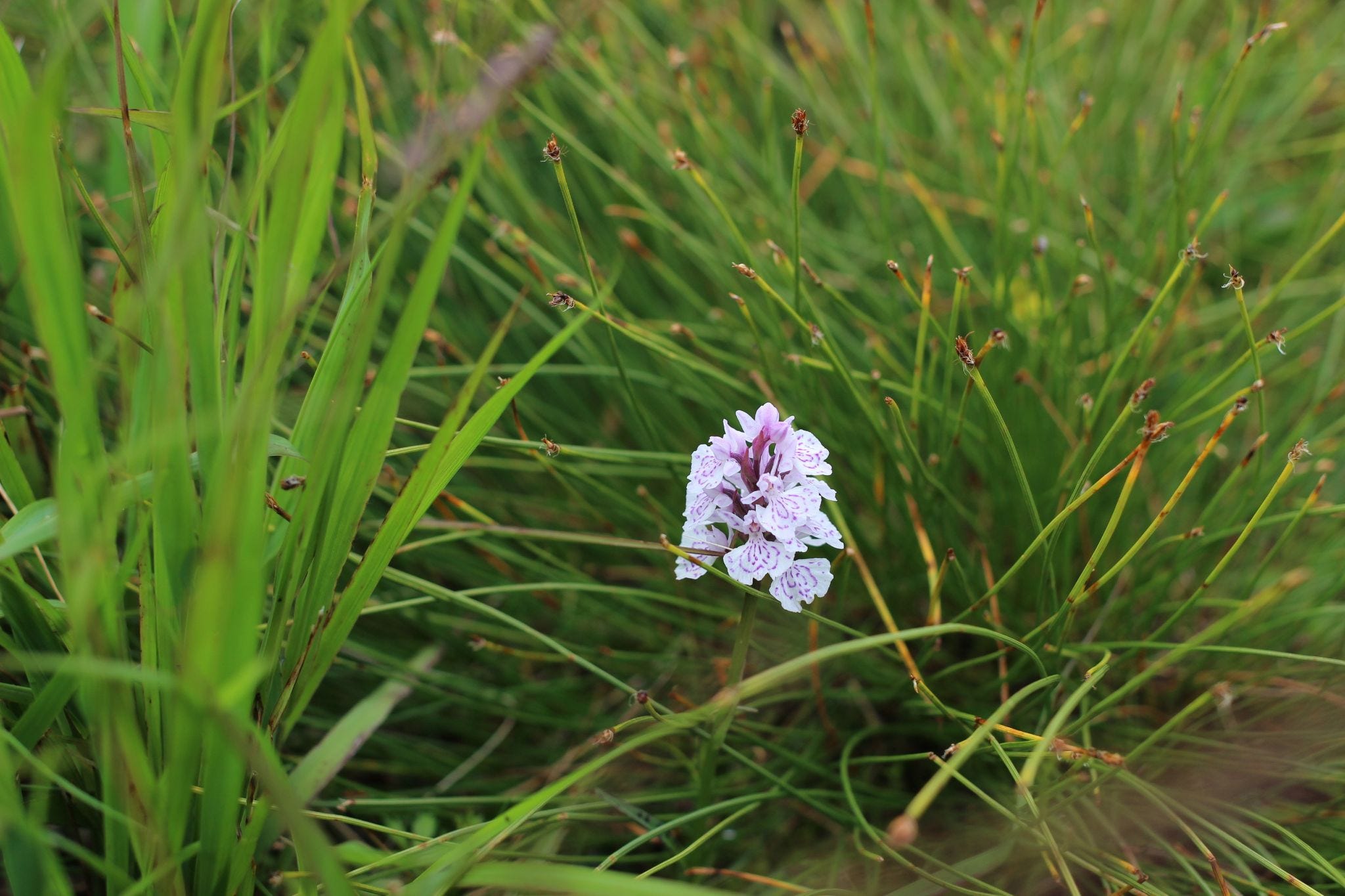
We were reluctant, at first, to come along, but it was a nice weekend out to look for orchids in the countryside. And we were city kids, so this was a big expedition to go outside the city and look in meadows. And we grumble about it, but I do realize that now, those were magical times when we could run freely, away from the constraints of the city.
I grew up in Paris and near Paris, where stepping on a lawn would get you in trouble, right? There’s very formal gardens, and back in, particularly the ‘70s, as a child, if you ran across grass, you’d get whistled at by the park guards. So green was off limits. And yet here, because of my mother’s passion for orchids, she would take the family out for a little picnic and then go look for some orchids beyond the city, we got to experience being around plants, animals, other creatures in a way that now I love and try and make more and more room for in my life.
It was all kindled by her love of orchids that was first coming from a very botanical, scientific point of view and identifying things, but then also expanding into artistic realm, taking photographs, paintings, and just pure appreciation, not boxed into, oh, this is either science or art, but our lives were richer because we knew many of these orchid companions.
Some of them have strange, beguiling names as well, unlike other flowers that seem a little more straightforward. Orchids have weird-looking flowers and have crazy names like lizard orchid and man orchid and fly orchid. As a kid, that was another fun thing because it seemed like each one was a little portal into a fairy tale, if you like, with characters in it.
Marcus Smith: When I think of orchids, I’m thinking of a potted plant bigger than my fist. Are we talking about your mother out in the field in the UK looking for tiny little plants?
David Haskell: Yeah, some tropical orchids are quite big and magnificent. When we go to the supermarket checkout aisle, those big colorful pink and white orchids, they’re mostly from Southern and Eastern Asia. They’ve been bred to produce very visually spectacular flowers. Orchids that grow out in the wild are often more subtle, say the ones we were looking for in France, as tall as my hand or maybe some fingers and, and the flowers were just tiny, maybe the size of a penny. And some of them were brightly colored, yes, so pinks and purples, but many of them were browns or beiges, and these were orchids that communicated to insects mostly through aromas.
So even if they weren’t visually spectacular, they were quite conspicuous to the insects. So we called it orchid hunting because you actually had to go out and really pay attention, sort of as turkey hunters and other people do in North America. To bag a turkey, you’ve got to be quiet and careful and put in time in the woods, and there’s a sort of meditative aspect where you’re looking for the orchid or whatever other creature that you’re seeking.
You need to quiet your nervous system, pay attention.
Marcus Smith: I can’t resist this next question because I know from your book that your attentiveness to flowers is not limited to the flower in its bloom. There are all the stages of a flower’s life, and you had mentioned that your mother would find orchids not even in flower.
It seems to me that in our culture we’re so given to the explosion of color and to the explosion of aroma and to the pizzazz of flowers that people will actually uproot them and throw them away as soon as they’re finished with their visual and olfactory utility.
David Haskell: Right, yes. The colors and the spectacular firework-like nature is part of the original superpowers of flowers, right? So these really beautiful beings evolved to be that way so that they could speak to insects and then later birds and bats and other pollinators, and we are sort of hitchhikers or eavesdroppers on those conversations.
So there’s nothing wrong with being absolutely bedazzled and beguiled by the beauty of flowers, but there’s more to it. When a flower matures, the ovary of the flower becomes what we call a fruit. And so when we admire the different forms of fruits, whether they’re familiar ones like cherries and good to eat for animals and that the plant is persuading us to carry their seeds away, or some fruits are dry or some float on seawater like coconuts. Fruits themselves are the mature form of a flower, and then the rest of the plant lives in service to the fruits. The leaves all serve the reproductive parts, which ultimately is the biological focus of every plant, is to produce seeds to perpetuate its genes, to perpetuate onto future generations.
So yes, I think of the visually and aromatically obvious aspects of flowers as invitations to engage with the flower then, and then to think about what else is interesting and delightful about this creature that close attention could reveal to us.
Marcus Smith: I don’t want to get away from your family story too soon. I just happen to know that I have a second great-grandfather that I learned one day had been a horticulturist and had kept bees and had a nursery of trees and transplanted trees from out of the mountains. I know that that heightened my investment in him, his history, his legacy. You also can reach back to somebody you never even met, a great-grandfather who bred pansies. Tell us about Reg, if you would.
David Haskell: Yes. So Reg Cantelow is my great-grandfather. He died nearly 20 years before I was born, and all we have of him are a few watercolors that he did, especially when he retired. He was quite an accomplished amateur watercolorist, and he also won awards in horticultural shows.
We have a little shoebox with some of his watercolors and his World War I army badges and insignia and ration card from World War II, where he’d turn it in to get food. So I only just in the last few years discovered this when we inherited this after our grandparents and then my father passed away. It was a delight to me to learn that he had this connection to flowers, that he’d won first prize in the 1950s for breeding beautiful pansies in his garden in the south of England. He also had some prizes for vegetables and other things. But the pansies were the one that, year after year, he won and that he won first prize for as well.
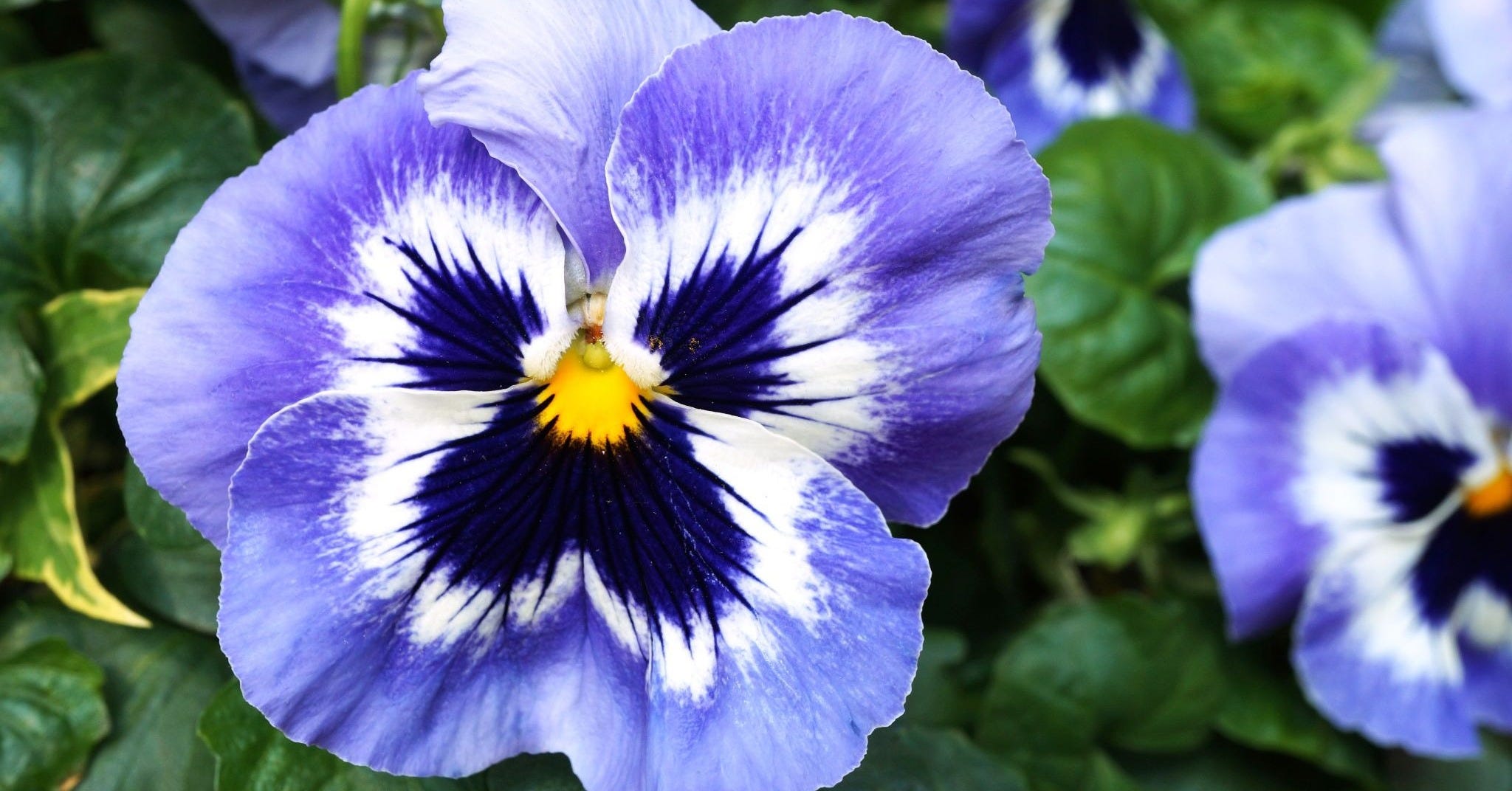
So that sent me to the seed catalogs to look at what he might be growing, and of course, even in the ‘50s, 1950s, there were lots of different varieties that he could have chosen from, and unfortunately, there’s no record of what he grew. And I feel an echo as well, because we’ve got maybe three or four black-and-white photographs of him.
He’s standing in his garden. He’s holding his cat. He’s sort of squinting at the lens a little bit skeptically, like he doesn’t really want to have the photo taken. And all of these things remind me of myself, even though I never met the guy. That’s what I do when I have some time. I go out into the garden and poke around, sometimes in a productive way, actually growing things. Other times I don’t know what I’m doing. I’m sniffing the flowers, I’m looking, I’m pulling maybe a couple of little weeds, but mostly I’m just being with the plants and also then with the cats as well, which have been an important part of my life as well.
So it’s strange. I know he’s my great-grandfather, so of course I’m going to look for those echoes. If it was a random person off the street, I could maybe find some connections too. But I do think that our dispositions perhaps come through the family line, some directly through what people teach us, but also maybe there’s a genetic predisposition among some people to be more oriented towards plants. To other people to more pastoral care of other people. Others are great educators. And of course, it’s not all genetic. Most of it isn’t genetic. But I do wonder about those transgenerational echoes.
Marcus Smith: I just want to mention here that you have a story to tell of human interventions in the natural world of flowers that sometimes, or frequently, have gone awry. And as you write about your great-grandfather, Reg Cantelow, you mention that, unbeknownst to him, there was a downside to what he was trying to accomplish.
David Haskell: Yeah, so anytime we have beauty, lots of beauty, we have the potential for deception. Beauty on the surface and brokenness underneath. That’s a familiar theme in lots of human art and human mythologies, but it’s true in flowers as well.
So we humans love to have bright, colorful flowers in our gardens and cut flowers on the table, and lately, particularly the last few decades and the last couple of centuries, we have been very active in breeding flowers to please our human senses, and specifically around pansies, which are just one of thousands of examples.
They’ve been bred to be much larger than the wild pansy that grows out in fields and meadows and gardens all over Western Europe. They’re much larger. They come in different kinds of colors, which is all about what we want to see, right? But you put those flowers out in your garden, they’re so big that the bees that formerly would have fed on the pansies can’t reach in to get the nectar.
The petals are so big that they can’t grip onto them. In other flowers, it’s even more extreme. Some camellias and even some roses have been bred to have so many petals that they have no sexual parts and no nectar anymore, so they look like little pom-poms. They look great to us, but they provide no food whatsoever to the creatures who originally were their partners, their symbiotic partners, the pollinators.
By selectively breeding, we have unintentionally brought the flowers to benefit just human aesthetics rather than human aesthetics and all the rest of the community of life. And I think we’re actually at a hopeful time now where we’re waking up to this and realizing that not all selective breeding is necessarily good. The associated problems, say overuse of pesticides and herbicides, likewise are harming the rest of the community of life. It’s a hopeful time because we’re asking the question now: How can we have beautiful gardens, beautiful parks, beautiful forms of horticulture that draw on human skill and the traditions of plant breeding and plant design, but also feed the rest of life?
To me, that’s a more beautiful vision, and it brings me delight to see this in public gardens, big gardens in big cities all over the world now, but also just in the everyday practice of gardening in window boxes and in people’s backyards. And it all adds up to not just a change in how we garden, but a change in how we think about ourselves in relation to the rest of the world.
Yes, we deserve delight and joy in this world, and gardens are a great way of bringing that to us and sharing it with others, but we can do that while also being connected to the rest of life’s community. And then to me, that’s a necessary—but also very beautiful and very optimistic—change that I see happening all over. Wherever I go to talk about my books or gardens or flowers, people are having these conversations.
Marcus Smith: David Haskell’s new book is called How Flowers Made Our World: The Story of Nature’s Revolutionaries. It’s high time now to deal with that subtitle, with David’s characterization of flowering plants as ‘revolutionaries.’ To paint them as such is no exaggeration, David argues, because the epic story of evolution really does include the object we call a ‘flower’ in a leading role.
Maybe we’re narrow-sighted, underestimating the radical, fundamental, revolutionary impact of flowers on this planet. So what can we appreciate about flowers beyond our own special connection to them as part of human heritage, human culture? It’s true that floral aromas can suddenly revive a childhood memory, that a mother’s love of orchids can rub off on her children, that even a great-grandfather’s grand prize-winning pansies can feed our own sense of connection with nature.
But apart from just these intersections of human life with other natural phenomena, there’s a much bigger picture by far. Not to forget is that flowers have been acting on the world stage for 130 million years longer than we humans have even been around. David sees flowers as revolutionaries in the framework of geological time, and not just human history, and he says that they may actually be the overwhelming reason life as we know it even exists.
[BREAK]
David Haskell: Yeah, so flowers are revolutionaries, which seems a strange thing to say. We think of revolution as being all about blood and chopping the king’s head off and things like that. And of course, sometimes that does happen in the human realm. But there are other forms of revolution, and by revolution I mean things that really change the world forever, as far as we can tell.
And the evolution, the appearance of flowers on this planet was one of those. They arrived very late on the scene. Complex animals had evolved hundreds of millions years before them. There were animals and plants on land. There were birds, there were mammals, but no flowers. And then about 130 million years ago, the flowers appeared, and once they appeared, they swiftly took over and built most of the habitats that we have today.
For example, there were no tropical rainforests on this planet before flowering plants evolved. And if you go to a tropical rainforest today, most of the plants there are flowering plants of one sort or another. There are lots of mosses and ferns and other non-flowering plants too, but they are living in a habitat that was built by the flowering plants.
There were no prairies, because grasses are a specialized form of flowering plant. They’re not very conspicuous, showy flowers, but they’re flowers nonetheless. So the grasses that built the savannas, the prairies, the steppes that cover about a third of the planet today and a foundation of human agriculture, those are flowering plants too.
In the oceans, mangroves, salt marshes, seagrass meadows, these are all types of flowering plant that have adapted themselves to the edges of the oceans, all built by flowering plants. Deciduous forests, all the maples and the basswoods and the oaks, these are flowering plants, too. So again and again, really important habitats on this planet have been built by flowering plants.
So they catalyzed great bursts of ecological productivity and of biological diversity, sometimes very directly. There were no bees or butterflies or grazing mammals before flowering plants evolved. The flowers directly led to the evolution of those. And even creatures that were around long before flowers, like beetles and flies and birds, often diversified in concert with the diversification of flowering plants.
So we do live on a floral planet, even though in our culture now, there’s a tendency to dismiss flowers as being merely ornamental. They’re pretty, that’s fine, but they’re not in charge. They’re beautiful, but they’re not world builders.
Marcus Smith: You said they’re not in charge. That’s our perception of them. So is there a thesis that you’re making that flowers, in the world as we know it today, actually are in charge?
David Haskell: I think there’s a good case to be made that they built and today sustain many of— in fact, most of the most important habitats and ecosystems on the planet. By ‘in charge,’ if we mean the foundation of ecological productivity and the diversity of life, yes. But if by ‘in charge,’ we mean a sort of hierarchical top-down, like there’s a boss with an organization chart that flows down from that, that’s not how any ecosystem works, and that’s why I actually find going out into the woods or the meadows so delightful. There’s no one ruling authority, right? There are interconnections, there are connecting themes, but it’s a lot less top-down, and yet very productive, and yet very creative, and yet not just complete chaos that falls apart. There’s deep cooperation, even without people or any other creature telling, “Oh, you’ve got to cooperate with this other person, or else.”
So that’s one of the great beauties and mysteries of the world is, how does so much cooperation thrive in a world that would seem to be more, if we just look at a purely selfish point of view, towards individualism? And I think flowers actually offer a great example of that and a great answer to that question.
Marcus Smith: Yeah, so maybe I should try a second shot at this rather than talking about something being ‘in charge.’ Maybe I could put it this way: the world is give and take and take and give. And maybe it’s that flowers have really maximized the ability, are incredibly dynamic in both directions of give and take with whatever is around them.
David Haskell: Yes. They’re very dynamic. I love that way of putting it. They’re very much in conversation and in interaction and exchange, and a lot of that is actually mutually beneficial. So think of flowers feeding bees or the bees eating nectar and pollen and raising their babies with that or grazing animals out on the prairies.
The animals are being sustained by the grass plants, but the grass is also benefiting because the grazing animals keep all the competition away. So it’s a back and forth between the flowering plants and the animal cooperators. The same is true with fungi and microbes below the ground. That took levels and complexity of cooperation on this planet to a new level, and that’s part of why flowering plants became so important so quickly.
I should add that one of the delights—and actually orchids are a great example of this—is that some flowers take that basic cooperative spirit and then flip it on its head, and they become pirates, and they become deceivers. And that’s a minority of flowers, but it makes for an interesting story because you’ve got some edgy characters. You’ve got a little bit of skullduggery going on as well as straight up symbiotic reciprocity that’s happening with a lot of flowers.
Marcus Smith: Oh, okay. You have to give me some examples of some pirates.
David Haskell: Yes. So there are orchids that, instead of attracting pollinators with nectar and pollen, they grow flowers that look and smell and feel just like a female wasp of one particular species. The male wasps hatch out of the ground in the spring and think that there’s a field full of female wasps who want to breed with them. And so the males try to grasp the females in a loving embrace. And of course, the male wasps are wasting their time. They’re being used by the orchid as a courier for pollen, which gets stuck on the back of the wasp’s head, and the wasp gets no benefit.
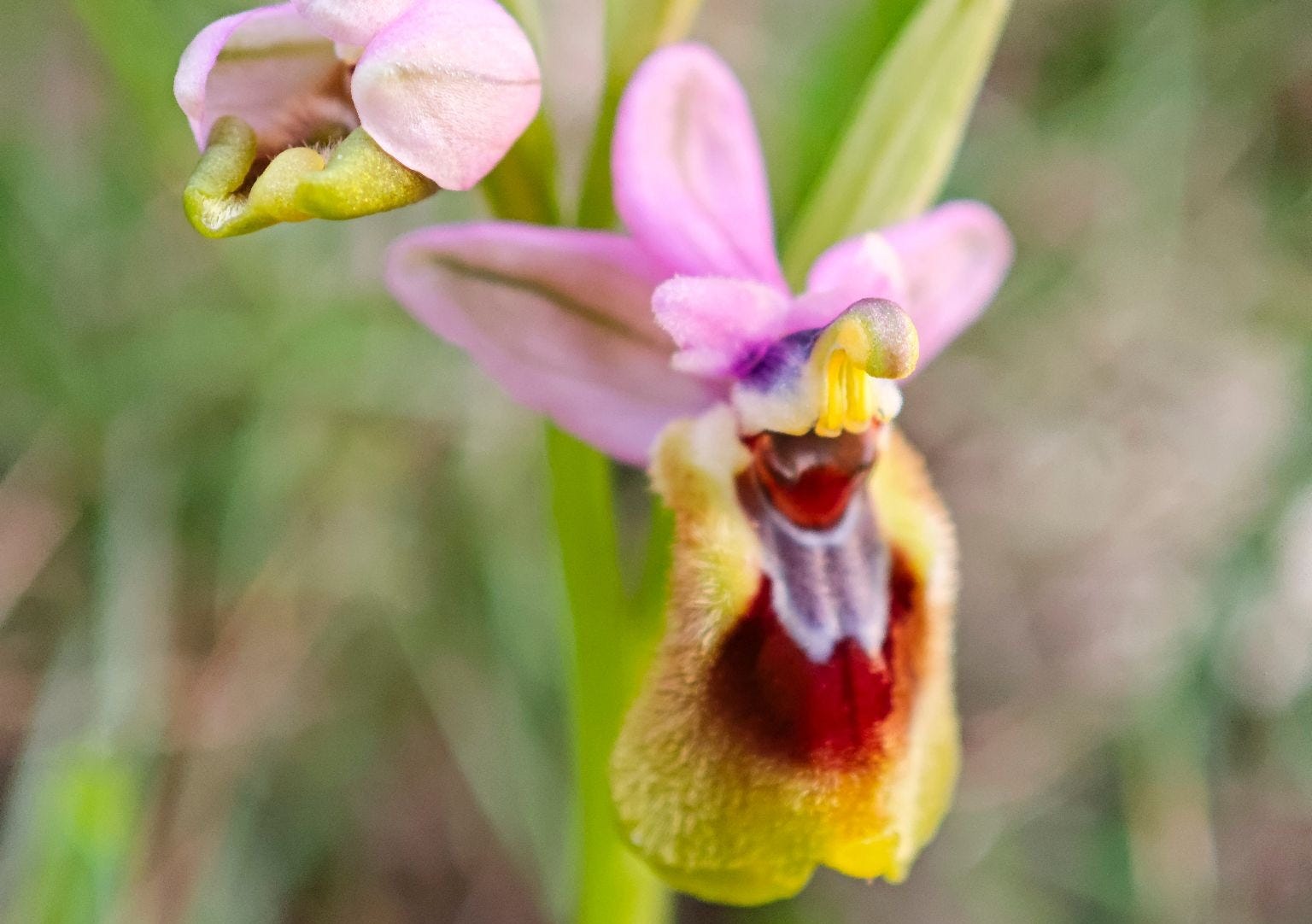
It’s just wasting its short life being a pollen courier because it was so lustfully attracted to these, to these orchids that look like a female of their species. There are other plants like the Jack-and-Jill in the pulpit plant that grows in North America. It looks like a vase with a little column. On the inside, the column is covered with either male or female flowers. And the vase smells just like mushrooms. And there are tiny little flies, little gnats that like to eat and lay their eggs in mushrooms, so they are attracted to this flower, and they go in the vase, and they get stuck because the walls are all slippery, and they fall to the bottom, and they get dusted with pollen if it’s a male flower.
And then they escape from a little hole at the bottom of the vase and fly on. But if they go to a female flower, they enter the vase, they get stuck, they deliver the pollen, and there’s no exit hole, and they die. And the flower doesn’t even have the decency to digest them the way a Venus flytrap would, or a pitcher plant.
So this is a plant that literally kills its pollinators. There’s absolutely no benefit and a very severe cost to these little creatures pollinating the jack-in-the-pulpit. So that only works because there are lots of mushrooms out there in the world, and the gnats haven’t evolved a distaste for mushrooms because there are only a few jack-in-the-pulpit flowers compared to all these mushrooms, in the same way that once in a while, I’ll bite into an apple and it’s rotten on the inside. Well, it’s one in 100 or one in 1,000, so it doesn’t put me off the apples. So sneaking and piracy only works if you’re rare. So jack-in-the-pulpits, orchids, these are the deceivers. They have interesting stories, but they tend to be quite rare in any ecosystem, and the, quote-unquote, “honest plants” that are saying, “Look, I’ve got nectar. I’ve got pollen. Come visit me,” and then they give the insects the nectar and the pollen, and there’s a more equal exchange, those are much, much more common.
Marcus Smith: You know, everything you’ve been saying just leaves me astonished because my mind is saying, this is Byzantine. This is complicated. There are so many moving parts. It’s like the best detective novel, even if there are no villains, just the sheer number of relationships going left, right, up, down, all over. Do you ever find it exhausting to try to trace these interactions?
David Haskell: Well, it’s not just exhausting, it’s impossible, right? And it’s very, very humbling to realize that, in a tiny little patch of meadow, just to try and understand the history of one plant far exceeds what any human could do in their lifetime. And I think it’s a good sort of humility, realizing that we’re in a complex and mysterious world, and to me, that’s a pathway, sometimes into exhaustion, but mostly into gratitude, and also into thinking that this idea that lots of movies divide. There’s the villains and then there’s the good guys, right?
Well, in the plant world, and I would argue actually within human society too, it’s rarely quite so simple. So those jack-in-the-pulpits and orchids that are deceiving their pollinators are actually working cooperatively with some fungi. And if you look inside every single plant cell, there are little green jewels that we call chloroplasts that were once free-living bacteria.
So it’s a deep kind of symbiosis at the center of every plant, even at the center of the pirates. So cooperation and conflict go hand in hand and often exist in a creative tension and emerge in a way that I think feels much more interesting to me than just saying, “Well, this plant is just completely deceiving and is on the ‘bad side’ of the ledger.”
No, in the more-than-human world, good and bad, first of all, are the sort of things that we might apply to human moral behavior rather than to plants and non-human animals. But there’s a much more complex melange, like a good novel, right, where the characters seem more nuanced and then help us understand perhaps our own interiority, which is also a mix of good and bad, right?
That’s the part of the challenge of being a human, is navigating a path that leans towards the good and away from the bad. And just knowing that the whole world is caught in this tension to me is interesting and worthy of paying some attention to.
[BREAK]
Marcus Smith: So flowers aren’t simply good guys or bad guys. They’re full-bodied, three-dimensional characters in the fickle world of cooperation and competition. And wrapping your head around an entire meadow or woodland of endless complexity is, says David, impossible. But what’s to stop you from zooming in with a tight focus on just a single blossom in a wood or in that meadow or in your own neighborhood?
Imagine a lone blossom that possibly has hundreds of followers with feathers or antennae, but you might be its only human subscriber. Well, here’s what you might do. Select a promising flower blossom. Follow it over many days through the various stages of its development, from emergence as a bud to its eventual blooming and fruiting.
Just come back to it again and again to watch the drama play out start to finish. David Haskell has done precisely this, many times over, actually, with carefully tracked blossoms. His book opens with a description of repeated visits for the purpose of logging the progress of just one blossom on a much-loved flowering species of the American South.
You may know about this. It’s the southern magnolia tree. Blossoms on some magnolia species (I’ve seen these) are impressively large. They can span a foot or more in diameter, and the perfume of this flower in bloom can be unforgettable. Well, here’s the exchange I had with David about magnolias. No surprise here that he exhibits the trademark glee of a passionate, confirmed naturalist.
The way that you, David Haskell, tell a good plant story requires incredible observational skill and patience, attentiveness. In fact, among all of your various flower stories that you tell, the one with the magnolia, which leads out in your book, really struck me because of your doggedness in going to see the various stages throughout the lifespan of a single flower.
You will tag them, you tie little strings around them, go back and visit them, check them, track their progress through their short existence, or maybe long if you follow it all the way to the fruiting stage, right? What’s in it for you as you track the progress of a single flower?
David Haskell: First, absolute delight because magnolia flowers just smell absolutely heavenly. There are so many different layers of aroma, and they’re growing for free right on the street where I live, right? In fact, there’s a big one outside my house. It’s too big. I can’t get up into the canopy to smell the flowers. So I know where all the low-growing magnolias are in my neighborhood because when I walk around getting some exercise, I’ll just go for a little run, I’ll stop and smell the magnolias, and I learned that the nature of the smell changes as the flower matures.
When it first opens up, it’s sweet, citrusy, a tiny little bit of rose and jasmine may be added into there, but there’s a bitterness too, like cucumber skin, something like that. And then by the next day, the flower has opened, and all that bitterness has gone, and we’ve got some spiciness, a little bit like cloves, in this flower that is almost the size of a dinner plate and the color of pure white porcelain.
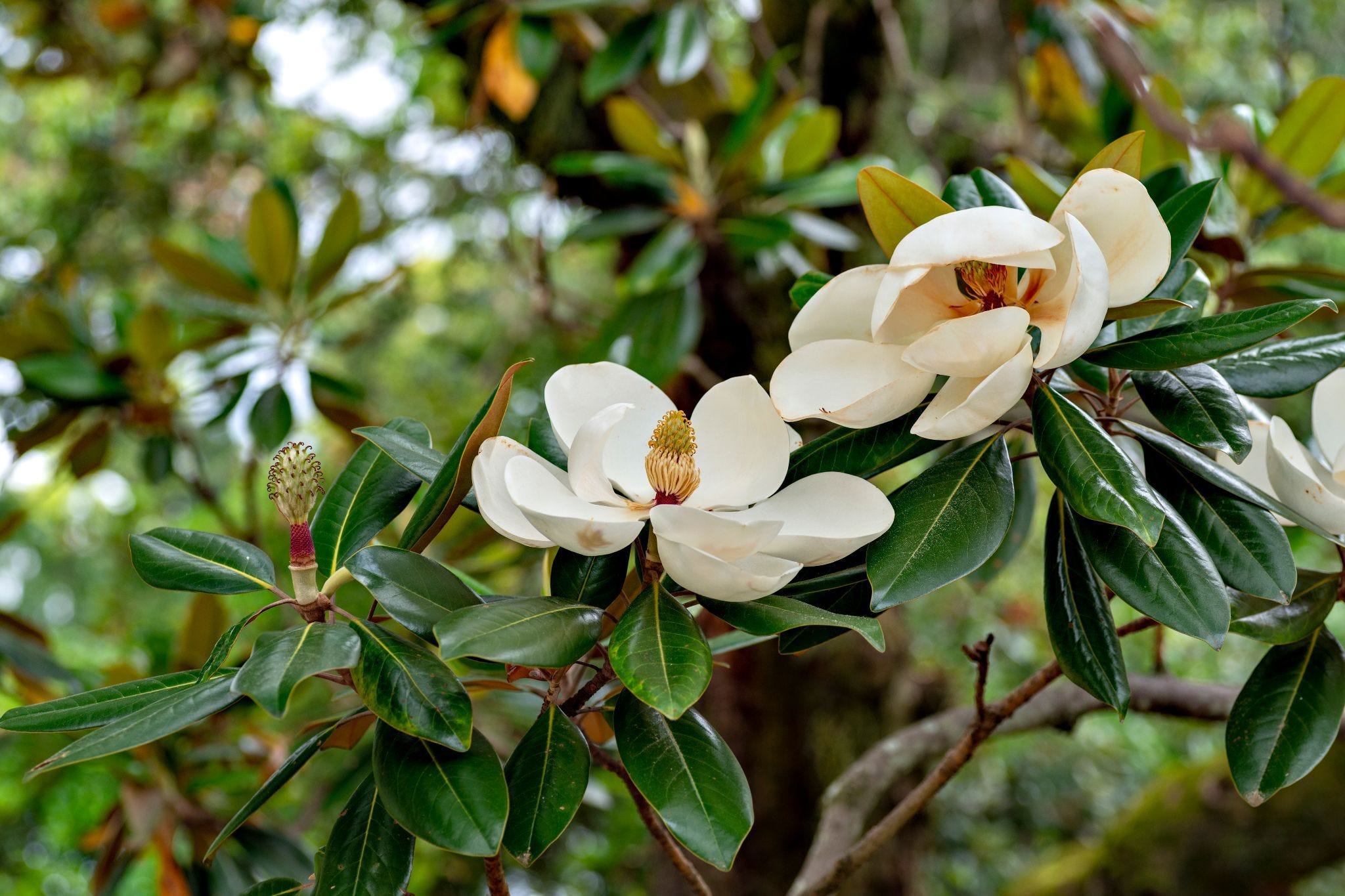
It’s a really extraordinary experience to see this and to stick your nose into it. It’s transporting. For a few seconds, you’re taken into a different realm, letting those aromas communicate directly to your head. It’s not a sacrifice to do this. It’s just inviting myself to take the time to do it, to bring a little bit of joy and sensory delight into my life.
And then there’s a sort of intellectual curiosity that I’ve learned—and I’m not the only person who’s learned this—that by sticking with one thing, you can go deeper and the world becomes richer. So whether it’s studying a particular kind of literature, or becoming a really good woodworker, or getting really good at baking a soufflé, right?
By constraining ourselves to just one practice, we actually go further, and the world becomes more interesting, and it reveals its stories and subtleties in ways that we can’t do by skimming over the surface. Now, I’m a big skimmer as well. I love harvesting things like a magpie from many places, but you’ve got to stick with a few things.
It really helps if it’s in your neighborhood because then it doesn’t take that long. And the magnolias, indeed, I tagged the flowers so I could keep track of which flower, because from day to day they look so different, and then a month later I’ll never remember which flower was which. To track how each flower then matures into a fruit that looks like, almost like a little green pineapple with a little rosy blush around it.
And then late in the summer, these fruits open up and reveal bright red seeds, and the woodpeckers and the thrushes come from all around to feast on them. So by paying attention to those flowers and their life history, my daily walks became more interesting, and I realized, oh, this flower is talking to the beetles that are pollinating it.
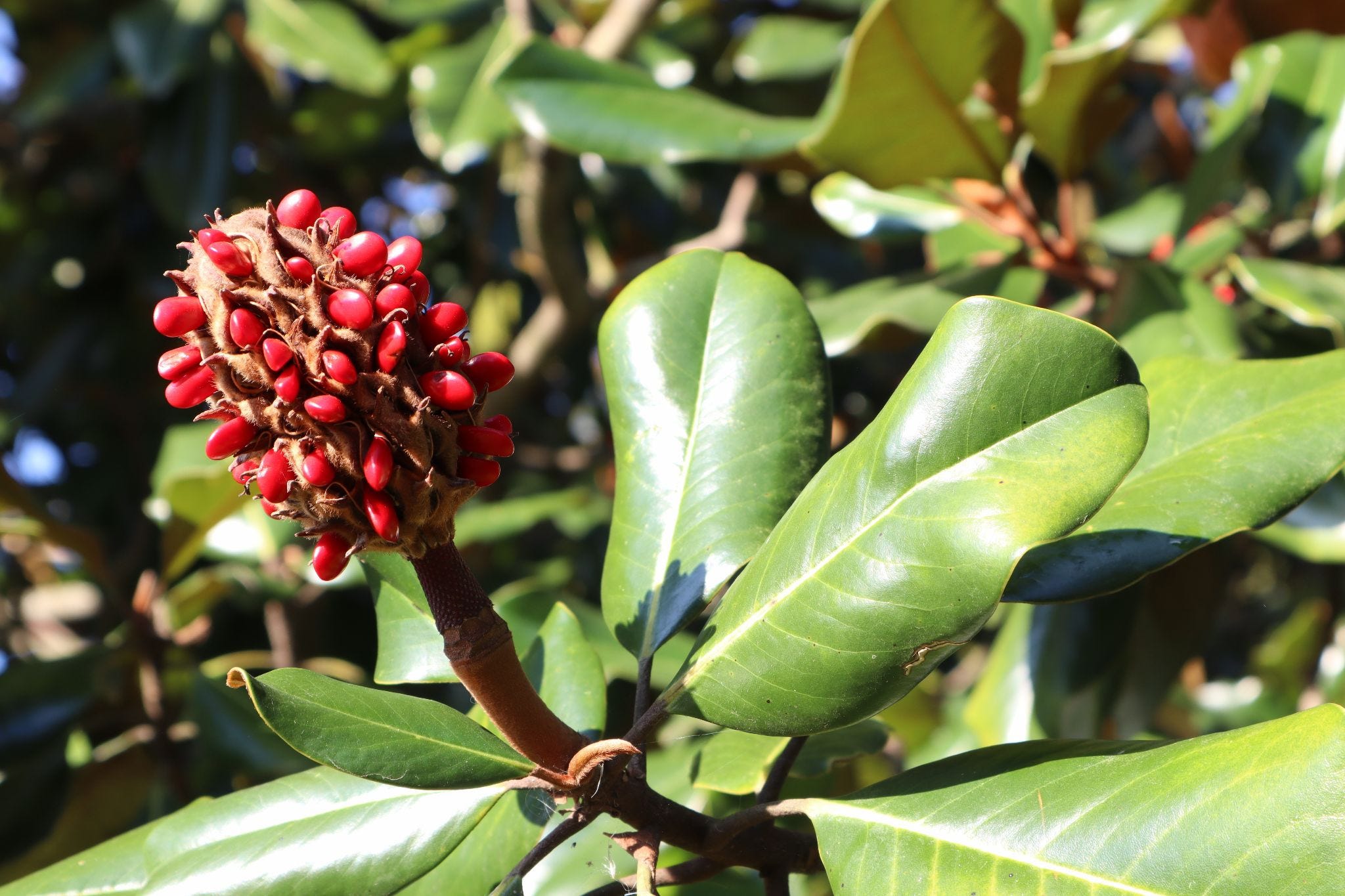
And then also the woodpeckers and the thrushes and the seeds appear. They’re bright red. They appear right when the thrushes are migrating through the south. So I live in Atlanta now, and the weeks when we’ve got lots of migrant birds coming down from Canada, going down to Central and South America, is right when all the trees and the shrubs that produce red fruits produce their fruit.
So the trees have synchronized their seasonality to the pulse of bird migration across the planet. I go to sleep and imagine all the migrating birds coming over at night, waiting to feast on magnolias. It really draws me out of myself in a way that I find I really need. If I’m just too enclosed in my own head, I get anxious or depressed or angry. Well, pay attention to some magnolias. Get out of yourself, David, and it’ll be helpful.
Marcus Smith: Well, let me ask you this. Just a moment ago, you used the two words, “right when.” You said, “Right when the thrushes come through.” It seems to me that in the story of a single flower, there are multiple right when moments.
Right at this time is the narrow, small window, maybe of just a few hours on one day, when the pollen is just ripening and ready for transport. Or maybe it’s the season when the thrushes come through and the seeds have matured. Or maybe it’s right when the beetle at night is showing up. What do you make of the specific narrow windows of opportunity in the life of a flower? Because I’m getting the feeling that flowers are not just sitting there inert doing nothing. They’re going through stage after stage after stage.
David Haskell: Yes. And it’s so beautifully attuned. This is one of the marvels of studying flowers and flowering plants that are native to a particular area. You realize that, over a very long time, they have tuned their seasonality to the precise movements of the bees and the birds and when the rainfall is going to come. And by studying the flowers, we can then connect into that multiplicity of seasonality. So our language has just four words for the seasons, right?
The winter and the spring, the summer and the autumn. Well, there are hundreds of different seasons at any one place. And so for example, in the south, the spring beauty wildflowers, which are tiny little white wildflowers that grow in great profusion in the woods and the edges of the forest, they bloom for just about a week or two, and they’re precisely timed to the emergence of just one species of bee, and the bee has synchronized its life cycle to the emergence of these flowers.
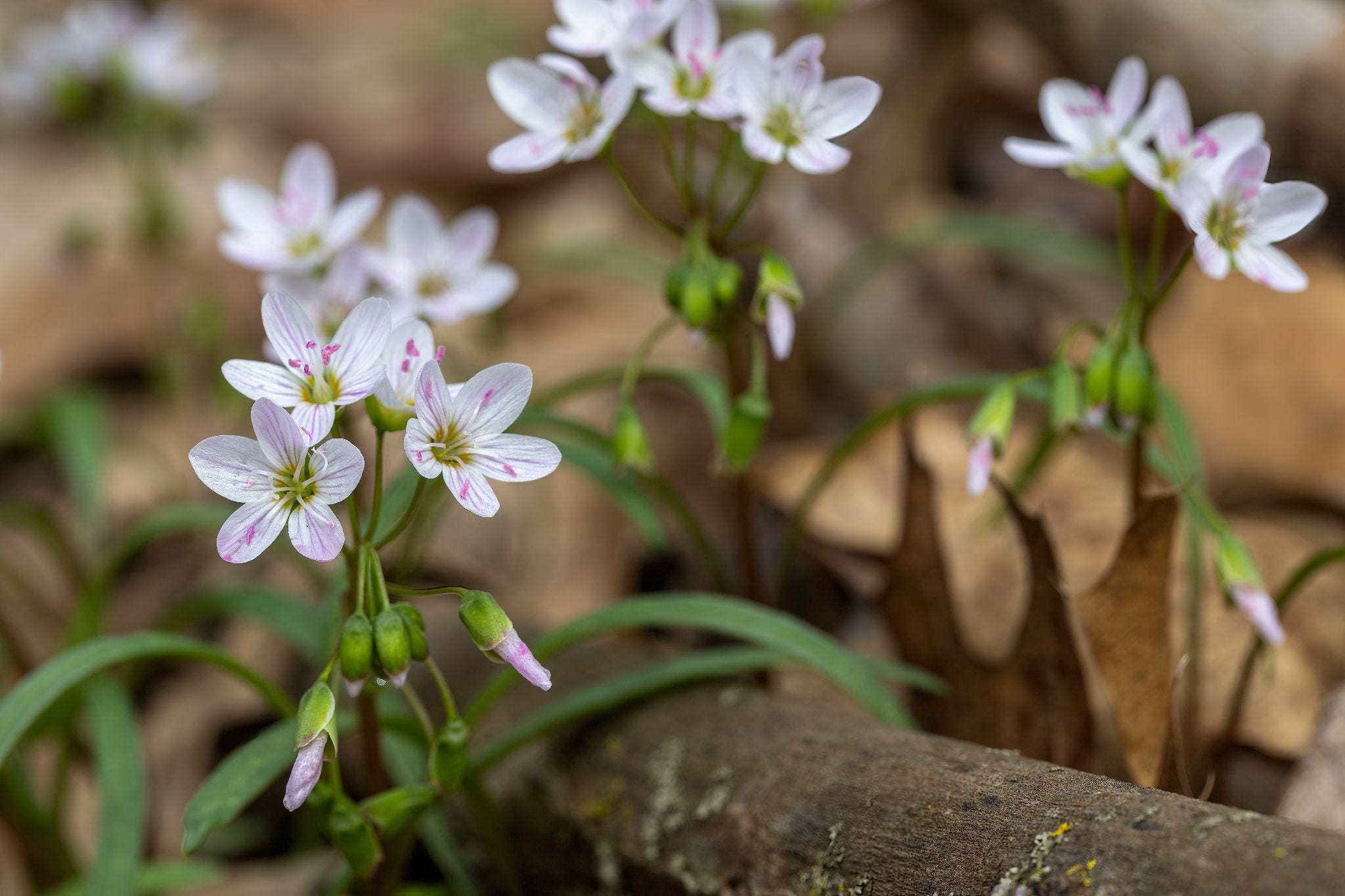
So the flowers and this one tiny little bee that nests underground, it’s not a honeybee, it’s a native miner bee that drills down into the ground. There are all these synchronicities, but that’s just one of them. The other wildflowers are tuned into the bumblebees or the butterflies. It’s not infinite, but it feels infinite. There’s this number of rhythms out there. The seasons are like a polyrhythm, and there are hundreds of them. And I have found that really enriching, particularly if I spent a few years living in just one place, one yard, really trying to note down and pay attention to those. Again, it draws my imagination and my curiosity out of just the human realm into the more-than-human realm, and then it, in a way, acts as a mirror.
It’s like how we humans also have a multiplicity of seasons, and many religious traditions recognize these, right? So religious festivals which are tied to sort of ecological, physical seasonality, and others are about the seasons of human life. So there’s religious festivals, cultural ones, and then just the rituals that we develop in our own families.
Right? So when do we go out for the first summer barbecue, or when do the swimming pools open? Delightful things like that, but also the seasonality of anniversaries where we remember people who’ve gone on from this life. The flowers taught me, oh, you humans are just the same way. You just don’t pay attention to that enough.
Marcus Smith: Yeah, yeah. And this merges, too, because in our rituals or in many of our rituals, then we pull in the floral component. And we pull that together, maybe even subconsciously?
David Haskell: I think that even though, in our culture, we sometimes dismiss flowers as merely ornamental, we do have, both individually and in the collective subconscious of our society, an understanding that flowers are the life-givers.
They’re not just pretty. They’re actually the creators in an ecological sense. So when we bury someone, we bring flowers to the grave, and people have been doing that for at least 13,000 years. There is archeological evidence of flowers in graves in what is now Israel from way back then. But when people get married, when we want to woo someone, we bring flowers.
When we decorate an altar or create a city park, we plant flowers in places where we’re going to have civic gatherings. Each one of these is expressing human particularity, human cultural identity, by merging the human with the floral, and ironically, by doing that, we become more ourselves. So the I becomes a we. The self becomes the community. And this is the original genius of flowering plants, to expand other creatures out of themselves into deep symbiotic relationships. And we reenact that again and again. Even when we put on floral perfume or aftershave or a floral tie or a Hawaiian shirt or a floral print on the dress, we’re expressing our individuality by becoming chimeric.
We’re a human-flower merger of beings. A Hawaiian shirt is actually lots of layers of symbolism in that they are deeply ecological as well as being just plain fun.
Marcus Smith: I know that you keep a floral diary of some sort. If I were to do that, and if I were making an entry today, I would say that I was out in my front yard, and I was noticing that the seeds on the umbels of my lovage plants were starting to turn black. I’ve watched those stalks grow. They bolt and shoot up and grow as high as my shoulders. That’s what I would talk about.
David Haskell: Mm-hmm.
Marcus Smith: And I think I would be trying to somehow etch in stone, something important just happened.
David Haskell: Yes. Well, the important thing is that you paid attention to another being and are taking a moment to note it.
For me, a diary is an organized way of having a practice that, in my life, doesn’t take much time each day, but just reflecting at the end of the day, what plant did I encounter that was interesting? And it might have been something very obvious, like a rose in a botanic garden or bread, the wheat on my plate. Other times, like today, I found some black nightshade, which is a European weedy plant producing these deep, deep, black— they’re purple, but they’re so purple they’re black. These tiny little fruits that are dispersed by birds but are poisonous to humans. It’s this extraordinary eruption of beauty.
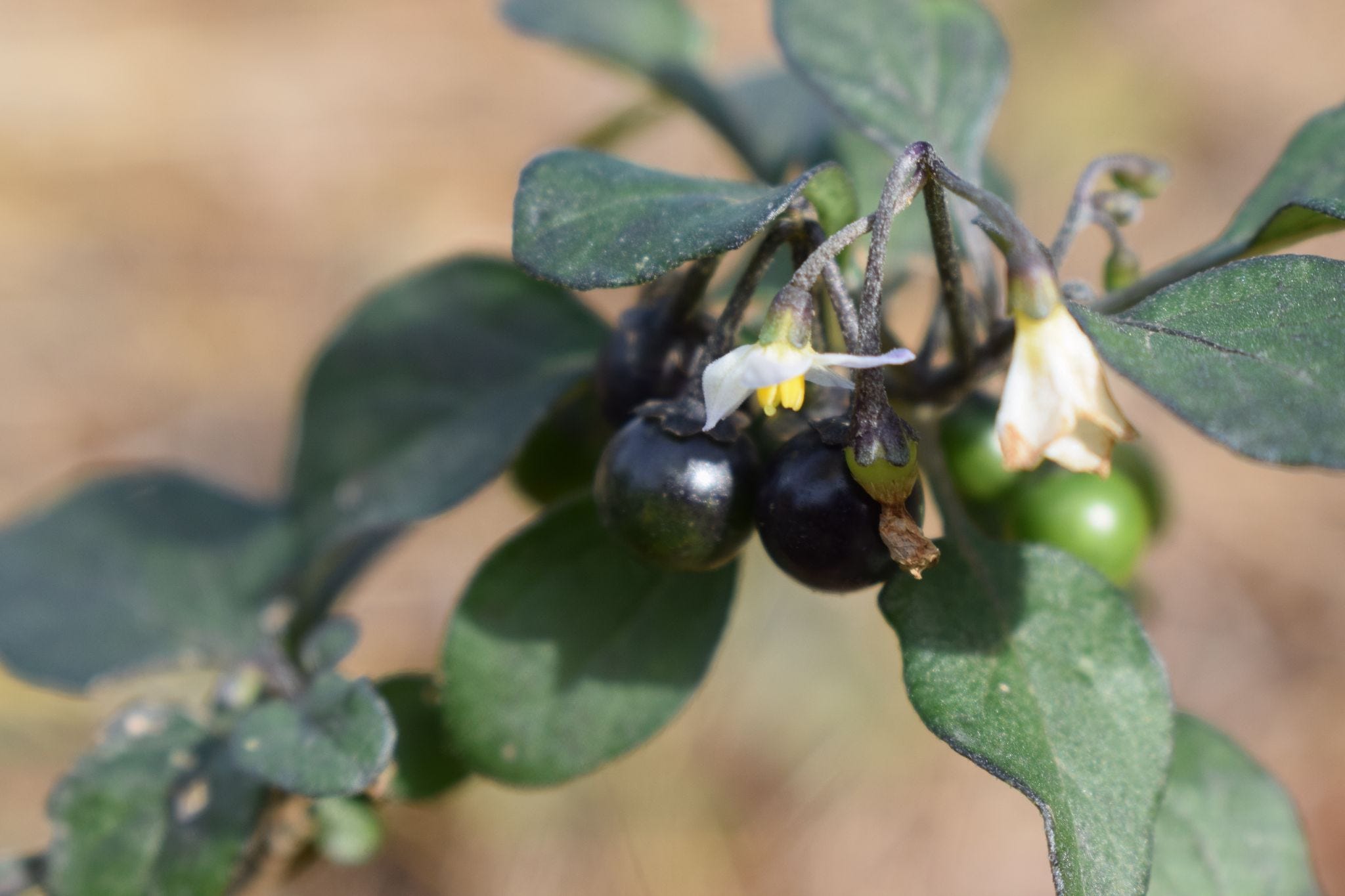
I even took my camera out and was taking photos of them, from a plant that most people dismiss as a mere weed. So keeping a little diary each day helps keep the radar open to the plant world, which, in the middle of winter sometimes it’s hard to think, “What plant have I interacted with today?” Well, maybe it was the tea in my cup of tea or the coffee or some spice in a cake that I ate.
Marcus Smith: So you actually go that far afield. You’re willing to put in your diary something that’s not maybe a living, rooted plant, but is the byproduct of its afterlife that lands on our table.
David Haskell: Yes. The second life of plants is often as rich and interesting as their first life. I mean, think about musical instruments. You go to hear a concert, you’re hearing the second voice of spruce and maple in those violins. For me, that is partly a botanical experience, as well, of course, as a musical one.
Marcus Smith: Flowers, to me, seem like an example of the great dynamic intensity of life in which nothing is wasted. And this is a lesson I learned from being a gardener and working in a compost pile. The compost pile, among the many lessons I derive from it, is that nothing is wasted, including time, including energy, calories, pollen, the hours or minutes that a flower has in which to attract a pollinator. No opportunity is wasted. Nothing is superfluous or extra.
David Haskell: Absolutely nothing is wasted, and even more, flowers in their relationship with other beings, as we mentioned already, build ecosystems and thereby create opportunities for other beings. So think about the rainforest that was built by flowering plants.
Well, most of the world’s biodiversity, the animals and the other plants are concentrated in those rainforests. So yes, flowering plants are knitting the world together in very efficient ways and very thrifty ways. But beyond thrift, there’s an expansiveness as well, that through their lives, they’re building a wider, more productive, more creative, innovative future for other beings.
And that’s the world that we’re in now, that flowers have been around for more than a hundred million years. They’ll probably be here for another—at least another—hundred million years. So in a way, it’s this extraordinary unasked-for, undeserved gift form of biological grace, if you like, that flowers have provided the world this thrifty, efficient, and also massively expansive gift formed mostly through relationship with pollinators, but also intergenerational relationship.
Another key innovation of flowering plants is their mothering ability, by forming fruits and providing food inside their seeds in a way that no other plants do anywhere in the world. Flowering plants have given their youngsters a leg up. So by mothering their own seeds and their own fruits, flowering plants are then also mothering the rest of the planet, because think of all the other creatures that eat seeds and fruits, including us. 60% of our diet comes from just three species of grass.
Marcus Smith: Did it take you days, weeks, years to come up with that concept of biological grace?
David Haskell: A lifetime. I’m still working on it. I mean, we live into this, right? And I really do think that the idea of giving thanks before a meal, of course it’s spiritual, but it’s also a form of ecological remembrance, and maybe that spiritual and religious context is also ecological, so they shouldn’t be thought of as separate things.
So we thank all the creative powers of the universe that have brought even a simple dish of food to our table. And as a biologist, of course, I’m particularly attracted and can at least understand at the edges of how flowering plants have produced that. It is a form of grace, because what is grace other than a gift that is usually undeserved, that derived from forces and powers and creativity that was around long, long before us.
And flowering plants are a biological form of that.
Marcus Smith: David George Haskell is author of How Flowers Made Our World: The Story of Nature’s Revolutionaries, as well as other award-winning books, always about the world around us. Our episode today was produced by Jes Scoville with help from Meimi Teeples. I’m Marcus Smith. Constant Wonder is a production of BYUradio.
I’m confident you’re going to enjoy hearing David Haskell on a previous Constant Wonder episode, so here’s a clip from season 3, episode 1. The talk was all about listening to nature.
David Haskell: Ponderosas are some of the most talkative trees that I’ve ever encountered anywhere in the world, and that’s because the ponderosa pines, particularly in the Rocky Mountains, have very stiff needles.
Marcus Smith: Okay, you just said “talkative tree.” That’s a poet speaking.
David Haskell: Right, yeah. If there is poetry there, it’s because the poetry’s in the tree and its relation to us, and I think the job of a writer, or of a scientist, a naturalist, is to report those sensory connections and the nature and personality of other beings.
And so when the wind blows through a ponderosa pine tree, it lets this great big whoosh out, and it sounds very different from other species of pine trees. The other thing with ponderosa is it has a beautiful aroma, sort of vanilla. Well, every tree has a slightly different tang, but in the young, fast-growing trees, vanilla.
In the older ones, there’s a bit more of a darker, tannic, almost like a whiskey-barrel aroma mixed in with the vanilla. And I do this quite a lot when I’m hiking out in the West, just stop on the side of the trail and listen. And then get up close to the tree and inhale that beautiful aroma, and it’s not just a sensory delight of the moment, but those sounds weave their way into my nervous system, and then the aromas from the tree actually get into my lungs and then my bloodstream, so I carry part of the tree with me after I’ve left.
And this is one reason why we feel better after going out into the woods and slowing down, slowing our minds and our bodies down to be in relationship with the living world as it is, not always thinking about the past and the future as we usually do in our busy, busy minds.
Marcus Smith: So that’s the excerpt I wanted you to hear from an earlier episode with David Haskell. Be sure to catch the whole of it, from our Constant Wonder Season 3. It leads out in that season as episode one. It’s a great exchange I had with him about his earlier book, which is titled Sounds Wild and Broken: Sonic Marvels, Evolution’s Creativity, and the Crisis of Sensory Extinction. And remember, always, we want you to pass on word to all of your friends and family— people whose lives will be enriched by constant wonder and, of course, by our podcast which goes by the same name. I’m Marcus Smith. Take care until next time.
Comments
Nothing yet. Say the first thing.
Sign in to join the conversation.