
Consecutive days of sentry duty on a four-hour rotation meant we rarely got more than three hours of continuous sleep. No one was ever fully rested. Maybe the idea was to accustom us to sleep deprivation, but all we learned was to sleep through anything. If a grenade had exploded outside our bunk window, only half of us would’ve awoken; the other half would’ve needed a direct strike. A friend who’d served a decade earlier once found a sentry upright, rifle at his side, sound asleep. Another outpost carried a sleeping conscript’s bunk outside and left him to wake up the next morning on the soccer field.
Rousing conscripts was its own battle, especially for the two or four a.m. shifts. One guy in our outpost required minutes of shaking and shouting in his ear. At first I didn’t mind waiting an extra five or ten minutes at my sentry post to be relieved, but it was always the same culprits: the ones who kept you waiting longest were the first to complain when they had to wait.
Sometimes the next man didn’t show up at all. He’d simply mumble to the in-house guard to sign the Change of Sentry sheet for him, and the guard would call to tell him to return to the outpost. The forged signature was crucial: if the officer on duty found an unmanned post, he could only punish the scheduled sentry, not the one who’d abandoned it. Officers knew the ruse but had no way of proving it.
Farcical as our sentry duty was, I resisted the first time I was told to head back and leave my post unmanned. But either I climbed down or I shivered out there for another two hours. After fifteen minutes of dwindling willpower, I finally abandoned the post, though I took the ammo box as consolation that my dereliction of duty was done responsibly.
Two weeks after my arrival, a patrolling officer caught a sentry asleep in his bunk. Later that day, a neighboring outpost called to warn us the camp commander was on his way (all outposts had developed an efficient surveillance network for tracking our own officers). A flurry of activity ensued as everyone rushed about, tidying, making beds, shining boots, yelling for shaving cream.
Minutes later, the commander arrived. He was in good spirits but still canceled the delinquent’s furlough for ten days. Moving down the line, he inspected us one by one:
“Show me your nails, Petrou—how many times have I told you to cut them? You could till the fields with those things!”
“Shakola, you’re a good-looking boy, but you’re getting fat. You think this is a taverna?”
When he reached me, I stomped to attention and stated my name and rank. He paused.
“I never had any doubts about you, Markides.” His compliment haunted me for years.
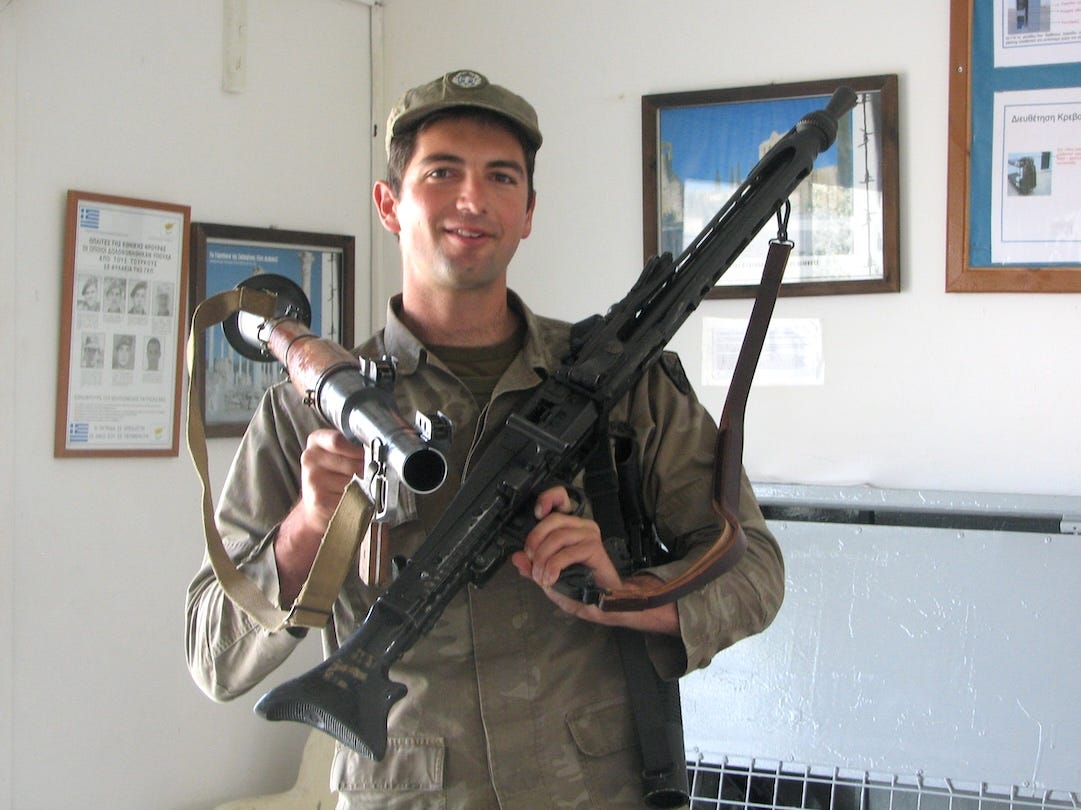
The brigadier’s inspection came a few days later. We were lined up outside when he arrived with a small entourage. He wanted us to enact a state of emergency: take up positions in the bunkers along the Green Line, armed with rifles, machine guns, and the grenade and rocket launchers.
But before the order was given, our commander gently reminded him that we might want to alert the U.N. first. The brigadier paused, pained by this sensible and unmanly suggestion. Unwilling to entirely capitulate, he had us haul the weapons and ammo out onto the street instead.
Only a handful of us had seen the inside of the weapons room, though it was adjacent to the kitchen.
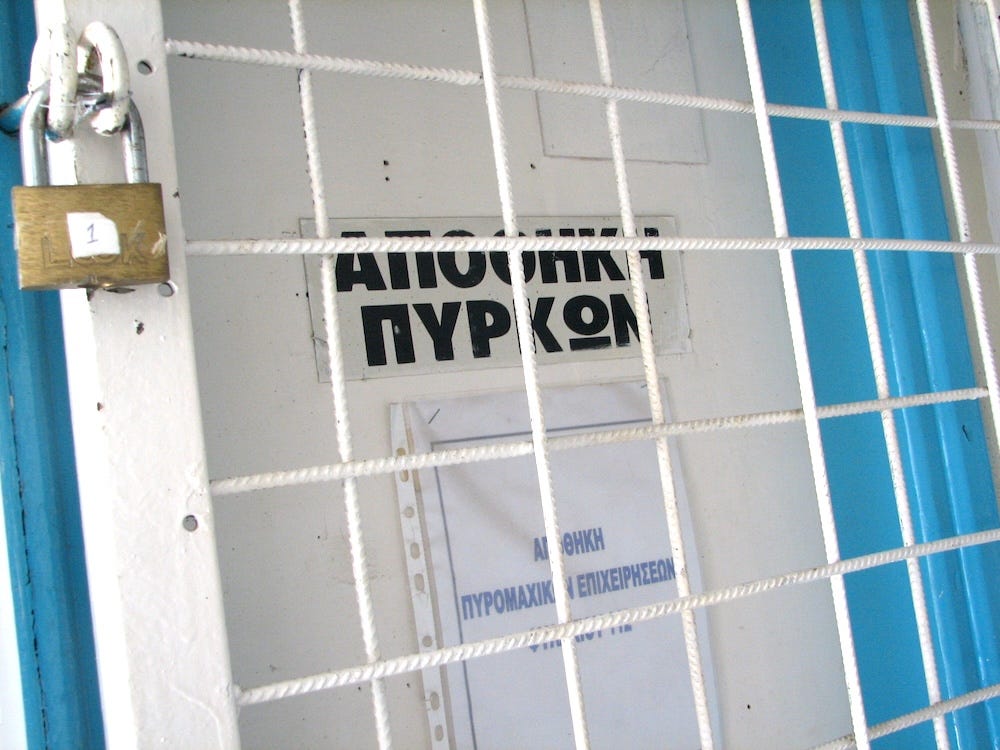
It took two minutes just to unlock the door. Getting in was just the start:
“Are these G3 bullets or MG3?”
“Hurry up, you asshole!”
“Pass the grenades… These are rockets not grenades, you idiot!”
Ten minutes later we were lined up again, weapons leaning against the porch rail, ammo spread across the road. We’d been told we were the guardians of the neighborhood, but I suspect the neighbors saw this house of rowdy teens differently—especially after seeing our stockpile of explosives.
The brigadier strode down the line, firing questions about our weapons and emergency procedures. It wasn’t long before he was thundering at us, several younger officers at his heels scribbling away in their notebooks. I couldn’t blame him for the tantrum. The chief sentry had no idea how to work the radio, and one conscript failed to reattach his cartridge.
“It’s not going in,” he mumbled. “I think it’s broken.”
“That’s because you’re putting it on backwards!” the brigadier roared. The left hem of the brigadier’s military pants had come loose and was flapping over his boot. Instead of turning the cartridge around, the flustered conscript flipped it upside down and tried to jam it in.
The brigadier turned to our commander. “The Turks will kill this one! How do we protect this area when the Turks nail him with the first shot?”
“He used to serve coffee at headquarters,” our commander said. “They must have kept him there too long.”
The colonel—one rank above the camp commander—seized the moment to berate him, as if to impress the brigadier with his intolerance for slack leadership. It may have been in keeping with army practice, but it was still ugly to watch an older man hollered at, especially by a mousy-eyed opportunist drunk on his stripes.
To his credit, our commander stood firm, defending us and refusing to pass the abuse down the line to our captain. He assured the brigadier all necessary changes would be made.
I expected collective punishment, probably a five-day furlough suspension at least. Instead, after warning us about drug use and reckless driving, the brigadier congratulated us on having improved and granted everyone five extra days of leave.
It was just as well the brigadier heeded the commander’s warning against the live drill. While the weapons were still outside, a U.N. helicopter passed overhead on a routine flyby, then turned back and circled over us. The open crates of rockets and grenades must have caught the pilot’s eye.
The helicopter continued east.
TO BE CONTINUED
Read the previous post here:
Comments
Nothing yet. Say the first thing.
Sign in to join the conversation.