
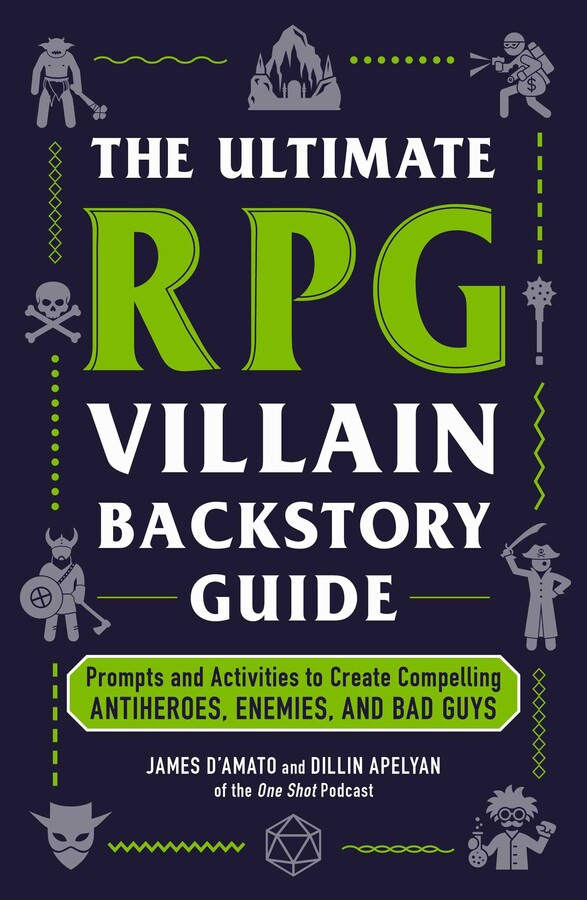
Enter your villain era with this indispensable resource for game masters and players eager to breathe life into their campaigns with captivating villains and complex antiheroes.
Darth Vader. Prince Zuko. The Arbiter. Rumpelstiltskin. They’re all complex characters doing what they believe to be right. Whether working for a leader with unlimited power, wanting to please a parental figure, questioning religious beliefs, or making deals that serve their own needs, characters like these are complicated yet beloved.
They are the types of characters The Ultimate RPG Villain Backstory Guide: Prompts and Activities to Create Compelling ANTIHEROES, ENEMIES, AND BAD GUYS is designed to create. Ones that act as the big baddie the entire party can rise up against or even ones that may join the party as players. Creating that baddie can be a challenge, one that The Ultimate RPG Villain Backstory Guide looks to help you out with.
NOTE: Like the BBEG you may deal with at your table, many may have lengthy titles like the aforementioned guide. It’s a lot to type out so I’m just going to refer to it as the Villain Guide from here on out.
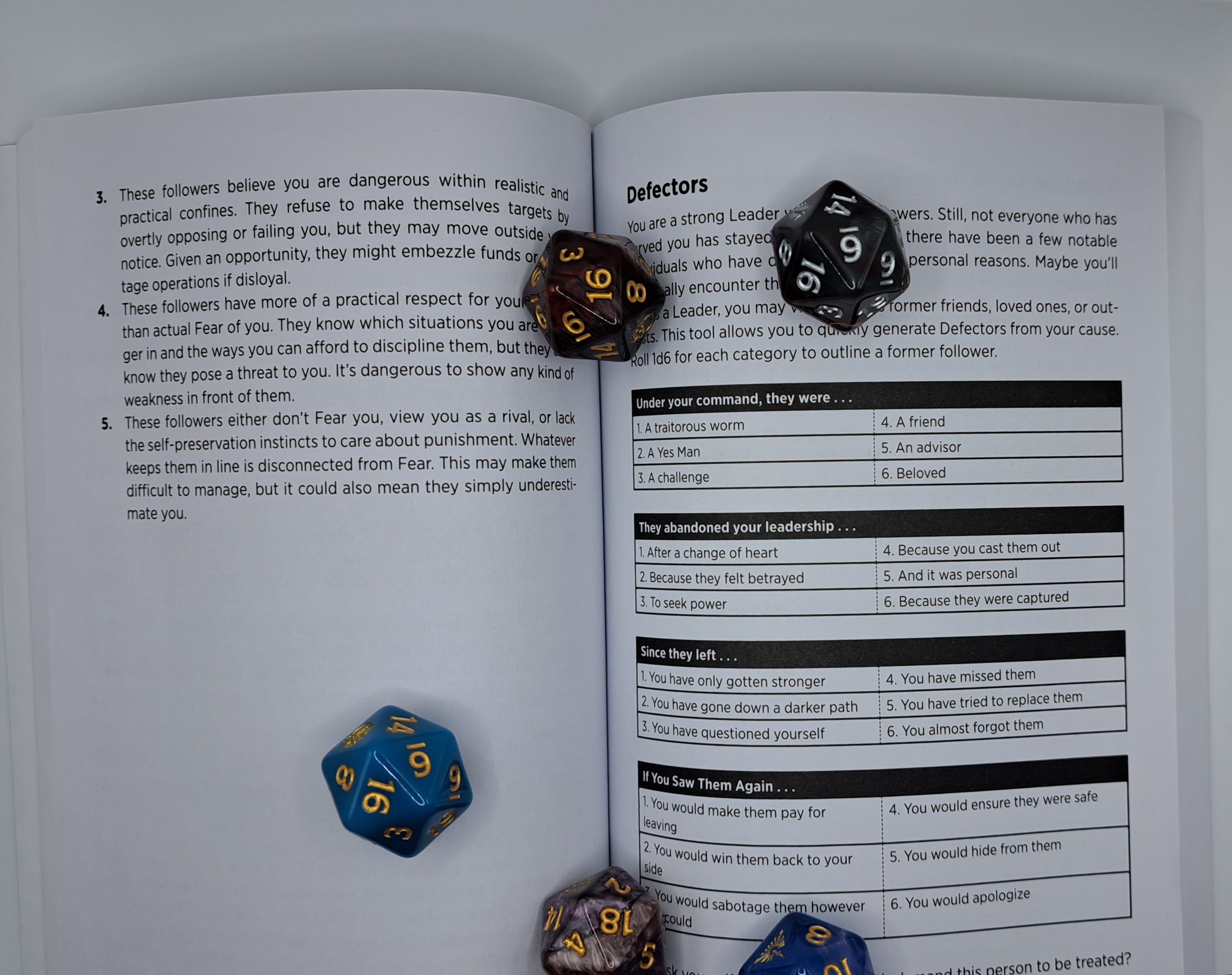
The Villain Guide is 248 pages (okay 254 with the index and glossary) full of creating a villain for a tabletop campaign. Whether it’s set in a fantasy and sci-fi or western and mob setting, you’ll find plenty of information for making the most sinister BBEG, NPC, or character for the party.
Written by James D’Amato and Dillin Apelyan, the book is a helpful guide to creating villains with fun roll tables or by drawing cards. It’s a creative way to build a character if you need to create one for your game. By using dice or choosing yourself, it provides choices to craft a villain with morals, values, and a background with their own complicated history.
Choosing from five types of villains: outlaws, leaders, believers, the opulent, and supernatural, each one includes a separate roll table that decides who they are. An outlaw is known as a rough and tumble type who may have a scar or two. The scar may be from a former rival, friend, or lover, and can look and feel a certain way to the villain. This is a great way for the villain to stand out and one way the characters can notice the villain. Perhaps they know who left the scar due to how it’s designed or looks.
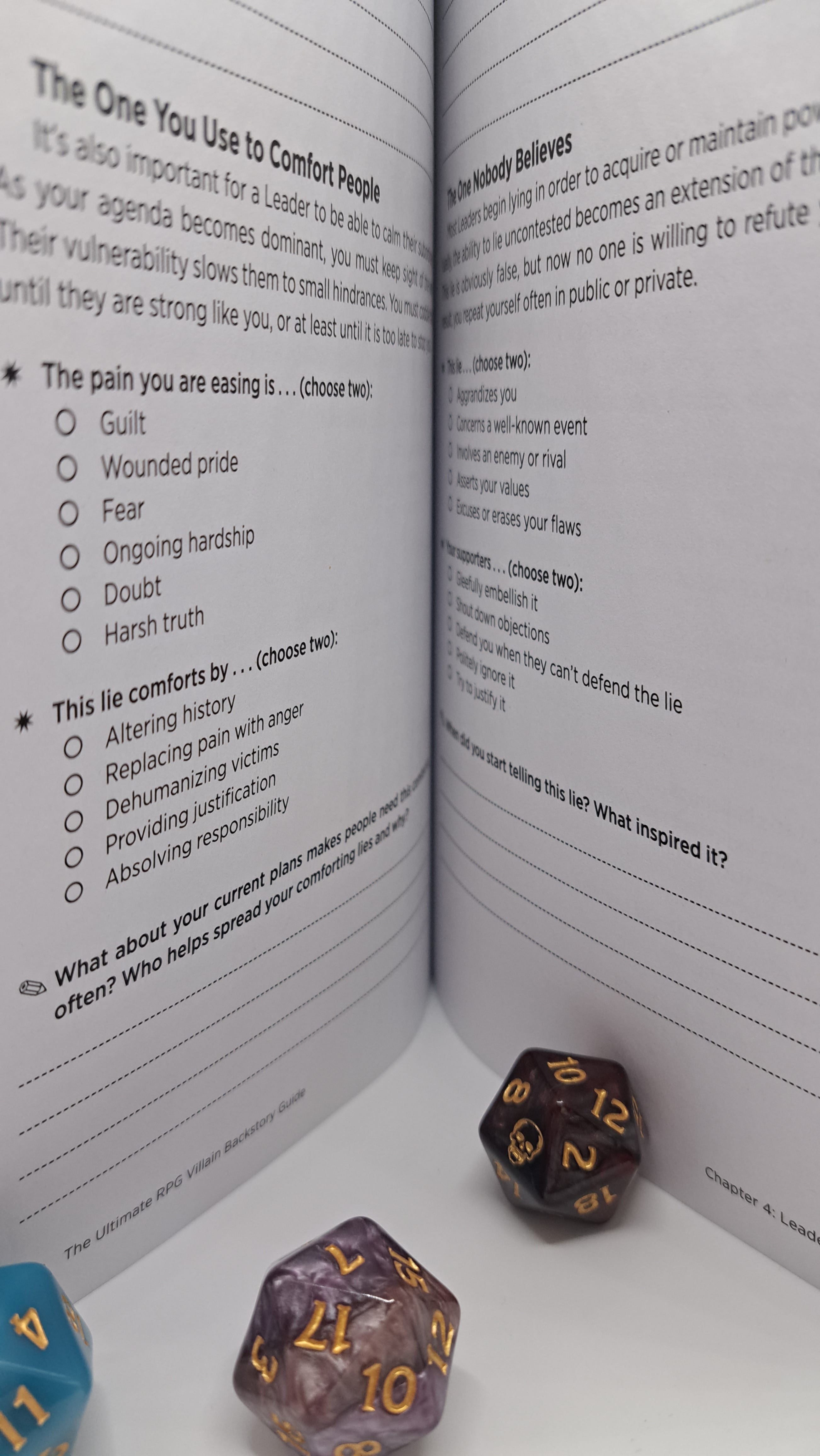
It’s easy to make a villain and say, “Well, they’re evil because they are just mean.” That’s not compelling. It may work on the surface level or if you just need a quick character, but to better connect with a villain, they need a strong background and belief system. A villain is one you can sort of empathize with. Their ideals are ones you can understand, even if they may be a bit of a red flag – I’m looking at you Thanos.
One takeaway from the guide that felt out of place was when it came to traumatic events. Trauma affects everyone differently and while it can leave a person scarred and changed, it isn’t a great representation to say that trauma turns people into villains. Many, in fact, may develop a more positive demeanor
The Villain Guide is full of ways to dress your villains in the wardrobe of villainy, both physically and in their narrative. An opulent villain is one who may wear flashy clothing but may also carry a trinket such as a worn down cape or cane that shows they may not have always been wealthy.
Color is an important character choice, too. Many iconic villains are known to wear specific colors like Darth Vader in black, silver, and red or Rumpelstiltskin surrounding himself with gold.
A drawback is that the book didn’t go into any detail about names. Names are similarly as important as the things villains surround themselves with. Players remember a name. Names hold power and weight. Giving your villain a memorable name and even a nickname can go a long way in fleshing them and their backstory out. Captain Hook, known as Killian Jones in Once Upon a Time, goes by Hook. It’s memorable as well, he’s got a hook for a hand.
As Thanos once said, “I am inevitable.” As challenging as it is to create a villain, they are inevitably necessary for telling a great story around the table. The Villain Guide is a comprehensive look at what it means to be a villain. The random roll tables create compelling baddies, NPCs, or characters and make for a number of unique variations so you’ll never have copies. And the quirks, questions, and thoughtful questions make for designing fascinating and memorable characters. If you need a villain for your campaign, The Ultimate RPG Villain Backstory Guide: Prompts and Activities to Create Compelling ANTIHEROES, ENEMIES, AND BAD GUYS is worth a read.
It’s also a villain in itself with that lengthy title.
*The Villain Guide was provided by Adams Media, an imprint of Simon & Schuster.
No posts
Comments
Nothing yet. Say the first thing.
Sign in to join the conversation.