
Hello there. Let’s get to it.
The video game industry is full of passionate and dedicated developers, players, and creators. The future of the industry we all love is one that is in jeopardy. If one picked up a Magic 8 Ball asking it what the next five years look like for gaming at large, the response would be…well let’s see.
The leaders of AAA publishers and developers showed they are chasing profits and not people. Corporate greed and mismanagement have caused a major shift in the games industry. The layoffs at Xbox, Bethesda, ZeniMax, and iD Software and sale of studios are well documented and reported on. It’s the people that were part of those layoffs we need to focus on.
Gina Bruno, Milo Webb, Iryna Murin, Christina Cornett, and more than 3,000 others (3,200 total) lost their jobs as part of the Microsoft layoffs. Search ZeniMax layoffs on LinkedIn and you’ll found numerous posts talking about it. They made one of my most played games of all time, Elder Scrolls Online.
The mishandling of people and studios is a major problem in the larger games industry. The layoffs also saw the sale of studios Compulsion Games who made South of Midnight, and Double Fine who developed Psychonauts. Both of which are returning to independent studios and will get to take their IP and game catalogs with them.
After 2025’s layoffs at ZeniMax, a few of those impacted took what they learned and formed their own independent gaming studios. These included Sackbird Studios, Ironroot Games, and Eighth Lantern Studios. Each is a small indie team dedicated to making titles they are interested in and want to make. All without corporate oversight and creative blockage.
It is those indie creators that are leading the way of the future of the gaming industry. Their ideas are unique, the creators are passionate, and they get to make what they want. They can even decide if they want to get a publisher, be owned by one, or if they want to produce physical games in actual boxes with real discs or cartridges that actually contain the game. Unlike Sony’s announcement to no longer produce physical games starting in January 2028 due to “consumer trends.”
Sony may be following trends, but more likely they make more money from digital games. Search online and you’ll find Reddit forums full of people saying they believe it’s a dumb idea to forgo physical games. However, data from Circana and gaming analyst Mat Piscatella shows that sales for physical PlayStation games peaked in 2009 at around 292 million units sold. By June of 2026, that number fell to just 37 million.
Games are meant to be played, shared, and experienced and that experience includes seeing a game box on a shelf, having a collector’s edition next to the console, and preserving tangible media like its an artifact found at an archaeological dig site. Now, years from now, we may discover physical games like they did with Atari’s E.T. the Extra-Terrestrial video game buried in the ground. What’s next, will Sony bury its physical games, too?
However, Piscatella’s research does show that there has been some growth in the physical game market. There has been a four percent growth in physical software unites sold in 2026. That is in part due to the Nintendo Switch 2 and physical sales on Nintendo hardware.
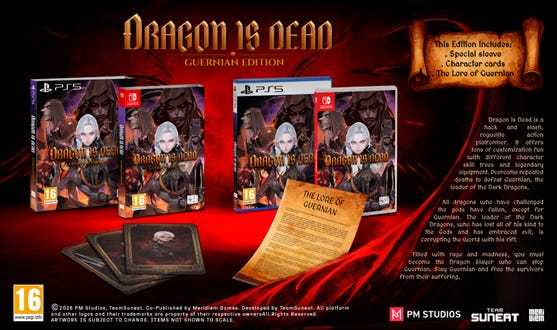
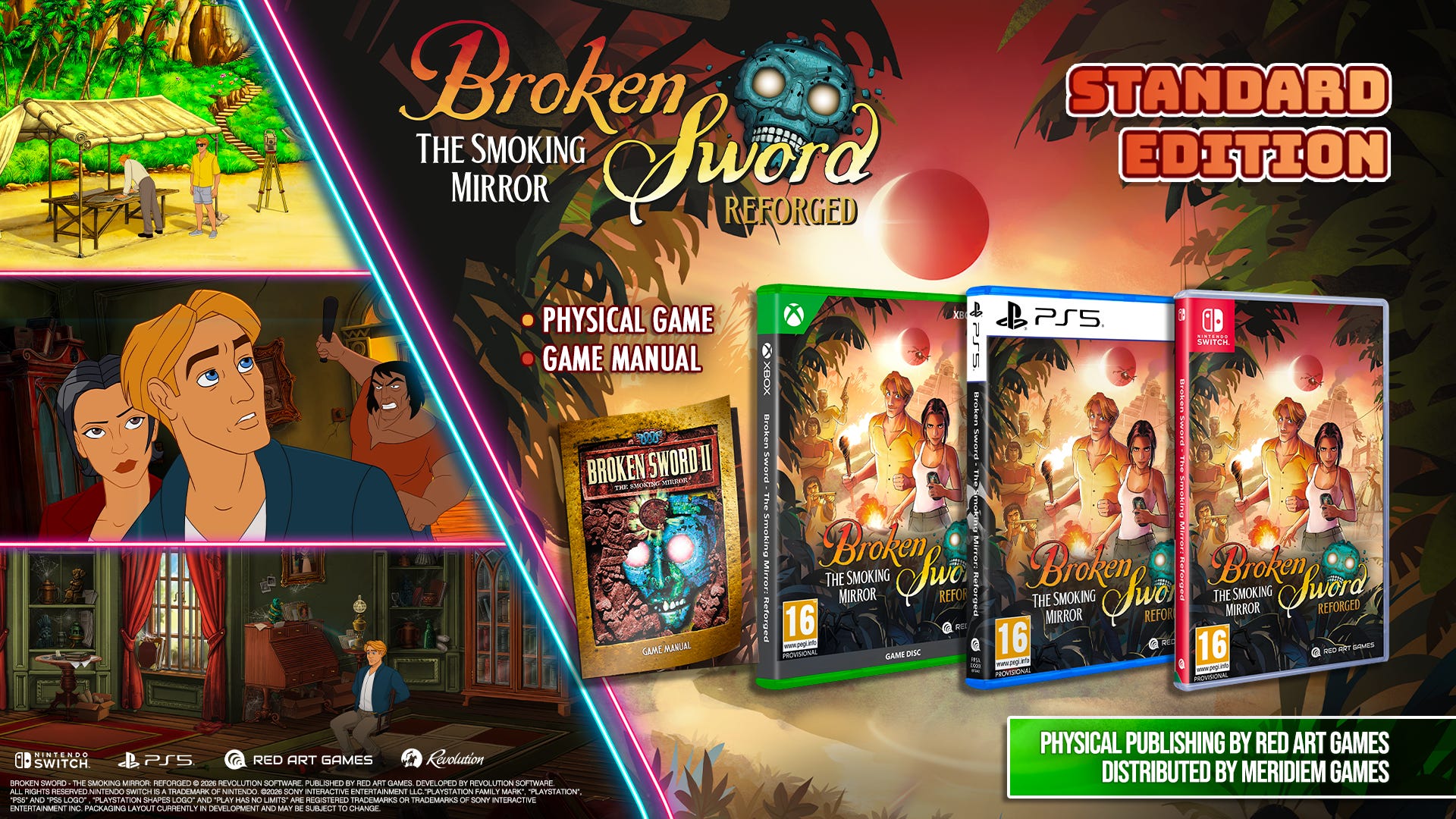
There are companies and indie studios that are doing what they can to keep video game preservation alive with physical games. My inbox featured a few games that have physical copies on multiple consoles. Dragon is Dead physical editions are available on the PS5 and Nintendo Switch, and Broken Sword - The Smoking Mirror: Reforged is getting editions for Nintendo Switch, PS5, and Xbox Series X on February 19, 2027. Having a physical release is a major way to grab attention as players may want to frame the box or showcase their favorite title.
Literally as I was writing this newsletter, I got an email with the headline “What discs mean to a publisher of ‘meaningful’ games.” In Stephen Totilo’s Game File Substack, he interviewed Zhenghua Yang, founder and CEO of publisher Serenity Forge who have a physical copy Doki Doki Literature Club Plus!. The topic was about what physical games mean to a publisher as to which Yang responded, “It’s actually an important part of our mission to bring meaningful games to as many people as possible globally. Physical games help us reach audiences that digital often can’t.”
There will always be a market for physical games and for those who want them. It may not be from Sony after 2028, but from smaller independently-owned developers, publishers, and distributors.
No posts
Comments
Nothing yet. Say the first thing.
Sign in to join the conversation.