
Join us on a (cost-efficient and eco-friendly) trip down memory lane —
In this edition of The Conquest Communiqué, we trace the story of the EV ecosystem in India from its early days to the present and beyond.
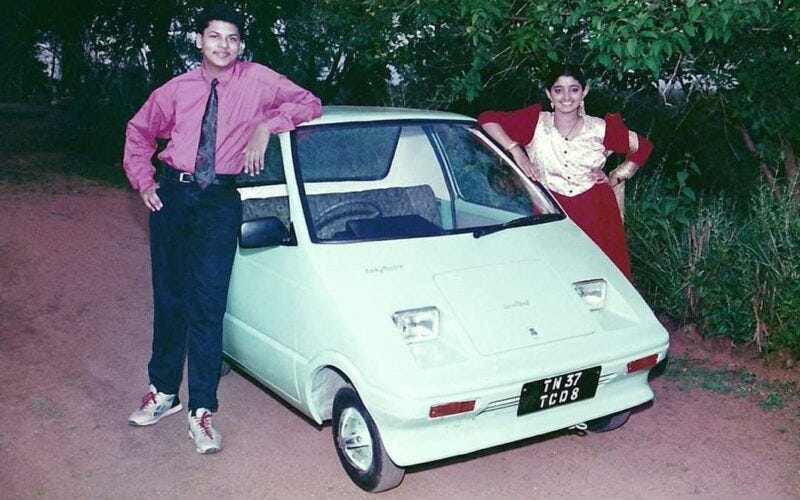
1993. Pragati Maidan, New Delhi. The second Delhi Auto Expo featured a two-seater car that became the centre of much curiosity. A DC electric motor, a 4-speed gearbox (with even a reverse gear) and a range of 60 km: that was the Lovebird, manufactured by Eddy Current Controls, founded by MD Jose.
They had to make do with lead-acid battery packs, and those drove up the cost of ownership. Underdeveloped charging technology meant the car took about 8 hours to charge. And the slope limit was 15 degrees, so it couldn’t safely drive up steep slopes.
The ECC Lovebird did not reach customer adoption. Failing to hit even the three-digit mark in sales (private and institutional buyers combined), the government subsidy of Rs 80,000 was discontinued which marked the final nail in the coffin of the pioneering Lovebird.
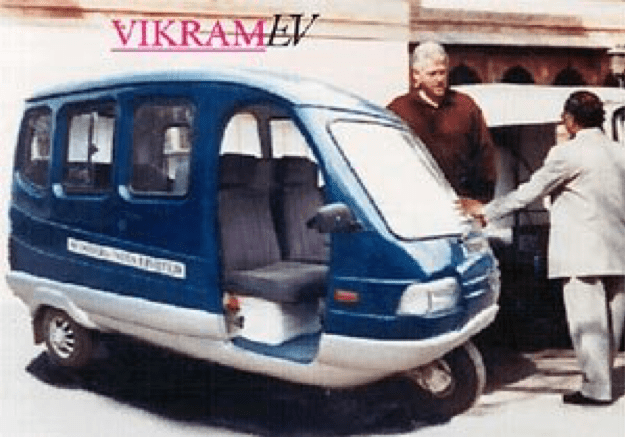
The next big milestone in India’s EV story came in 1996. The Vikram Safa, developed by Scooters India Limited, was India’s first electric three wheeler. About 400 Vikrams were manufactured and sold. But they were still powered by lead-acid batteries, which would run out after every 41,250 kilometres — again driving up the cost of ownership.
In 2000, BHEL developed an 18-seater electric bus powered by the same lead-acid battery tech. About 200 of these buses were built and deployed in Delhi, with the support of the Ministry of Non-Conventional Energy Sources. But once more, the bus was plagued by the high cost of the battery, short life and poor consistency.
2001 proved to be a game changer for the EV industry in India with the launch of the Revolutionary Electric Vehicle Alternative, or REVA — India’s first fairly successful electric car.
The Reva Electric Car Company (RECC) — founded by the co-founder of Sun Mobility, Chetan Maini as a joint venture between the Maini Group and Amerigon Electric Vehicle Technologies — was created with a single aim: developing and producing an affordable compact electric car.
RECC joined forces with several automotive experts to engineer components for REVA. Curtis Instruments, Inc. of the USA developed a Motor Controller specifically for the car. Tudor India Limited supplied customised Prestolite batteries for the car’s power pack. Modular Power Systems of the USA developed the charger for Reva.
The result was REVA: a small, three-door hatchback with the DC motor powered by eight 6V, 200A-h lead-acid batteries — but its chassis was not strong enough to pass crash tests at 40 km/h. It was sold for ₹ 3,50,000 in India with a running cost of about 40 paise per km in those times.
In 2004, GoinGreen of the UK entered into an agreement with RECC to import REVA cars, and marketed them under the G-Wiz moniker. REVA continued production till 2007.
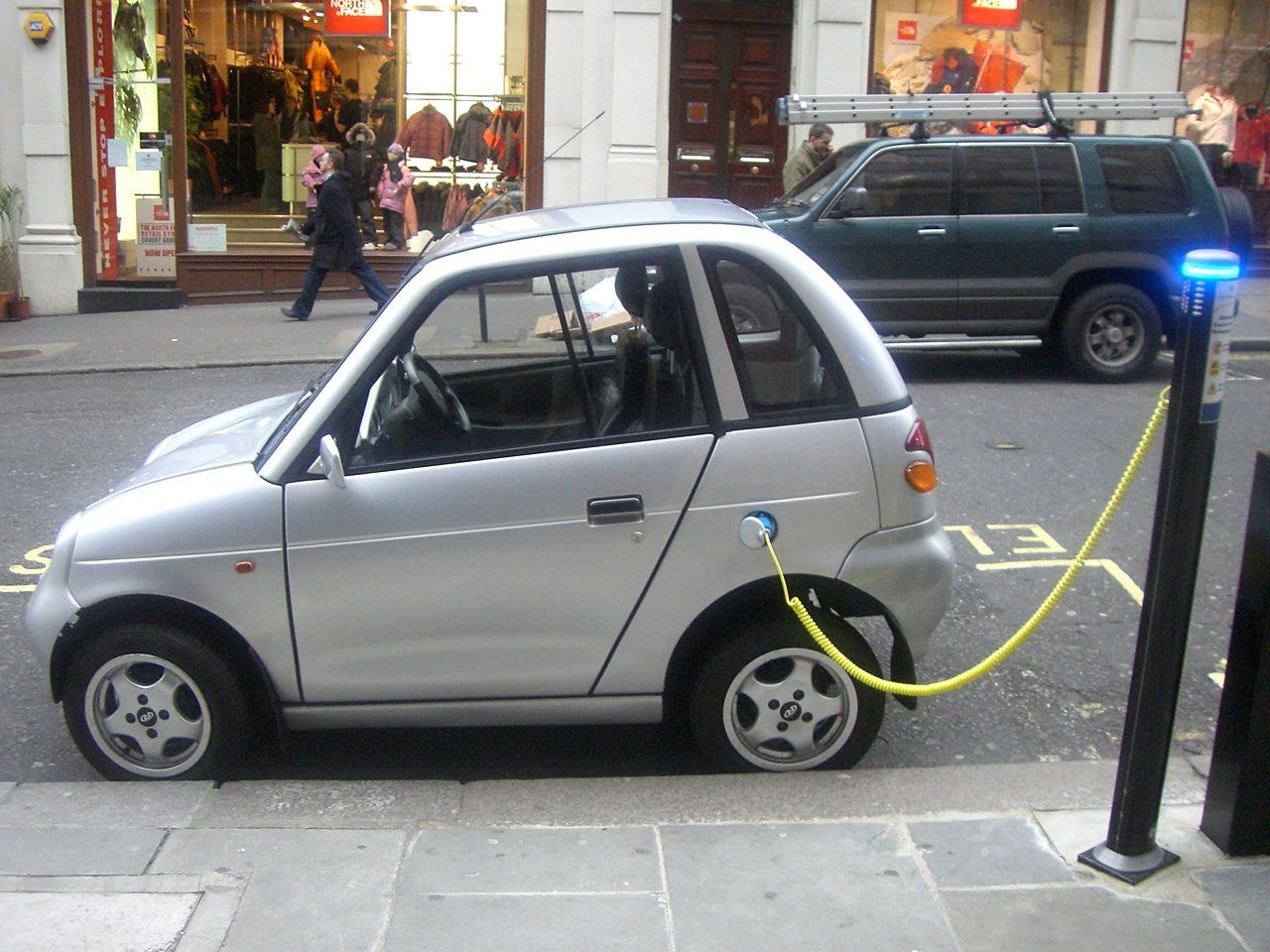
In January 2008, a revamped model was introduced called the REVAi (G-Wizi in the UK). Now packing a 3-phase AC motor (but still powered by the previous lead-acid battery pack), it also had a “boost” switch that imparted 40% extra torque for better acceleration and slope ascent, increasing the top speed to 80 km/h. In conjunction with Lotus Engineering, several new safety features were added and a reinforced chassis was implemented which was successfully crash-tested at 40 km/h by the ARAI.
A year later, in January 2009, came the REVA L-ion. Finally doing away with lead-acid batteries, the REVA L-ion was powered by high-performance lithium ion batteries (and was otherwise similar to the REVAi). This single innovation reduced the kerb weight of the car by 100 kgs (from 665 kg to 565 kg), reduced charging time to 6 hours, enabled greater acceleration, and increased the nominal range by 40 km (from 80 km to 120 km).
In May 2010, Mahindra & Mahindra acquired a 55.2% majority stake in Reva, renaming RECC to Mahindra Reva Electric Vehicles Private Limited. In 2016, the company was rebranded as Mahindra Electric Mobility Ltd. with the intention to reflect not just the business line of producing vehicles, but also developing powertrains and integrated mobility solutions.
The different versions of the REVA sold about 4,600 vehicles worldwide by late 2013. India was its main market, accounting for 55% of global sales, of which 40% were in Bangalore city, where Mahindra Reva was based. The UK was also one of the leading markets, with the G-Wiz being the top-selling electric car in Britain for several years, particularly in London.
Volumes hit a peak of ~1,00,000 units per year in 2009-10.
And then the industry crashed.
As Tarun Mehta, founder and CEO of Ather Energy put it:
Around 2007, some brands started importing electric scooters from China. What happened was, a lot of crap vehicles were imported, because nobody knew anything better. Customers bought, thinking – ‘How bad can it be? It will be like an Activa, but without needing to spend on petrol’.
And that’s when reality hit them. Indian two-wheeler buyers had never experienced a truly bad product, until electric vehicles hit them. These EVs could not go over a flyover… when that word of mouth started spreading, the EV industry pretty much collapsed. It went from 80 brands to ~15 brands, from ~1,00,000 units per annum to ~15,000 units per annum: a major collapse happened.
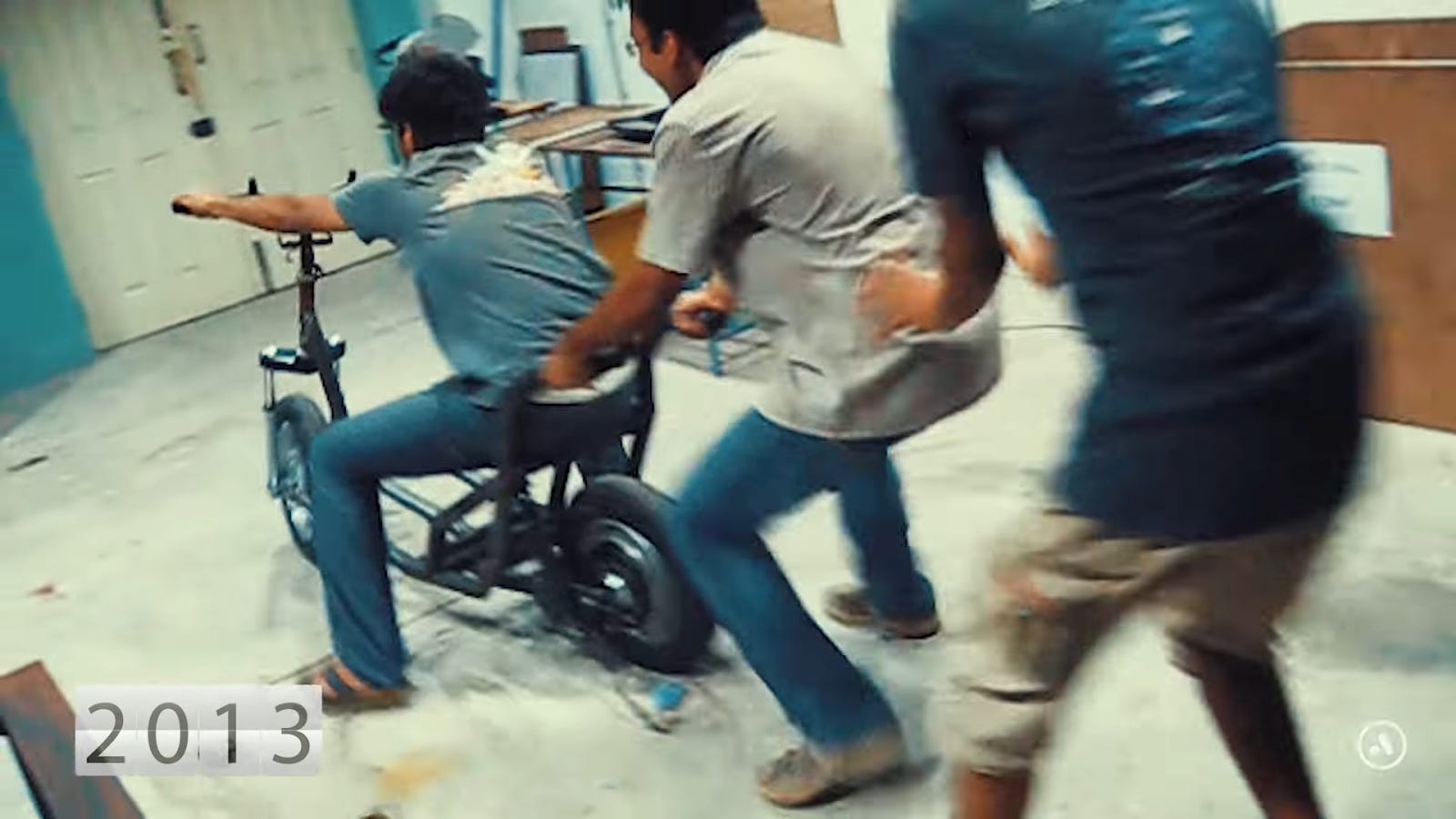
So when Ather started in 2013, the industry had certainly seen better days.
But when they finally launched their scooter in 2018, they changed market dynamics massively.
You see, before Ather, the 2W EV market was primarily very small powered vehicles with a top speed of 30-40 km/h. It was unclear who the customer even was: they could never figure out who wanted to buy the vehicle. Everyone who has the money to experiment with something non-mainstream as an early adopter, also wants to be fundamentally proud of what they buy. But the 2W EVs at the time were “terrible” — slower than others, had worse performance, and looked bad. “You look like a dork on them”, as Tarun likes to put it, time and again. “They were bad from every possible perspective.”
Ather did not want to just beat these EVs. They wanted to beat petrol vehicles. They wanted to beat Activa on parameters that mattered to consumers.
Observing Tesla, they understood the value of launching something leaps ahead of others. And boy, did they follow through with their 2018 launch:
Ather 450 was the fastest accelerating scooter produced in the world, ever — including petrol vehicles! If this wasn’t already mind-boggling enough, it was also the first scooter to have a touchscreen dashboard, the first to have Google Maps, the first to have a bolted aluminium frame… With so many firsts, they became ‘the equivalent of the Roadster’ in the Indian EV segment.
Multiple OEMs (Original Equipment Manufacturers) followed in the footsteps of Ather, and high-performance electric scooters became the market standard. Today, about two-thirds of the Indian scooter market is products in this category. As a result, the Indian scooter market has become the most advanced scooter market in the world with regard to quality and tech standards.
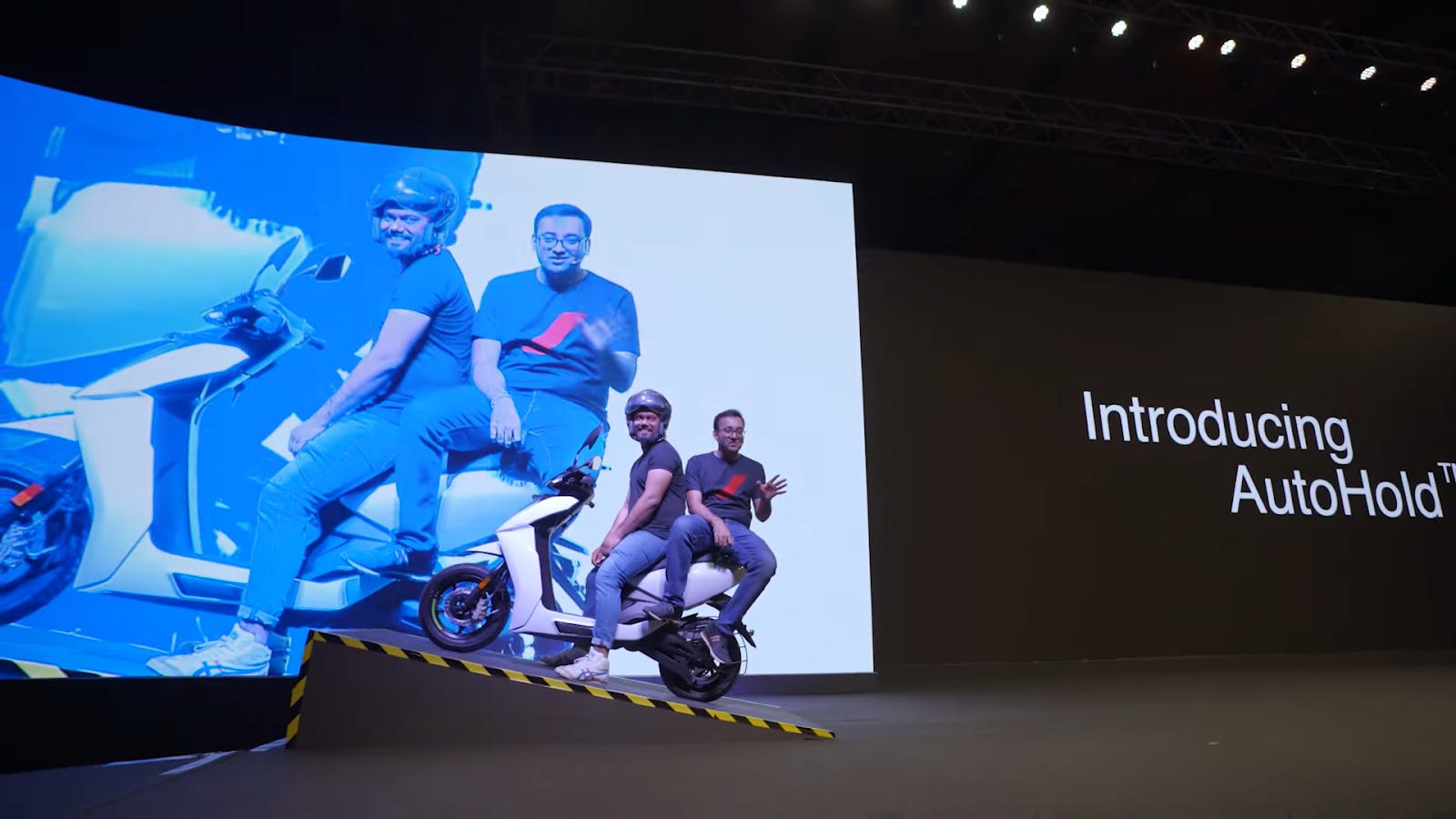
Ather had sold about ~1000 vehicles in India in FY2018-19, with a revenue of 20-30 Cr. In FY2022-23, they sold ~100,000 vehicles, with a revenue of 1800 Cr. The numbers sure appear outstanding.
But once you realise that Ather has only really been doing sales for about a year now (being focused on R&D for 9 years prior to that), you experience a sense of wonder and excitement about the future potential.
Of course, this piece would be incomplete without mentioning the electric rickshaw revolution in India.
By costing half of what a CNG-powered auto rickshaw does upfront and also helping cut fuel costs, e-rickshaws make it much easier for a manual rickshaw puller to attain a better quality of life — needless to mention the benefits to the environment.
Favourable government policies played a significant role in facilitating the e-rickshaw boom. Although sales somewhat died down during the pandemic, the sector has bounced back strong. From March 2022 to March 2023, passenger electric 3 wheeler sales have seen a 90% YoY growth.
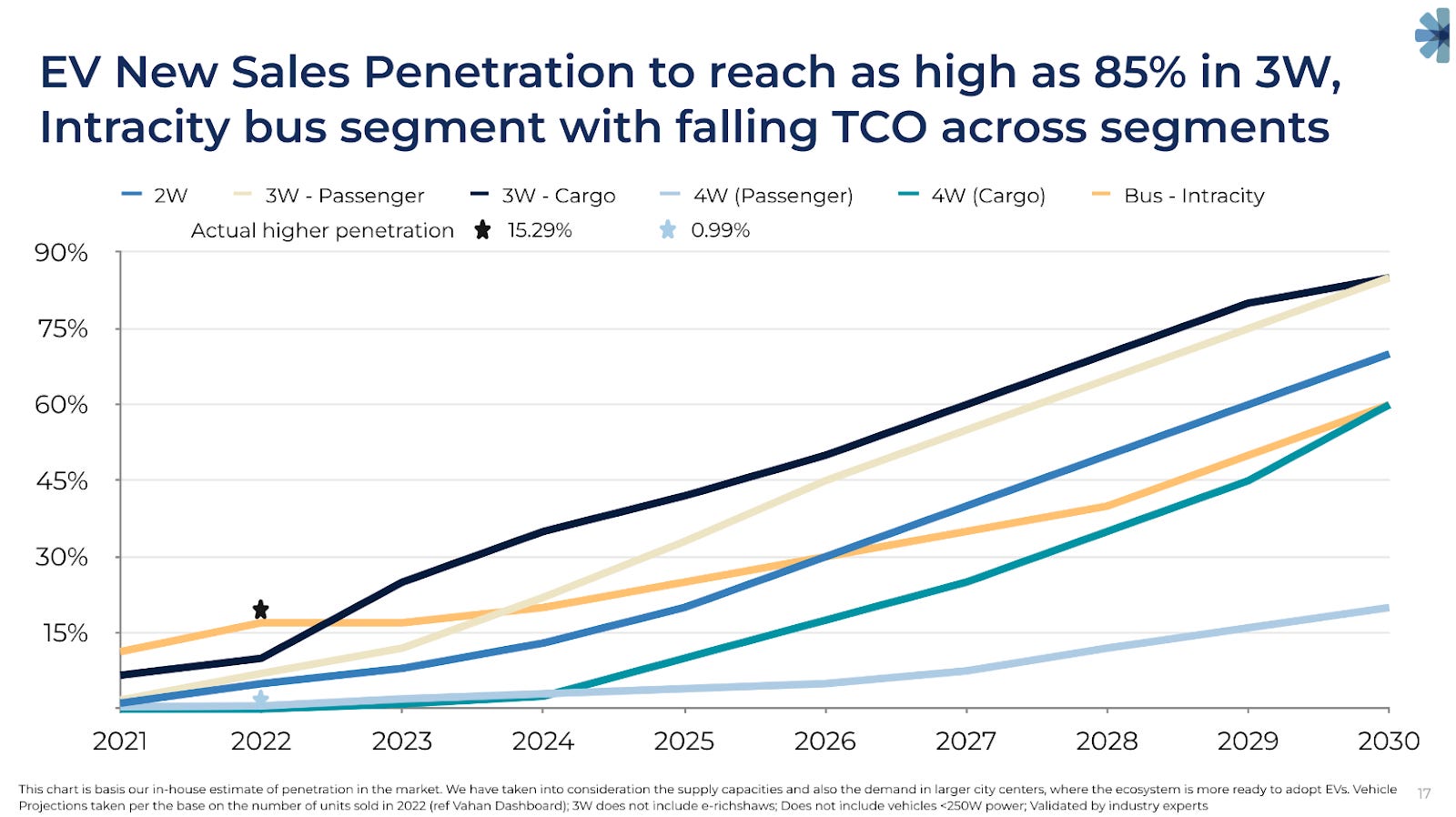
In their EV Primer (evprimer.in), Blume Ventures projected EV penetration to well surpass 50% of the market within the next 7 years, for all segments save for 4W Passenger. This would be driven by falling TCO (Total Cost of Ownership) across segments, with all segments of EVs already being TCO positive at the moment with subsidy.
Being TCO positive means that the overall benefits or cost savings associated with owning and operating these vehicles exceed the total cost of ownership, which makes them financially attractive in the price-sensitive Indian markets.
Another interesting observation: Vehicle Cost is the highest cost in the TCO of an EV, while Energy is the highest cost in the TCO of an ICE. This corroborates common consumer belief.
In their inaugural 2022 version of the EV Primer, Blume Ventures recognised 4 “cold start problems” for EV adoption in India.
Updates in 2023 indicate significant strides made toward solving each of those 4 problems:
#1: Lack of good vehicles
Over the last year, there has been a rise in the number of OEMs across categories, which has largely solved for this problem. As Tarun Mehta of Ather stated while talking about their segment: what was earlier high-performance has today become the market standard.
#2: Lack of component manufacture
PLI (Production Linked Incentives) government schemes for cells and components have accelerated the solution to this problem. The recently introduced AIS 156 regulation should help ensure safer batteries and charging. And for OEMs to enjoy the benefits of FAME-2 (The Faster Adoption and Manufacturing of Electric Vehicles scheme) subsidies, they must be using indigenised components from the country, promoting local manufacturing.
#3: Lack of charging infrastructure
This remains the most under-developed of the 4 cold start problems. Lack of charging infra leads to range anxiety: more of a fear of not finding chargers, than of running out of charge. Most charging today is slow and private. Aggregator platforms are lacking. FAME-2 has, however, re-initiated the focus on fast charging infra.
#4: Lack of financing options
Large banks have already begun to offer competitive interest rates. For instance, IDFC First offers interest rates as low as 5.99% on Ather scooters. With increased quality of the vehicles and their components, underwriting of vehicles has become easier and more accurate with on-ground operating data. It is safe to say that access to financing has been largely solved.
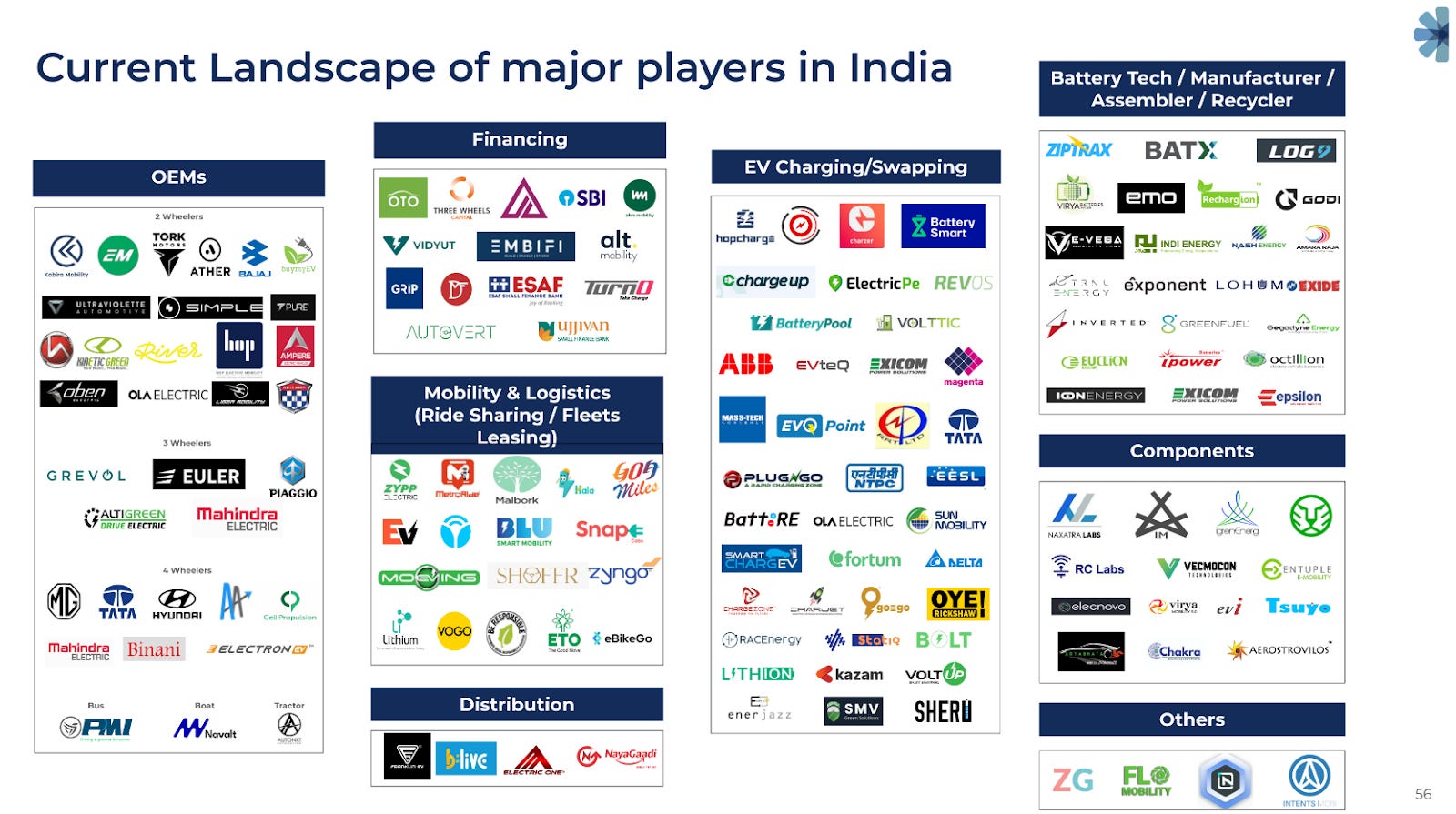
With a thriving ecosystem in place in India today solving for all these problems and beyond, the future sure looks electric.
Comments
Nothing yet. Say the first thing.
Sign in to join the conversation.