
Human nature shapes every one of us, every single day, usually without our noticing. It runs underneath almost everything you do, long before you have reasoned any of it out.
And it has barely changed. The technology around us would be unrecognizable to someone a few hundred years ago, yet the people using it run on the same wiring as ever. The fears and drives that moved a Roman senator are moving you, right now.
That makes understanding human nature the most useful skill there is. Almost everything you want runs through other people. Stay blind to how they work, and you spend your life confused about why people, including yourself, keep doing what they do.
The smartest people in history understood this. Two thousand years ago, Seneca was advising the emperor Nero on how people really work. Marcus Aurelius spent his nights writing private reminders to master his own reactions. They were not studying history. They were studying human nature.
Human nature is the one thing in history that never got an update.
If people are all running the same ancient software, then anyone who can read it has an edge in every single room they walk into. Caesar had it. Machiavelli wrote the manual for it. The Stoics built a whole philosophy around it. Most people never even learn it exists.
School teaches you math, history, maybe a language. Almost none of it teaches the one subject every single day of your life will test you on: people. Most of us reach adulthood fluent in everything except the thing that decides how our life actually goes.
Here are the 5 forces of human nature that have decided who people become since long before we could write. Once you see them, you cannot unsee them.
Force 1: We run on emotion, not logic why being right is not enough
Force 2: The status game the ranking instinct nobody admits to
Force 3: The shadow the dark side that has not changed in 3,000 years
Force 4: We become our surroundings how the group rewrites you without asking
Force 5: Mastering yourself the oldest project, and the only force you control
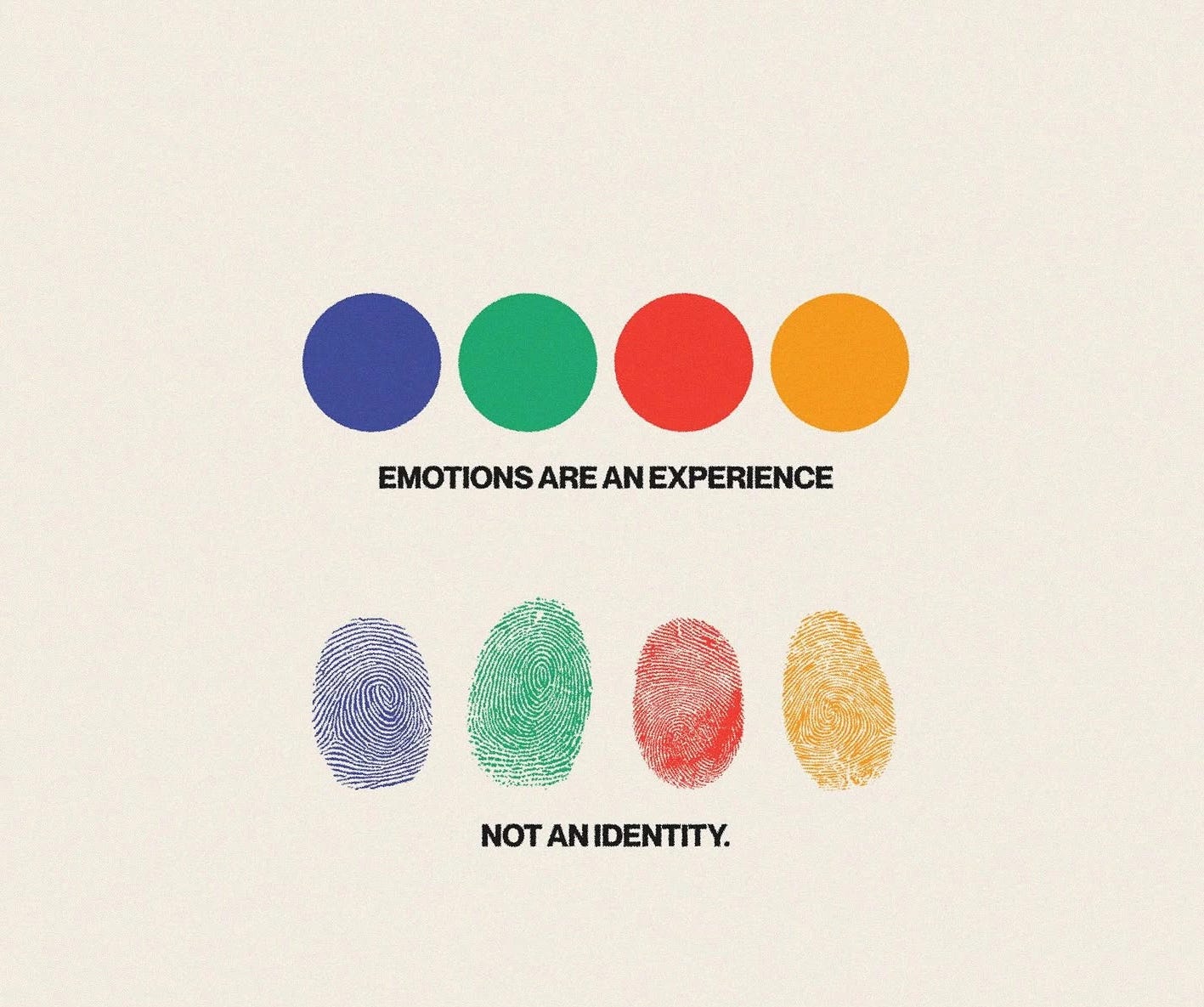
We like to believe we are reasonable. We make decisions with logic, weigh the facts, then act.
That is almost never what happens.
The feeling comes first. The reason comes second, as a lawyer hired after the fact to defend a verdict your gut already reached. Modern psychology has watched this happen in the brain: the emotional response fires before the thinking part has even caught up. By the time you are “deciding,” your body has often already chosen.
The stranger half of this came out of the neuroscience lab. Antonio Damasio studied people whose emotional brain had been damaged, who could still reason perfectly but felt almost nothing. You would expect cold, flawless logic. Instead they could not make even simple decisions, stuck for an hour weighing where to eat lunch. Emotion is not the enemy of clear thinking. Take it away and thinking loses its compass.
This is why being right is not enough.
I watched this play out today, in a supermarket parking lot. A woman had parked badly, right on the line, crowding the car beside her. A man came out, saw it, and he was completely in the right. But the way he said it, sharp and loud, made her shut the whole thing down. She did not move the car. She got defensive and walked off. He won the argument and lost the outcome.
If he had said “hey, would you mind nudging it over a bit, it is tight for me to get in,” she almost certainly would have moved it. Same request. The only thing that changed was whether her brain heard a neighbor or a threat.
People do not respond to your words. They respond to how your words make them feel about themselves.
The Stoics understood this 2,000 years before we had brain scans to prove it. Marcus Aurelius could have anything in the world. What he worked on hardest was his own reaction. He knew that the man who cannot control his temper is not free, no matter how big his army is. Seneca said it plainly:
We suffer more often in imagination than in reality.
— Seneca
Most of what wrecks us is not the event. It is the story our emotions tell about the event, instantly, before reason gets a word in.
Marcus Aurelius filled a private notebook, the one we now call his Meditations, with reminders to himself: people will be rude and selfish today, do not hand them your peace. The Stoics treated their own temper as a skill to drill, not weather to suffer through.
Buddhist practice is built on watching the space between what happens and how you respond, then widening it on purpose. You are not your first reaction, and you do not have to obey it.
You already know the price of forgetting this. The message you fired off angry. The email you cannot unsend. None of it came from your reason. It came from an old alarm firing faster than your mind could catch it.
The space between the trigger and your response is where all your power lives. Widen that gap by even one second and the whole thing changes:
you stop firing off the message you will regret
you stop taking the bait when someone is baiting you
you become the calm one in the room while everyone else loses it
That was true in the Roman senate. It is true in your group chat tonight.
Name the feeling before you act on it, and you have already done what 90% of people never manage.
Think of the last time a friend won something big. A promotion, a new car, a relationship that made yours look small.
You were happy for them. And underneath the happy, something twisted that you would never say out loud.
That twist is one of the oldest forces in us. Almost nobody admits to feeling it.
For nearly all of human history, your rank in the group was life or death. High status meant food, safety, mates, protection. Low status meant you were the first to starve and the last to be defended. So the brain still tracks status constantly, every room, every conversation, often without telling you it is doing it. When researchers slid people into a brain scanner and left them out of a simple game, the region that lit up was the same one that registers physical pain.
Exclusion does not just sting, the body files it under injury. Robert Sapolsky found the same cost: across decades studying wild baboons, the low-ranking animals carried higher stress hormones and worse health, year after year, from nothing but their place in the pecking order. We chase relative rank even when it wrecks our actual happiness.
Human nature is stronger than any individual, than any institution or technological invention.
— Robert Greene
Rome ran on this. Everything was honor, rank, and the eyes of the crowd. Julius Caesar understood it better than anyone: he gave the mob bread and games, and they handed him a republic.
The hunger for status has built empires and burned them down.
Social media is the purest status machine ever built. Likes are rank, follower counts are rank, and the jolt before you check how a post did is the same fear the Roman felt waiting to hear how the crowd received him.
Lao Tzu taught that the man who needs to stand above everyone is secretly owned by everyone, because his peace depends on their applause. The Tao Te Ching put it simply: he who knows he has enough is rich. The man still chasing rank can never arrive, because there is always someone higher up.
And underneath the whole status game sits envy.
Envy is hard to catch. It comes out as a small criticism. A joke at the exact wrong moment. The friend who hears your good news and instantly finds the one flaw in it. Greene’s read is blunt: the people closest to your own level are often the ones who can least stand to watch you rise.
I have seen what the wrong circle does to a person. A group where status comes first, where someone’s win is talked down the moment they leave the room. Stand in that long enough and you start shrinking yourself to fit, playing smaller so you do not become a target. And that shrinking compounds, year after year.
See the status game for what it is, and you stop being its puppet. Now you get a choice most people never realize they have. You can walk away from the empty games, the ones played over cars and follower counts, and stop pouring your life into a race with no finish line. And where status genuinely counts, in a career or a field you care about, you can play it on purpose and play it well, eyes open, instead of being dragged along. The one rule is to play the game without letting it play you. Win the rank without selling the part of you that made it worth winning.
You have met the smiling coworker who agrees to your face and undermines you the second you turn around.
What’s harder to admit is that you have been that person too.
The pleasure we feel at a rival’s failure. The urge to dominate. The pettiness, the spite, the will to win even when winning costs us nothing good. Carl Jung called it the shadow, the part of yourself you pretend you do not have. And his warning was simple: the parts you refuse to look at do not disappear. They run you from behind your back.
Modern psychology even has a name for the sharp end of it: the dark triad, narcissism, Machiavellianism, and psychopathy. These traits sit at low levels in plenty of ordinary people and spike in the ones who lie, charm, and use others without much guilt. The unsettling part is that they often come across as likable at first. The charm is the camouflage.
This is exactly what Machiavelli was doing in The Prince, and it is why the book still scandalizes people 500 years later.
He was not teaching people to be evil. He was being honest.
He described how power and people actually work. He said a leader who acts only on how people should behave, instead of how they really behave, walks straight into his own destruction.
It is much safer to be feared than loved, if one cannot be both.
— Niccolò Machiavelli
You do not have to agree with him.
Machiavelli wrote The Prince after he had been arrested, tortured, and exiled. He had watched from the inside how power actually changes hands, who survives and who gets killed. The book was not the daydream of a cruel man, but the field report of one who had stopped expecting people to be better than they are.
Jung turned that same honesty inward. The traits you cannot stand in other people, he said, are often the exact ones you have buried in yourself. Your loudest judgments are usually a confession. We attack in others what we refuse to look at in our own mirror.
And the dark side is astonishingly constant.
Alexander the Great conquered most of the known world before he was 30, and the story goes that he wept because there was nothing left to take. Ambition with no off-switch. Napoleon ran on the same engine, until it cost him everything.
See the shadow in others, and you stop getting blindsided by the smiling ones.
The tell is usually a small mismatch:
the compliment that arrives right before a request
the friend who is warm to your face and strangely pleased when you struggle
the one who never says a hard thing directly but always leaves you doubting yourself
See the shadow in yourself, and it stops steering you. The person who swears he has no envy, no ego, no cruelty in him is exactly the one those forces control the most, because he never watches them.
The dark side does not go away when you deny it. It just takes the wheel.
Notice how you are a slightly different person with your family, with your work friends, and with the people you grew up with. Same you. Different rooms. Different behavior.
We absorb our surroundings without ever deciding to.
We copy the people around us without realizing it, their habits, their speech, their standards for what is normal. In one famous experiment, the psychologist Solomon Asch showed that people will deny what their own eyes plainly see, calling a short line long, just to match the group. We would rather be wrong with everyone than right alone. That instinct is wired deep.
And the reach is bigger than the room you stand in. When Nicholas Christakis tracked thousands of people across decades of health data, he found that habits and moods travel through social networks like a current. Your weight, your happiness, even whether you manage to quit smoking is nudged by your friends, and by your friends’ friends, people you have never met. You are shaped by a crowd.
This is why religion has shaped human behavior for thousands of years more powerfully than any law ever has.
Whatever you personally believe, religion is one of the clearest pieces of evidence that humans are built by the story their group tells. It gave people a shared meaning, a code to live by, and a reason to trust and cooperate with strangers they would never meet, long before any police force existed. It organized whole civilizations through belief alone.
Walk through 30,000 years of human art, from the animals painted on cave walls to the Renaissance to the photo someone posted an hour ago. The styles change completely. The human staring back at you does not. The same love, the same fear of death, the same lust and grief and hunger to matter. We have been the same animal the whole time, just holding different tools.
Step back and you can see what art and religion really are. They are the two oldest tools we built for the same job: making life bearable in a mind that knows it is going to die. Ernest Becker argued that almost everything we create, our gods, our monuments, our art, is a way of managing the terror of our own death. Viktor Frankl came out of the concentration camps convinced that a person can survive almost any suffering as long as they have a reason to hold onto.
Art and religion are not decoration on top of human nature. They are how the psyche keeps itself alive.
The East built whole societies around this truth on purpose. Confucius taught that you become good or bad through your relationships and your daily rituals, through the company you keep and the habits you repeat. Character was not something you were born with and kept. It was something your environment built in you, one ordinary day at a time.
You become the average of the people you spend the most time with.
So stop leaving your inputs to chance. Choose your circle, your influences, and the information you feed your head as if they are writing your future. Because, slowly and constantly, they are.
For 2,000 years, the wisest people across cultures agreed on one thing. The highest work of a human life is to master yourself instead of being run by your nature.
For a long time we believed personality was set like cement by 30 and never moved again. It is not. Researchers like Brent Roberts tracked thousands of people across decades and found that most adults keep changing, and usually for the better.
According to Aristotle you are not simply born brave or honest or disciplined. You become those things by doing them, again and again, until they set into character. Excellence was not an act for him. It was a habit. Modern brain science now says the same thing in its own language: every repeated action wears a deeper groove, and the grooves you run most often become the person you are.
Socrates said: the unexamined life is not worth living. None of them had our research, and all of them landed on the same instruction. Look at yourself honestly, on purpose, as a daily habit, because no one else will.
What actually drives that change is not motivation or affirmations. It is roles and commitment.
You grow into what you repeatedly do and the people you stand beside. I know a lot of people who changed drastically for the better (or worse).
Modern psychology even narrowed down what feeds that growth. Three needs show up again and again:
Autonomy. The sense that your life is your own choice
Competence. The feeling of getting better
Connection. Real bonds with people
If you know the enemy and know yourself, you need not fear the result of a hundred battles.
— Sun Tzu
For 3,000 years, these forces barely moved. Now times are drastically changing.
We have built machines that can think.
AI is taking over the rational, mechanical work: the calculating, the sorting, the remembering. The things school spent 16 years training you to do, a machine now does in seconds. It is easy to look at that and feel like human nature is becoming obsolete.
The opposite is true.
As the machines take the logical half of life, the human half becomes more important. When anyone can generate a thousand options in a second, the rare skill is no longer making them. It is everything a machine cannot fake:
judgment, knowing which option is actually good
taste, the feel for what works and what is junk
trust, which only ever forms between real people
This is also why art and religion still matter. They point straight at the part of us no machine can touch: the hunger for meaning, for beauty, for awe, for belonging. In a world drowning in automated everything, the things that make us feel something become the most valuable things there are.
Naval Ravikant has been pointing at this for years. In an age where generic skill is cheap, he says the way you win is by being so completely yourself that nobody can compete with you.
The more authentic you are to who you are, and what you love to do, the less competition you’re going to have.
— Naval Ravikant
A machine can copy a skill. It cannot copy a person. Your specific mix of curiosity, taste, story, and judgment is the one asset that does not turn into a commodity. Naval calls it specific knowledge, the kind you cannot be trained for, found by following what feels like play to you and looks like work to everyone else.
His deeper point is about what actually matters once the machines have handled the rest. The three things worth having, he says, cannot be bought at all: a calm mind, a fit body, a house full of love. As the outside world gets automated and abundant, the inner game becomes the scarce skill: mastering your reactions, knowing what is worth wanting, building real trust over decades.
Every person you deal with today is running 3,000-year-old wiring: the instant emotion, the status read, the hidden shadow, the pull of the crowd. You can keep being surprised by it for the rest of your life. Or you can learn the patterns and stop getting caught off guard by the most predictable thing in the world.
People.
Understanding human nature is not a soft skill. It is the skill underneath every other one, and in a world run by machines, it is about to become the one that matters most. It is not about manipulating other people. It is about no longer being a puppet of your own wiring.
“How much of your life are you actually choosing, and how much is your nature choosing for you behind your back?”
conduct|r
Books
Becker, E. (1973). The Denial of Death
Christakis, N. A., & Fowler, J. H. (2009). Connected. On social networks and contagion
Damasio, A. (1994). Descartes’ Error. On emotion and decision-making
Frankl, V. (1946). Man’s Search for Meaning
Greene, R. (2018). The Laws of Human Nature
Jorgenson, E. (2020). The Almanack of Naval Ravikant
Machiavelli, N. (1532). The Prince
Marcus Aurelius (c. 180). Meditations
Sapolsky, R. (2017). Behave. On status, stress, and the biology of behavior
Seneca (c. 65). Letters from a Stoic
Sun Tzu (c. 5th century BC). The Art of War
Academic research
Asch, S. E. (1956). Studies of independence and conformity. On group pressure and the majority effect
Eisenberger, N. I., & Lieberman, M. D. (2003). Does rejection hurt? On the shared neural basis of social and physical pain
Paulhus, D. L., & Williams, K. M. (2002). The Dark Triad of personality: narcissism, Machiavellianism, and psychopathy
Roberts, B. W., & Mroczek, D. (2008). Personality Trait Change in Adulthood. Current Directions in Psychological Science
Ryan, R. M., & Deci, E. L. (2000). Self-Determination Theory and the three basic psychological needs
Historical and philosophical figures
Aristotle on virtue as a habit formed through repeated action
Carl Jung on the shadow, the disowned side of the self
Confucius on character formed through relationships and ritual
Lao Tzu and Taoism on status, humility, and freedom from the crowd
Socrates and the Delphic maxim “know thyself”
Comments
Nothing yet. Say the first thing.
Sign in to join the conversation.