
On 30 May 2025 we launched the Computational Philosophy Lab with a mission to conduct philosophical research using computational methods and to reflect critically and constructively on the nature, uses, and societal impacts of artificial intelligence. Our aim was, and is, to become the UK’s first and premier centre for computationally-enabled and AI-enhanced philosophy.
The launch event itself—at Northeastern University London—featured presentations from the CPL leadership on each of the Lab’s four areas of research:
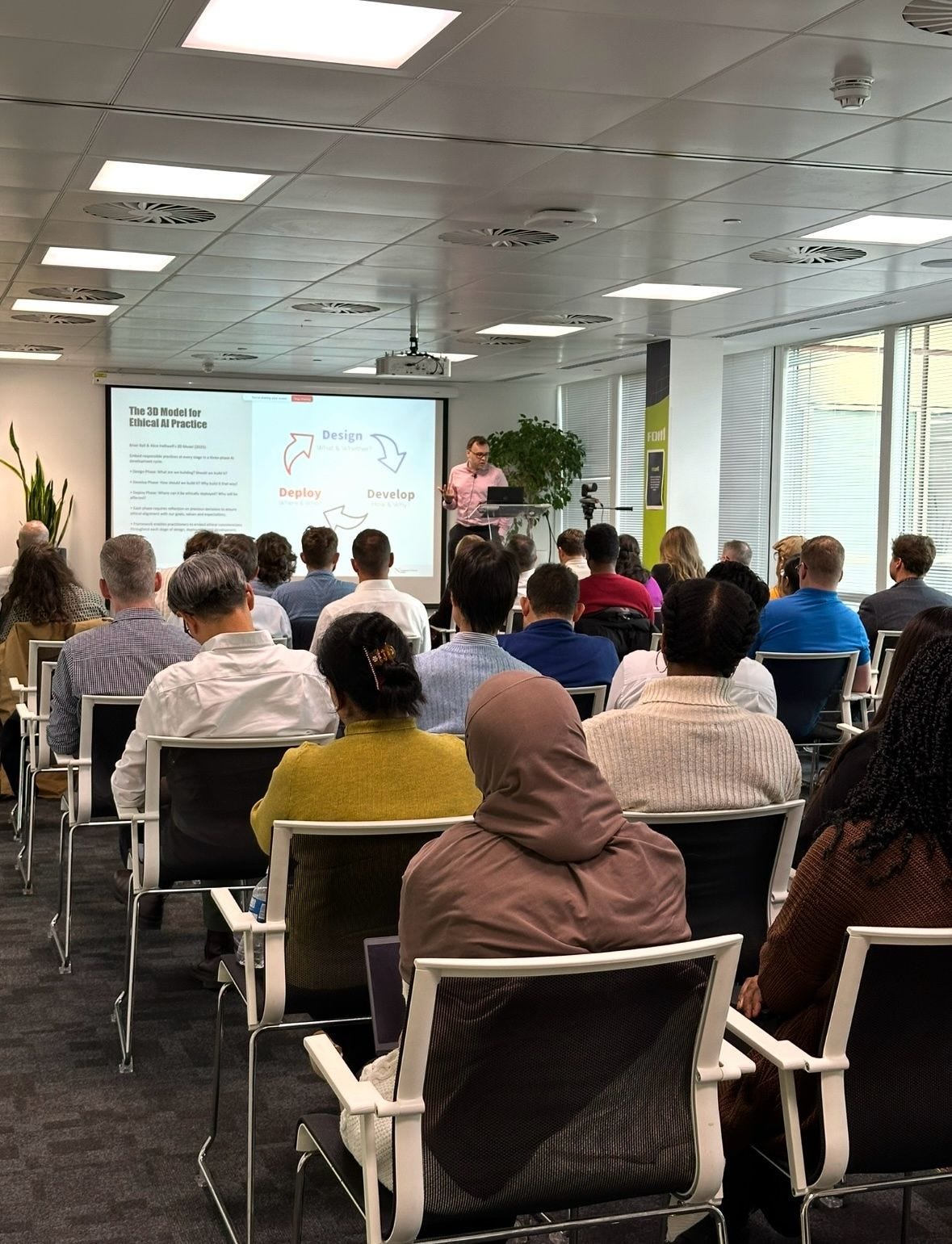
AI Ethics (David Freeborn)
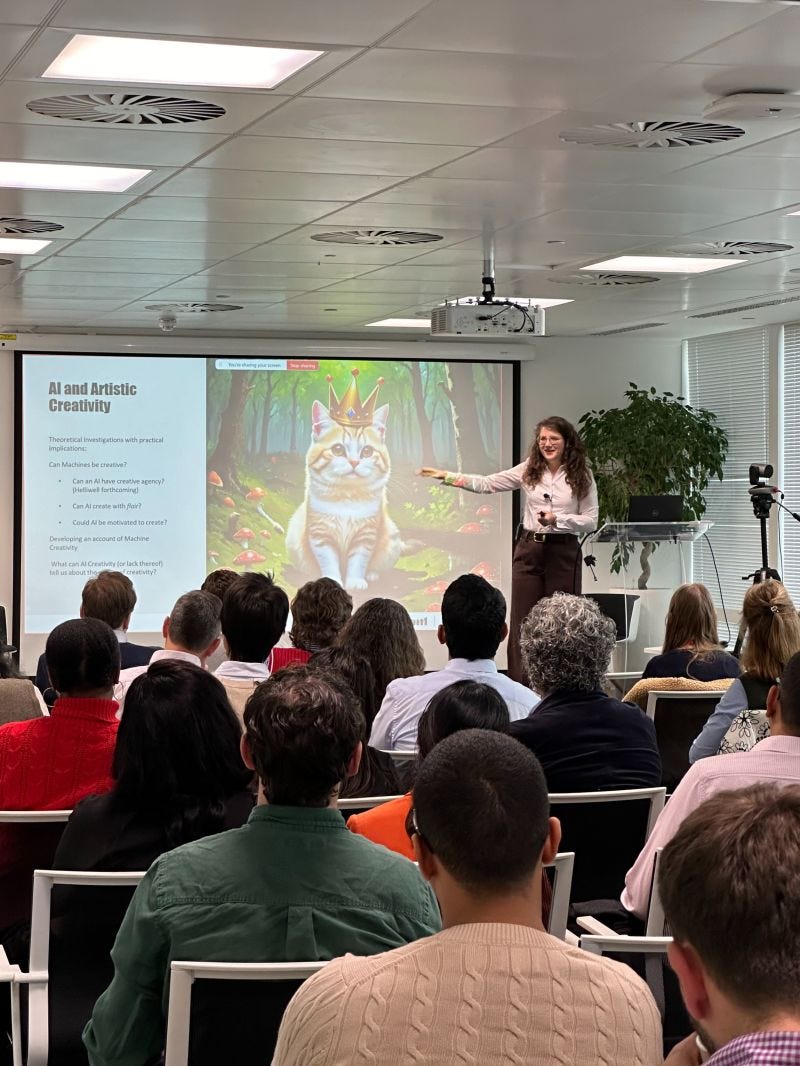
AI & Creativity (Alice Helliwell)
AI & Information Literacy (Ioannis Votsis)
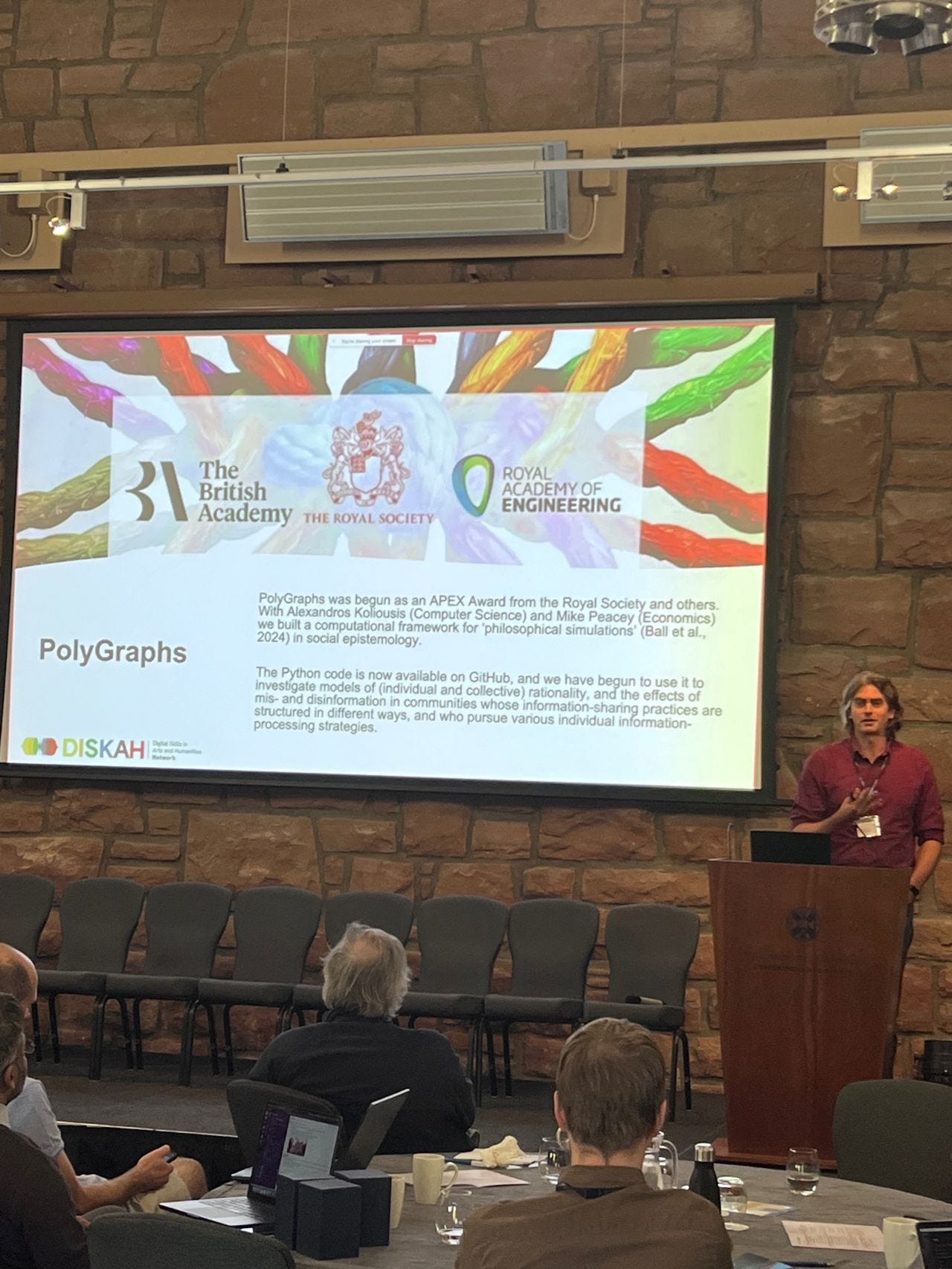
Philosophical Simulations (Brian Ball) — which also featured a presentation from student research assistant, Marta Weber
We also received responses from academia, civil society, and industry, hearing from the Institute of Philosophy, the Computational Humanities Research Group at King’s College London, the Center for Philosophy and AI Research, and the Munich Center for Mathematical Philosophy; as well as from the Alan Turing Institute, Rock Badger, techUK, and Wikimedia UK.
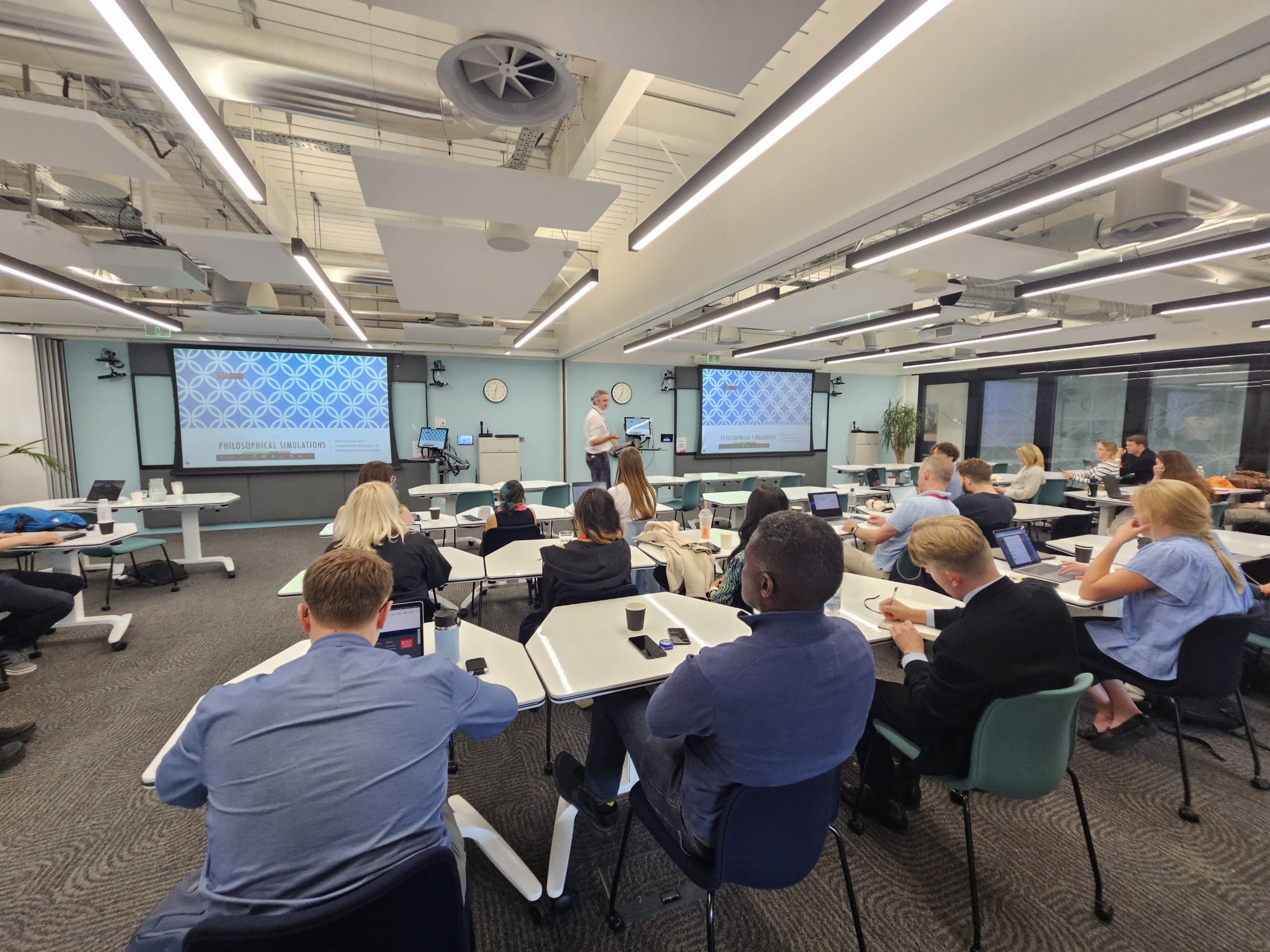
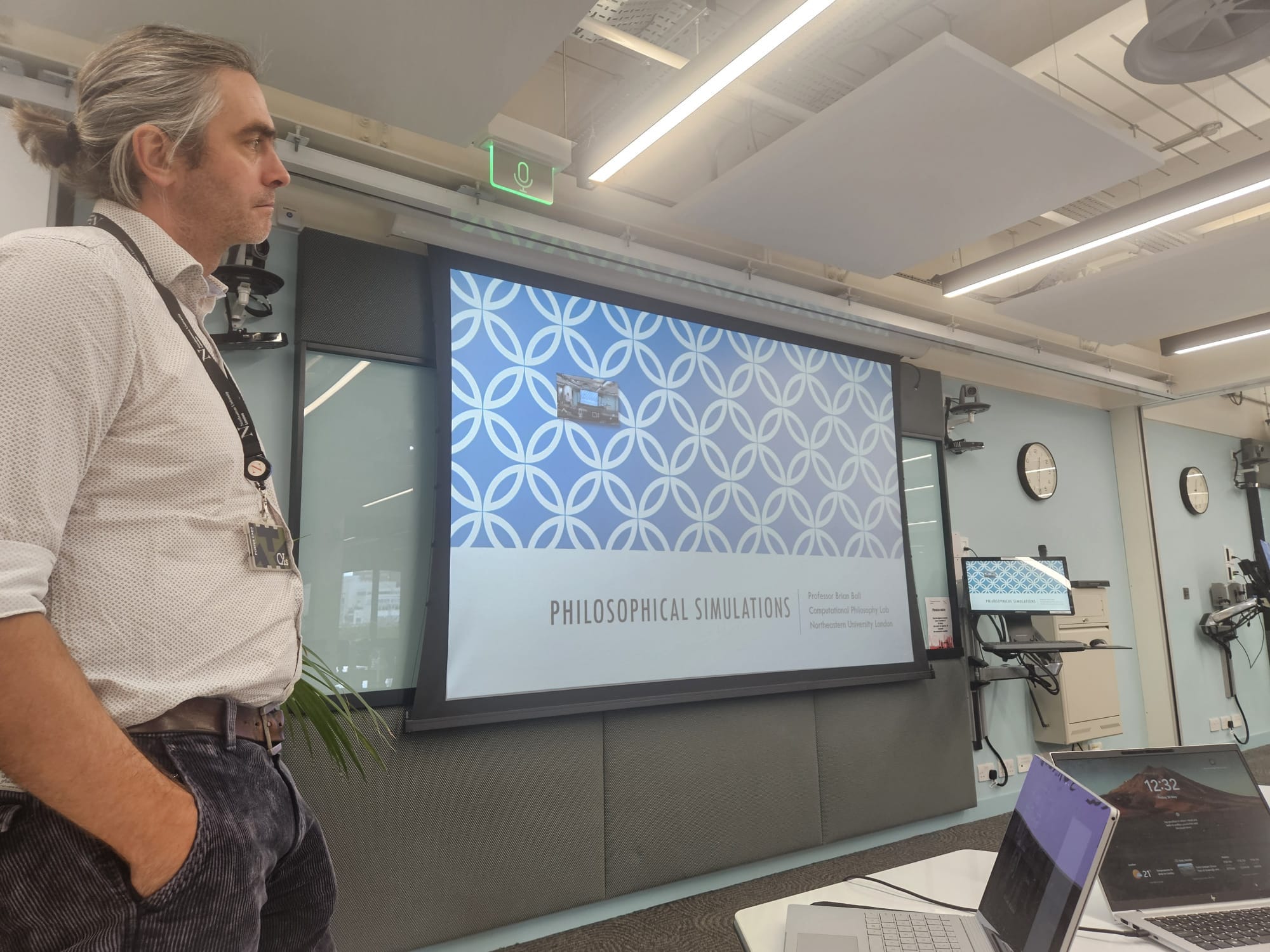
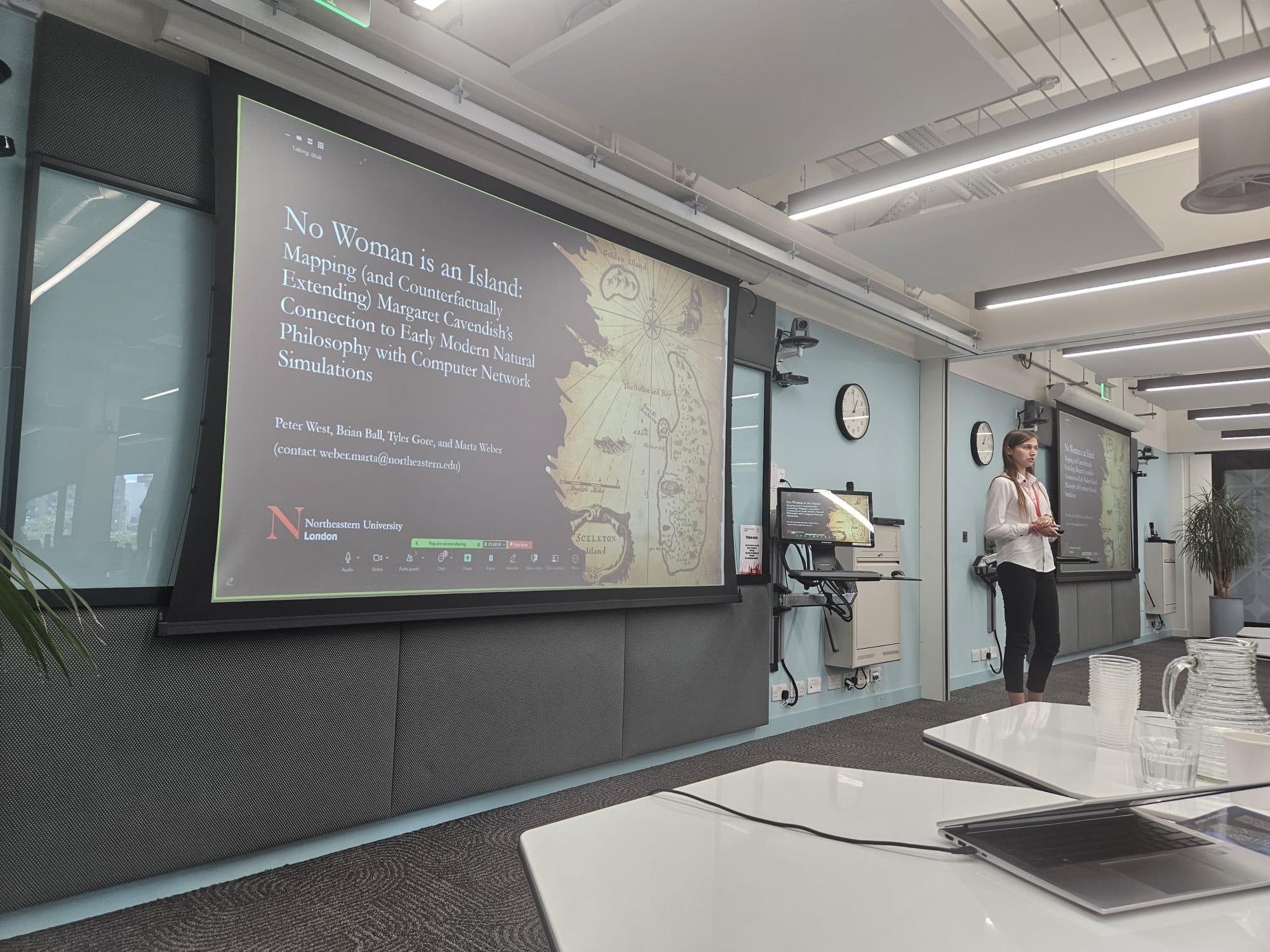
Since the launch event last year, the Lab has been very active in building the foundations of a successful research group. This post rounds up some of the highlights and achievements from our first year.
Publications: Our team has published widely across all four of the Lab’s research areas, including 11 peer-reviewed papers. Here are the publications, with the lab leadership team in bold:
Brian Ball, Alexandros Koliousis, Amil Mohanan & Mike Peacey (2026). Ignorance in social networks: discounting delays and shape matters. In Resch et al. (eds.), Trust and Disinformation, Springer, pp.105–120.
Brian Ball & Alice Helliwell (2025). The 3D model of ethical AI practice. AI and Ethics, 5(6): 5955–5969.
Brian Ball, Alex Cline, David Freeborn, Alice Helliwell & Kevin Loi-Heng (2025). Computational Analysis for Philosophical Education: A Case Study in AI Ethics. Edukacja Filozoficzna, 79: 47–74.
Cailin O’Connor & David Freeborn (2025). Industrial distraction. Philosophy of Science, 92(3): 666–687.
David Freeborn (2025). Compositional understanding in signaling games. Synthese, 206, 116.
David Freeborn (2025). Effective theory building and manifold learning. Synthese, 205, 23.
Alice Helliwell (2026). Can AI Create with Flair? Artistic Creativity and Artificial Intelligence. British Journal of Aesthetics.
Alice Helliwell (2026). Creativity, Agency, and AI. In Vincent C. Müller, Arthur R. Dewey, Leonard Dung & Guido Löhr (eds.), Philosophy of Artificial Intelligence: The State of the Art, Springer Nature, pp.227–242
Alice Helliwell (2025). AI as an Artistic Medium. Art Style, 1(16): 31–53.
Ioannis Votsis (2025). Grounded empiricism. European Journal for Philosophy of Science, 15(2).
Maria Federica Norelli, Ioannis Votsis & Jon Williamson (2025). The interplay of data, models, and theories in machine learning. Philosophy of Science, 92(5): 1383–1393.
Presentations: CPL members have been active in sharing our research, giving at least 20 talks across seven countries. Presentations include talks at:
APA Central (Chicago)
Dubrovnik Aesthetics Conference (Dubrovnik)
Ethics and AI (Warsaw)
Institute of Physics (London)
LSE’s Convention on Information and Democracy (London)
PhAI2025 (Amsterdam)
Canadian Philosophical Association (Halifax)
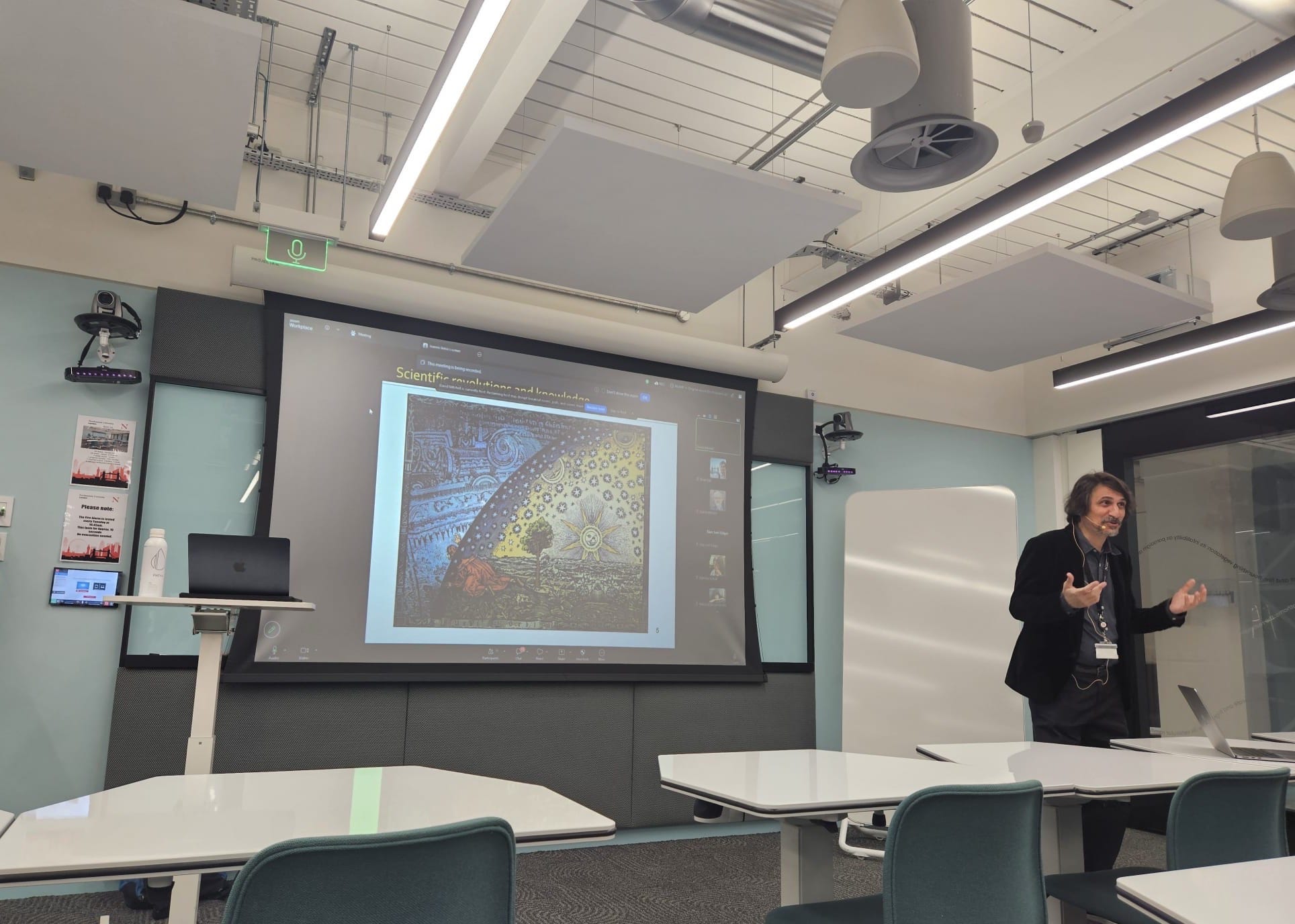
A particular highlight: Ioannis Votsis delivered his inaugural professorial lecture at Northeastern University London in May 2026 on ‘Structures, Monsters, and Grains’.
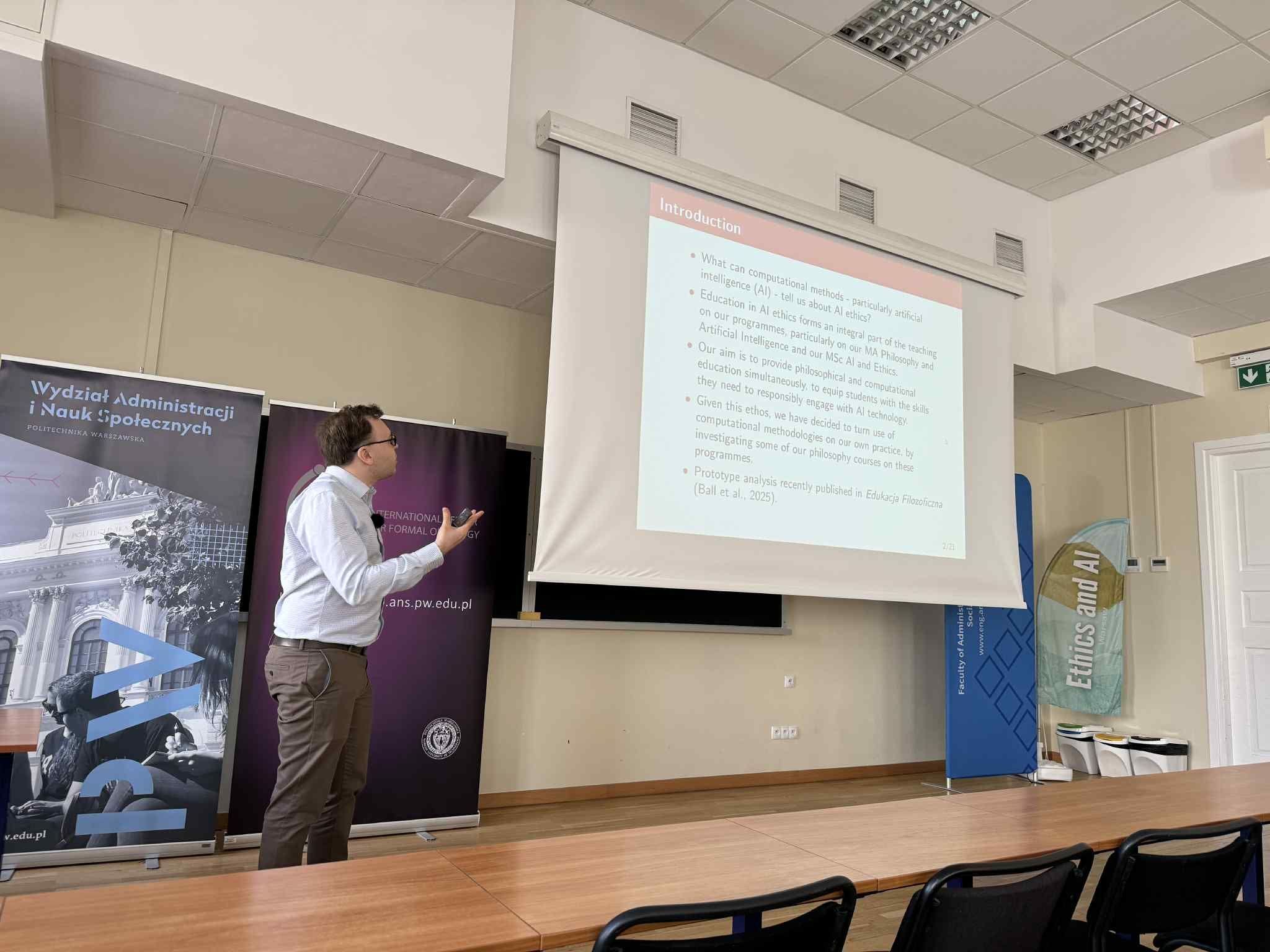
Public Scholarship: The Lab launched this blog, The Computational Philosopher on Substack in February 2026, featuring blog posts by faculty, alumni, and partners. Published weekly, it now comprises some 18 posts across a variety of topics. This blog is now also accepting submissions from others working at the intersection of computer science and philosophy.
CPL work has also been featured on other blogs, including the NULab and Women Writers in Context. In autumn 2025, FDM sponsored a series of industry-focused thought leadership talks on ‘Understanding AI: Beyond the Hype’ by CPL members; and Alice Helliwell appeared on the BBC World Service discussing her research.
The Lab works actively with industry, government, and civil society, creating impact at the intersection of philosophy and computing:
Policy engagement: CPL members have a track record of responding to government calls for evidence, for example:
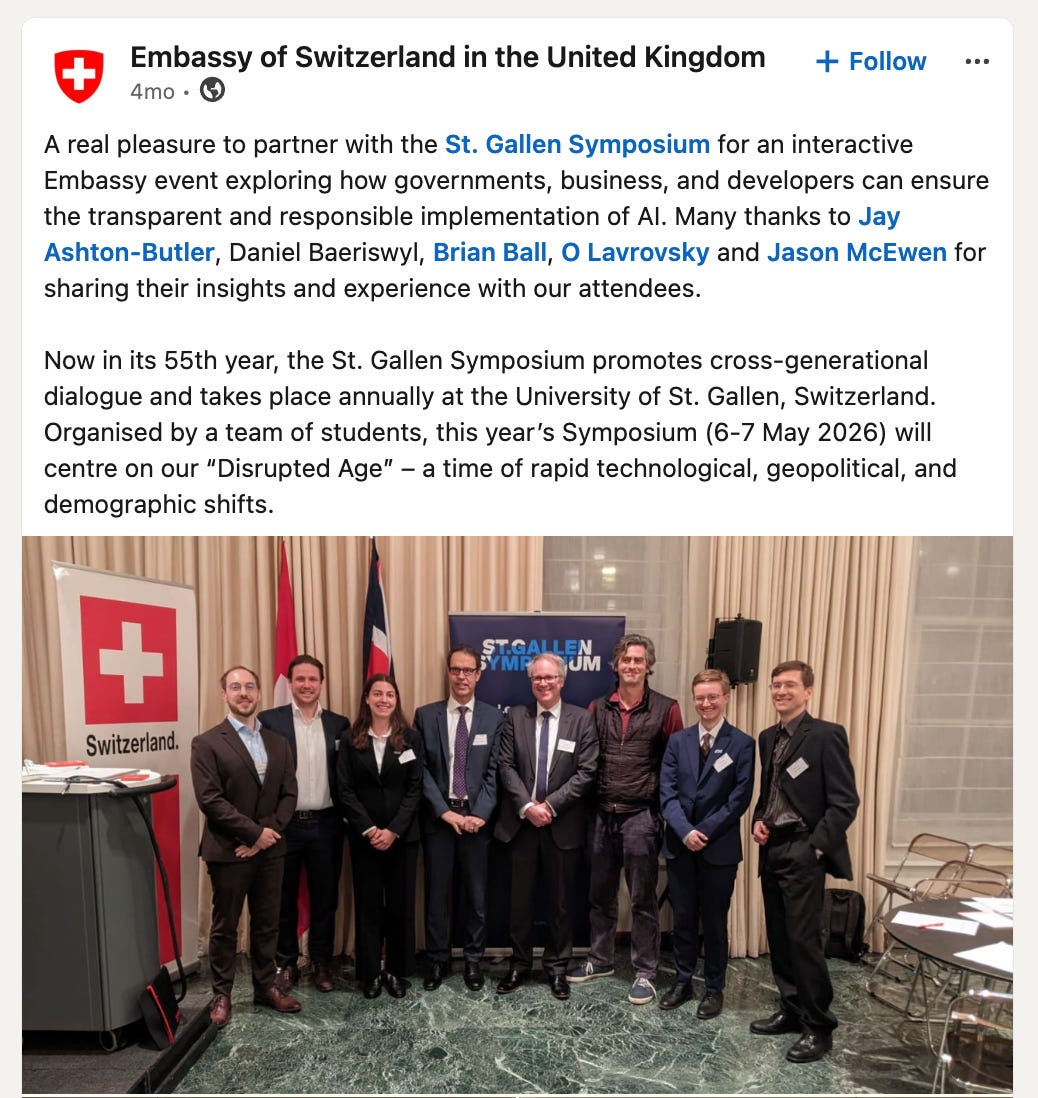
More recently, the CPL has continued to engage directly with policymakers and public bodies: we submitted evidence to an All-Party Parliamentary Group inquiry into AI harms and children’s online safety in January 2026. And Brian Ball contributed to an AI Policy Lab discussion on Trust and Transparency at the Swiss Embassy in February 2026, and spoke with the Greater London Authority regarding misinformation through the London Research and Policy Partnership in March 2026. Brian was mentioned in the House of Commons Foreign Affairs Select Committee’s report on Disinformation Diplomacy; and he and Ioannis were amongst the initial signatories (in December 2025) to the Media and Information Literacy Alliance’s joint statement concerning the UK government’s response to the curriculum and assessment review.
Industry partnerships: The Lab has built productive links with industry. Chief among them, we have:
Entered into a partnership with Cognia Lab that is currently pursuing three active strands of research and multiple funded student research assistant positions, with additional projects under discussion;
Worked with the agentic AI start-up Pippa Labs to research the implementation of Ball and Helliwell’s 3D model of AI practice;
Continued to collaborate with Conversations on AI to run an interdisciplinary and cross-sectoral event series discussing ethical issues arising in connection with AI.
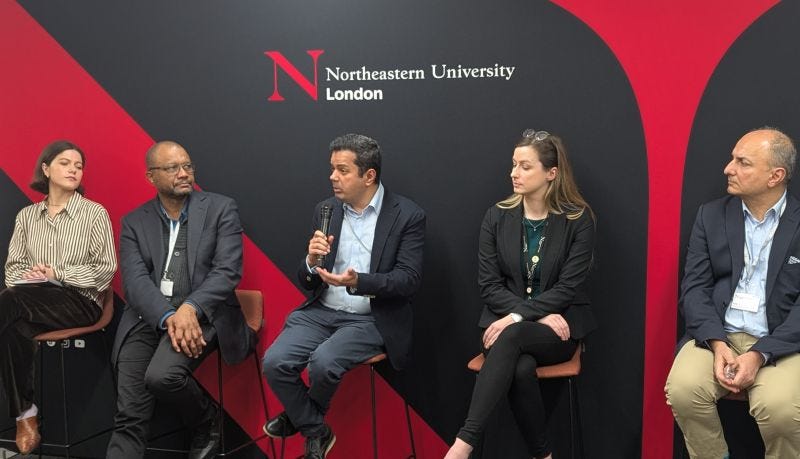
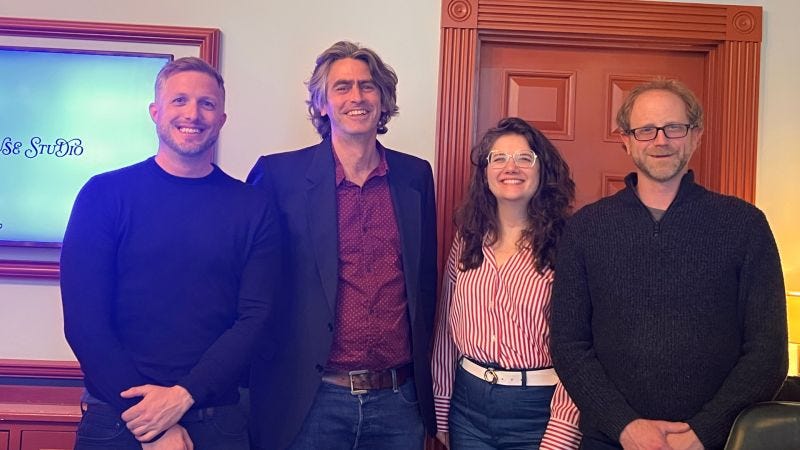
People: The Lab’s people include not only its leadership team, but also Faculty collaborators (most notably Tom Williams, as well as Andrés Saenz de Sicilia, Hossein Dabbagh, Peter West, Sian Joel-Edgar) and two PhD students. A particular highlight of our first year is that 15 student research assistantships have been funded, bringing many new faces onto the team.
The Lab has also built an extensive collaborative network. Alongside the industry partners mentioned earlier, we've built strong links inside Northeastern University:
The Ethics Institute
The NULab for Digital Humanities and Computational Social Science
We are also proud to collaborate with the student-run Alan Turing Society. External academic partners beyond our launch respondents include the DISKAH network and RAI UK.
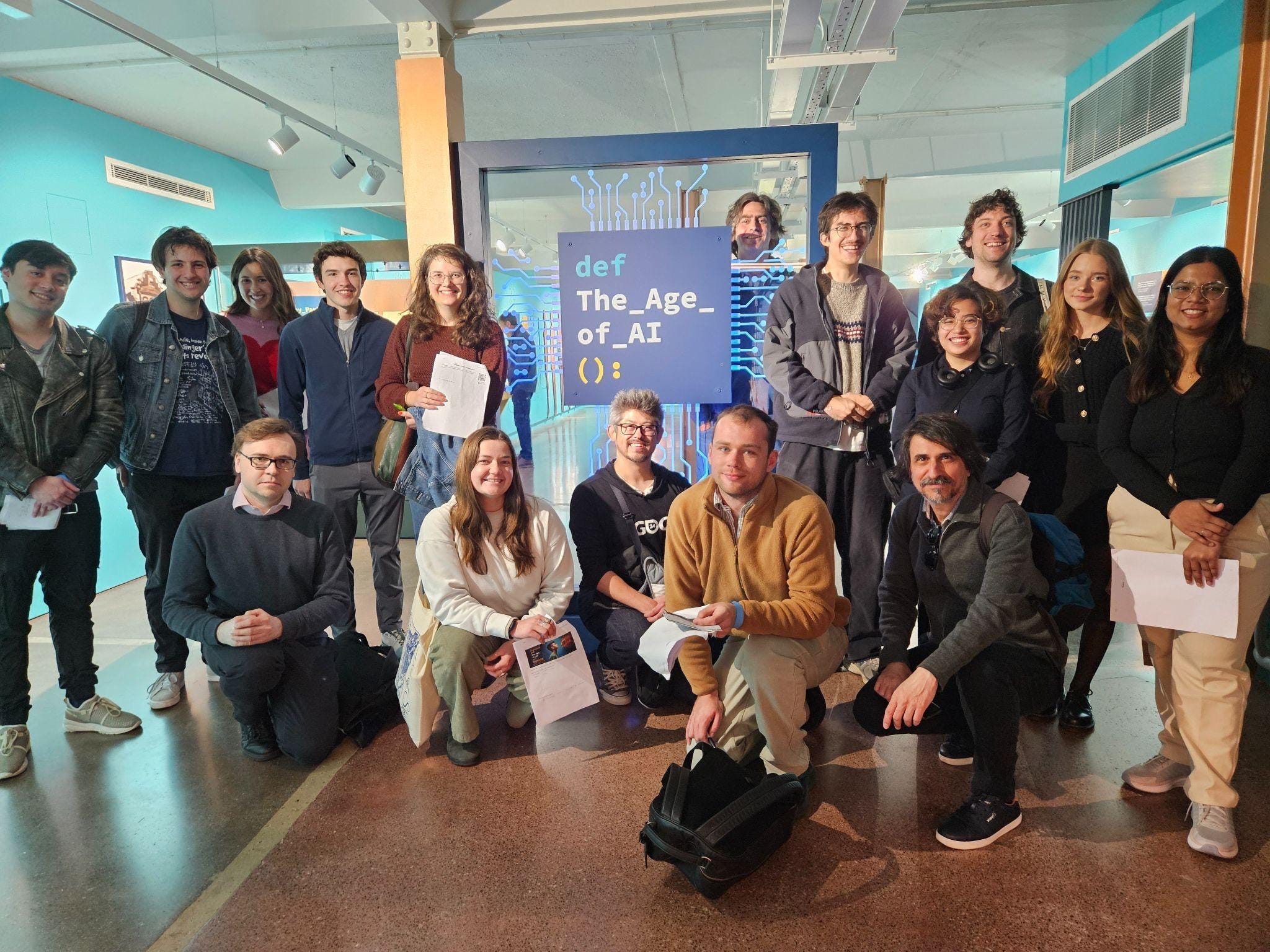
Environment: The CPL has established regular weekly meetings, run well-attended weekly 'open house' sessions for students (MA and undergraduate), and recruited and managed multiple cohorts of student research assistants. The Lab also held a High-Performance Computing workshop for members. A highlight of the year was the Humanities Center–funded research trip with students to Bletchley Park to visit the Exhibition on AI in May 2026.
Many thanks to the following, for their funding support during our first year:
The Institute for Information, the Internet, and Democracy (IIID)
Northeastern University London Research Services
Northeastern University’s Humanities Center
With these foundations now in place, we look forward to an even more successful second year. We will continue working with our existing student RAs, partners, and collaborators, while welcoming new ones, as we build the UK's premier centre for computational philosophy.
No posts
Comments
Nothing yet. Say the first thing.
Sign in to join the conversation.