
One of Our High Yield Portfolio companies is being acquired - Argan SA.
What makes this deal especially interesting is the buyer: Warehouses De Pauw (WDP), a company I’ve highlighted in previous Best Buys articles.
Let’s dive in to the deal and see what it means for Argan SA shareholders like us.
If you want to read the original Argan SA Investment Case, subscribe for free, and get instant access:
WDP’s CEO Joost Uwents is calling this a blending of companies.
Argan’s CFO described it as the two companies “merging and combining” to create a win-win for both sides.
It’s obviously a friendly merger, here’s what we’re getting for our Argan shares:
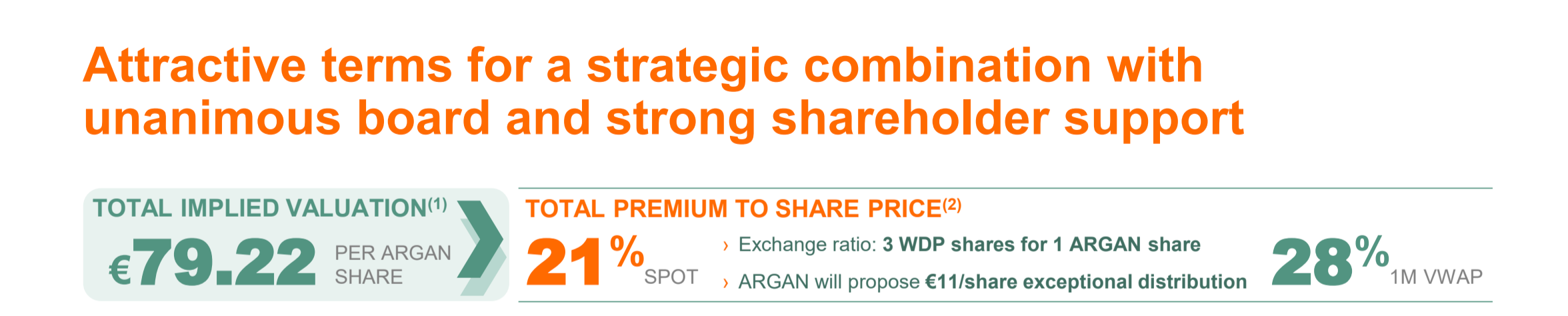
3 WDP shares for every 1 Argan share held.
€11.00 in cash per share, paid before the deal closes.
That a €79.22 total implied value per Argan share
A 21% premium over pre-announcement prices
Expected Dividend Step-Up: We’ll also get a 6% dividend increase based on forward management projections
My math says that should be a 12% increase based on current trailing payouts
Let’s look at why management thinks this deal makes sense.
They make 4 main claims:
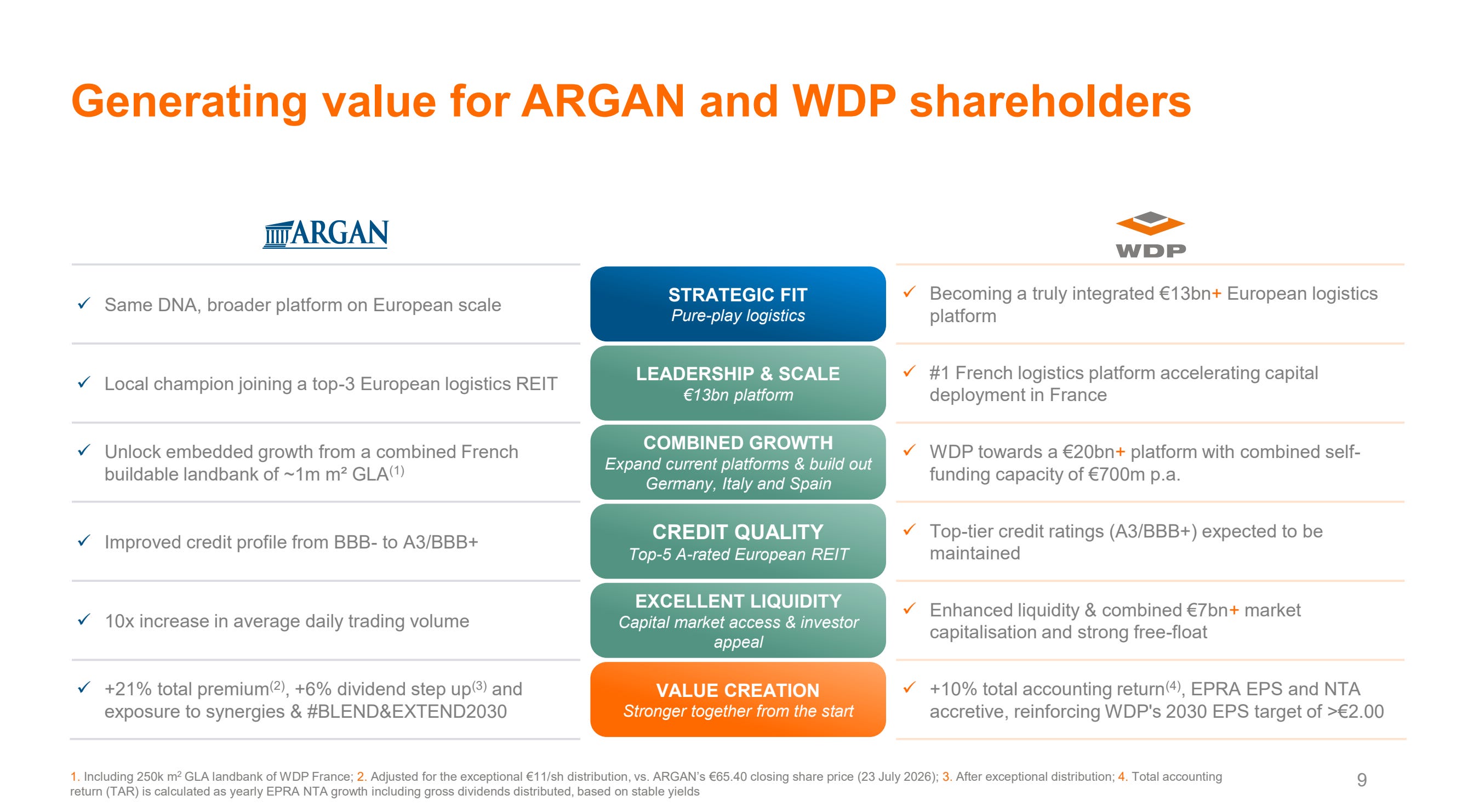
Both companies are still run by the founding families (the Le Lans for Argan, and the De Pauws for WDP) and both are entrepreneurial and growing.
Working together does seem to make some sense, so I’ll agree with them here.
Scale matters in logistics real estate.
Big tenants like Amazon or Carrefour prefer to work with one company that can lease across multiple countries
Owning properties across multiple regions also creates more opportunities to lease additional properties to existing customers.
A larger portfolio also lets the company spread its fixed costs across more properties.
Generating more cash flow lets you grow with less debt or equity issuance
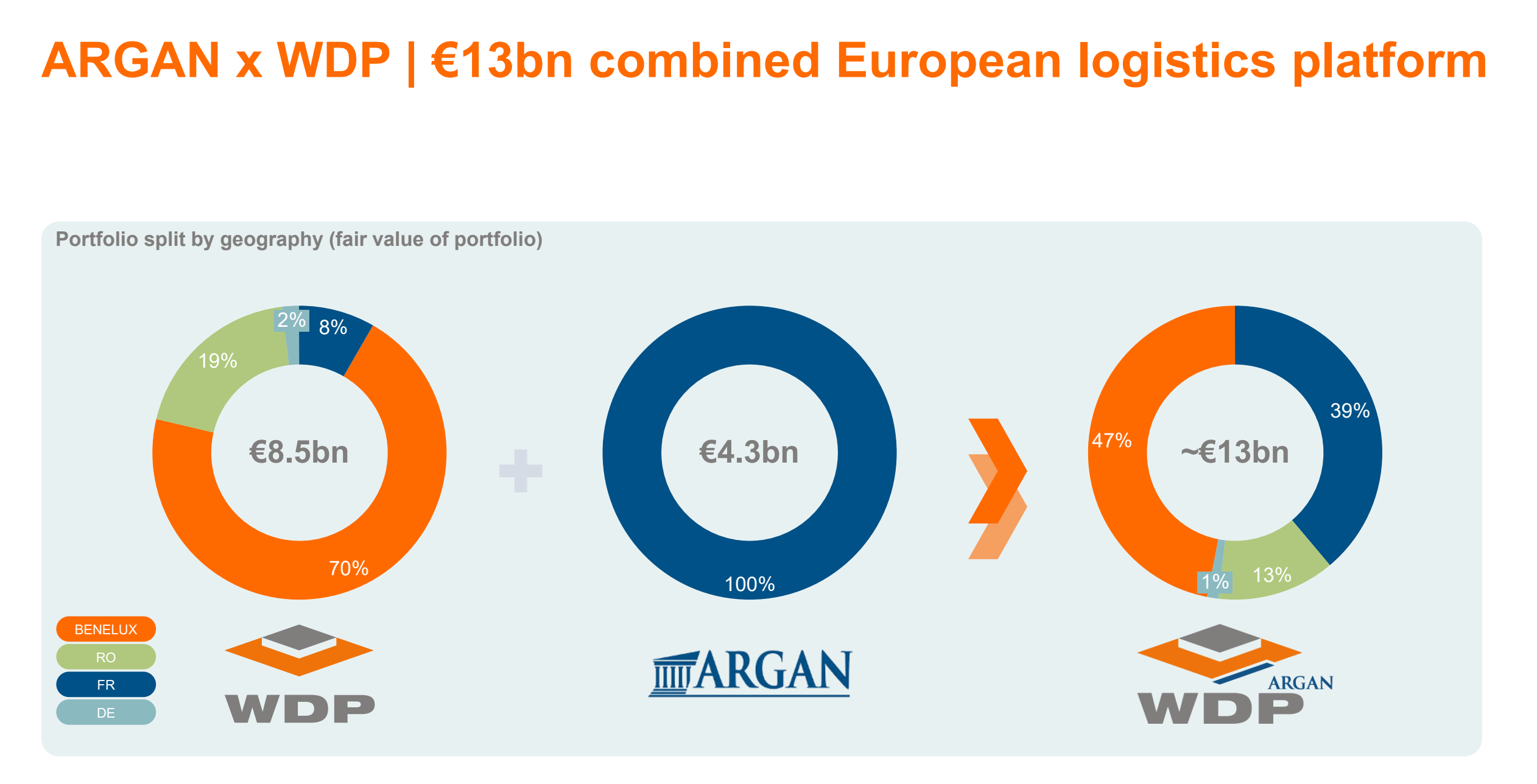
The merger will create a €13 billion portfolio across eight countries.
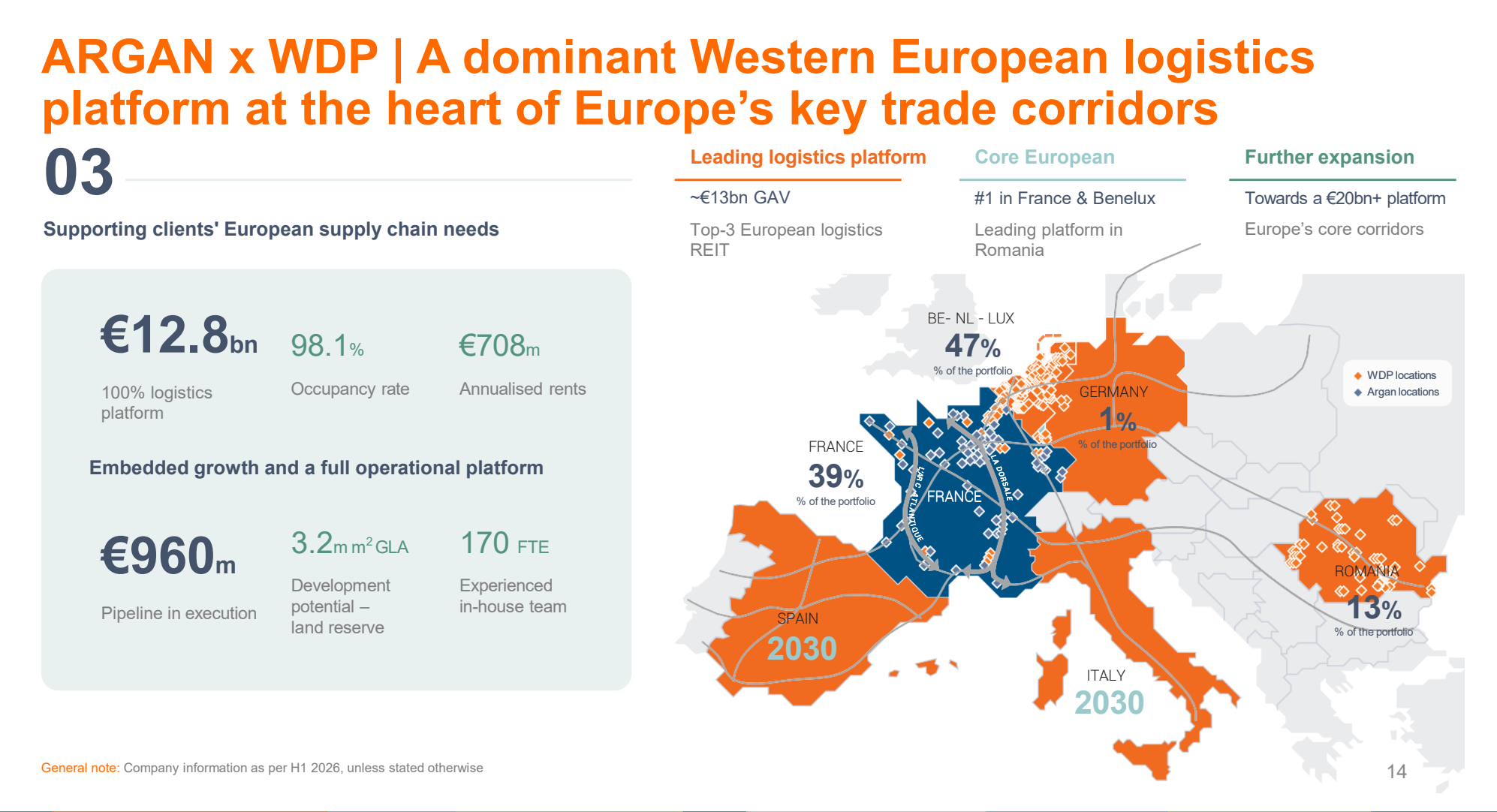
Argan dominates France, and WDP is very strong in the Benelux (Belgium, the Netherlands, and Luxembourg) region and Romania.
That gives the combined company assets across Europe’s busiest transport corridors.
WDP wants to expand across Europe, and buying Argan’s French properties makes a lot of sense to help them with that.
Many of the main transport routes across Europe run through France.
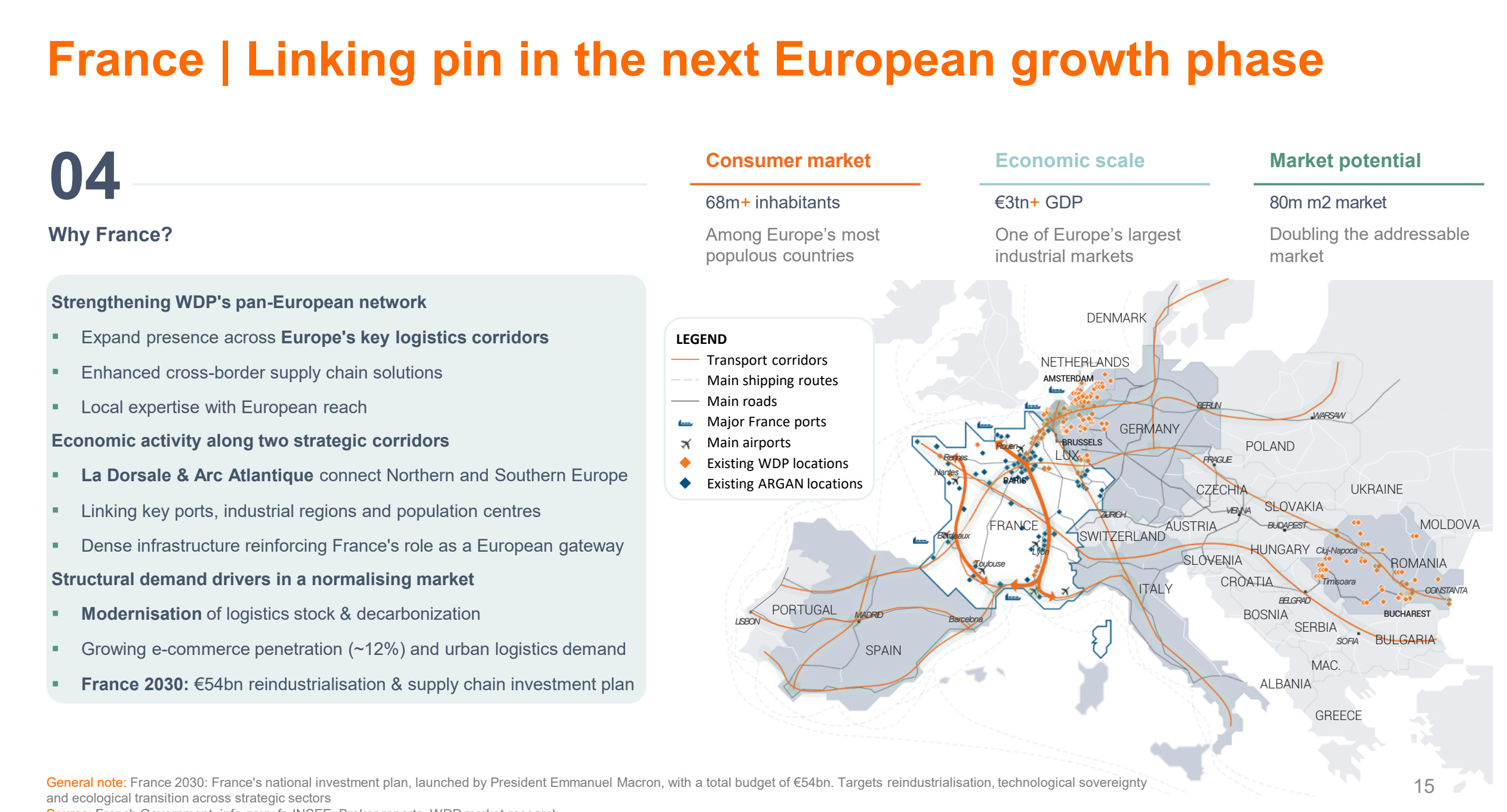
The next places WDP plans to expand to are Italy and Spain, which would help them further connect Europe.
It also creates the opportunity to grow a lot within France.
WDP has €700 million in annual self-funding capacity.
Argan owns a 750,000 square meter landbank within France, where access to capital was the main thing slowing down the development.
Management thinks the combined company will be able to double the pace of development of that land.
I think this is the weakest argument that management made.
They’re pitching the merger as a way for Argan SA to upgrade its credit rating and lower the cost of capital.
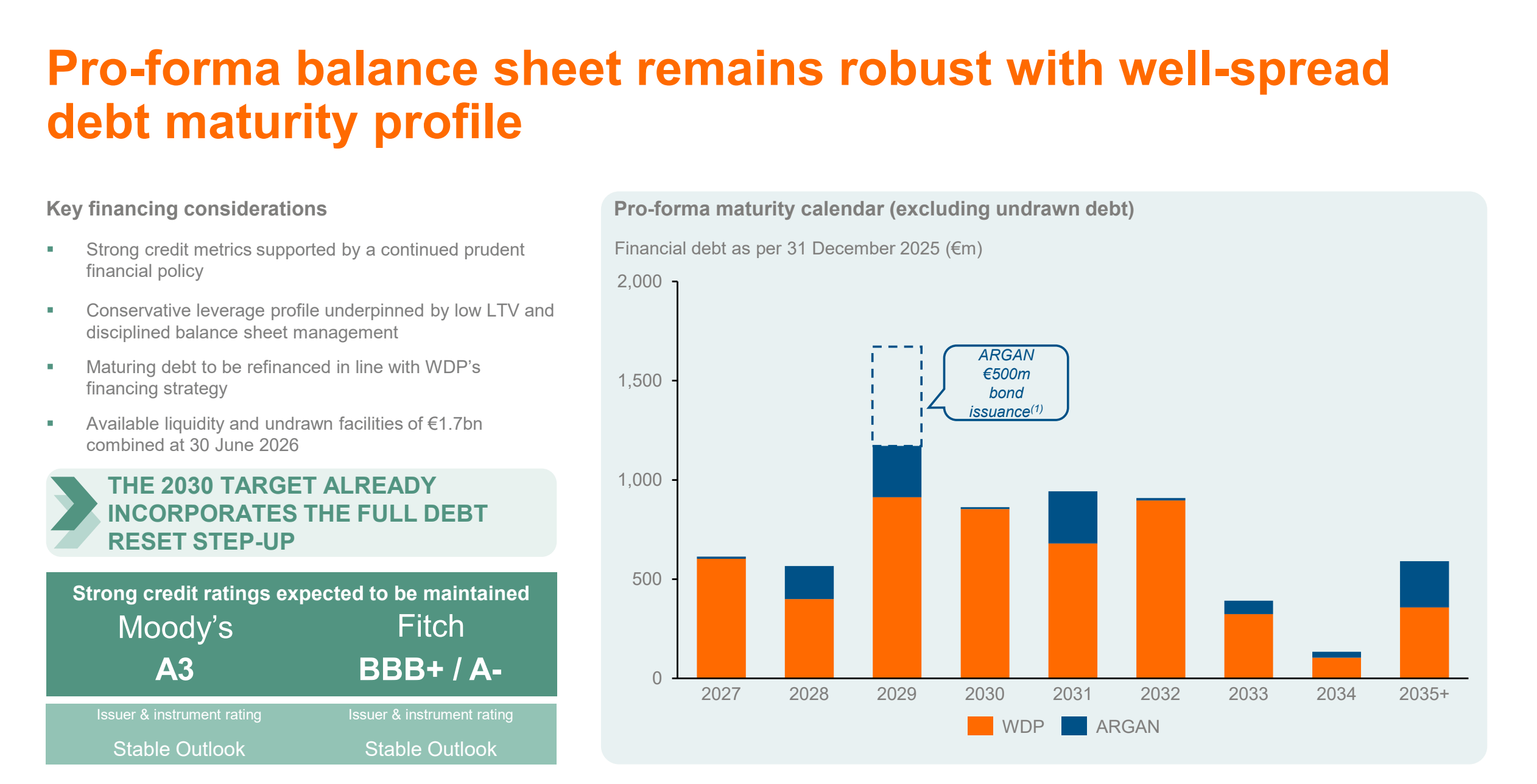
WDP does have a much larger balance sheet, and investment grade ratings of A3 (Moody’s) and BBB+ (Fitch).
Argan SA has a lower, but still investment grade BBB- credit rating.
I’m not sure that’s as big of a deal as they’re making it out to be.
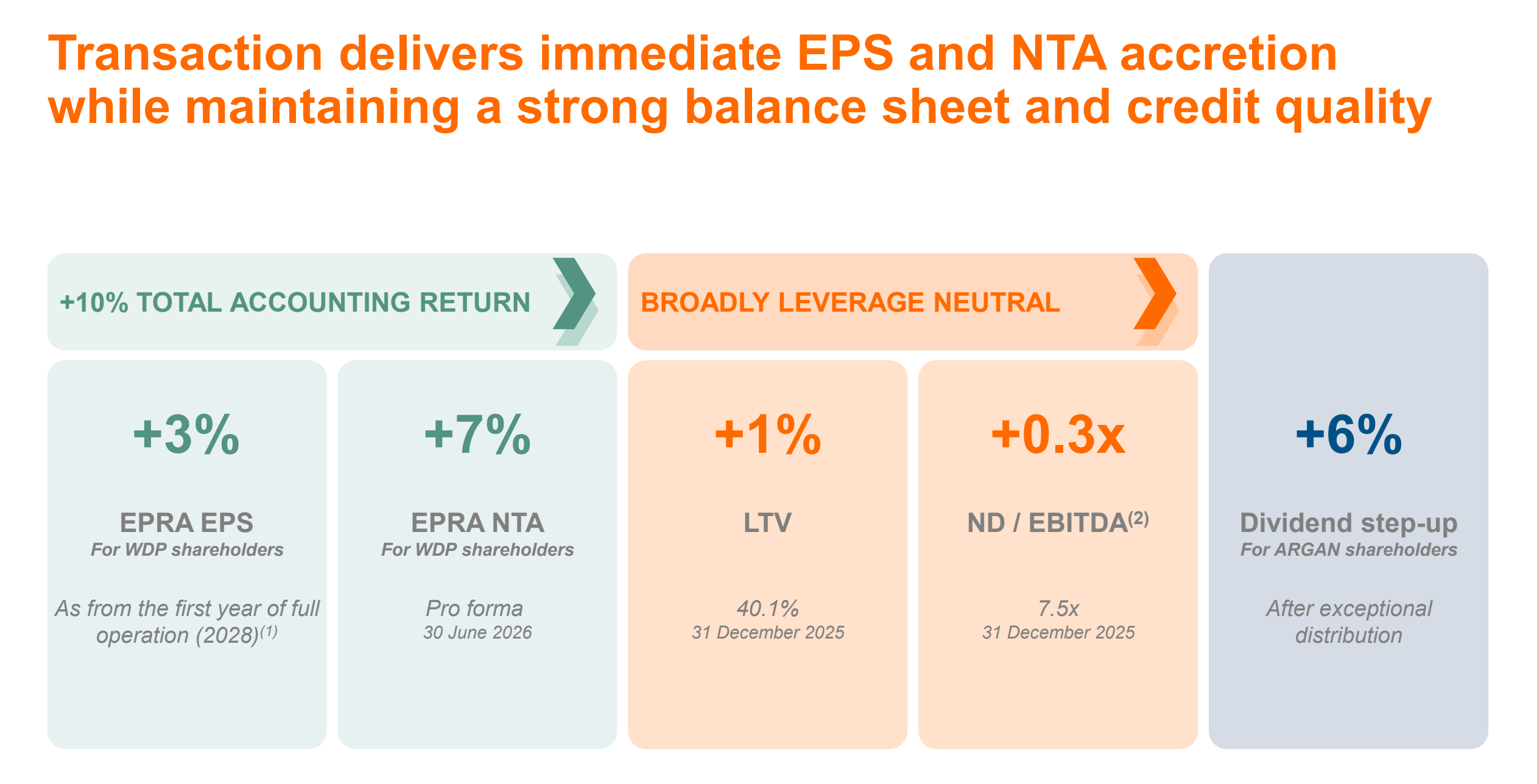
The thing that I do like is that the deal is expected to grow the EPS and Net Tangible Assets (NTA) enough that the Loan-to-Value and Net Debt/EBITDA numbers hardly change.
The combined company is expected to maintain WDP’s high credit ratings.
The deal gives us much more diversification.
We’re going from concentrated in France to owing assets across eight different countries.
Management is also projecting a DPS that’s > €1.60 by 2030.
It’s currently €1.29, so that implies a CAGR of around 5.5%.
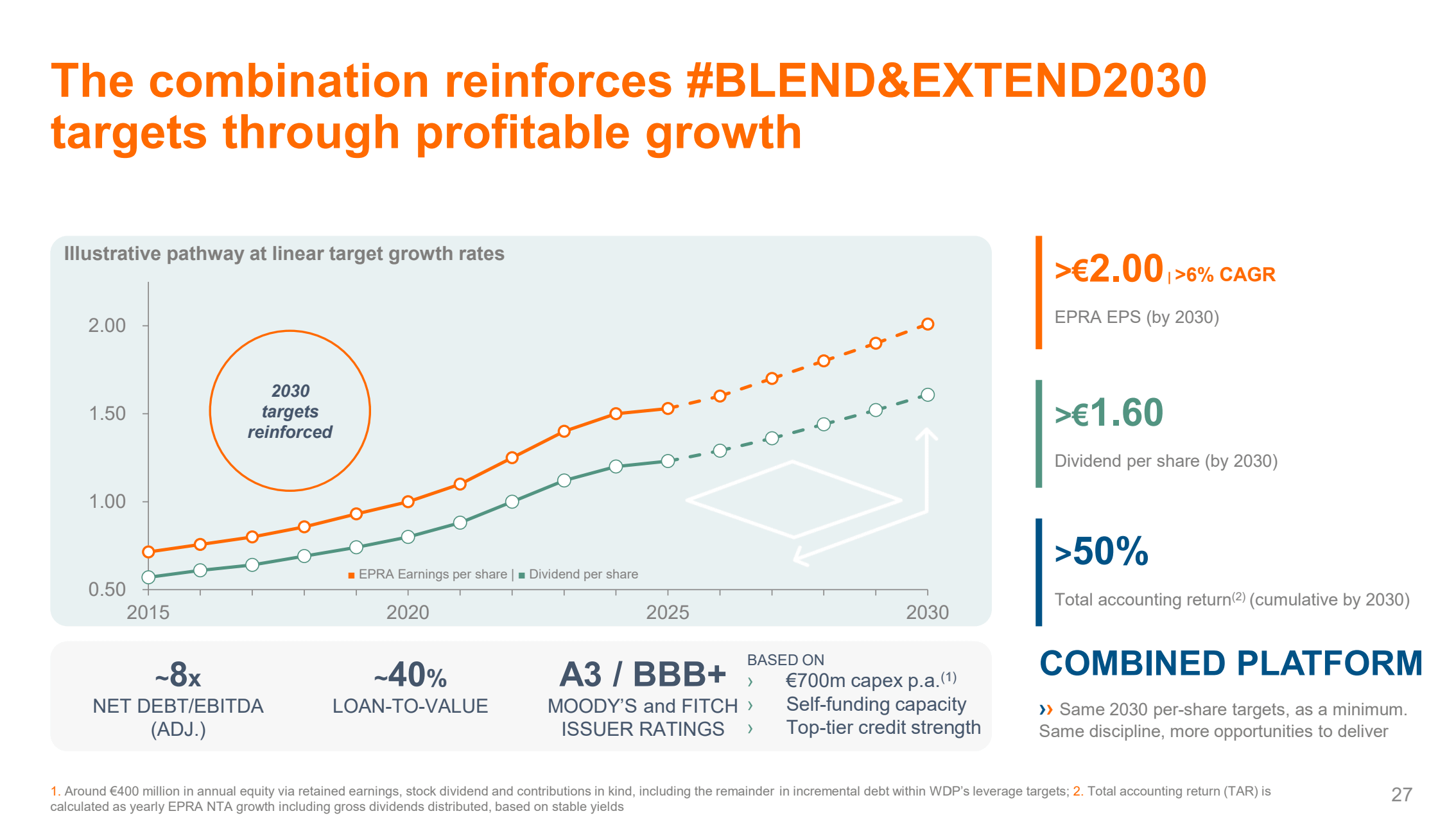
Our starting yield on Argan was 5%, so if management can grow the divided by 5.5% per year, that should give us a 10.5% return per year over the long-run.
I’d be happy with that!
Another great thing is that Argan’s brand and local management team will remain in place and continue running the French operations from Paris.
So we’re keeping the same, well-run French REIT, adding on WDP’s assets, and getting paid a premium for it.
I think this is a good deal for us!
I’ve pointed out WDP in the Best Buys articles in the past because I think it’s also well run, has a history of growth, and because it was (and still is) reasonably priced.
Let’s look take a quick look a little deeper into Warehouses De Pauw.
Just like Argan, WDP still has the founding family involved.
The De Pauws still own nearly 20% of the company through their RTKA family structure.
Isabelle De Pauw is also a non-executive director on the company's board.

She is also the daughter of Tony De Pauw, who was the co-CEO of the company along with Joost Uwents from 2010 to 2025.
After the merger, the company will remain family owned.
The De Pauw family will own 14%
The Le Lan family will own 9%
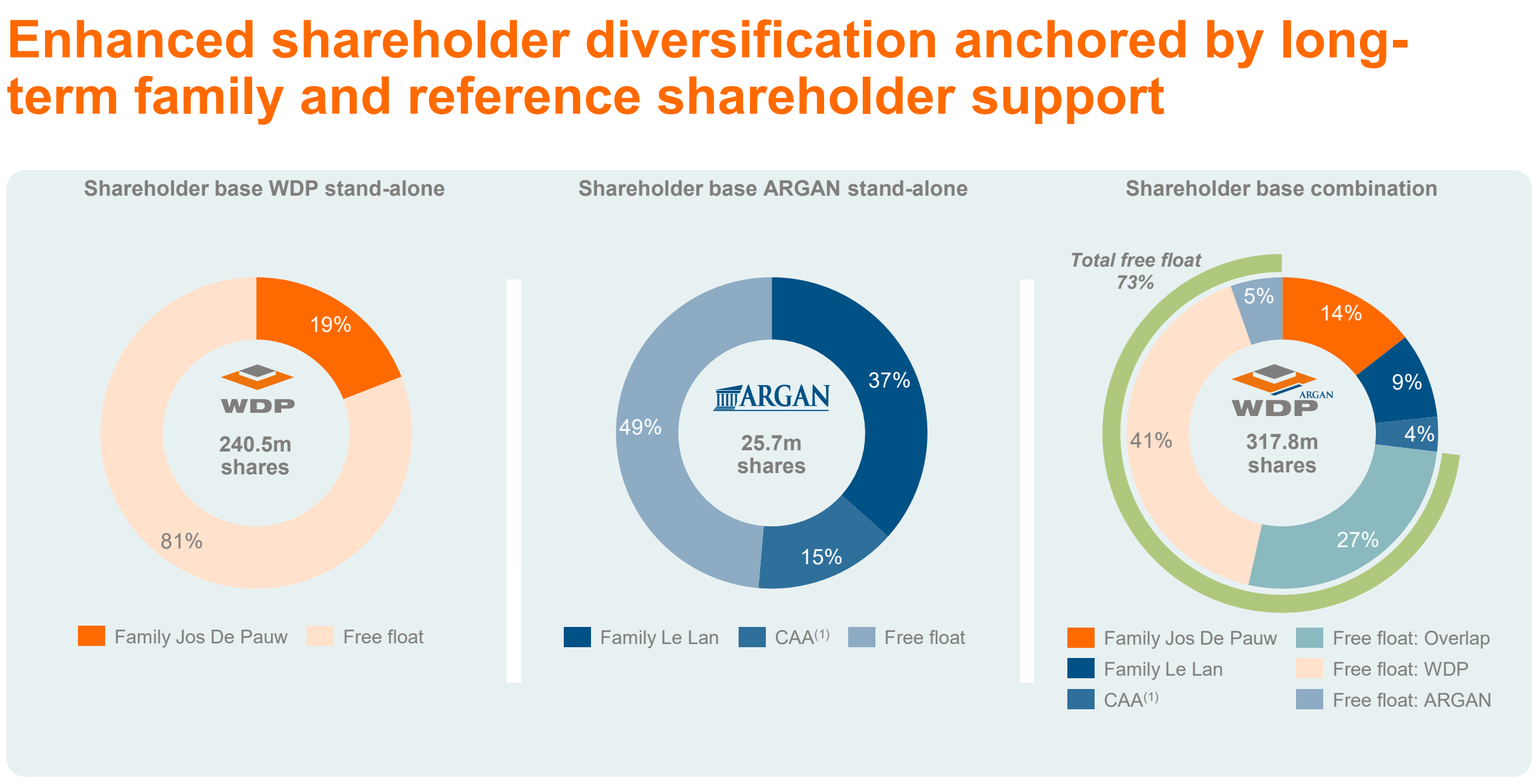
This keeps plenty of skin in the game for the families and aligns their incentives with ours.
WDP has a history of consistent growth in Revenue and Dividends Per Share.
We already know they have a solid balance sheet, and they maintain a conservative Payout Ratio.
That tells me that management is conservative, and we’re not adding a lot of leverage or risk here.
I also like that WDP’s management is looking at Argan’s “AutOnom” standard as an asset.
This is their system to develop net-zero, energy-efficient warehouses.
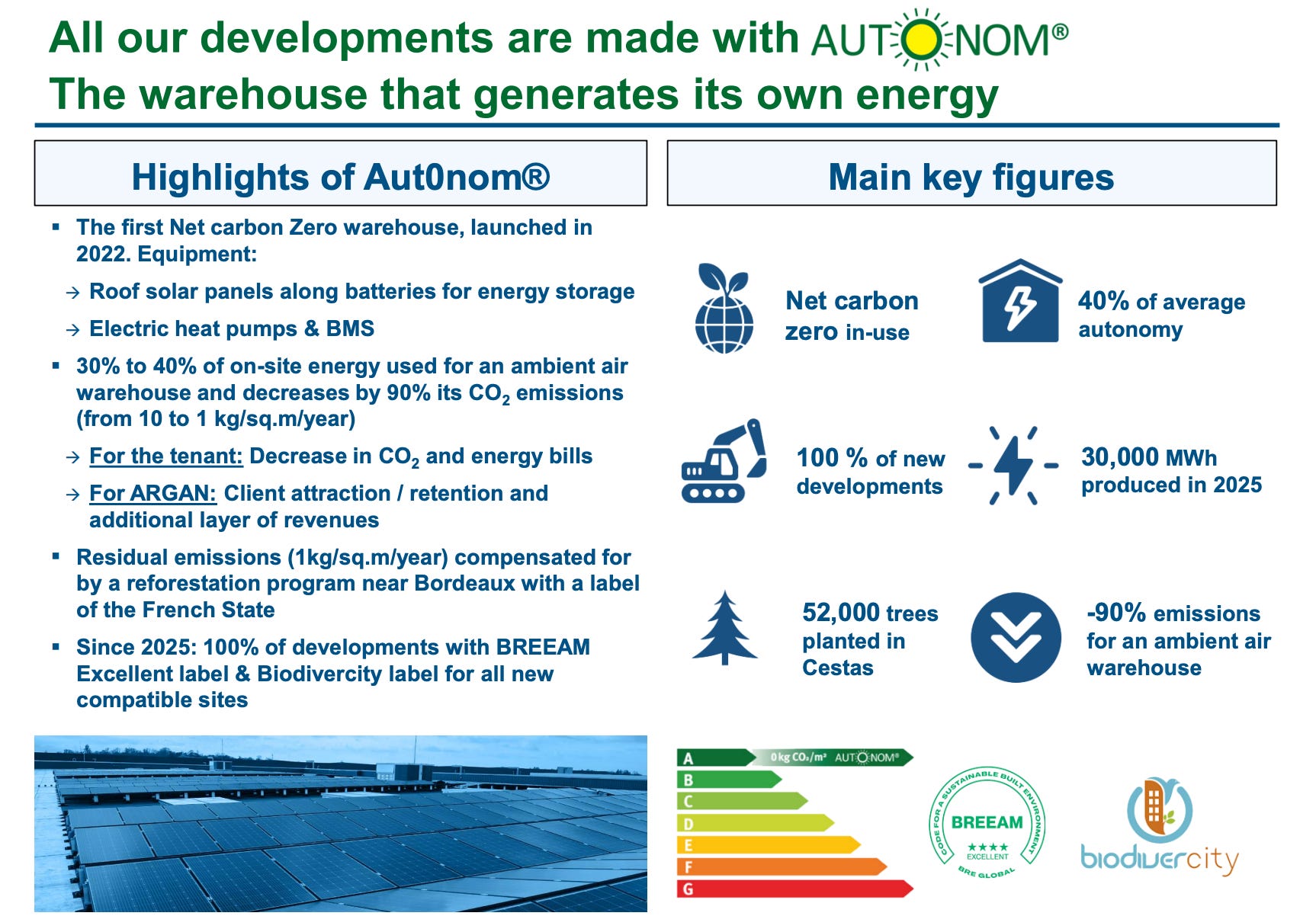
Tenants will pay a premium for these warehouses for two main reasons:
Companies like Amazon and L’Oréal have “Net Zero” targets, and AutOnom warehouses help them meet them
It reduces the the energy costs for the warehouses, which the tenants typically pay
WDP management said that they want to learn from this standard and potentially scale it across their portfolio.
This is another way the combined company could grow, and it would protect the whole portfolio from future environmental regulations.
We’ve seen a number of mergers and buyout offers in the REIT space, as well as outside of it (think about companies like PayPal or Wendy’s).
I think there’s a lesson in here.
Stock volatility and dislocation in price from intrinsic value is becoming a new normal.
Companies with cash, overvalued stock, or strong balance sheets, like WDP, are using this to buy high-quality assets at a discount.
As investors, we should be doing the same thing.
We buy stocks like businesses, so we should keep using market volatility to buy up high-yielding, growing companies at attractive prices.
-TJ
Interactive Brokers: Portfolio data and executing all transactions
Fiscal.ai: Financial data
As a reader of Compounding Dividends, you agree with our disclaimer. You can read the full disclaimer here.
No posts
Comments
Nothing yet. Say the first thing.
Sign in to join the conversation.