
There are three undisputed leaders in AI engineering and research talent in the United States: the San Francisco Bay Area, Seattle, and New York.
Together these three metros account for 76% of AI offers in 2025 year-to-date.
Here’s how it’s trended over the past two years:
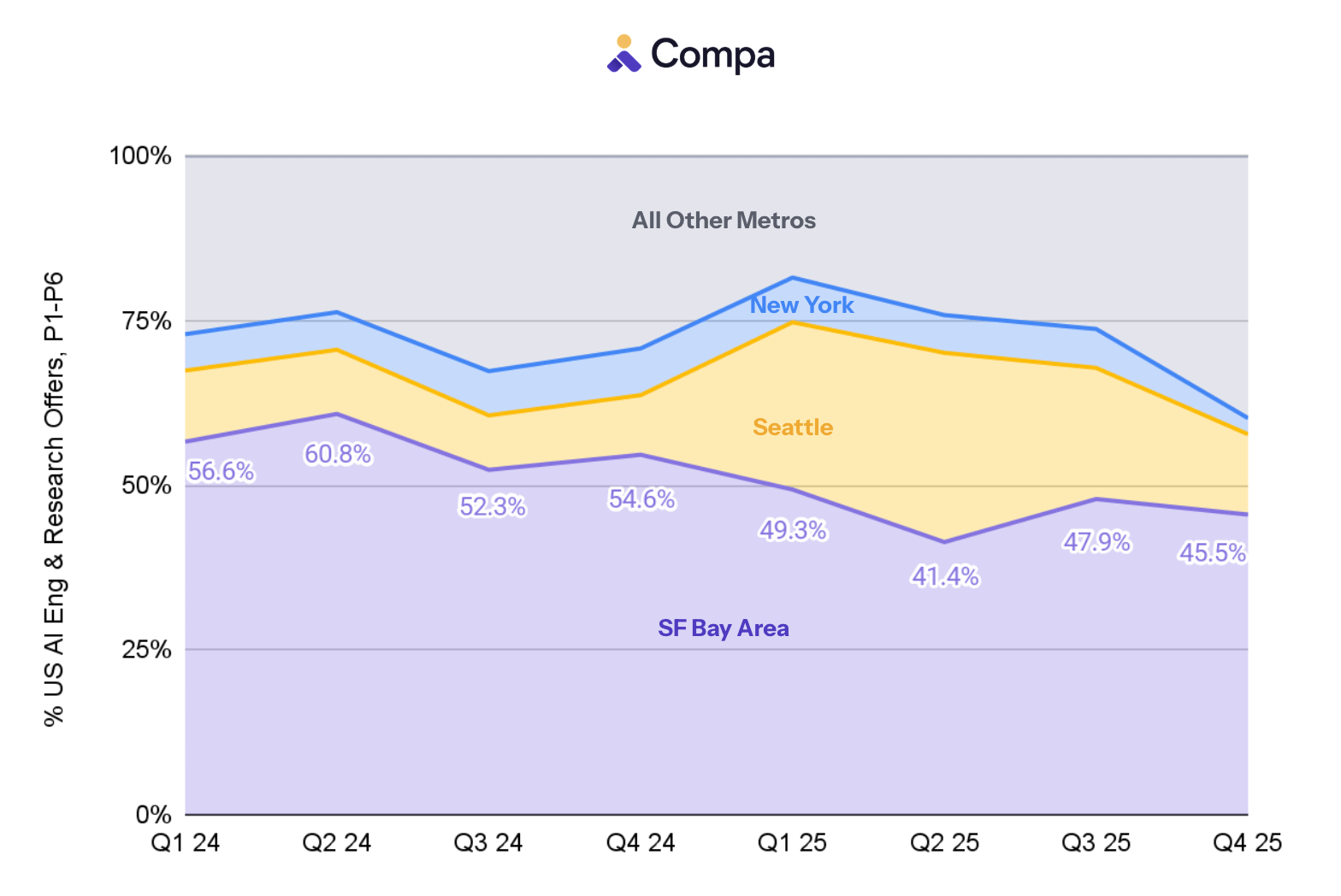
The Bay Area leads with 46% of all AI offers in 2025, but has steadily trended downward over the past two years from 57% in Q1 2024.
Seattle accounted for 24% of AI offers in 2025, rocketing up from 9% in 2024, solidly in second place and well ahead of New York.
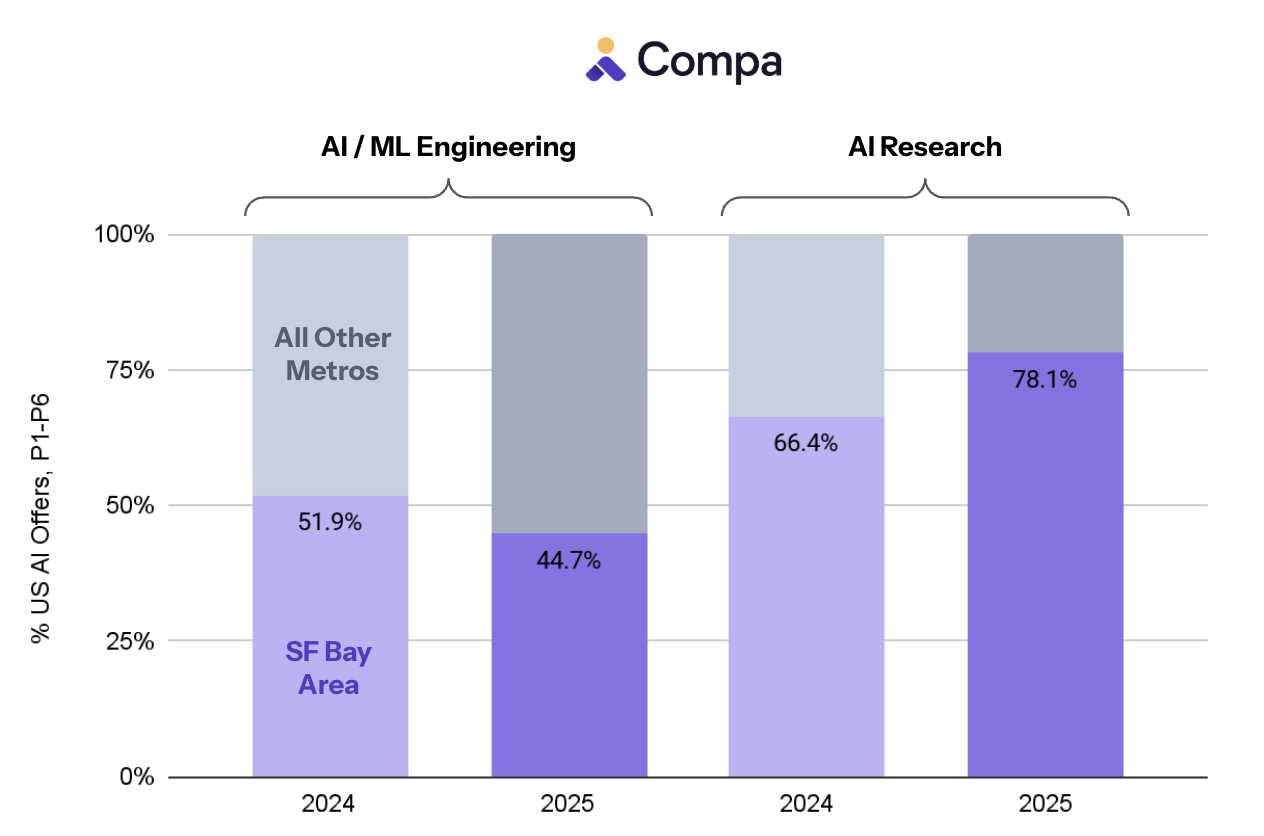
Focusing on the Bay Area, we see an even stronger lead in AI Research roles, 78% of the entire market, and this lead grew in 2025 while AI / ML Engineering shrank to 45%:
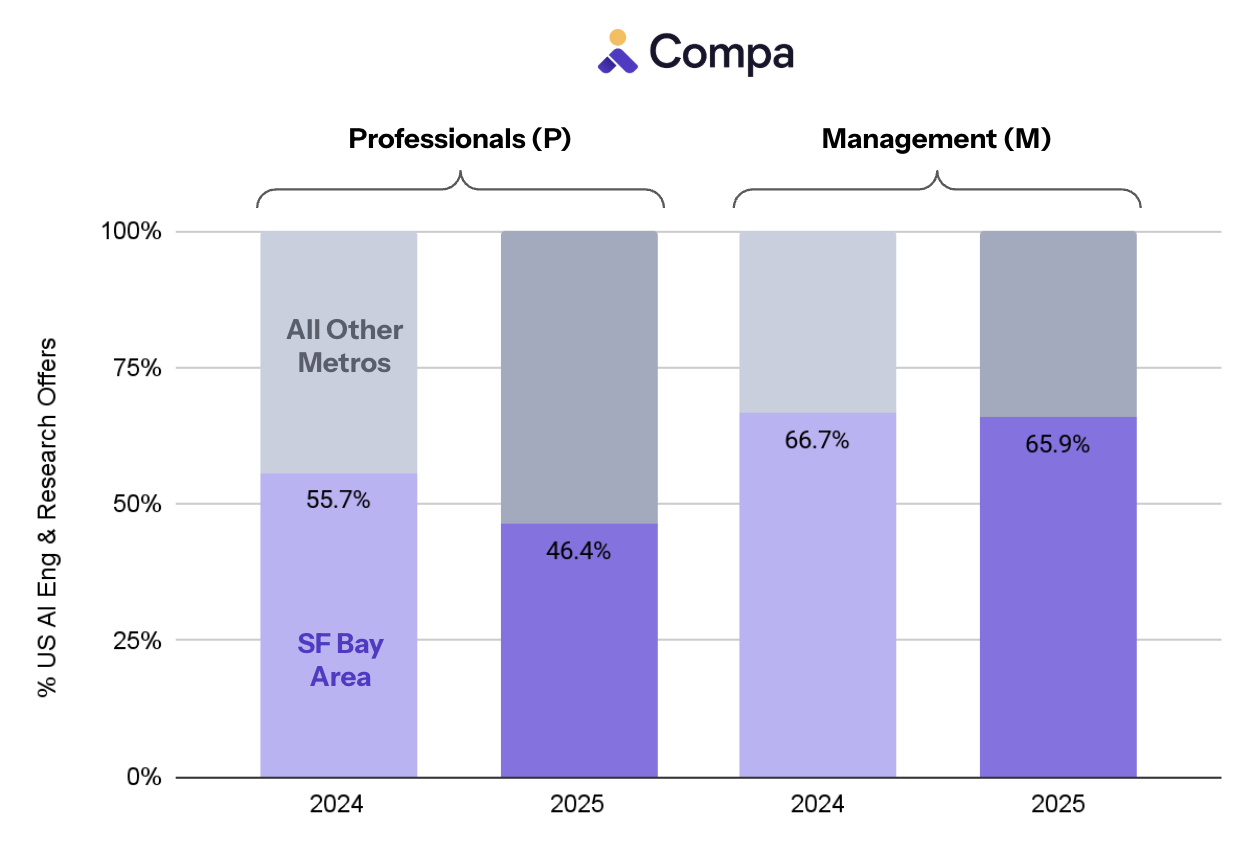
The above charts look at individual contributors, but SF similarly leads management (M) roles more than it does professionals (P):
Looking at compensation also shows SF leadership, but interestingly only in 2025:
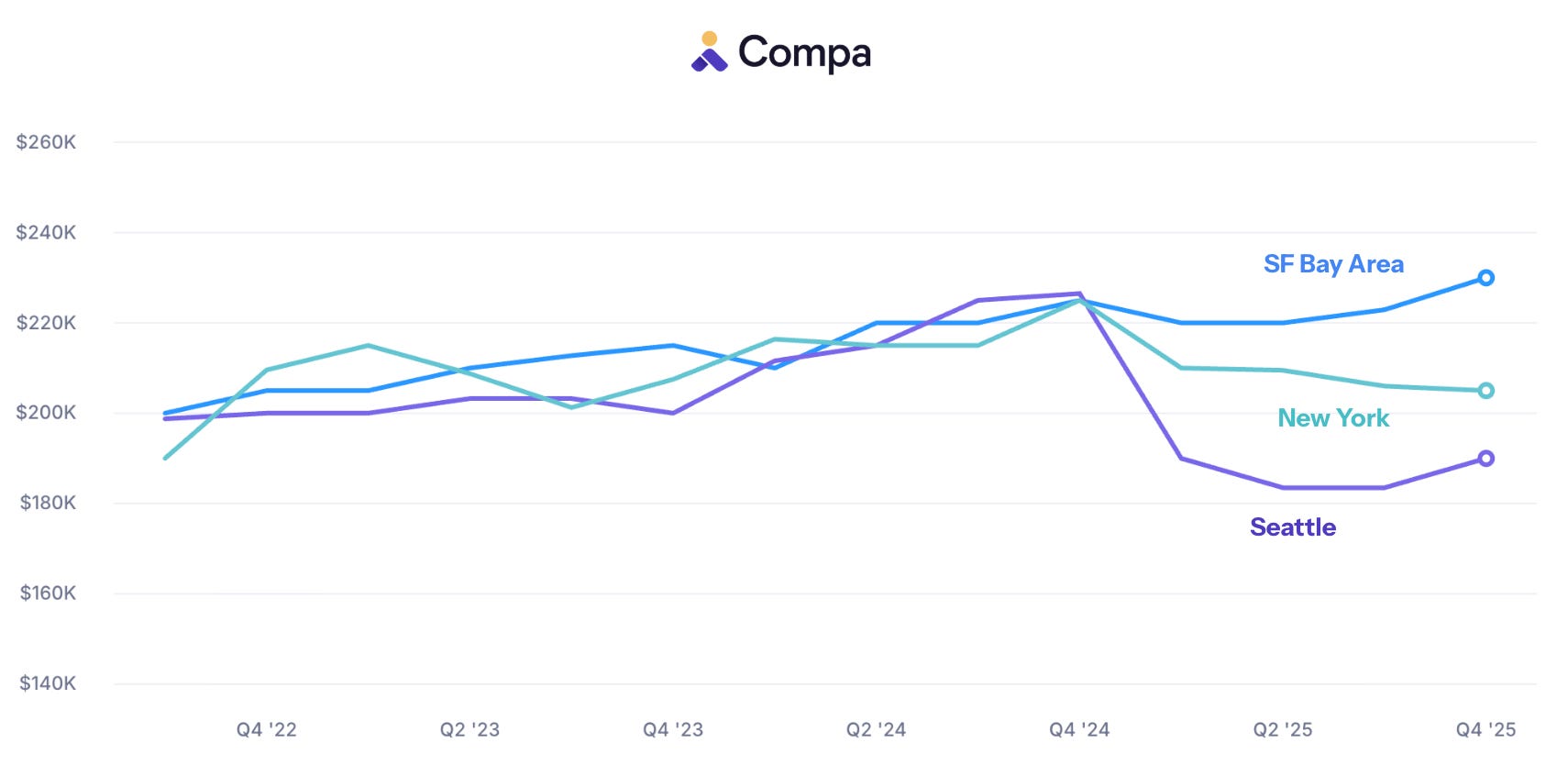
All three of the top markets trended very closely in median base salary for P3-P4 AI offers from 2022 until Q1 2025 when New York flatlined and Seattle dropped over 20% and hasn’t recovered since.
This pattern persists no matter how I slice the methodology — median versus average, base versus total comp, weight by offers versus weight by companies, etc.
Seattle and New York are major centers of AI innovation, but SF dominates in research roles, management levels, and compensation.
If SF Bay Area, Seattle, and New York lead the United States in AI Engineering & Research, we can look at two signals from Compa’s offer data to forecast where the market heads in 2026: offer volumes and offer acceptance rates.
Both metrics show that AI hiring may cool off next year.
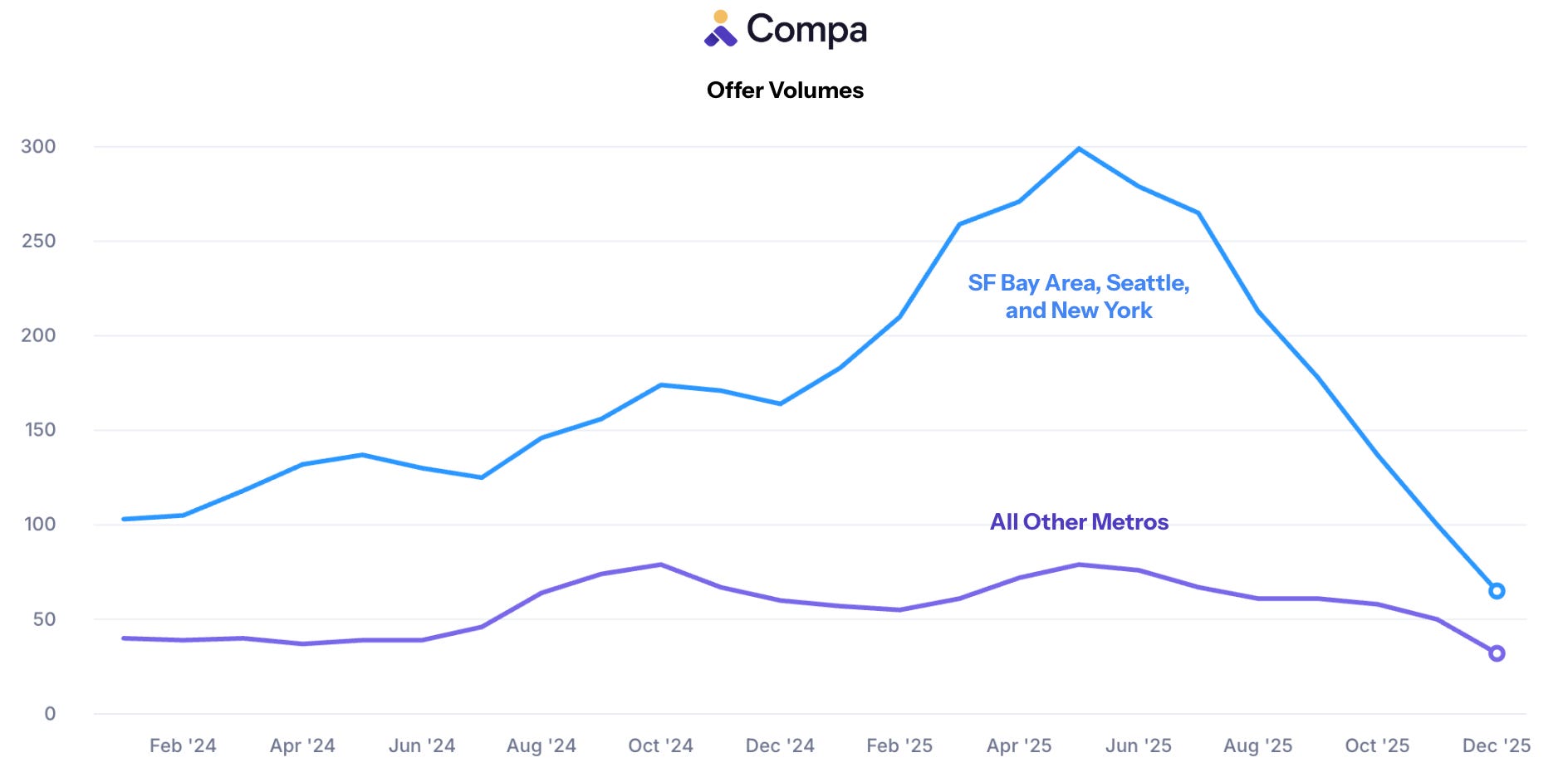
Analyzing offer volumes in the top three metros versus all others, we see a huge pulse of hiring in the first half of 2025 followed by a sharp decline over the past six months:
Meanwhile offer acceptance rates have been rising since May to end the year at 85%, with the top AI metros converging with the rest of the US:
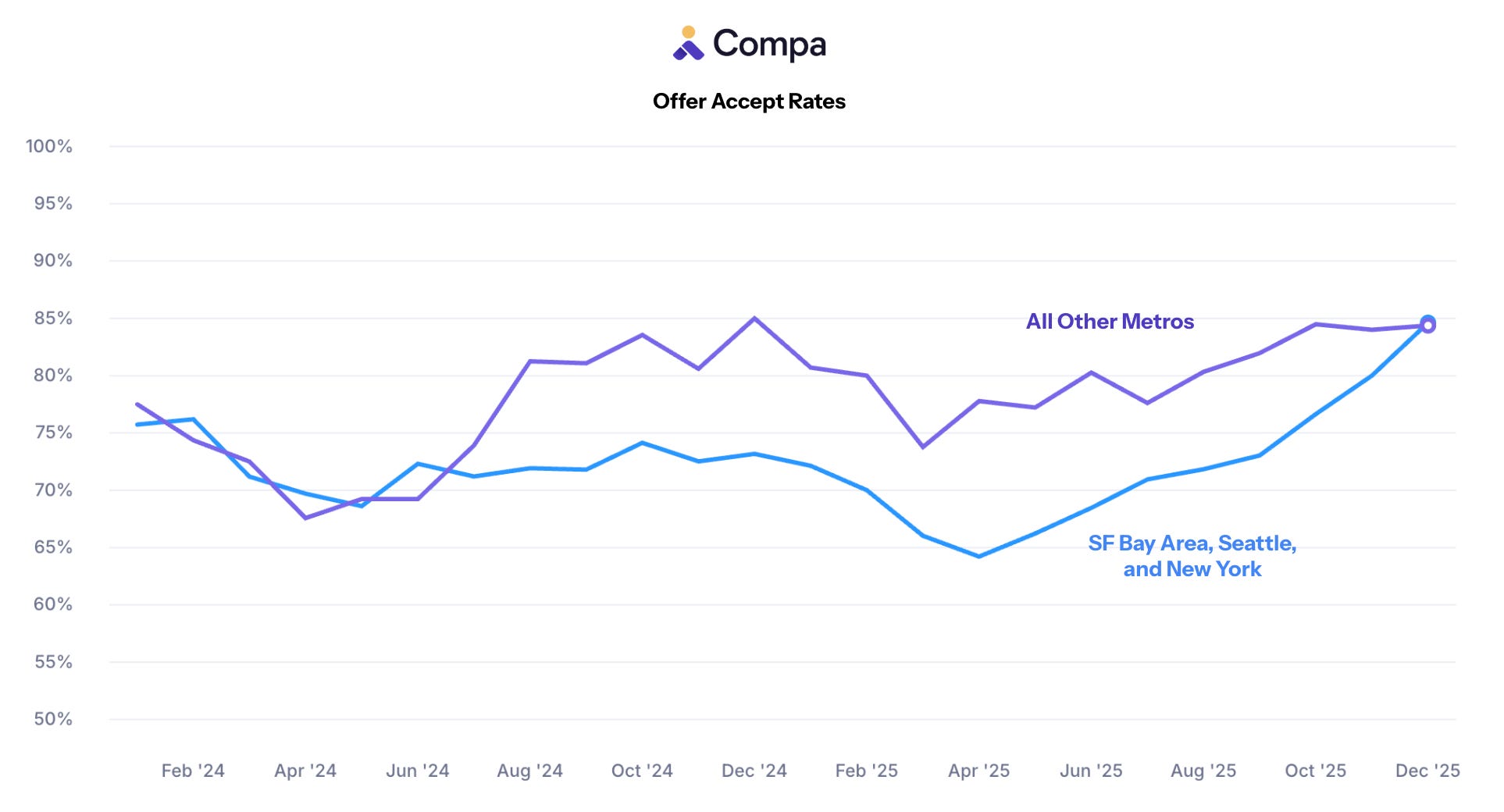
If offer volumes measure level of demand, then demand is falling. And if acceptance rates measure employee versus employer favorability, the markets are shifting to employer-friendly. Both are leading indicators of slowing wage growth.
These early signs suggest the AI boom may slow down going into 2026 — something to consider ahead of Q1 comp planning cycles.
Peer Group is a newsletter for comp leaders navigating fast-moving markets and AI transformation! If you want to share my newsletter, you can forward this email to your colleagues and fellow comp leaders.
Want more polls and insights about the latest thinking in comp?
Subscribe by hitting the button below.
No posts
Comments
Nothing yet. Say the first thing.
Sign in to join the conversation.