
Man, writing a novel is hard. But every once in a while the author gets lucky, and two things fit together perfectly.
Let me explain.

The story at the heart of my novel, COMMUNITY DAY, is told over 13 days in 2021. The narrator has daily interviews with his attorney from January 2, 2021 through January 14, 2021.
I knew that one idea I wanted to develop over the course of the novel was how the narrator’s sudden, unexpected violence on Community Day maybe should have been expected all along. I wanted to explore why those around the narrator had been blind to what was brewing inside of him.
Completely separately, as I was outlining and ordering the stories the narrator would tell to his attorney on each of these 13 days, I decided that I should do something with the actual January 6, 2001. That is, I wanted my narrator’s January 6 conversation to be somehow related to that real day’s horrible events.1
But for more than two years, during my writing and editing process, I couldn’t figure out what to do with the narrator’s January 6 interview. I wanted any allusion to the real world’s event to be subtle; I didn’t want this novel to be about contemporary partisan politics. But I wanted to reward a close reading—I wanted a reader who was tracking closely to see the parallel between the real world January 6, 2021 and the narrator’s January 6, 2021.
Finally, during a late-night walk in late 2023, I lit upon the idea: The connection would be “unexpected violence that might have been expected.”
This is the heart of Chapter 22, which is titled “Reverberations.”
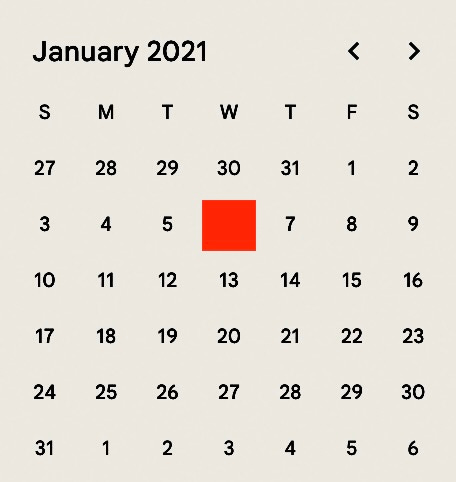
During his January 6 interview, the narrator begins by, as per usual, telling a silly story about one of his neighbors. But then he digresses into a painful story of how his wife confronted him during the pandemic about continuously missing work and getting caught up in conspiracy theories.
As he relates this story to his lawyer, he gets increasingly agitated. The implication is that something bad might have happened during that confrontation with his wife. Whether the lawyer is upset about his story or by his agitation in the interview room, she cuts short the day’s interview.
Chapter 22 is an email exchange between the lawyer and the narrator’s psychiatrist. The lawyer must’ve asked the doctor if the narrator had a history of violence—and whether there was any reason to believe he had the capacity for violence on Community Day.
What follows in the email is the doctor’s explanation. Or excuse-making. Depending on your reading it’s either CYA behavior, willful ignorance, or sincere surprise.
The first half of her response are denials. She wants the lawyer (and presumably others) to believe that no one could have predicted the narrator’s violence.
Here are some of her quotes:
On whether she had any indications: “No. None whatsoever.”
On whether the narrator was known to act out: “He avoided confrontations and sought to de-escalate tense situations.”
On whether medical professionals previously treating the narrator had any inkling: “We’ve interviewed all his previous physicians and counselors, and none foresaw anything like his role in the events of Community Day.”
But then the doctor obliquely concedes that maybe they should have seen this coming.
“Serious mental illness does run in his family, and several of his close relatives were prone to aggression.”
“His mother frequently had physical altercations when she was unwell.”
“Your client’s sister has a long arrest record and a history of self-harm.”
“Your client’s maternal grandfather […] was diagnosed as schizophrenic. […] He was non-responsive to early anti-psychotic drugs and remained aggressive.”
I let the reader consider whether the events of the real January 6, 2021 were a surprise or whether they should have been expected all along.
I now really like the idea of getting the reader to consider whether a big event was a surprise or something the reader should’ve seen coming all along.
I have three ideas about using this in the prequel. The female lead has a dark secret that will be revealed about 1/3 of the way through the novel. The villain will have a surprising ally and defender emerge about 2/3 of the way through the novel. A priest will reveal a beautiful truth at the very end.
I need to decide how much of this to foreshadow.
The key for me is figuring out why I would or would not foreshadow these events. It’s only worth doing if the reader’s introspection on the subject is consistent with the novel’s themes.
So, do I want readers to consider why they were so surprised by the female lead’s secret, the villain’s ally, and/or the priest’s revelation?
Chapter 1: Introducing Key Characters
Chapter 2: Forest and Breadcrumbs
Chapter 4: Heisting from Hamlet
Chapter 6: The Mysterious Stranger
Chapter 10: The Madness of Covid
Chapter 16: Split Personalities
To be clear, the real events of Jan. 6 are NOT part of the novel at all. They are not mentioned. They are not even alluded to. Since the narrator is incarcerated while telling the story, he probably had no idea they were happening.
No posts
Comments
Nothing yet. Say the first thing.
Sign in to join the conversation.