
Learning how to make a simple vinaigrette is one of those kitchen skills that pays off over and over again. It takes just a few ingredients, doesn’t require any heat or time management, and once you understand the basic formula (which you’ll find below), you don’t need to rely on a recipe.
But if salads are the only thing that comes to mind when you read “vinaigrette” — think again, babe. These dressings can add life to roasted vegetables, grain bowls, pasta salads, beans, sandwiches, and can even be used as a marinade for meat or shrimp. It’s one of the easiest ways to add flavor, balance, and variety to meals without any overly complicated cooking techniques.
So it’s a big ol’ bummer that diet culture did its thing and convinced many of us that oil-based dressings are something to fear. Something to order on the side, use as sparingly as possible, or avoid all together.
Let me help clear this up: making and using a vinaigrette isn’t “extra” or “unnecessary”— it’s a foundational cooking skill. And the more comfortable you become using simple techniques like this, the more confident and flexible you’ll feel in the kitchen.
So let’s make one (or 3 😊).
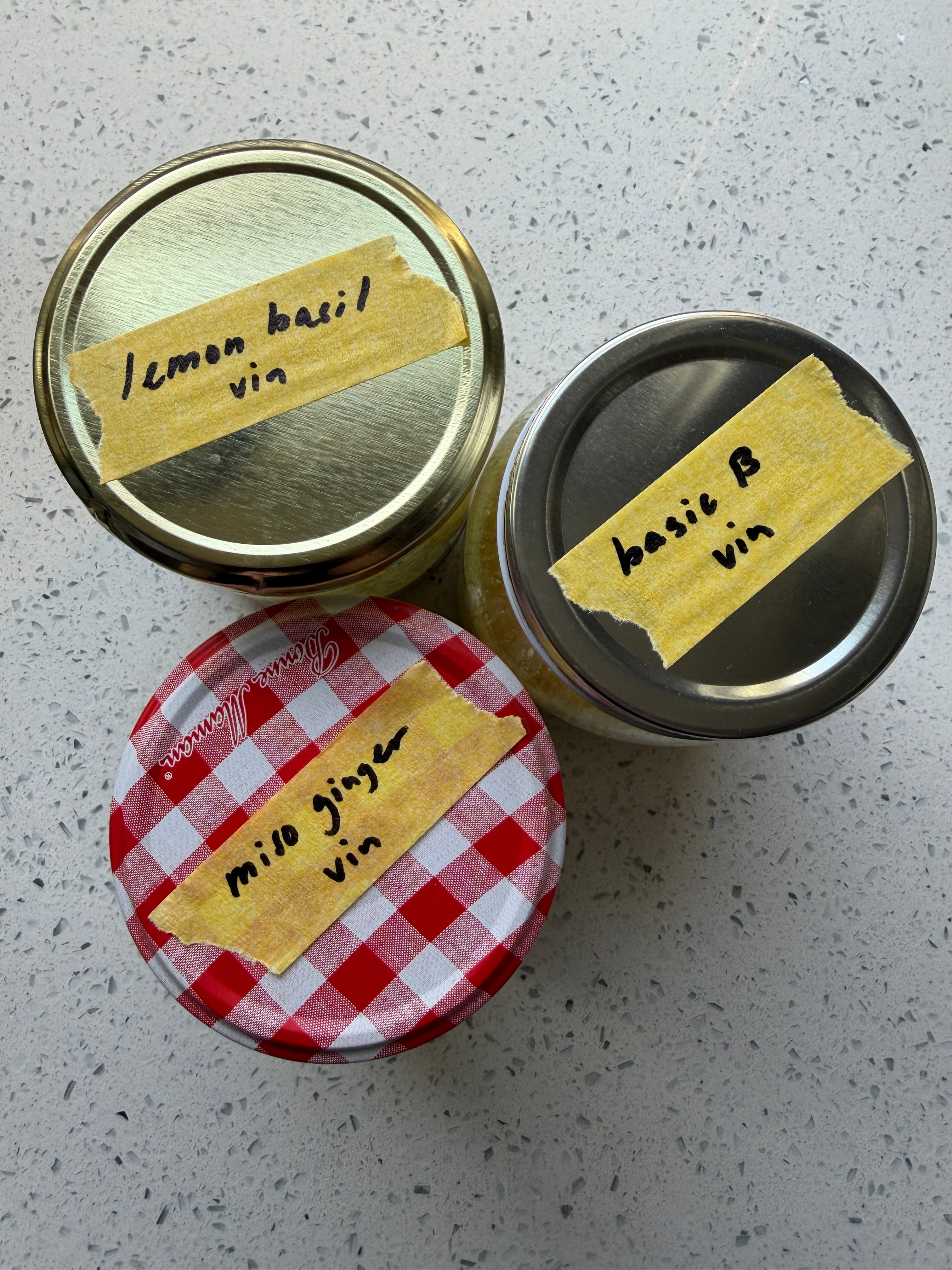
The standard formula for a vinaigrette is 3 parts oil to 1 part acid + an emulsifier + seasoning.
Think of the 3:1 ratio as a guide, not a rule. If you like your dressings a little tangier, use more acid. If you prefer something richer and more mellow, use more oil. The goal isn't to follow the ratio perfectly — it's to make something that tastes good to you.
Once you understand what each one brings to the party, you can mix and match ingredients to create endless combinations without relying on a recipe.
Oil: the base
Try: olive, avocado, grapeseed, canola, sesame
Acid: the brightness
Try: vinegar (red wine, apple cider, champagne, balsamic, rice), citrus (lemon, lime, orange, grapefruit)
Emulsifier: what keeps it all together
Oil and acid naturally separate when mixed, so an emulsifier binds the ingredients and creates a smoother texture and better mouthfeel
Try: mustard (dijon, yellow, whole grain, etc.), mayonnaise, egg yolk, honey, tahini, miso
Seasoning: the flavor + balance
Try: salt, pepper, aromatics (garlic, shallot, ginger, etc.), herbs (basil, cilantro, dill, tarragon, etc.), sweeteners (honey, sugar, maple syrup, agave syrup, jams or preserves)
Time: 5 minutes or less
Skills you’ll learn and use: balancing flavor, making an emulsion
How to prepare: gather tools + ingredients.
Bowl or wide mouth jar with lid
Measuring spoons and cups
Microplane
Whisk (if using a bowl)
Spoon
Apple cider vinegar - 2 1/2 tablespoons
Dijon mustard - 2 teaspoons
Maple syrup - 2 teaspoons
Garlic - 1 clove, peeled and grated
Diamond Crystal kosher salt - 1/2 teaspoon (start with less if using table or sea salt)
Olive oil - 1/2 cup
If using a jar, add all of the ingredients, close the jar tightly, and give it a really good shake.
If using a bowl, add everything but the oil and whisk. Then slowly drizzle in the oil while whisking until everything is combined.
TASTE and adjust as you like! Remember, the recipe is just a starting point.
Store in the fridge for up to a week.
Time: 5 minutes or less
Skills you’ll learn and use: balancing flavor, making an emulsion
How to prepare: gather tools + ingredients.
Wide mouth jar or container with lid
Measuring spoons and cups
Microplane
Hand juicer (optional)
Immersion blender
Spoon
Lemon zest - about 1 teaspoon
Lemon juice - 1 tablespoon (less acid since we’re using the zest as well)
Garlic - 1 clove, peeled and grated
Dijon mustard - 2 teaspoons
Maple syrup - 1 teaspoon
Diamond Crystal kosher salt - 1/2 teaspoon (start with less if using table or sea salt)
Fresh basil leaves - about 1/2 cup
Olive oil - 1/2 cup
Add all of the ingredients to the jar or container and blend with an immersion blender.
TASTE and adjust as you like! Remember, the recipe is just a starting point.
Time: 5 minutes or less
Skills you’ll learn and use: balancing flavor, making an emulsion
How to prepare: gather tools + ingredients.
Bowl
Measuring spoons and cups
Microplane (optional)
Whisk
Spoon
Rice vinegar, unseasoned - 2 tablespoons (I use a little less than usual because rice vinegar tastes pretty strong to my palate!)
White miso paste - 2 teaspoons
Maple syrup - 2 teaspoons
Soy sauce - 2 teaspoons
Garlic - grated, 1 teaspoon (I used the frozen cubes for convenience)
Ginger - grated, 1 teaspoon (I used the frozen cubes for convenience)
Avocado or canola oil - 1/2 cup
Add all of the ingredients but the oil to a bowl. Whisk until combined.
Slowly add in the oil and whisk until combined.
TASTE and adjust as you like! Remember, the recipe is just a starting point.
Thanks for reading Common Kitchen! This post is public so feel free to share it.
Comments
Nothing yet. Say the first thing.
Sign in to join the conversation.