
It’s time for crypto to put on a suit and tie
While President Trump has quickly followed through on many of his crypto related campaign promises, the honeymoon phase for risk assets ended writ large in February. $BTC actually topped on inauguration day and crypto demonstrably led the ensuing decline in equities. Crypto is more tied to the hip of macro than perhaps ever before given dependencies on TradFi bids. Whether it’s further regulatory clarity (a la impending stablecoin and market structure bills) attracting sidelined institutions or inflows to spot crypto ETFs and stablecoins / Real World Assets (RWAs), TradFi is the marginal driver of new capital to crypto. To entice demand from bankers and boomers, crypto needs to clean up its act and move beyond a purely speculative asset class. The stage is set for sustainable, cash-flowing protocols to thrive and a general return to quality in crypto as the memecoin narrative has faded. But macro winds and TradFi spirits must cooperate.
Memes may be cooked but $BTC has transcended the rest of crypto, and market structure improvements have fundamentally altered the 4-year cycle
It’s time to separate Bitcoin from ‘the rest of crypto’. $BTC has been recognized as digital gold by traditional investors and embraced by governments around the world, including the United States. The comps to gold are easy to (a.) understand and (b.) quantify. Furthermore, $BTC’s Sharpe ratio is consistently higher than stocks and rarely dips below Treasuries which adds attractive risk-adjusted returns and modest diversification benefits to multi-asset portfolios - all attributes that help justify money manager fees.
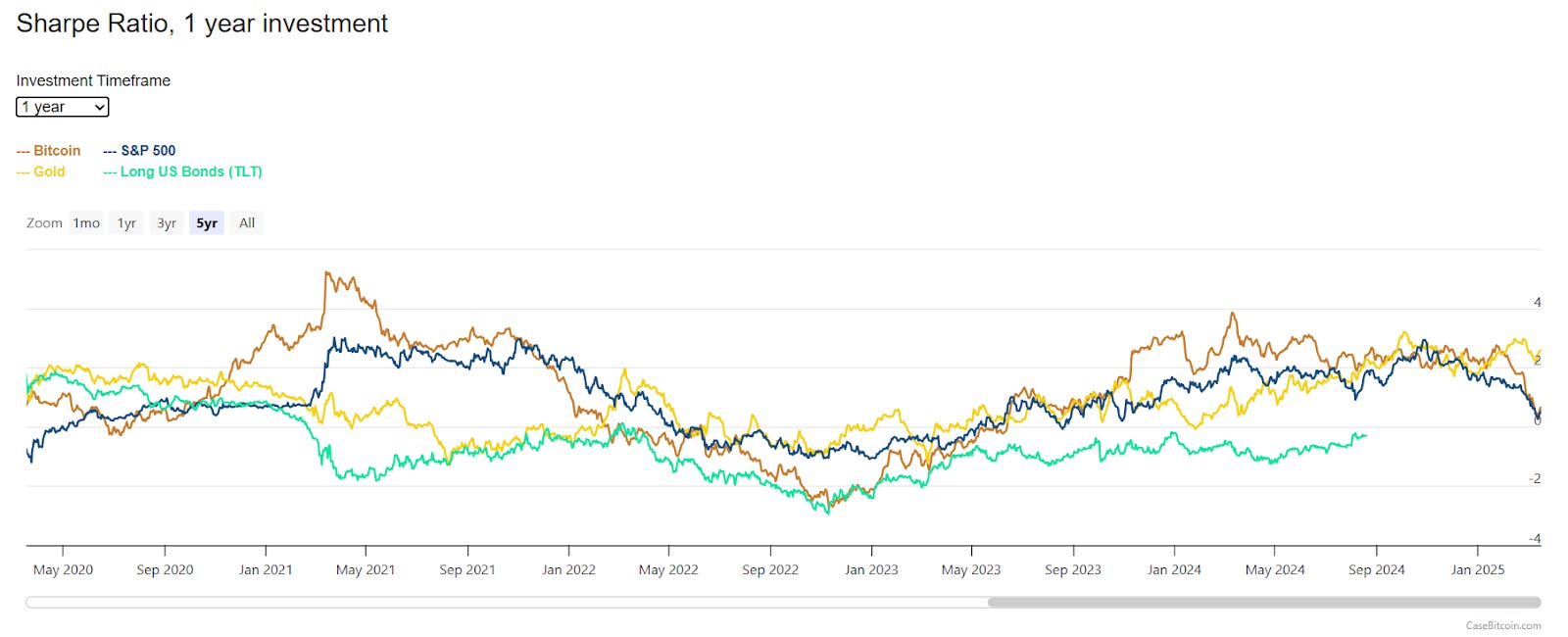
Source: https://casebitcoin.com/charts#sharpe_chart
While the gold analogy doesn’t do $BTC proper justice in my opinion and may ultimately hamstring future growth, gold is currently trading at all-time highs while the Bitcoin/Gold market cap ratio still has a long way to climb (currently sitting ~8%). The most encouraging endorsement of $BTC recently that failed to attract the market’s attention is BlackRock adding 1-2% allocations of $IBIT (iShares Bitcoin Trust) to their alternatives model portfolios. This is extremely bullish not from immediate flows but the signal it sends to trillions of AUM across wirehouses, private banks and wealth management platforms that have been reluctant to embrace crypto. $BTC comprises >60% of total crypto market capitalization and has transcended hurdles that still plague large swathes of the industry, so it’s time to separate Bitcoin from crypto.
In every cycle there are crypto market structure developments that impact how and where new capital enters the market and its eventual impact on prices. In 2016/17 it was the proliferation of crypto exchanges, in 2020/21 it was the emergence of DeFi, and in 2024/25 it’s the rise to prominence of spot crypto ETFs. The ETFs represent means of investing in crypto for the exponentially larger pool of traditional finance capital, however this $105bn+ of AUM is siloed and essentially off-chain. Historically, the 4-year crypto cycle ended with an ‘alt season’ that followed significant rallies in majors as crypto investors felt a wealth effect and rotated into higher beta small cap tokens that experienced euphoric blow-off tops. But these ETF holders are confined to the walled gardens of their brokerage accounts and currently $ETH is the only higher beta alt available to rotate into. And while crypto natives obviously still benefit from the price appreciation attributed to ETF inflows, only $2.5bn of the $38.5bn of ETF net inflow to date have gone to $ETH which is the most over-owned major amongst crypto natives and the primary ecosystem for alts. The vast majority of new money flowing into crypto is going to $BTC ETFs which are externalized from the on-chain economy. Meanwhile the endogenous crypto native capital is being spread across literally millions of new tokens.
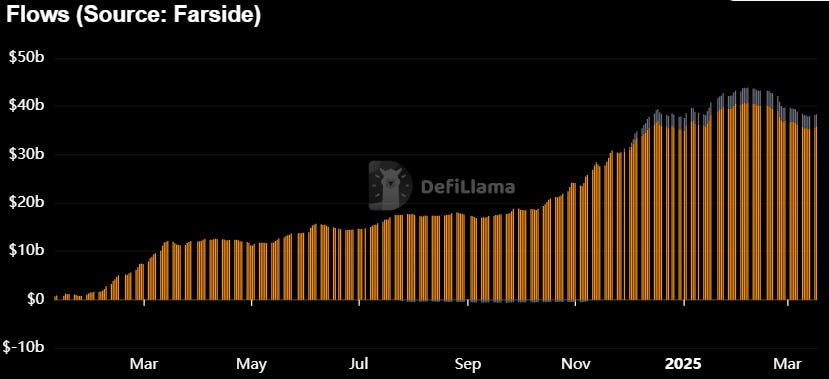
Source: https://defillama.com/etfs
Another major driver of change in crypto cycles is related to venture capital allocation. From the asset class’ inception through 2020 crypto VC was a fairly niche industry and investing in infrastructure was the obvious need if the industry were to onboard billions of users. And when the COVID era money printer kicked into high gear, all hell broke loose. After raising less than $10bn in aggregate through 2020, crypto VCs raised $58bn in the following two years.
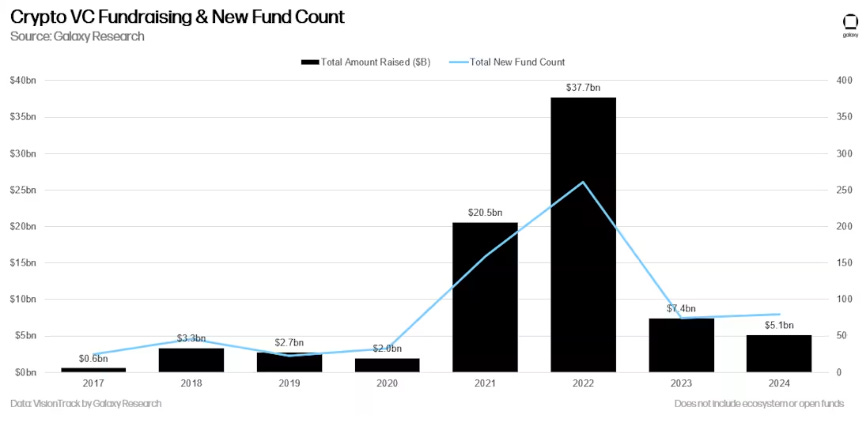
Source: https://www.galaxy.com/insights/research/crypto-blockchain-venture-capital-q4-2024/
At the time, interest rates were at zero and crypto was the bleeding edge tech. The glut of venture financing resulted in nose-bleed valuations and notoriously little diligence. There simply were not enough quality projects in crypto to deploy this much capital and the private market marks lifted liquid valuations. Fast forward to today, monetary policy has normalized and crypto takes a back seat to AI on the frontier of early stage tech investing. Furthermore, retail has wizened up to the crypto VC infrastructure game and are far less willing to be their exit liquidity. TVPI (total value to paid-in) and DPI (distributions to paid-in) data for crypto venture funds is hard to find but we suspect, like with the rest of venture, that the 2021/22 vintages are underperforming and behind schedule. This has a chilling effect on the entire alts market (where crypto venture specializes) as fundraising is more difficult and LPs aren’t receiving distributions to reinvest.
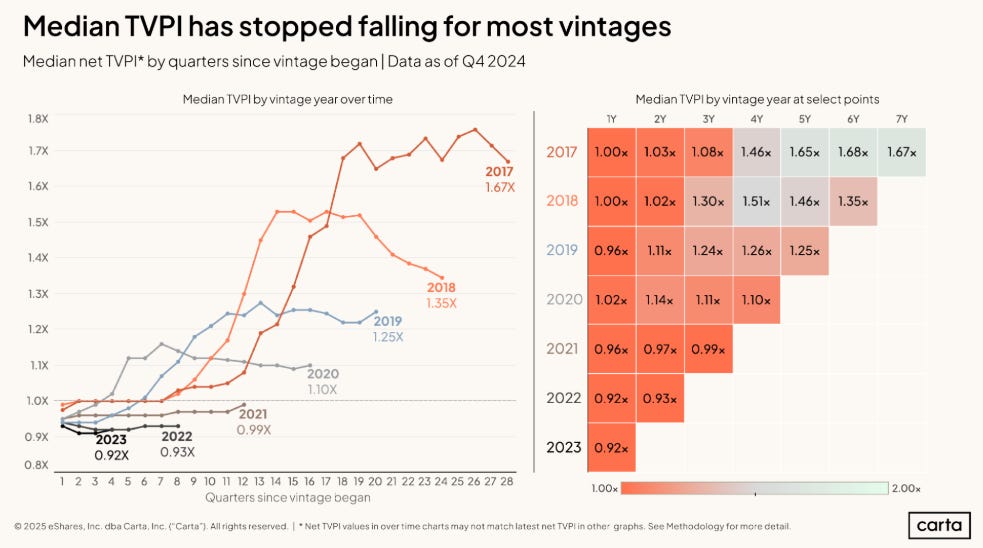
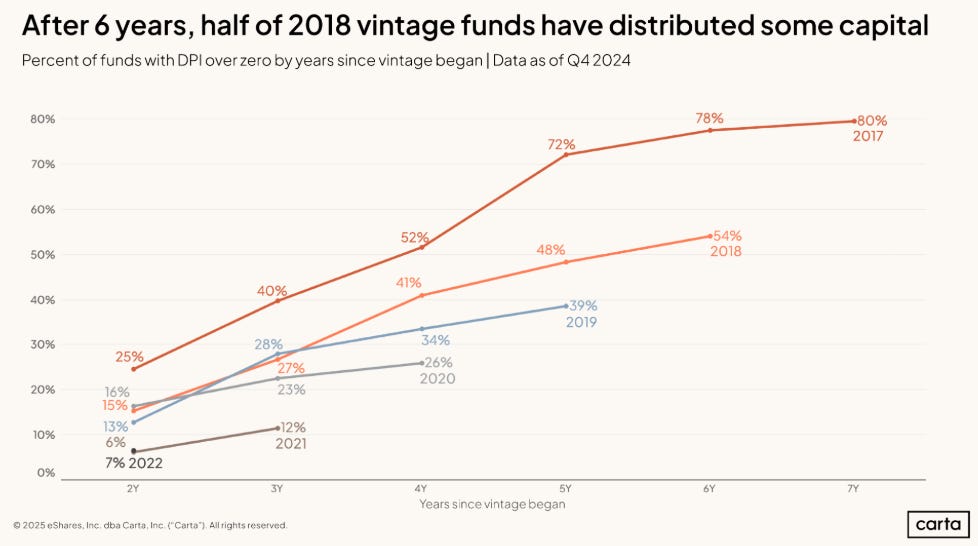
Source: https://carta.com/data/vc-fund-performance-q4-2024-full-report/
These modifications to crypto market structure - the introduction of select, low-cost passive vehicles combined with VC hangover - essentially kill any hopes for an indiscriminate altcoin mania which means crypto investors need to rethink their priors for crypto cycles entirely. And if the marginal new buyer of crypto is TradFi then there needs to be a return to quality: infrastructure and protocols that TradFi will use and governance tokens that distribute revenue (for which there are multiple ways to execute in crypto).
Fortunately, there is now a path for broad crypto utilization and investment by TradFi as the United States just elected the first ever pro-crypto president. Since the asset class’ inception it's been fighting fierce opposition from US regulators, and in a matter of months the pendulum has swung to total embrace. In the first 60 days of Trump’s second term we’ve seen:
An Executive Order mandating a “Federal regulatory framework governing the issuance and operation of digital assets, including stablecoins, in the United States”
Establishment of a Strategic Bitcoin Reserve (SBR) and Digital Assets Stockpile (DAS) comprised of ~$18bn of currently held crypto by US law enforcement agencies; over a dozen states have followed suit with bills to create their own SBRs
The confirmation and/or nomination of pro-crypto heads of the US Treasury, SEC, CFTC, and OCC
The OCC rescinding banking restrictions targeting the digital assets industry
Congressional repeal of the IRS’ DeFi Broker Rule with bipartisan support (Senate 70-27, House 292-132)
Significant sea change at the SEC in the form of:
Creation of an SEC Crypto Task Force headed by pro-crypto Commissioners
Rescission of SAB 121 which clears the way for regulated entities to custody crypto
SEC Dismissal of multiyear legal action against Coinbase and Kraken
Closing investigation on Uniswap, RobinHood, Gemini, and Consensys with no action
Issuing statement that memecoins are generally not securities
The crypto reform from this administration is unabashedly bullish for the ‘return to quality’ narrative over the medium- to long-term. However, it will take time for crypto to digest and respond to this sea change. And we’d be remiss not to mention the short-term headwinds created by this same administration when launching the $TRUMP memecoin the Friday before inauguration. The sector of outsized returns this cycle within the endogenous pool of crypto-native capital had been memecoins, which rose to prominence in large part from the draconian policies of the Biden administration making it incredibly difficult to operate legitimate crypto businesses. To circumvent regulatory scrutiny, memecoins gained popularity for their unequivocally useless, non-securities status whose sole driver of value is attention. And when the most recognizable person on planet earth and his wife launch their own extractive, low float / high FDV (Fully Diluted Valuation) memecoins the attention narrative has undoubtedly topped. The launch of $TRUMP and $MELANIA was a huge onboarding event and helped propel $SOL to all-time highs. But it also opened the door for a litany of low effort celebrity / political grifts while fragmenting liquidity - the memecoin mania culminated in a monthly record of 1.75mm new tokens launched on Solana in January. There simply is not enough endogenous capital in crypto (much less on Solana) to support prices for even a fraction of these tokens. As a result, on-chain volumes and valuations in the Solana ecosystem ($SOL being the ‘memecoin casino’ play) have dropped significantly.
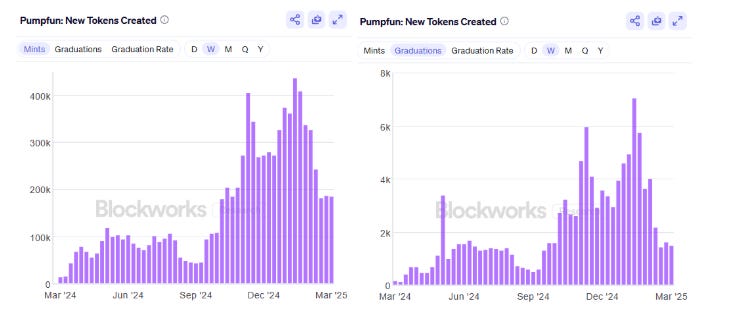
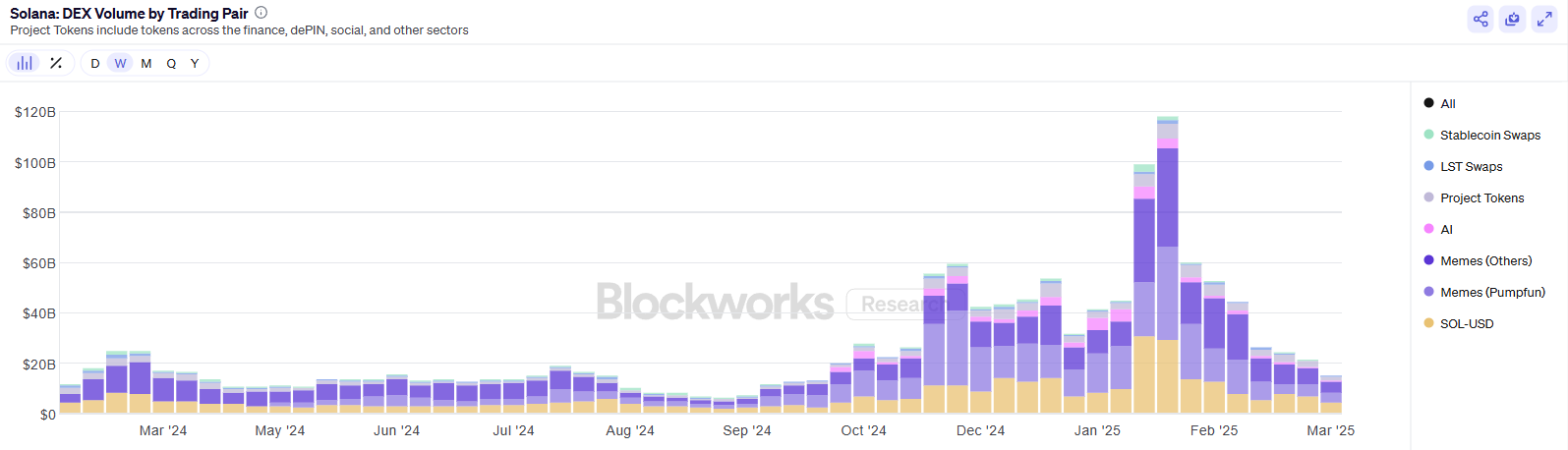
Source: https://blockworks.co/analytics/solana/sol-dex
While the memecoin euthanasia rollercoaster may be picking up speed, we find it hard to believe this is the beginning of a protracted bear market, in part due to the aforementioned changes to the historical 4-year cycle. The current pullback from recent highs is inline with previous bull market corrections, and on-chain signals for the majors failed to reach extremes. We expect dispersion within crypto to be more prominent under this new market structure regime, with particular sectors such as DeFi likely to regain their footing after significant underperformance to $BTC. A new cycle regime should be welcomed by builders in the space as trying to create lasting businesses in an industry that experiences the equivalent of an economic depression every 4 years is unpalatable. Upside valuations for most projects in this new era will inevitably be haircut versus previous cycle tops, but healthier and enduring long-term value can be created. We believe disciplined, value-oriented liquid crypto investing can thrive in this environment.
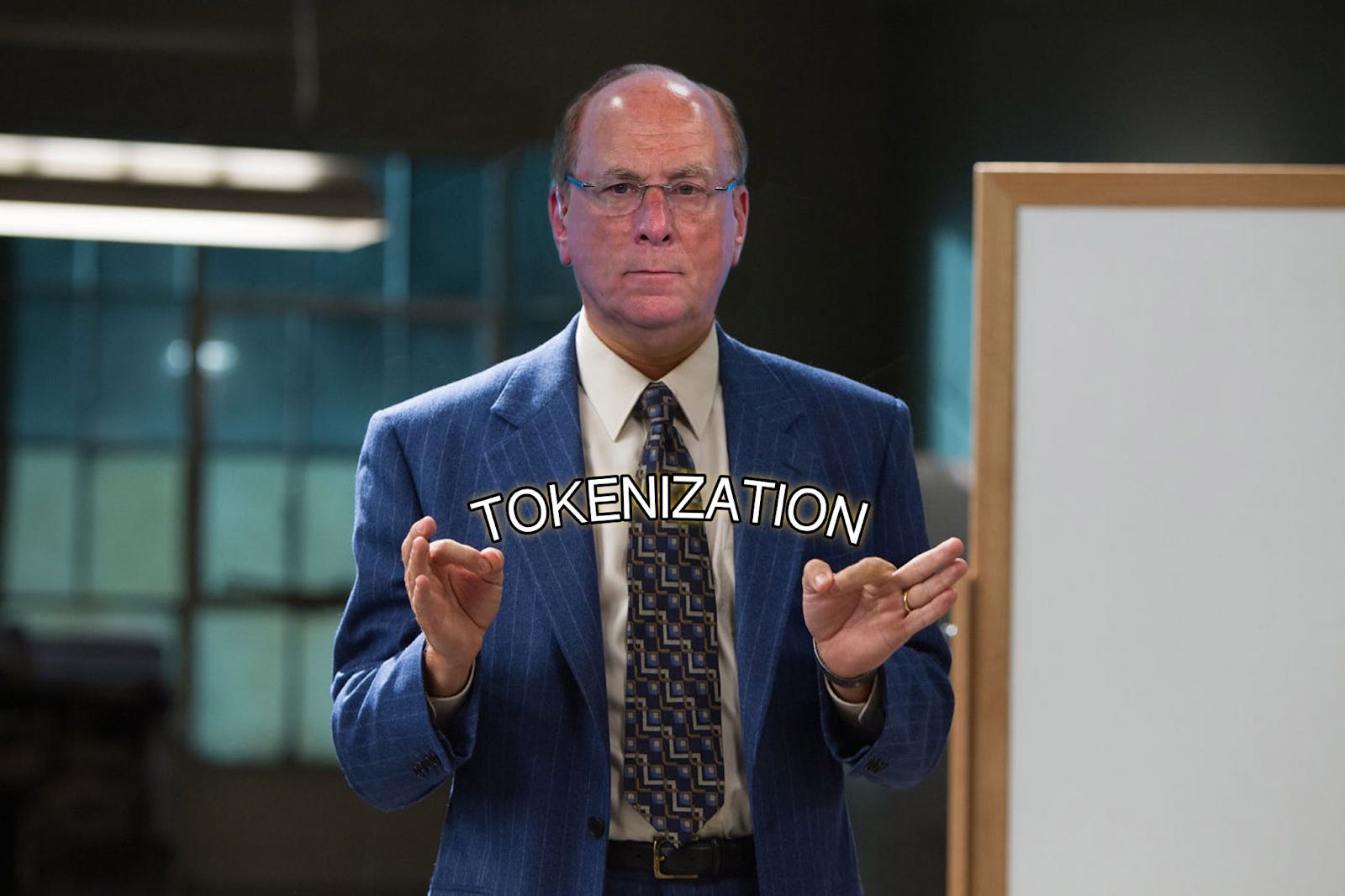
In our view, validation for the return to quality theme requires $ETH catching a sustained bid and closing some of the underperformance to $SOL. A crude framework for positioning the two leading smart contract platforms is Ethereum catering to enterprises while Solana serves consumers. As mentioned earlier, Solana’s meteoric ascent the past 18 months has been fueled through its role in facilitating the majority of memecoin degeneracy given its lower transaction fees and superior UI/UX. Ethereum prioritizes decentralization and security which leads to the majority of high value DeFi activity and stablecoin supply settling on mainnet. The natural choice for institutional crypto expansion efforts is building on Ethereum (whether it be mainnet or customized EVM compatible L2s) or DeFi integrations with TradFi. It’s worth noting the largest institutional on-chain money market fund is BlackRock’s $BUIDL, which just crossed $1bn AUM. But $ETH the base asset has suffered immensely from the utter failure of the ‘ultrasound money’ thesis (self-reinforcing scarcity through deflationary fee burning). The details of this demise and a viable path forward will be outlined in a future post, but if our TradFi brethren are looking for a simple $ETH narrative its this:
Macro uncertainty reigns supreme, but the speed of the recovery could match the pace of the drawdown
Markets hate uncertainty, and the macro outlook at the moment must contend with manically changing trade policies and unpredictable cuts to government spending which has been a significant driver of GDP since COVID. The fear is a tariff induced trade war leading to a US, or even global, recession. The result was institutional investors dumping US stocks faster than you could even say ‘growth scare’:
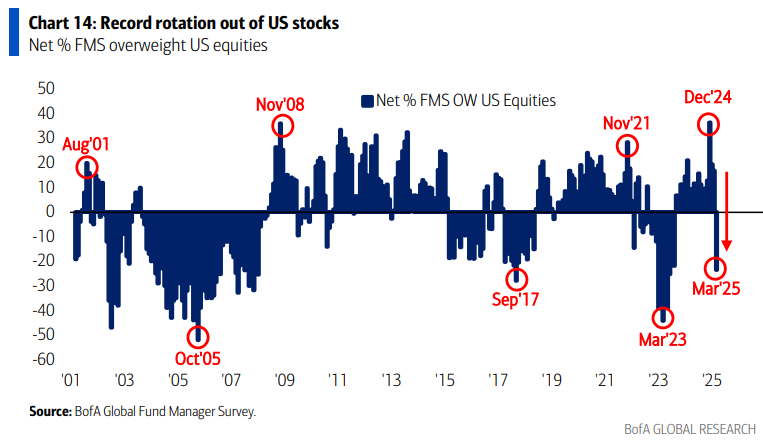
The speed of the sell-off in risk assets is notable. According to Pictet data this was the 7th fastest slide for the S&P 500 into correction territory, taking just 22 trading sessions. Noteworthy is that the tariff induced sell-off in February 2018 (8 trading days) was the second fastest correction behind the COVID crash. It’s of little surprise that crypto was once again the canary in the coal mine, starting the sell-off earlier and moving more dramatically than equities. But given that the bulk of tariffs haven’t been implemented yet and negotiations are ongoing, this bout of derisking was in anticipation of weakening economic data. Given crypto’s reliance on TradFi risk appetite it’s worth looking beyond this short-term repositioning and formulating an opinion on when the macro outlook might clear up.
But first, what’s the general economic plan from this new administration? Recommend listening to a recent interview with Treasury Secretary Scott Bessent where he lays it out quite clearly. But to paraphrase:
Deleverage the government by reducing spending and shedding excess labor - target a reduction of the federal deficit from ~6.5% of GDP to 3-3.5% of GDP
Deregulate the financial system and extend tax cuts which helps re-leverage the private sector and increase productivity, ultimately increasing GDP
Increase government revenue via tariffs, or at least use the threat of reciprocal tariffs to reduce the tariff rates levied against the US which incentivizes US manufacturing and private sector employment
The necessity for reducing the deficit should be consensus as the compounding interest on $36T of debt is an arithmetically induced death spiral, but the least painful path for getting to a 3% deficit to GDP is debatable. According to BofA Research the simplified options are either 10% nominal GDP growth (inflationary and unrealistic), $1T increase in revenue (if purely tariff driven would require 30% vs the current 2-3%), or $1T cut in discretionary spending and ~100bps lower US Treasury yields at the belly of the curve. Bessent has stated the intention of using a combination of all these options, but the most realistic path forward is spending cuts + lower rates. Markets are fixated in fear on the resulting impact on economic growth and inflationary impulse of tariffs.
Markets, rightly so, have been rattled by Trump tariff headlines. And while the unpredictable announcements of increases, delays and reciprocity make it hard for businesses to adapt, the uncertainty could be ending very quickly given the April 2nd implementation. The President, an agent of chaos in the tariff negotiations, can end the havoc as easily as he started it. Meanwhile, the impact on growth by ending the era of excessive US fiscal dominance will take time to process, but we look toward midterm elections as the most probable target timeline for resolution by this administration. 35 Senate seats are up in 2026 of which 22 are held by Republicans. Assuming growth does take a hit in 2025, and acknowledging the GOP has more to lose in the midterms, Trump will need to have the economy back on track well before the elections in order to retain control of Congress and follow through on his ambitious agenda. While spending cuts and their resulting uncertainty have garnered the bulk of financial markets’ attention, expect to see more announcements in the coming weeks and months of broad deregulation efforts and reversal of certain Dodd-Frank / Basel III safeguards that are stimulative to private sector credit. Animal spirits could return as quickly as they left, and there are risks to being sidelined.
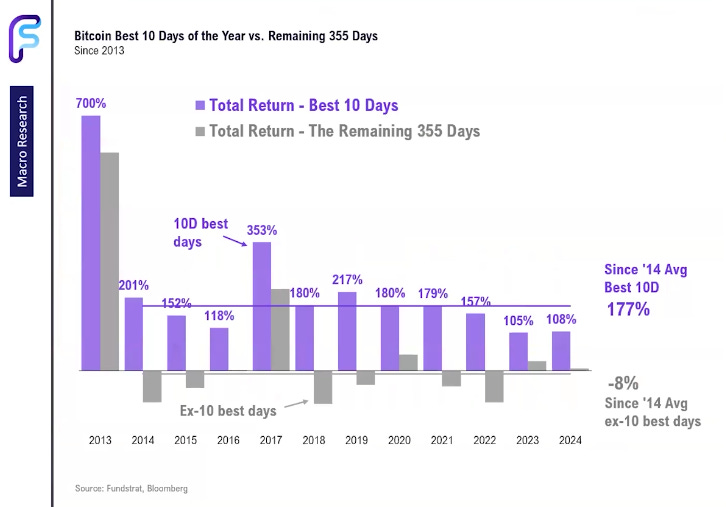
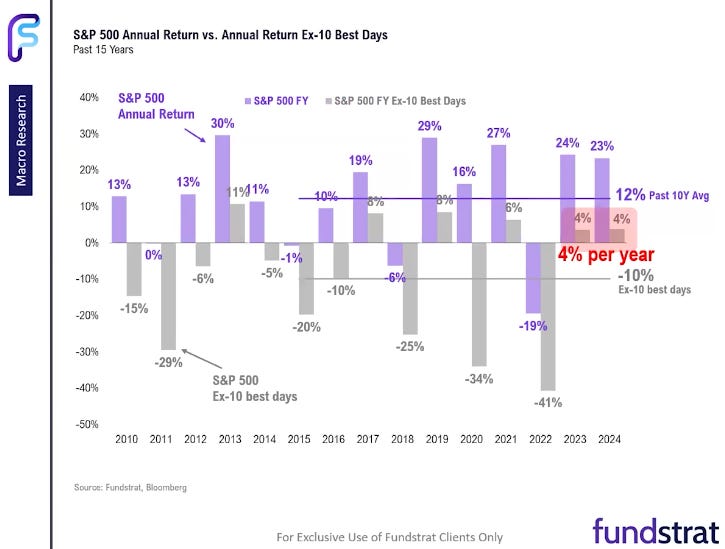
Lastly, liquidity conditions are likely to improve marginally in 2025 after 3 years of stagnation in the US and considerable decline when looking globally. The Fed announced this week a significant decrease in their pace of quantitative tightening (QT). Market expectations are for the Treasury General Account (TGA) to draw down amidst the debt ceiling showdown and the possibility of some exemptions to banks’ Supplementary Leverage Ratio (SLR) as a dampener to the TGA rebuild post debt ceiling raise. These are all modestly positive for liquidity, or at least help offset the liquidity drain of increased Treasury issuance after the debt ceiling is eventually raised.
The other major crypto related policy helping spur demand for Treasuries - welcomed by Bessent in his quest to lower rates and refinance almost a third of the national debt that’s rolling over this year - is stablecoin legislation. Tether, the company behind USDT, was the 7th largest buyer of US Treasuries in 2024 compared to countries. The GENIUS Act could be passed by Congress as early as this summer. Significant growth in stablecoins is expected as banking restrictions are eased and more companies integrate stablecoins into their payment systems. It’s worth noting that total stablecoin supply only recovered from the 2022 redemption cycle (and Terra Luna implosion) in November of last year. And any further reductions in the Fed Funds Rate make the two dominant centralized stablecoins, USDT and USDC, more attractive. Circle (issuer behind USDC) is also expected to IPO this year, likely after stablecoin legislation is passed.
Stablecoins will be a multi-trillion dollar sector that rivals the Eurodollar market. It will be the largest bridge of users and capital to crypto while simultaneously reinforcing the global reserve currency status of the US Dollar.
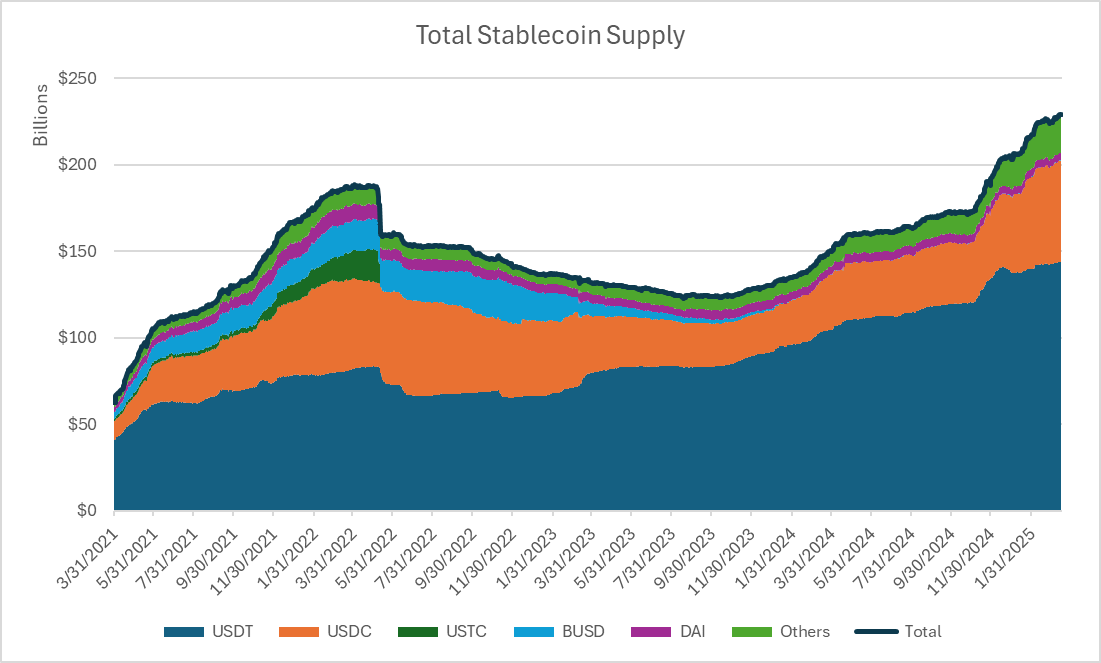
Source: https://defillama.com/stablecoins
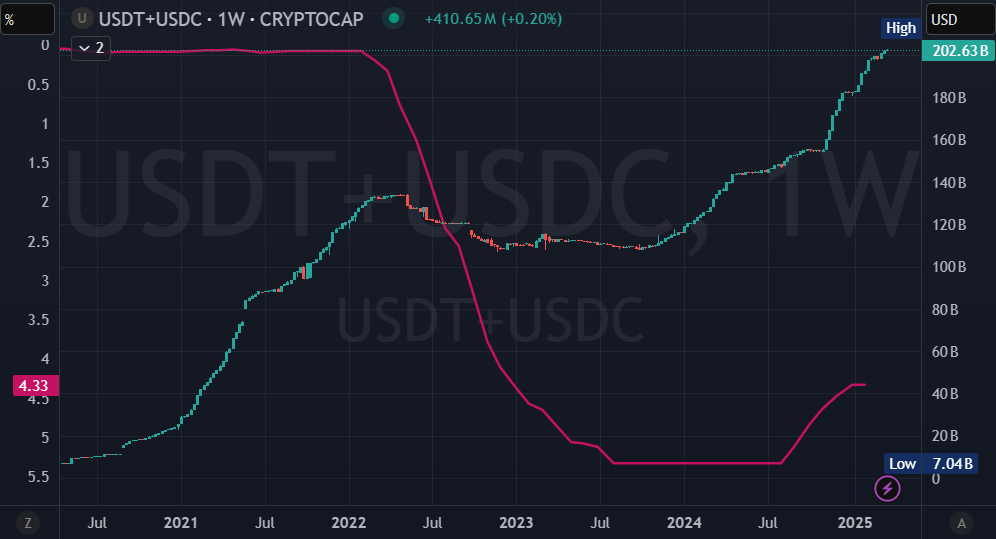
Source: TradingView; pink line is Fed Funds Rate (inverted)
Crypto is tied at the hip to macro in 2025, and the outlook is uncertain, but resolutions could come quicker than you might expect.
The information contained in this presentation (the “Presentation”) is provided for informational and discussion purposes only by Combine Capital LLC (“Combine”) and its affiliates and is not, and may not be relied on in any manner as, legal, tax or investment advice or as an offer to sell or a solicitation of an offer to buy an interest in any fund which may be formed or sponsored by, or affiliated with, Combine.
Some of the information contained in this presentation is based on or derived from sources outside Combine, including independent third-party sources, company websites, or third-party investors. While such information is believed to be reliable for the purposes used herein, none of Combine or any of its respective affiliates or partners, members or employees, assume any responsibility for the accuracy of such information and has not independently verified the assumptions on which such information is based.
Comments
Nothing yet. Say the first thing.
Sign in to join the conversation.