
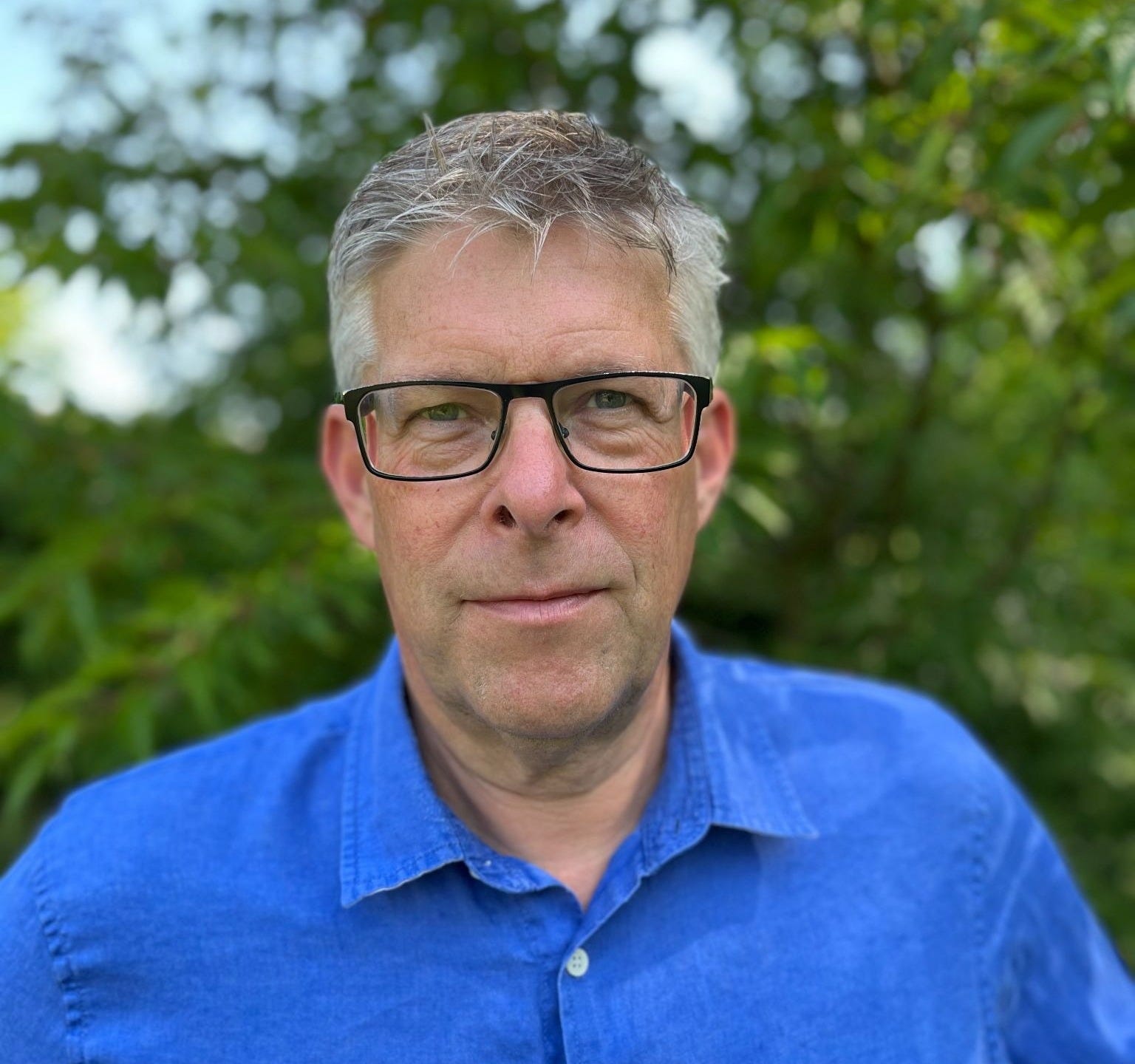
Andrew Robson grew up around property. Familial connections across every branch of the family tree meant a career in real estate was always going to happen by osmosis, though his route there was anything but direct.
After early stints negotiating residential sales in South London and a near-decade of brokering contracts in the newly deregulated energy sector, Robson returned to property via Hamptons International in the early noughties, taking on a leading role in its international department .
Within a year, he had co-founded Robson Barnes, a boutique sales and marketing outfit representing high-end overseas developments—and became the first agent ever to transact at Jumby Bay Island, Antigua.
That introduction proved pivotal. When Jumby Bay’s long-standing property sales manager retired in 2009, he passed the baton to Robson directly.
What followed was 12 years living and working on the private island, overseeing all real estate sales, and marketing through the resort’s reopening and beyond—personally handling transactions totaling over $750 million in the process.
Robson left in 2021 and founded Arawak Estates, a Caribbean-focused advisory practice drawing on more than two decades of on-the-ground market knowledge to guide UHNW buyers from initial search to completion.
Since early 2024, he has added the role of Sales Director at The Beach Club, Barbuda—the $250 million resort Robert De Niro has spent 30 years and a chance lunch from Antigua bringing to life—assembling the legal, design, and marketing infrastructure ahead of its 2025 market launch.
His career, as he tells it, is less a planned ascent than a series of well-executed pivots—each one enabled by doing what he said he would, admitting what he didn’t know, and outlasting the bureaucracy in between.
We sat down with Robson to discuss authenticity as a differentiator in a homogenized luxury market, what over a decade living and working on a private island teaches you about UHNW buyers, and why the Caribbean’s most exciting chapter may still be ahead of it.
How did you initially get involved with the real estate industry?
My father was a property developer, my older brother is a property developer, two of my three sisters are married to estate agents, and my third sister is an interior decorator, so you could say I ended up in the real estate industry by osmosis.
After leaving school, I spent a couple of years working as an agent in South London before rebelling slightly in the early nineties and joining a start-up brokering contracts in the newly deregulated energy industry.
In the early 2000s, however, a great friend of mine left the army and joined the Hamptons International office in Walton-on-Thames [a suburban town on the capital’s outskirts].
He was soon spotted by Chris Palmer and appointed Head of International, overseeing offices in Nice, Marbella, the Algarve, Barbados, and a number of projects elsewhere. Until then, I hadn’t even realized a job like that existed, and I immediately started badgering them for a role.
I joined Hamptons in early 2003 and have never really looked back. By the spring of 2004, one of our developer clients hired us to set up an agency of our own, initially to sell their projects but also to work with other developers internationally.
What’s the most unexpected aspect of how your career has evolved?
The most unexpected, unintended, and ultimately fortuitous turn in my career came in early 2009.
We had enjoyed a fabulous year in 2008, with most of our product priced in US dollars and an exchange rate of more than $2 to £1. Then, in September, the credit crunch hit. The music stopped almost overnight, the phones went dead, and the business was suddenly on life support.
From early 2008, I had been working with a London-based entrepreneur who had recently sold his business and was looking to buy in either Barbados or Antigua. I introduced him to numerous agents and developers and, although he viewed a great many properties, nothing quite fit the brief.
Eventually, I introduced him to Don Tate, who had been handling property sales on Jumby Bay Island since its inception in the late 1980s. Don showed him around and he fell in love with one particular house.
What followed were months of negotiations between buyer and seller, which I handled as though my life depended on it and, as it turned out, that wasn’t too far from the truth.
In January 2009, shortly after the sale completed, Don called me to say he had been looking to retire for some time but had never found the right successor. To my astonishment, he suggested I approach the Board and apply for the role.
It was the break of a lifetime, and from 2009 to 2021 we ended up living, working, and raising our young children on Jumby Bay.
What advice would you give to someone entering the industry today?
When we left Hamptons to set up on our own, many people told us it would never work. We had no brand and, according to some, no one would take us seriously.
What we did have was enormous enthusiasm and drive, a determination to do our very best for both our developer clients and our buyers, and a genuine commitment to exceeding expectations.
If you can consistently do what you say you are going to do, admit when you don’t know the answer, but commit to finding it out, you will already be ahead of much of the competition.
People remember professionalism, honesty, and reliability, and they come back to you again and again because of it.
What has surprised you most about how the built world and the real estate industry have changed since your career began?
So much has changed over the last 20 years. Before the 2008 financial crisis, we relied heavily on enormous print advertising budgets.
That world has largely disappeared. Digital marketing and social media have transformed how properties are presented and sold.
I was also surprised by the relatively poor finishes and lack of attention to detail in many Caribbean luxury properties back then. Happily, that has changed dramatically, and today we see some of the most sophisticated homes anywhere in the world.
The Covid pandemic also had an indelible impact, too. People realised they could run their businesses from virtually anywhere, and so a property in the Caribbean was no longer simply somewhere to spend a couple of weeks each year, but somewhere to relocate to for months at a time.
That shift in mindset changed everything, from the scope, design and specification of new homes, to the demand for robust fiber connectivity, and the wider infrastructure needed to support these new ‘residents,’ including roads, restaurants, medical facilities, and schooling.
What’s your favorite aspect of working in the real estate industry?
Without question, it’s the people.
Over the years I’ve been fortunate enough to meet an extraordinary range of individuals from all over the world; entrepreneurs, families, creatives, business leaders, and lifelong friends I would never otherwise have encountered.
Property is ultimately a people business. You are often involved in hugely important moments in people’s lives, whether they are buying a family home, making a major investment, or fulfilling a lifelong dream.
Being trusted to guide them through that process is both a privilege and a responsibility.
No two days are ever the same, and the relationships you build along the way are what make the industry so rewarding.
What’s your least favorite aspect of working in the real estate industry?
Probably the lengthy legal process and the bureaucracy that can sometimes surround getting a sale across the line.
Real estate is an incredibly emotional and exciting business at the beginning. Clients fall in love with a property, deals are agreed, and everyone is enthusiastic about moving forward.
However, the reality is that transactions often involve a huge number of moving parts: lawyers, banks, tax planning, due diligence, surveys, licences, and cross-border considerations, particularly in the international markets we operate in.
At times, the process can feel unnecessarily slow and complicated, especially when both buyer and seller are fully committed and simply want to move ahead. One of the biggest challenges is keeping momentum and managing expectations while navigating all of that bureaucracy.
That said, it has also taught me the importance of patience, communication, and attention to detail. Very often, getting a complex transaction over the finish line is just as much about persistence and problem-solving as it is about selling the property in the first place.
What do you think is the biggest challenge facing the industry today?
In the Caribbean, even at the highest end of the market, I think the biggest challenge is differentiation.
Working with The Beach Club, Barbuda, we are fortunate to represent something genuinely unique, but the reality is that almost every luxury development today describes itself in very similar terms—”toes in the sand”, “understated luxury,” “world-class amenities,” and so on.
Much of the language, branding, and even design philosophy across the sector has become remarkably homogenized.
The challenge is no longer simply building something beautiful in an exceptional location; it is finding an authentic identity and communicating that clearly in a crowded global marketplace.
Today’s buyers are incredibly sophisticated and well traveled. They have seen countless luxury resorts and developments around the world, so they are looking for something with real character, substance, and a genuine sense of place. They want authenticity, privacy, community, environmental sensitivity, and experiences that feel difficult to replicate elsewhere.
For us, the focus has to be on telling a truthful story about what makes a place special rather than relying on generic luxury marketing language.
The projects that will ultimately stand out are the ones that create an emotional connection and offer something genuinely distinctive, rather than simply another version of the same aspirational lifestyle narrative.
What makes you optimistic about the future of the built world?
What makes me most optimistic is the extraordinary level of innovation now taking place across both design and sustainability.
Particularly in the luxury sector, there has been a real shift in mindset over the last decade. Environmental considerations are no longer viewed as an optional extra or a marketing exercise, they are increasingly central to how projects are conceived, built, and operated.
The advances we are seeing in areas such as solar energy, water purification, waste management, food production, and sustainable building materials are incredibly encouraging, especially for island communities and remote destinations where resources have traditionally been more limited.
We are now seeing developments incorporate sophisticated solar infrastructure, grey water recycling, desalination and purification systems, organic farming initiatives, and far more intelligent approaches to waste disposal and energy efficiency.
At the same time, architects and designers are becoming much more thoughtful about how buildings interact with their natural surroundings, maximizing natural ventilation, reducing environmental impact, and using materials that are both sustainable and beautifully crafted.
What is equally exciting is the creativity of the architects themselves. I continue to be amazed by their ability to consistently surprise and astound with new ideas, new technologies, and entirely fresh ways of thinking about how people live.
The very best architects are no longer simply designing beautiful homes but creating environments and experiences that feel both inspiring and deeply connected to their location.
For all the challenges the industry faces, I think the combination of sustainability, technology, and genuinely visionary design gives enormous reason for optimism about the future of the built world.
Comments
Nothing yet. Say the first thing.
Sign in to join the conversation.