
Some battles you win, some you lose. I lost this one: most people who asked about an audiobook for my bestselling work told me that I should be the voice. The number of people who said they primarily “read” books by listening actually surprised me. I guess they’re the same ones who regularly eat up podcasts.
I thought it would be Really F**king Cool TM to narrate my book for the audiobook, giving it the exact intonation and feeling I had in my mind when I wrote it. My perhaps once-in-a-lifetime chance to be a voice actor. I pushed for months to make that happen, badgering my publisher, agreeing to submit an audition recording if requested, and never giving up. Alas, it wasn’t meant to be. Through miscommunications or shortcomings, they pushed forward with a pro narrator through the audiobook publisher, regrettably without clear updates along the way.
Of course, I’m excited those book listeners now can hear my book, though, and the narrator seemed to do a good job.
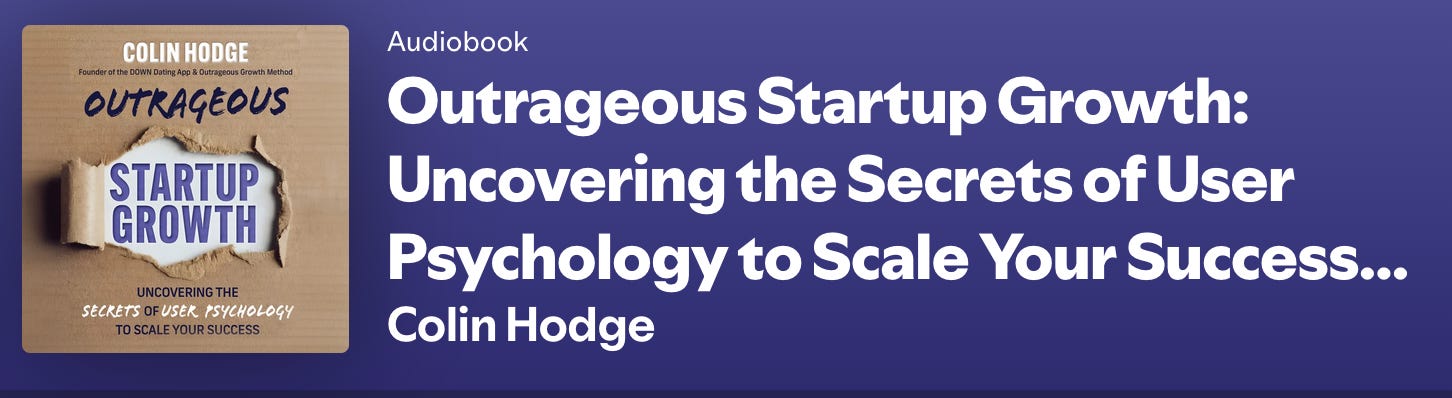
So if that sounds like you, take a listen to the preview and consider buying it on Audible, B&N, Spotify, or wherever you get your audiobooks! In fact, you can listen to the book for free if you have a Spotify or Audible subscription (or want to start a free trial).
You can’t beat that price.
🤨 What percent of people learn better by listening vs. reading?
I always considered myself a more visual learner. I certainly seem to pick up new languages better if I can picture the characters/letters in my head, rather than remembering the sound. When I set out to write this post though, I discovered that the oft-cited number of auditory (listening) learners is completely bunk! It traces back to SEO content-farm blogs, not real studies. That’s where the “30% of people are auditory learners” statistic comes from.
It gets weirder. The research I found actually shows no evidence for visual vs. auditory learning styles at all. [Source]
Where does that leave us? Their look at the overall research studies doesn’t mean that some of us don’t learn better with one method. It just found that so far, there isn’t proof of it. So, I’ll stop citing this made up statistic, but I’ll keep leaning into whichever method of learning seems to work for me.
Speaking of audio content, I was listening to a podcast lately that was a debate between two entrepreneurs: a billionaire and a much less-wealthy (presumed) millionaire. They were debating the biggest societal and economic problems we face, and more importantly, what we should do to fix it. Here’s the twist: the billionaire, Nick Hanauer, is one of the rare ultra-rich guys who not only sees the massive inequality problem, but is working to fix it via progressive efforts: higher minimum wage, closing tax loopholes for rich people & companies, etc.
I found myself agreeing with a lot of his takes and ideas for shaping a better world, with a new version of capitalism that is focused on our benefit as humans, not funneling even more money to those at the top, but I was also struck at my skepticism of him, solely because he’s a billionaire. It’s something I don’t think I would’ve felt in the early 2000s, or even 10 years ago. But now, to me at least, billionaires come with heavy baggage: I’ve seen too many of them working to pilfer an even greater share of wealth for themselves or engaging in cronyism to allow a clean slate in judgement. I think public opinion has shifted recently from admiration for entrepreneurial billionaires to sometimes outright hatred for them.
So it got me curious, what do you think? Can you ever trust a billionaire?
No posts
Comments
Nothing yet. Say the first thing.
Sign in to join the conversation.