
A year ago, I asked a friend to write the foreword to my book.
Their response was the one of countless “No”s and implied “No”s I heard.
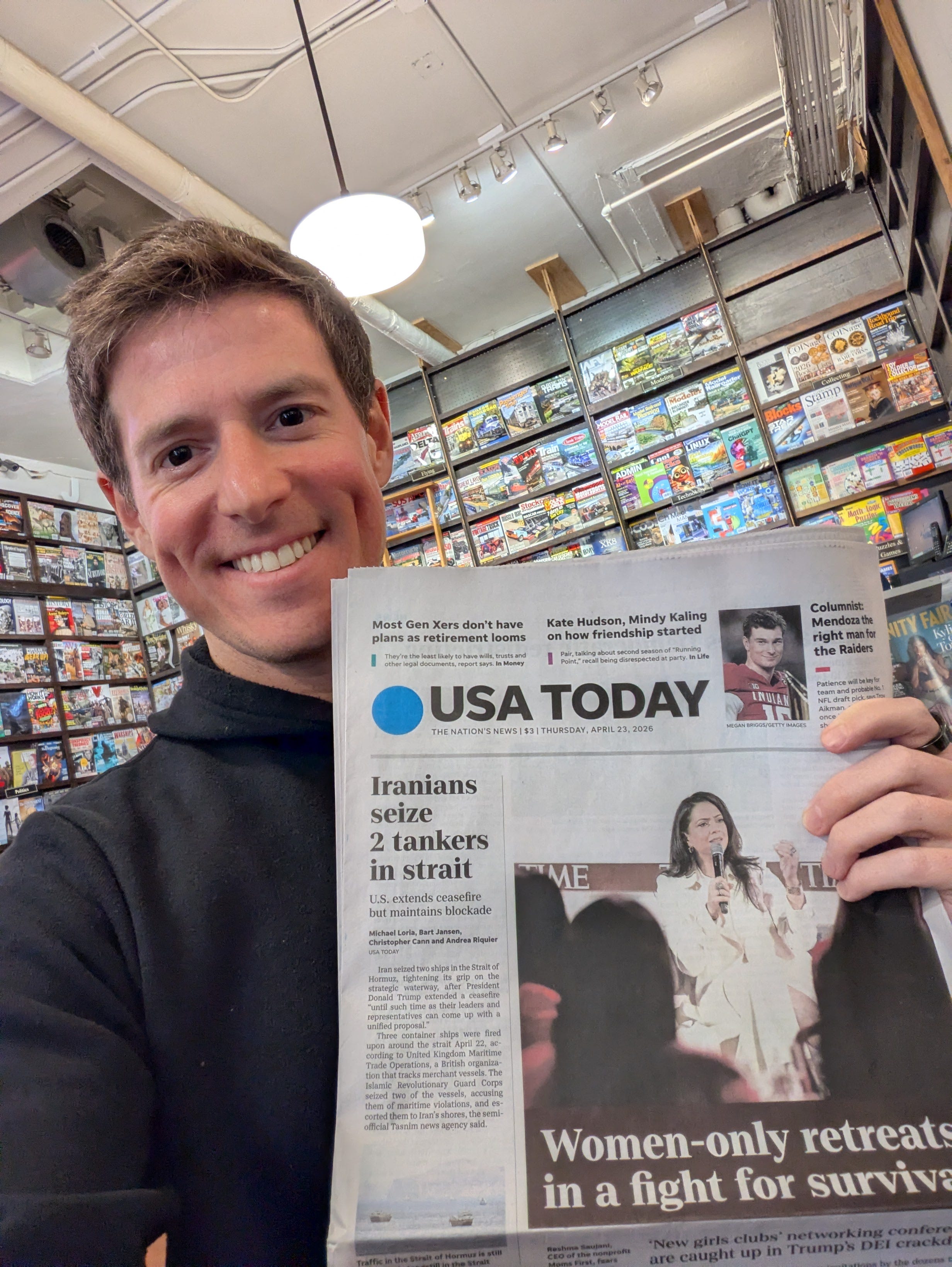
Last week, that same book debuted at #6 on USA Today’s national bestseller list. A top 10 business book in the country.
I want to tell you the surprising lessons learned along the way, because the things that got me here are the same things that work for almost any side project worth doing.
If you’ve ever had a thing on the side you wished was bigger (a newsletter, a product, a creative project, a small business), or if you’re currently running a company, these are for you.
(And yes, my book was my side-piece mistress, while my main squeeze, DOWN, occasionally got jealous).
First, my apologies to every friend and acquaintance I annoyed over the past two years.
But here’s what I learned:
Most people will say no, ignore you, or quietly forget. That doesn’t mean stop. That means keep going.
When my friend declined the foreword, I hustled for months and landed bestselling author Roger Dooley instead.
When I went after endorsements from Nir Eyal, Tim Draper, Shn Juay (CEO of Coffee Meets Bagel), and many others, some of those came only after the third or fourth awkward reminder.
⚡️ Psych insight: Discomfort is the toll you pay to grow.
Skip the toll, skip the growth.
That’s the trade-off.
Writing a book felt insane.
Securing a top publisher felt even more insane.
Hitting a bestseller list felt impossible.
So I didn’t think about any of those.
I thought about the each day’s 300 words. The next intro email. The next podcast invite.
Big goals don’t get accomplished all at once. Stacks of small wins get you there.
Motivation has valleys. You’re going to land in one. The only thing that keeps you moving is a micro-goal small enough that even on a bad day, you can do it.
⚡️ Psych insight: When you break large tasks into smaller, manageable ones, that’s called Chunking. Studies show it massively helps you (or your customers) make progress.
Simplify into micro-goals. Stack the win. Repeat.
We’ve tested dozens of content angles and offers to spread the word about my book, both in our DOWN app and right here in this newsletter.
The thing that’s worked best so far surprised me.
It wasn’t free swag.
It wasn’t free credits.
It wasn’t even the most “useful” content.
⚡️ Psych insight: It was quizzes that get you curious about yourself, with the psychology tucked in around the answers.
I wouldn’t have predicted that. The data did. (Try the one that’s been our top performer.)
Stop guessing what your audience wants. Ship something small, watch what people actually do, and follow the signal.
Here’s a truth most authors don’t want to say out loud:
Most people don’t read books. Many of you haven’t bought one in years.
Everyone is busy. Everyone is tired. Nobody is sitting around waiting to hear about your latest thing.
You can resent that, or you can work with it.
I chose to work with it. That’s why “side hustle” has become such a frequent lens for what I share. Most of you aren’t running a venture-backed startup. But plenty of you would love a little extra income on the side, without quitting your day job.
So I meet you there.
It’s also why I try to be concise. Your time matters more than my word count.
⚡️ Psych insight: Empathy isn’t soft. It’s the difference between content that gets read and content that gets ignored.
So that’s a peek into how a side project hit with plenty of “No”s became one of the top 10 business books in the country.
It wasn’t talent. I’m not the smartest person in the room.
It was: keep showing up, stack small wins, ship and listen, and meet people where they are.
If even one of those lessons helps you push a side project a little further this week, this email did its job.
If you want the full playbook (including the psychology behind the quiz that’s outperformed everything else), grab the book here. It’s a top 10 business book for a reason, and a few thousand of you likely helped put it there.
To psyched growth,
Colin
P.S. Next time I’ll share more on the Psychology of Dating, or I’ll delve into when it pays to be an early adopter (and when it doesn’t). Stay tuned.
No posts
Comments
Nothing yet. Say the first thing.
Sign in to join the conversation.