
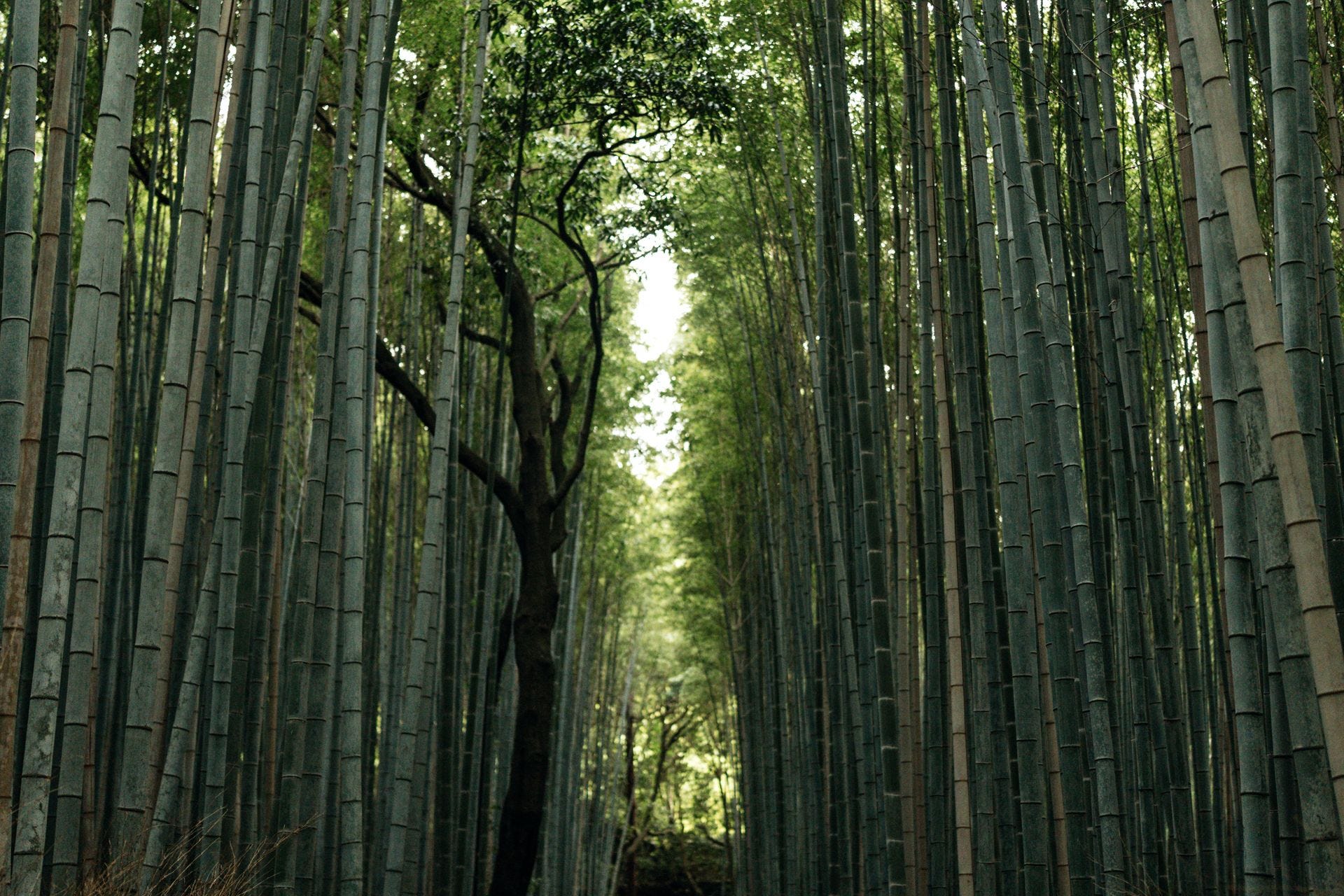
The heat in the Thai countryside was a physical thing, a heavy, damp blanket that pressed down on the soul as much as the skin. For Richard Ainsworth, it was the perfect incubator for his life’s work. He’d been a botanist of some repute in England, a specialist in graminaceae, but his obsession had become singular, all-consuming: the Dendrocalamus asper, the giant bamboo of Southeast Asia. He believed its secret, its freakish strength and rapid growth, lay in the mycorrhizal network of its roots. This subterranean fungal brain could, he theorised, be harnessed for revolutionary construction materials. Ten years ago, he’d uprooted his family from their damp, orderly home in Surrey and transplanted them to the edge of a village called Ban Na, in the province of Chiang Rai.
His wife, Eleanor, had never adapted. She remained a ghost of an Englishwoman, pale-skinned and perpetually sweating, her hair a lank, defeated brown. She spent her days in the wooden house Richard had built, staring out at the endless green wall of the bamboo grove that bordered their property, as if waiting for it to swallow them whole. The people of Ban Na were courteous but wary, their smiles never quite reaching their eyes when they looked at the foreigners. The humidity had rotted the soles of her shoes, the silence of the jungle had eroded her sanity, but it was not the climate or the isolation that truly unnerved her. It was the twins.
Freya and Bryony were twelve now. To Richard, they were the embodiment of perfection, his “little jungle blooms,” as he called them with a wet, paternal chuckle. They were eerily beautiful, with skin like alabaster and hair the colour of pale honey, an anomaly in the sun-drenched land. Their eyes, however, were the source of Eleanor’s quiet terror. They weren’t the clear blue of her own, nor the muddy hazel of Richard’s. They were a strange, polished grey, like river stones, and they held a depth of knowing that was profoundly wrong in a child. They rarely spoke, and when they did, it was in a syncopated, intertwined whisper, a private language of gibberish that only they seemed to understand. They moved with a grace that was too fluid, too silent, like shadows given form.
Richard was oblivious. He would spend hours with them in the bamboo grove, his notebooks and measuring tapes in hand, extolling the virtues of the plant’s architecture. “Look at the symmetry, Eleanor!” he’d beam, gesturing at his daughters who would be standing perfectly still, their grey eyes fixed on some point in the middle distance. “They have the spirit of the forest in them. Pure and uncorrupted. They are the children of this place.” He saw only a reflection of his own romantic idealism. Eleanor saw something else. She saw the village dogs cower and whine when the girls walked by. She saw the way the other children, who were initially curious, grew suddenly fearful, their mothers yanking them away as if from a viper. She saw the inexplicable, vibrant green that always seemed to bloom around the twins’ feet, even in the dry season.
Then the disappearances began.
The first was Mags, the nine-year-old daughter of the village headman. A cheerful, mischievous girl who had once, in a moment of childish bravery, offered Eleanor a sticky, sweet mango. Mags was last seen playing near the old well on the edge of the village, a place where the bamboo grew especially thick and dark. The search parties, composed of grim-faced men with machetes, beat the undergrowth for days. They found nothing but her small, woven sandal, half-swallowed by a mound of bamboo shoots that had erupted overnight.
The village was in a state of quiet, simmering panic. No one dared to voice the old superstitions, but Eleanor saw it in their averted glances toward the Ainsworth property. She saw the way the village shaman, an ancient man with rheumy eyes, would trace symbols in the air whenever Richard passed. A week later, another child vanished. Then another. All girls, all around the same age, and all last seen in proximity to the encroaching bamboo groves.
Richard, ever the pragmatist, dismissed it as the work of human traffickers. “A terrible business,” he had said, his forehead creased with a patronising sympathy as he spoke to the village headman. “The authorities in Chiang Rai are doing everything they can.” Eleanor saw the hatred flicker in the headman’s eyes. He didn’t believe Richard any more than she did.
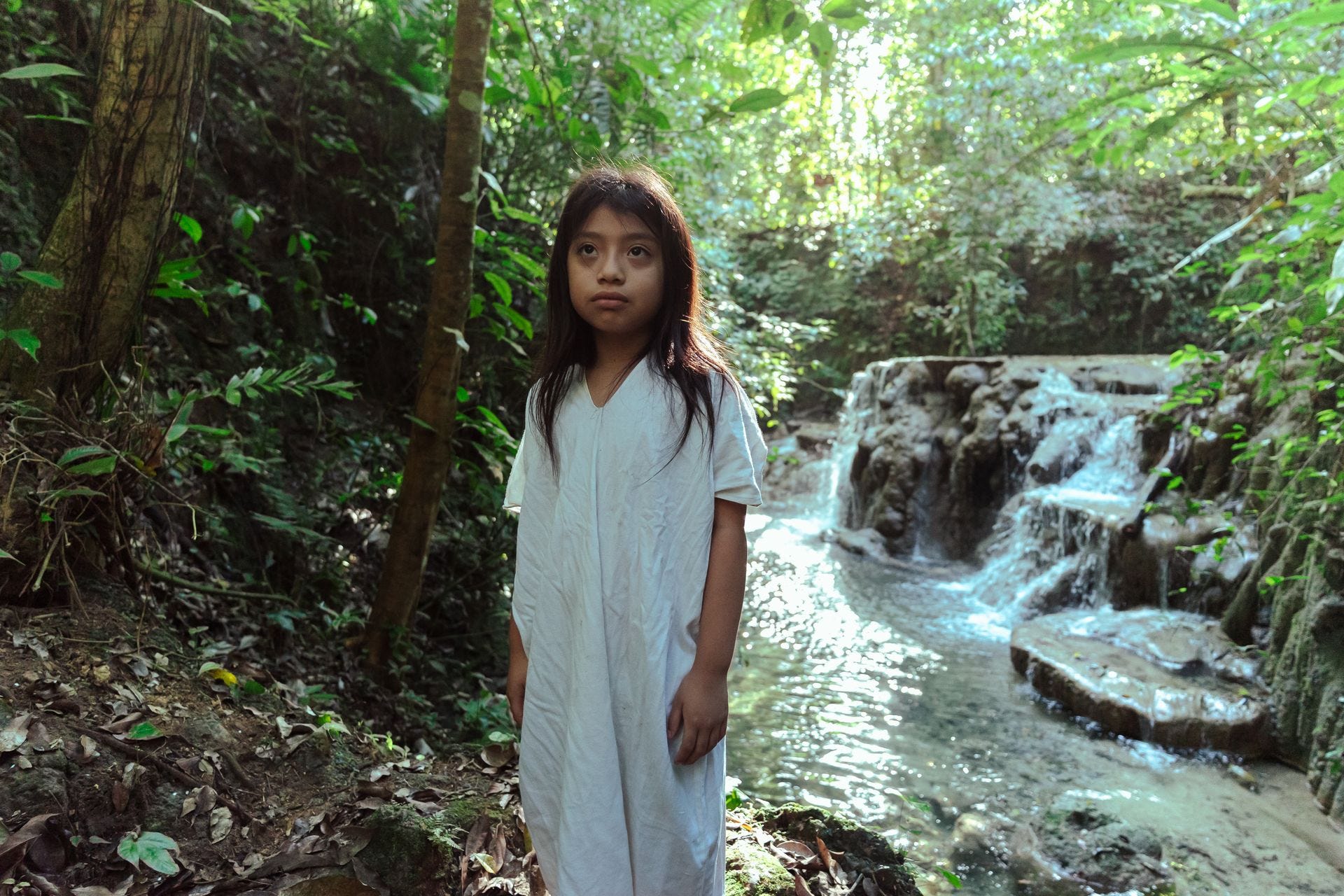
The girls continued to play in the grove, their laughter a tinkling, unnerving sound that echoed through the humid air. “They are innocent, Eleanor,” Richard insisted, his voice strained with a desperation he couldn’t conceal. “They are just children.”
But Eleanor knew better. She began to watch them with a cold, clinical eye she had never possessed before. She noticed how they were never hungry, despite their parents’ insistence that they ate. She noticed how they would sometimes stand on the forest floor, their bare feet sinking into the soil, and remain motionless for hours, as if listening to something only they could hear. She noticed how, when they returned from the grove, the soles of their feet would be perfectly clean, despite the mud and leaf litter. The most chilling detail was a faint, rhythmic pulsing she could sometimes perceive in their throats, a vibration that wasn’t a heartbeat, but felt more like the slow, patient suck of a giant root drawing up water from the earth.
One night, Eleanor was woken by the sound of soft, murmuring voices. It was Freya and Bryony. Their bedroom door was ajar, and a sliver of moonlight fell across the floor. Eleanor crept closer, her heart hammering against her ribs. They were kneeling on the floor, their hands pressed flat against the wooden planks. They were whispering in that strange, dual-toned language, their words punctuated by soft, wet clicks. And as she watched, she saw the boards beneath their hands begin to warp and buckle. Green shoots, tiny and pale, pushed their way through the grain of the wood, sprouting from the touch of their fingers. They were coaxing life from the dead timber. The children of the forest, Richard had called them. They weren’t just children of it; they were part of it. They were an extension of it.
Eleanor stumbled back to her room, her mind reeling. Her daughters were not human. They were monsters, avatars of the voracious grove. The village girls weren’t being taken. They were being fed. Fed to the bamboo, to the living, breathing, hungry forest that her husband worshipped. The girls were the hands, the roots, the silent, beautiful face of a predator. The family had moved here to understand the secret of the bamboo’s growth. The secret was a simple, horrific exchange of life. The grove was feeding on human flesh, and her daughters were the conduit, the pollinators for this monstrous growth.
She had to do something. She had to save what was left of her family, to stop her husband from continuing his oblivious, monstrous folly. A terrible plan formed in her mind, born of desperation and a mother’s primal instinct to sever the unnatural.
The next day, she waited for Richard to leave for the grove, his satchel of tools and notebooks slung over his shoulder. The twins were reading in the living room, their pale heads bent together. Eleanor went to the kitchen and found the kerosene she used for the lamps. She took two cans and, with a trembling hand, began to pour the oil around the base of the house. The stilts, the wooden walls, the veranda—she soaked them all. The pungent smell of the fuel filled the air, strong enough to make her eyes water. She moved to the twins’ bedroom, dousing their floor where she had seen the shoots grow. She had to cleanse it all: the house, her children, the whole terrible infestation.
Bryony was the first to notice. Her head snapped up from her book, her grey eyes fixing on her mother with an unnerving intensity. Freya followed suit, their heads turning in perfect, unnerving synchronicity.
“What are you doing, Mother?” the two voices asked in unison, the sound flat and empty of emotion.
“Ending it,” Eleanor sobbed, the tears streaming down her face. “Ending all of it. You’re not my children. You’re not real.”
She struck a match and dropped it onto the kerosene-soaked floorboards. The fire erupted with a deafening roar, a violent, hungry beast of orange and red. The twins didn’t scream. They didn’t cry. They stared at her with those abyssal grey eyes, their pale faces illuminated by the inferno.
“You are a part of us, Mother,” they said, their voices echoing, merging with the crackle of the flames. “We are a part of the grove. The grove is a part of you. You are the grove.”

And then the walls of the house buckled inward, not from the fire, but from a more primal force. From every crack, every splinter in the wood, thick, green bamboo shoots exploded. They were smooth and flawless, growing with impossible speed. They pushed through the furniture, shattered the windows, and rose like grasping arms from the floor. Eleanor screamed, a sound of pure, animal terror, as she felt them wrap around her legs, her torso, her arms. The green stalks were cool and unyielding, and they pulled her into their embrace, just as they had done to the village girls.
Through the billowing smoke and the blinding heat, she saw her husband, Richard, standing at the edge of the grove. His face was not one of horror, but of a feverish, sublime ecstasy. He was laughing, his eyes wide, his arms outstretched to the sky. “I see it!” he shouted, his voice high and hysterical. “It’s magnificent! The communication, the symbiosis! You are all one! A perfect, beautiful, single being!”
The bamboo from the ruins of the house reached out to him, and he welcomed it. He didn’t struggle as the thick shoots entwined him, as they lifted him off his feet and pulled him into the heart of the blazing structure.
Eleanor, now suspended in a cage of green, her body aching, her mind a whirlwind of pain and confusion, realised the horrible truth as the fire consumed the wood around her but failed to scorch even the bamboo that held her. The twins had said, “The grove is a part of you.” It wasn’t a lie. It wasn’t a threat. It was a fact.
As her body was pulled down, sinking into the earth itself, through the soil and into the vast, root-bound network below, she understood. The bamboo didn’t need to break the bones of its victims. It didn’t need to crush them. It simply invited them in, its roots surging through their flesh, their blood, their very cells, dissolving and absorbing them over a process of weeks. It was a slow, agonising digestion, and she could feel it beginning. She could feel the tiny, fibrous tendrils pushing into her veins, spreading through her, making her a part of the network. She could feel the minds of the other girls, the ones before her, their consciousnesses flickering in the darkness, a chorus of silent screams that were now forever part of the grove.
And she could feel her own daughters, their consciousnesses not as dispersed victims, but as the guiding intelligence, the will of the forest, pulsing through every root and stalk. In the suffocating, total darkness, she could hear their voices, the twin tones, whispering to her now from everywhere.
“Don’t worry, Mother,” they murmured, their voices soft and full of a terrible, possessive affection. “You are home now. You are part of the forest. You are part of the grove. You will be perfect now... forever.”
High above, the fire continued to rage, consuming the house that was no longer needed. The jungle was silent, save for the roar of the flames and the frantic flight of the birds. The village of Ban Na had lost another family, but the grove was now more vast and verdant than ever, a testament to its own terrifying, undeniable perfection.
The END
Did you enjoy that one? One of my anthologies of dark Thai stories is FREE - but only for a few days. Get it HERE

Comments
Nothing yet. Say the first thing.
Sign in to join the conversation.