

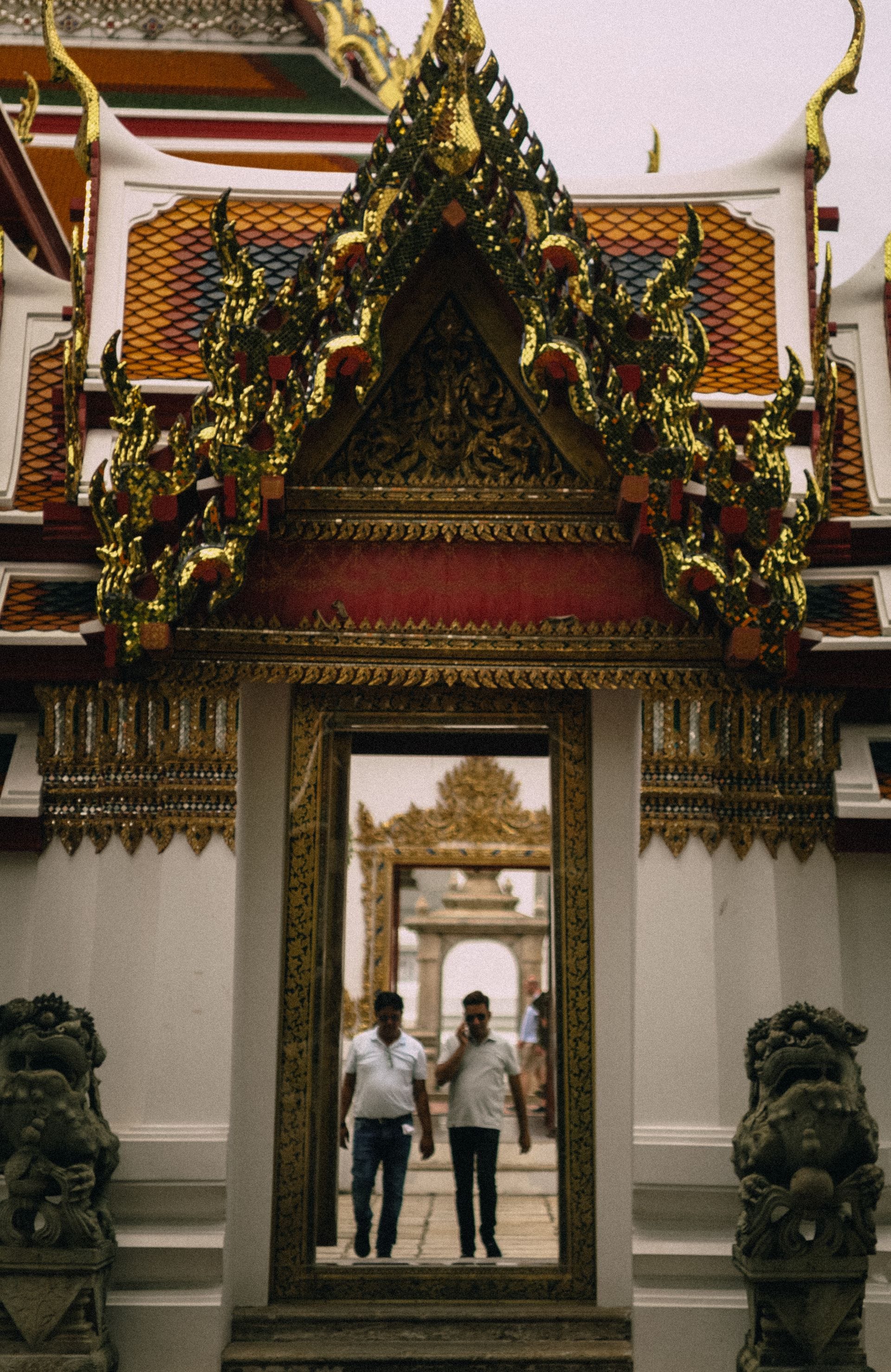
The heat in Bangkok was a physical presence, a damp, heavy blanket that clung to your skin and seeped into your bones. Jackie had been here long enough to be used to it. Three years. Three years of the ceaseless hum of tuk-tuks, the fragrant assault of street food, the polite, enigmatic smiles of the Thai people. He’d come for the chaos, the cheap living, the thrill of a place where the rules were different. Now, the chaos was inside him.
It started subtly. A flicker of movement in his peripheral vision that wasn’t there. The feeling that the garish, golden spires of the temples were leaning in to watch him. He’d wake in the middle of the night, his chest tight, convinced he’d heard a voice whisper his name in the humid darkness of his apartment. But it was just the whine of a mosquito, or the distant yowl of a soi dog.
His girlfriend, Pen, noticed nothing. To her, Jackie was the same farang she’d met two years ago. A bit more tired, maybe, a bit more withdrawn, but that was the heat, the city, the grind of living abroad. She’d rub his shoulders after a long day, her hands soft and cool, and murmur, “Jai yen yen,” which she’d explained meant “cool heart.” It was her mantra for him, a way to soothe the foreign anxiety she sensed but couldn’t name. Her own life was a whirlwind of family obligations, work at a small travel agency, and the relentless optimism that seemed baked into her culture. His darkness was a shadow she couldn’t see in the blinding Thai sun.
His mates at The Londoner, the expat pub on Sukhumvit, saw even less. Steve, a grizzled contractor from Liverpool, would clap him on the back. “Alright, Jackie boy? You look like you’ve seen a ghost.” And Jackie would force a smile, the gesture feeling alien on his face, and say, “Just tired, mate.” They’d drink their Leo beer, complain about the traffic, the pollution, the “bloody Thais and their bloody rules,” and never once look into Jackie’s eyes and see the panic swirling there.
They were too busy maintaining their own fragile realities, their own little islands of Britain in the steamy heart of Southeast Asia.
But the whispers grew louder, the flickering shapes more distinct. They weren’t shapeless things anymore. They were people. Specifically, important people. He’d see them on the news, their faces beaming from the television screen in the pub. The Prime Minister, a benign-looking man with an ever-present smile. The chief of the Metropolitan Police, a stern-faced general with a chest full of medals. A powerful business magnate who owned half the skyscrapers in the city. And every time he saw their faces, a voice—clear, cold, and utterly rational—would speak inside his head. They are the problem. They are the source of the noise, the heat, the confusion. Remove them, and the world will quieten.
The idea was absurd, horrifying. He was Jackie, a forty-two-year-old ex-IT consultant who’d burned out and come to Thailand to hide. He wasn’t a killer. He couldn’t even kill the cockroaches that skittered across his kitchen floor without a shudder. He tried to rationalise it, to push the thoughts away. It was the heat. The pollution. The isolation. He started drinking more, hoping to drown the voice in Leo and cheap Lao Khao whiskey. It only made the voice clearer, more persuasive.
One afternoon, a week after the voice first named the Prime Minister, he saw Pen looking at him with a strange, unsettled expression. She was carefully folding his laundry, her motions precise, but her eyes were on him. He was standing by the window, staring at the traffic snarl below, his fingers drumming a frantic rhythm on the sill. The honking was like a thousand needles in his brain.
“Jackie,” she said softly. “Are you okay? You have been… very quiet.”
He turned to her, and for a second, the world swam. He saw not Pen, but one of them. A person who wasn’t helping. A person who was part of the problem. The name was on his lips. He opened his mouth, ready to speak it, ready to tell her she was the next one to be…
He blinked, and the vision was gone. He saw her worry, her love, the slight furrow in her brow. A wave of nausea washed over him. The voice was lying. Pen was the only good thing in his life. He took a deep, shuddering breath.
“Sorry, babe. Just a headache. The bloody heat.”
She didn’t look convinced. She walked over and placed a hand on his forehead. Her skin was cool. “You have a fever?” she asked. “I make you some soup?”
“No,” he said, his voice harsher than he intended. He pulled away from her touch. “I need some air. I’m just going for a walk.”
He left the apartment, the door clicking shut behind him. The hallway was stifling, and the wallpaper seemed to writhe. He took the stairs, the metal steps groaning under his weight, and burst out onto the soi. The air hit him like a wall. The street was a churning river of motorbikes, street vendors, and tourists. He walked aimlessly, his mind a battlefield. The voice was now a constant companion, a low hum of justification. They are destroying the country. They are corrupt. They are the reason for the noise, the poverty, the endless, pointless striving. They are the cancer. You are the cure.
He found himself in a small park, a rare patch of green in the concrete jungle. He sat on a bench, his head in his hands. He watched a group of schoolchildren, their laughter pure and untainted. He watched an old man feeding pigeons. Life was going on, mundane and oblivious. And then he saw him. A tall, broad-shouldered man in a crisp white shirt and dark trousers, surrounded by a phalanx of aides, walking through the park. He was a man Jackie had seen a dozen times on the news. Khun Somchai, a prominent opposition leader and rising political star. Even more important than the Prime Minister to the voice.
The voice surged, roaring in his ears. There. Him. The people want him gone. They just don’t know it yet. You will be doing them a service. He is the lynchpin. Destroy him, and the chaos will begin to unravel.
Jackie didn’t think. He just moved. He stood up and walked towards the man. His movements felt fluid, purposeful. He wasn’t Jackie anymore. He was a vessel. He was an instrument of a divine, terrible logic. He saw a discarded piece of metal rebar lying by a construction site next to the park. He picked it up. It felt perfect in his hands. Not heavy, but heavy enough. The group of men hadn’t noticed him. They were laughing, the sound like glass shattering in Jackie’s ears.
He was ten feet away, the rebar raised, when a security guard, a small, wiry man with a thin moustache, intercepted him. He spoke in rapid, angry Thai, his eyes wide. Jackie didn’t understand. He saw only an obstacle. He swung the rebar. It connected with the guard’s shoulder with a sickening crunch. The man crumpled, a cry of pain escaping his lips.
The group froze. Khun Somchai turned. For a split second, Jackie saw the man’s eyes—not the confident, charismatic gaze from the television, but a look of pure, primal fear. It was a human look. It was the look of a man who was about to die.
But then the world exploded. Other security guards swarmed Jackie, their shouts a cacophony in his ears. He was wrestled to the ground, his face pressed into the rough, hot concrete of the path. The rebar was wrenched from his grip. He saw people screaming, running. He saw the bright, morning sky above him, and it was the most beautiful thing he had ever seen.
He was taken to a police station, his body bruised, his mind feeling strangely, unsettlingly calm. They questioned him for hours. His Thai was basic, but he understood the gist: Why? Who are you working for? He tried to explain. He told them about the voice. The noise. The important people. He told them he was trying to save the city. The policeman interrogating him, a tired-looking captain with a nameplate that read ‘Phong,’ just stared at him. He thought Jackie was mad, and in a way, he was right.
He was put in a cell. It was small, concrete, and stifling. He shared it with a Thai man who was clearly insane and muttered to himself, drawing nonsensical diagrams in the dust on the floor. Jackie thought they might understand each other now. They were both prisoners of the same noisy, chaotic world.
Pen came to the station. Her face was a ruin of tears and disbelief. She spoke to the Captain, her voice pleading. Jackie could hear her from the cell. She was begging them to let him go. “He is a good man,” she cried. “He is sick. Please, you must understand. He is not himself.”
Captain Phong finally came to his cell. He looked at Jackie, not with anger, but with something like pity. “Your girlfriend,” he said, his English slow and careful. “She says you are a good man. She has paid for a lawyer. A very good one.” He paused. “She says you are not yourself. I believe her. But you attacked a man. An important man.” He sighed. “You will be here for a while, Khun Jackie. This is not like back home. Things are… different here.”
The days blended into a suffocating haze. The cell was a crucible for the voice. The whole system was a monster. The only way to kill the monster was to kill the people who ran it. He was the only one who could see it. He was the chosen one. He was the one who had to act. The fact that he’d failed the first time was just a test. The next time, he would be more careful. He would be more patient. The voice whispered plans to him, intricate, beautiful plans. He was in a prison, but in his mind, he was the only one who was truly free.
His court appearances were a blur of incomprehensible Thai and the quiet, measured tones of his lawyer, a man who looked perpetually disappointed. He saw Pen in the gallery, her face a portrait of fading hope. She was becoming a ghost to him. A distraction. A liability. The voice reminded him that she was just another person who didn’t understand. Another person who was part of the system that needed dismantling.
One night, in the deep, stifling heat of the cell, he had a vision. It was as clear as the moon he could sometimes see through the high, barred window. He saw Khun Somchai again. This time, he was on a grand stage, addressing a vast crowd. He was more powerful than ever. Jackie understood what he had to do. The voice wasn’t a symptom of his madness. It was his destiny. It was the only clarity he had left.
He heard the guard’s key in the lock. It wasn’t meal time. He looked up, his eyes adjusting to the sudden light. It was Captain Phong. With him was a man in a plain grey suit, his face impassive.
“Khun Jackie,” Captain Phong said. “You have a visitor.”
He was led to a small, windowless room. A single fluorescent light buzzed overhead, casting a sickly pallor on the concrete walls. The man in the grey suit sat across the table from him. He did not introduce himself. He just sat there, his eyes flat and appraising. Captain Phong stood by the door, his hand resting on his holster.
“You attacked Khun Somchai,” the man in the grey suit finally said. His English was perfect, devoid of accent. “A very important man. You have no political affiliation. You are a foreigner, a drifter. This is a very… unusual situation.”
Jackie stared at him. The voice was screaming in his head. He is one of them. He is a gatekeeper. An enforcer. He must be removed too.
The man in the grey suit continued. “We have been trying to understand you. Your lawyer has tried to enter a plea of insanity. The court is not convinced. They see a man who tried to assassinate a political leader. They see a crime that could destabilise the country.” He leaned forward slightly. “Do you understand the severity of your situation?”
Jackie found his voice. It was dry and raspy. “Yes,” he said.
“No, I don’t think you do,” the man replied, his eyes hardening. “You tried to kill an important man. But here, you are nobody. Your girlfriend, she has spent all her money on lawyers. She is a good woman. She believes in you. She will sacrifice everything for you. But in the end, it will not matter. You will be convicted. And you will go to prison for a very long time. Or worse.”
He paused, letting the words sink in. Jackie felt a strange calm wash over him. The man was threatening him. It was proof. The whole system was rotten. He was right.
“But,” the man in the grey suit continued, his voice dropping to a near whisper, “a man like Khun Somchai has… enemies. People who would be very grateful if the situation were simply… resolved more quickly. Quietly. Some people would prefer you did not spend years in a Thai prison, creating a diplomatic incident, becoming a cause célèbre for human rights groups.”
It took a moment for Jackie to understand. They weren’t going to torture him. They were giving him an out. They were making the problem of him go away. They were going to kill him. The thought should have terrified him. Instead, it confirmed his entire, broken worldview. They were all monsters. The city was a machine for eating people. They were offering him a way to stop the noise. They were offering him a way out of the chaos.
He looked at the man in the grey suit, and for the first time in weeks, he smiled a genuine, peaceful smile. No one saw it or understood it. It was a smile of profound, world-ending relief.
“Yes,” Jackie said, his voice clear and steady. “Thank you.”
The man in the grey suit looked at Captain Phong. There was a flicker of something unreadable in his eyes. He stood up. “The charges against Khun Somchai’s security guard will be reduced and transferred to a provincial court. Khun Jackie has been deemed to be suffering from a severe mental illness and will be transferred to a government psychiatric facility outside of the city. For treatment.” He said the last word as if it tasted of ash. “He will be moved tonight.”
Jackie was led back to his cell. His cellmate was drawing a new diagram on the floor. This one looked like a city, with spiralling towers and crooked roads. Jackie sat down on his bunk, his mind utterly quiet for the first time in months. The voice was gone. He had finally understood. His destiny wasn’t to kill the important men. His destiny was to go to them. To the heart of the machine.
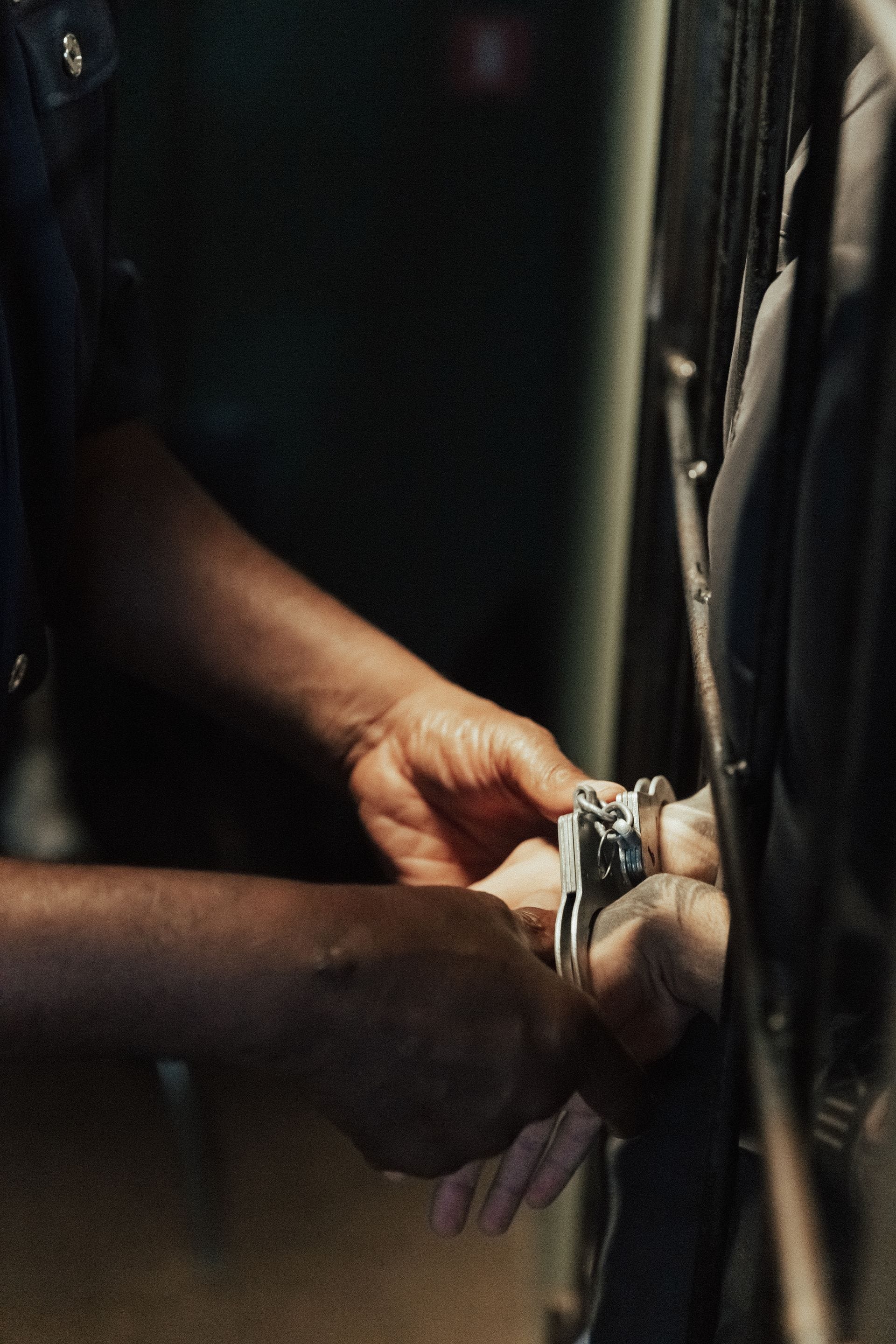
Later that night, two guards came for him. They didn’t speak. They cuffed his hands and led him through the silent station and out into the sticky, polluted night. A dark van was waiting. They put him in the back. The metal floor was cold. He lay there, feeling the van vibrate as it pulled away from the police station and into the sprawling, chaotic, sleeping city. He could hear the distant hum of the city, the pulse of the monster. He closed his eyes and listened. The noise was still there, but it no longer troubled him. It was just the sound of a world that was already dead. He was finally going to be where he belonged. He was going to meet them. He was going to see the important men up close, in the only place they truly existed: in the dark, silent, absolute heart of the abyss. And he would be at peace.
A week later, Pen finally returned to the small apartment they had shared. It was empty. The life she had known with Jackie was gone, vanished like the morning mist over the Chao Phraya River. There were no messages, no calls. Only a final, terse letter from the lawyer saying the charges had been dropped and that Jackie had been released into the custody of the state for treatment. It didn’t say where. She sat on the edge of the bed they had once shared, and she remembered his tired eyes, his quietness, the way he had pulled away from her touch. She had thought it was just the heat, the city, the farang blues. She had tried to give him a cool heart. She had failed. She didn’t understand. She would never understand.
And that was the real horror of it. She folded his forgotten laundry and placed it in a small box, her silent, uncomprehending tears falling onto the shirt that still smelled faintly of him.
The END

$2.99 from Amazon HERE
Comments
Nothing yet. Say the first thing.
Sign in to join the conversation.