

The air in the village of Ban Rai was thick enough to be chewed, a humid blanket woven from the scent of flowers, bike fumes, and the ever-present, earthy tang of the nearby river. It clung to the skin, a second, oppressive layer of heat that made even the simplest task feel like a trial. For Luang Por Toh, a young monk of only twenty-two, it was the heat that was his true penance. He bore it not with complaint, but with a serene acceptance that belied his years, a stillness he had cultivated since he was a boy, a poor farmer’s son plucked from the rice paddies by a wandering abbot who saw something in his eyes.
His namesake, the legendary Luang Por Toh of Wat Rakang, was famous for his kindness and his powerful amulets, said to be able to deflect bullets. The young Toh, however, saw no such protection in his own destiny. His world was the quiet monastery, the scent of incense and old wood, and the rhythmic chanting of morning and evening prayers. It was a world away from the roaring motorcycles that had, in recent years, become a plague upon the region.
The gang called themselves the Nak Leng, the ‘playboys,’ but their games were brutal, and their laughter was cruel. They were ghosts on the mountain roads, their modified bikes cutting through the night like shrieks of black metal and fire. They had no real leader, only a brutal hierarchy held together by fear. Their names were whispered with a mixture of terror and a strange, grudging respect by the villagers.
The first to die was Wirote, known as Pee Mod, the ‘Demon Ant.’ He was a small man, but wiry and venomous. He had a habit of using a pair of pliers to break the fingers of anyone who owed him money, and his smile was a permanent, unsettling rictus. The villagers found him at dawn, not on the road, but on the steps of the village’s small spirit house. He was posed, his helmet resting on his lap, his head—a thing of a shattered, ugly beauty—resting peacefully against the wooden post. There was no blood, not a single drop. His eyes were closed, and for a fleeting moment, he looked almost at peace. It was the wrongness of it, the utter stillness, that was so unnerving.
The headman, a nervous man named Sak, had come to the wat. He stood at the temple gate, twisting his hat in his hands, unable to even cross the threshold. “Luang Por,” he’d called out, his voice a tremor. “We need you. It’s... it’s Wirote. The one they call Demon Ant. He is dead. His soul may be… restless.”
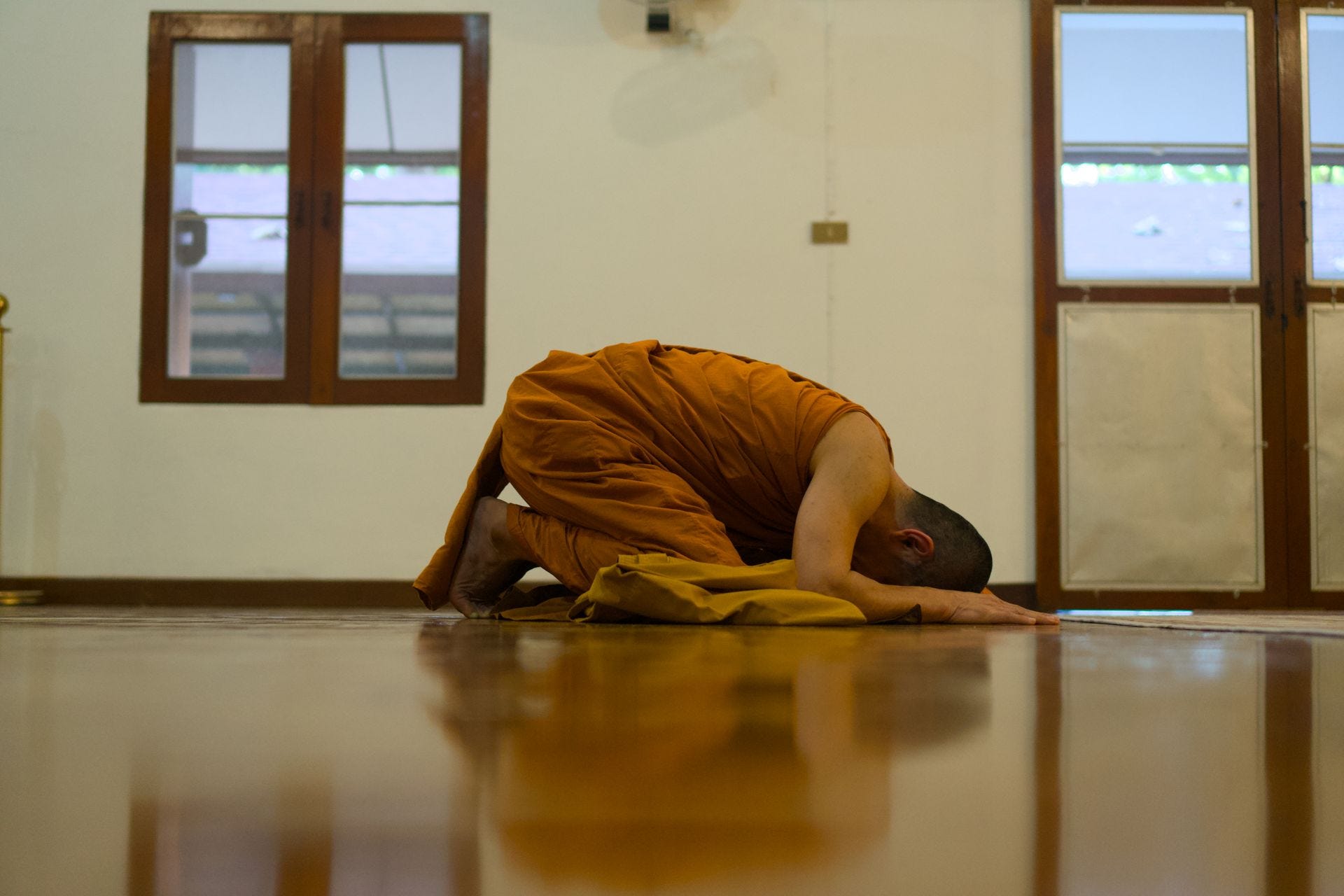
It was the duty of the monk to minister to the dead, to chant the sutras that would guide their spirit from the cycle of suffering, to offer a final grace. Toh had performed the rites before, for old farmers, for children who had succumbed to fever. But he had never seen a death like this. He went with his alms bowl, a saffron robe that seemed to glow in the early dawn, and chanted a prayer over the silent body. He didn’t need to cover the face; there was nothing to cover. It was serene. The only sign of violence was the silent, shattered skull beneath the skin. To Toh, it didn’t look like a crime; it looked like a judgment.
Two nights later, a second body was found. This time, it was beside the river, half-submerged in the murky water, as if the river itself had rejected the corpse. It was Sak’s own nephew, Prasert, known as Pee Khon, the ‘Ghost.’ He was a different creature from Wirote. Where the Demon Ant was quick and vicious, the Ghost was a sullen, brooding presence. He was the gang’s enforcer, a man who had sent countless others to the hospital with his bare hands. He was proud of the scars that crisscrossed his massive forearms and claimed he’d survived a stab wound to the heart because he simply didn’t have one. He was found with his face frozen in an expression of utter, existential terror, his arms and legs splayed as if trying to escape something that had him in its grip. His body was unmarked. Again, not a single drop of blood. It was as if his terror had snapped his heart, his lungs, his very soul.
Toh was called again. This time, he knelt in the muddy bank, the river gurgling a low, mournful tune. He chanted the same sutras, his voice a steady, comforting drone. He looked at the terror etched onto the man’s face, a face that had once looked upon pain and fear with casual indifference. What could terrify a man like that? He felt a flicker of something, a cold, detached curiosity that he immediately suppressed with a murmured prayer. He was a monk, a vessel for compassion. He had no room for curiosity.
The village was in a panic. The Nak Leng were furious. They had lost two of their strongest, and they suspected a rival gang, a feud, a betrayal. They rode through the village every night, their lights piercing the darkness, their engines a snarling promise of violence. They were hunting for revenge, but they didn’t know who to hunt for. The police from the distant town were baffled. The deaths were too clean. There was no forensic evidence, no witnesses. They spoke of a possible “heart attack” for Wirote, but the look on Pee Khon’s face told a different story.
Then, three nights later, came the third. He was their best rider, a man who could take the treacherous hairpin turns on Doi Luang at a speed that defied physics. His name was Sakda, but everyone called him Pee Fai, the ‘Fire Demon.’ He didn’t burn things; he was the thing that burned. He had a fiery temper and a streak of pure, unadulterated sadism. He loved the chase, the thrill of pushing a victim to their limit before the final, crushing moment. He was found on the road to the wat, his prized motorcycle, a chrome-and-black beast, lying on its side with its engine still ticking as it cooled. Pee Fai was sitting on a large, mossy rock beside the road, his posture perfect, his gaze fixed on the distant mountain range. His eyes were wide open, staring at something only he could see. And they were filled with a profound, unending sorrow. It was the first time Toh had seen the dead man’s soul, and it was drowning in a sea of regret.
The village abbot, a frail old man with cataracts clouding his eyes, was now confined to his kuti. He was too afraid to leave his room. The responsibility of comforting the living and the dying, the terrified and the dead, fell wholly on young Luang Por Toh. He walked through the village, his presence a quiet, balming calm. He would stop at the shrine, touch the amulet, and whisper a prayer. The villagers saw his serenity as a sign of strength. They didn’t see the conflict that raged within him.
Toh had been a monk for only three years, but he had lived with the ghosts of his past for far longer. In his former life, before the saffron robes, he had been a different person. He had been a boy in the same village, a scrawny, timid kid with a kind heart, who was the favourite target of the Nak Leng. He remembered Wirote, the Demon Ant, and the pliers. He remembered the sickening crack of his own fingers, the white-hot agony, the permanent twist in the bones that still ached when the rains came. He remembered Prasert, the Ghost, and the feeling of his own ribs splintering under the man’s heavy boot. He remembered Sakda, the Fire Demon, who had chased him on his bike, forcing him to run until his lungs burned, until he collapsed, laughing as he spat on his terrified, broken body.
The Nak Leng had taken everything from him—his family’s farm, his dignity, his boyhood. He had fled to the wat, seeking refuge in the dharma. The abbot, a man of infinite patience, had taught him that revenge was a poison that infected the soul. He had taught him the path of forgiveness. And for a time, the young Toh had believed it. He had found a semblance of peace in the sacred chanting, in the simple austerity of monastic life.
But it was a thin peace, a fragile surface over a lake of boiling anger. And then, they had come back. They hadn’t recognised him. To them, he was just another nameless monk. They had laughed at him as he walked past, calling him a “young, holy fool” and mocking his robes. The mocking had been the spark. The memories were the kindling. And the sight of them, alive and well and just as cruel as ever, had been the final match.
He hadn’t planned it, not in the way the village elders planned a harvest or a temple fair. There were no journals, no late-night plotting. It was a visceral, primal thing. A prayer that had curdled in his throat.
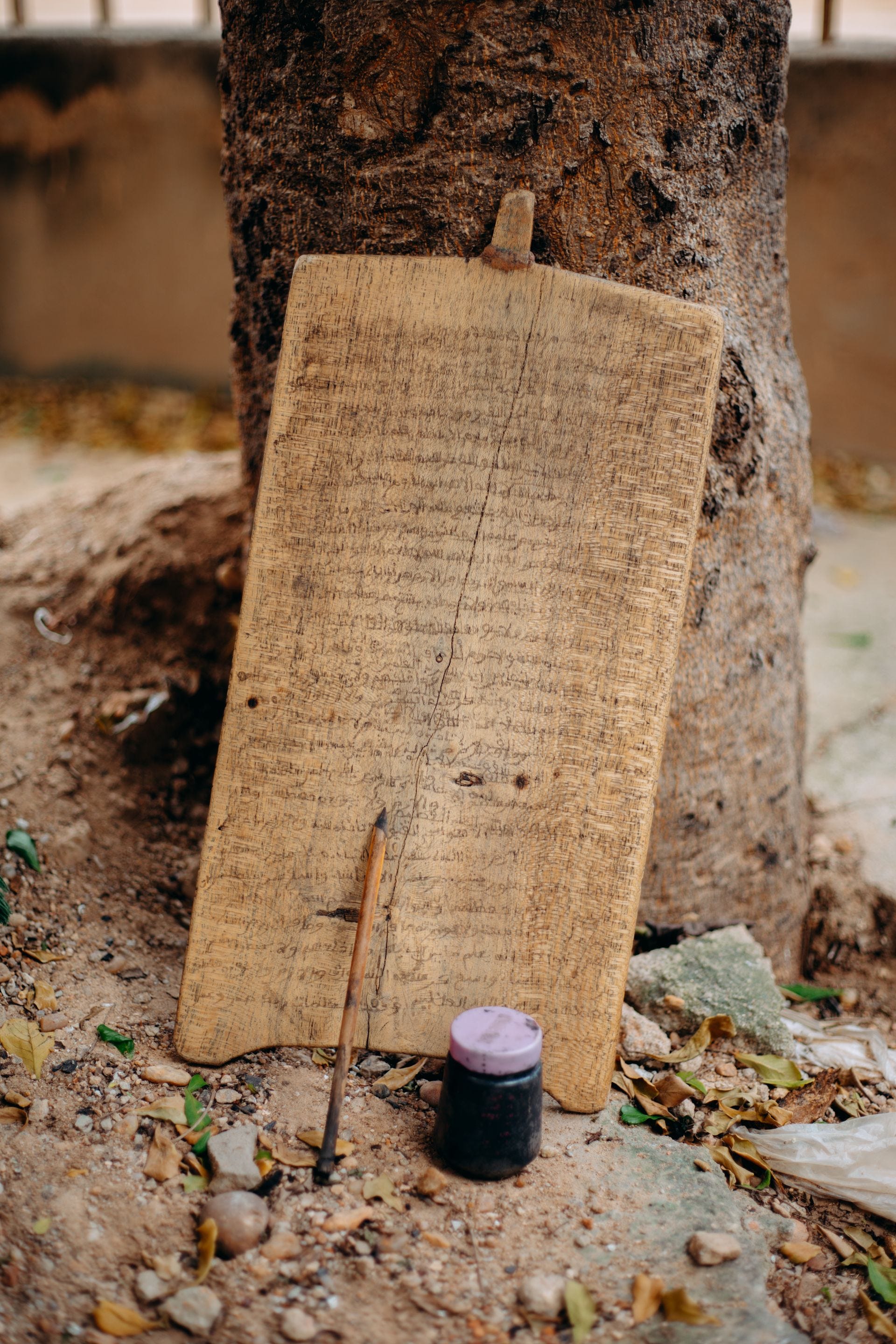
It had been a simple, ancient Pali chant he had learned from the old abbot—a mantra for meditation, for finding stillness. But Toh had found a different use for it. His teacher had told him that the mind was a powerful thing, that a focused will could move mountains. He had meant it as a metaphor. For Toh, it was a guide. He had found that if he repeated the chant, focusing all his pain, all his rage, all his self-righteous fury into the vibrations of his voice, he could project it. It was a weapon of the spirit, a psychic arrow that found its mark. It wasn’t a curse, not in the traditional sense. It was more like the forceful removal of an impurity. He was offering them a swift, merciful judgment, not a slow, torturous execution. He was cleansing the world of their darkness.
With Pee Mod, he had focused on his arrogance, his cruel, unearned pride. He had shown him the truth of his own pathetic, insect-like existence, and the man’s spirit had crumbled. With Pee Khon, he had focused on the emptiness of his violence. He had filled his mind with the screams of all his victims, and the ghostly terror had consumed the man. With Pee Fai, he had shown him the consequences of his actions, the sorrow he had inflicted, and the remorse that had drowned his fiery soul.
And now, only one remained—the leader. The man who was so cruel, so monstrous, he made the others seem like misguided children. He was known as Pee Yak, the ‘Demon.’ No one called him by his real name. He was the one who had given the orders for Toh’s torment. He was the one who had laughed the loudest. He was a mountain of a man, a walking fist with a shaved head and a face like a slab of granite. He was the heart and soul of the Nak Leng. In a dark, twisted way, he was their abbot.
It was the night of the new moon, a time of deep darkness. Toh knew where he would be. The Nak Leng had a final, defiant gathering at their favourite spot, a clearing in the jungle by an old, abandoned teak sawmill. Their grief had turned to a lust for revenge, but their vengeance was blind. They were lost. Toh knew he had to lead them home.
He left the wat, his saffron robes a ghostly flash in the darkness. He walked through the village, past the spirit house where Pee Mod had died, past the river where Pee Khon had been found. He climbed the mountain road, his bare feet silent on the asphalt. The air was cool and clean, the sky a blanket of stars so clear it felt like he could reach out and touch them.
He heard them before he saw them. The low rumble of powerful engines, the raucous laughter, the clinking of glass. He stepped into the clearing, his presence immediate and absolute. The laughter died. The music that had been blaring from a portable speaker stopped.
Pee Yak was sitting on a pile of lumber, a bottle of cheap whiskey in his hand. He squinted at the young monk, his face a mask of confusion and contempt. “Well, look who we have here. The holy man has come to bless our little party.”
A few of the other gang members laughed nervously. Toh ignored them. He walked forward, his gaze fixed on Pee Yak. His heart was pounding in his chest, a drumbeat of righteous fury.
“Pee Yak,” Toh said, his voice calm and clear. “I have come to guide you.”
The big man laughed, a loud, ugly sound. “Guide me? To where, little monk? To the temple? I don’t need your prayers. I need a drink. Join me.” He held out the bottle in a mock gesture of hospitality.
Toh stopped a few feet away from him. “I am here to show you the truth,” he said softly. “It is a mercy.”
Pee Yak’s face contorted with anger. He threw the bottle, shattering it against a tree trunk. “Shut your mouth! You think you’re special with your orange robes? I’ve killed better men than you for less!” He rose to his feet, a massive, terrifying silhouette. The other Nak Leng began to stir, their hands reaching for the knives and clubs they carried.
Toh ignored them. He closed his eyes and began the chant. He had done it three times before, but this was the fourth, the final act in a play only he understood. He thought of his broken fingers, his splintered ribs, his crushed spirit. He thought of the years of suffering, the fear that had been his constant companion. And most of all, he thought of the old abbot, the man who had taught him only peace, the man he was betraying with every word. The sorrow of that betrayal welled up inside him, mixing with his rage, creating a potent, volatile cocktail.
The chant flowed from his lips, a quiet, melodic whisper that cut through the night like a knife. The other gang members, their faces slack with confusion, began to back away. Pee Yak stopped, his mouth open. His eyes widened. His body began to tremble. The cruelty, the sadism, the sheer, unfiltered evil of his soul was laid bare for him to see. He was forced to look at his own reflection, not in a mirror, but in a lake of fire. He saw the innocent lives he had destroyed, the families he had shattered, the tears he had caused. He saw himself for what he truly was: a demon.
A guttural scream tore from his throat, a sound of pure agony. He clawed at the air, as if trying to fight off an invisible assailant. He fell to his knees, his great body convulsing. The chant continued, relentless, a divine hammer smashing his spirit. And then, with a final, shuddering gasp, Pee Yak collapsed to the ground. The laughter, the rage, the life had vanished from his monstrous frame, leaving behind only a shell.
The silence that followed was absolute. The other Nak Leng stood frozen, staring at their fallen leader. They looked at the young monk, their faces pale with a new kind of terror. And then they ran. They sprinted for their bikes, the roar of their engines a chaotic, terrified fugue as they fled into the darkness.
Toh stood alone in the clearing, the sweat cooling on his brow. He stared at the body of Pee Yak. He had shown him the truth, and it had killed him. It was a mercy.
He knew what he had done. He had not offered them grace; he had offered them his wrath disguised as compassion. He had broken every precept he had sworn to uphold. He was no longer a monk. He was just a boy, a killer, who was finally, utterly and completely alone.
Slowly, he knelt beside the lifeless body. He didn’t chant a prayer for Pee Yak’s soul. He didn’t deserve one. Instead, Toh reached into his own robe and pulled out a small, weathered amulet. It was the one the old abbot had given him, meant to protect him. It was warm to the touch, but it offered him no solace. He looked up at the night sky, the same sky that had watched over his torment and his vengeance. He felt no triumph. No peace. Only a vast, echoing emptiness that was far more frightening than any demon he had vanquished. He had become the very thing he had sought to destroy, a ghost haunting a world he no longer belonged to.
The stars above seemed cold and distant, indifferent to the shattered life of a village and the shattered soul of a monk who had been called to minister to the dead, only to discover he was the one who had sent them there.
The END
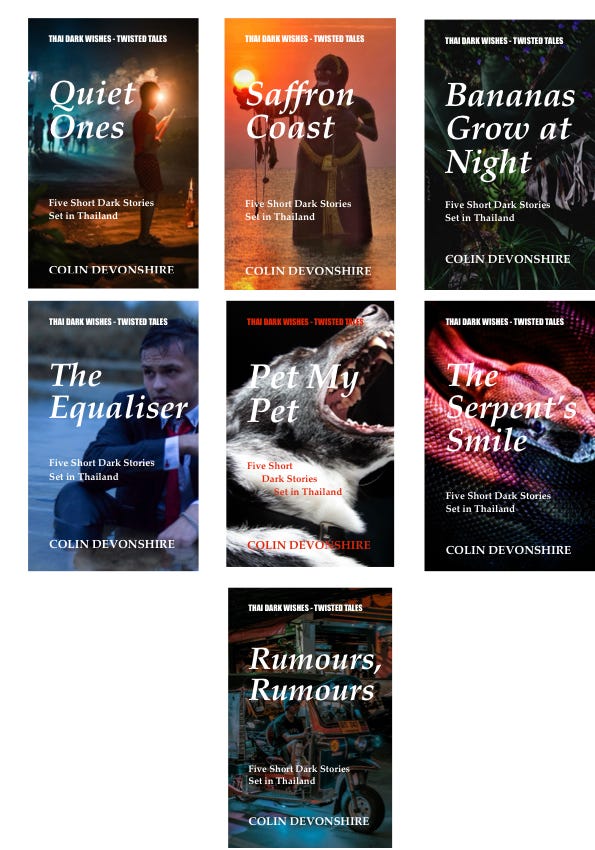
The seven Thai Wishes - Twisted Tales books are available at Amazon USA and Amazon UK.
The Quiet Ones - https://a.co/d/0565sWTG
Saffron Coast - https://a.co/d/06D4UUim
Bananas Grow at Night - https://a.co/d/01cXOTm0
The Equaliser - https://a.co/d/01i9QuXn
Pet My Pet - https://a.co/d/02PtPATW
The Serpent’s Smile - https://a.co/d/0bdkncRn
Rumours, Rumours - https://a.co/d/0aSZbdEg
Go on, treat yourself, ebook or paperbacks
Comments
Nothing yet. Say the first thing.
Sign in to join the conversation.