
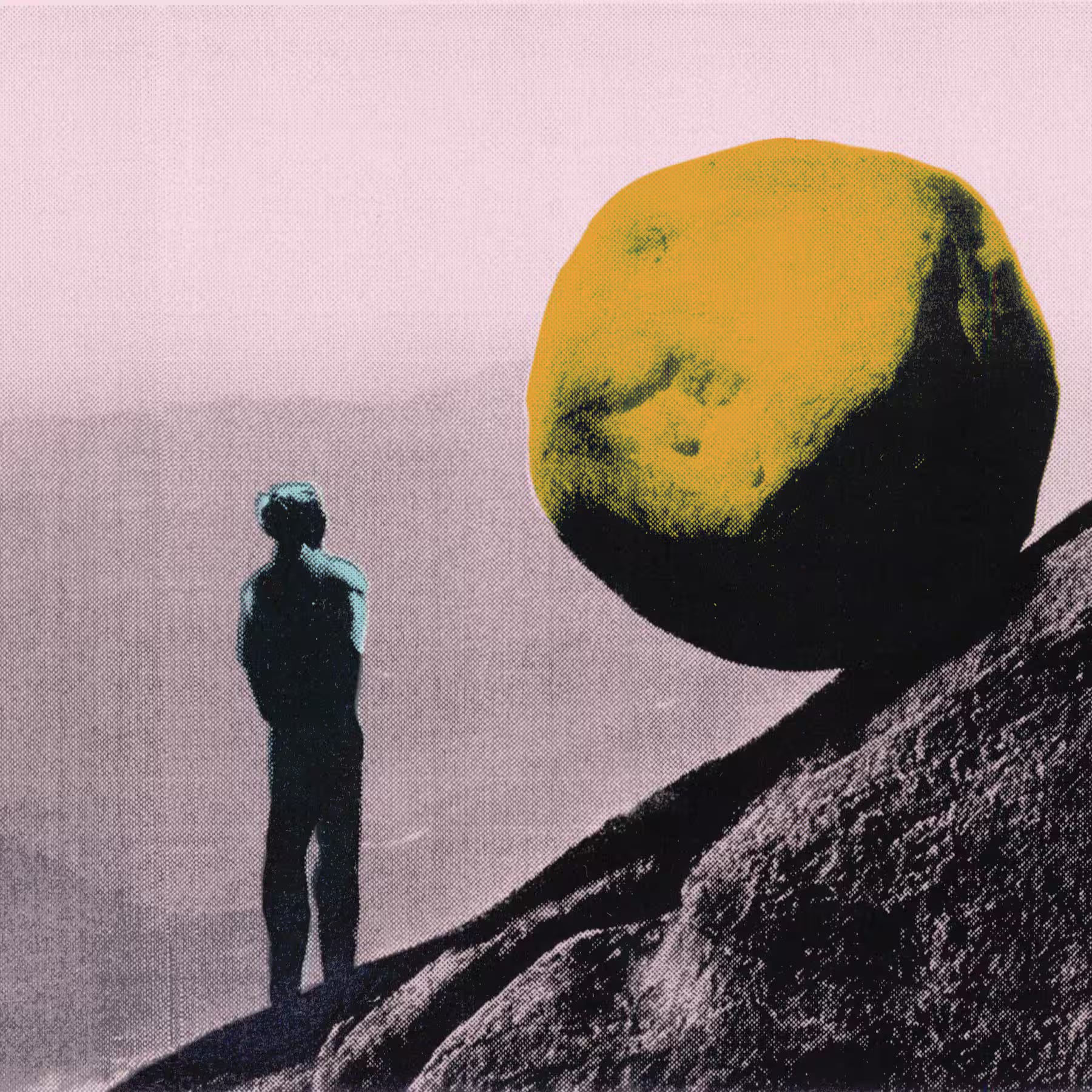
This year, I’ve been trying to make a more earnest effort to read…to mixed success. I’m finding it’s just another thing to add to my increasingly elaborate self-care diet, which often gets neglected at times of stress in favour of sleep, doomscrolling, and copious amounts of chocolate and Diet Coke, though, thankfully, less than I used to.
Perhaps because I had sweet cravings at the time, I picked up on a certain hunger in this phrase from Adam Phillips’ incredible essay collection, On Giving Up:
“We can’t give up on wanting a destination. Hesitation is integral to wanting, a moment of reconsidering giving up. We can’t give up, it seems, on having ego-ideals, on there being people we would like to be, places we would like to go; on there being always an as yet unattained self. There is something we want, or think we need (hope, destination, not turning back, satisfaction), but because we cannot give up wanting it we have to redescribe the process of wanting, how we go about wanting it, (if there is hope but not for us we have to hope differently; if there is a destination but no way there we need a new attitude to destinations). The hunger artist never gives up on wanting to fast even though it is going out of fashion as a popular entertainment; but in order to go on fasting he must never die of hunger; to be a hunger artist means never to complete one’s starvation, just as in sadomasochistic relationships the sadist must never kill the masochist because he needs to go on torturing him. It is better to travel hopefully than to arrive, but as it turns out you may have to travel hopelessly and never arrive. You will certainly never arrive at exactly what you had anticipated.”
Phillips’ vision is eloquent, stylish, and a sharply observed depiction of the Kafkaesque nightmare that can accompany the constant cycle of auditions, interviews, and artistic experiments. His whole book - a miniature paperback fit to burst with psychoanalytical insight - explores the notion of giving up, and the values and associations that cling to the phrase: resigning, quitting, yielding, delivering. He also includes some very sensitively explored language around harm, which I won’t attempt to paraphrase here, only to say that it’s delicately and thoughtfully handled, and well worth your time reading.
The book found its way to me last term. I was in London for an extra day of work on a project, with around four hours to spare in a café near Victoria. I’d just had a string of frustrating interviews and a less-productive-than-usual one-to-one session with a mentor. I picked up the book to help me understand the things I might need to give up and change. Some of this thinking also made its way into a post I shared last month.
Without retracing my steps in too much detail, I want to spend a moment exploring what I believe giving up means in a musician’s life and how it interacts with that recurring, troublesome presence: impostor syndrome. Besides offering a small cathartic moment, I hope this might help those of us navigating self-doubt find a way to articulate it more clearly.
To “give up” in music is complicated. It’s not just about quitting a project or turning down an audition. It’s about relinquishing a version of yourself that you thought might one day emerge: the one who nailed the solo, got the role, finished the piece, got the job. Sometimes, giving up means releasing yourself from a timeline you didn’t even realise you were following. It’s the quiet negotiation between perseverance and peace.
There’s often shame tangled up in the phrase “giving up.” We associate it with weakness, failure, or some kind of moral frailty. But Phillips turns that idea on its head. What if giving up isn’t an endpoint, but a moment of redefinition? What if it’s how we evolve?
Musicians are trained into a strange kind of hope. We practise, strive, prepare, risk. We carry the belief, often quietly, that if we just work hard enough, something meaningful will come of it. And sometimes it doesn’t. Or not in the way we imagined. Or not yet. Fate, or rather luck, or rather circumstance, often plays a part.
I’ve had time to reflect on this recently in my academic life. A few years ago, I was enrolled in a doctoral programme at the University of Edinburgh, researching Soviet-Estonian choral music, particularly the work of Veljo Tormis. This is music I find deeply compelling, and the subject felt alive to me. I’d received funding. Not masses, but enough to cover the course and living expenses while staying at my mum’s. I started teaching within the department, and then at the Centre for Open Learning. It looked like the start of an academic career.
Then things changed. A relationship collapsed. Family members became unwell. I struggled with my mental health. And I began finding solace not in research, but in conducting. I wrestled with this for some time. Even after one of the best masterclasses of my life prompted me to relocate to England, I kept telling myself I would need to finish the PhD to legitimise what I was doing or legitimise myself.
Of course, the pandemic put paid to a lot of what I was doing, and though I was very close to submitting my thesis, I ultimately left the programme at the tail end to commit more fully to my performing and teaching life here.
I carried a deep sense of impostor syndrome about that decision for a long time. It deferred the inevitable decision by at least a year or two. My breaking point came when the thought of returning to the thesis made me feel dread and anxiety. Since leaving, I’ve felt largely at peace with the decision, but I still catch myself wondering what might have happened if I’d stayed the course.
More recently, I had another shift in that direction. While I had continued teaching remotely for the Centre for Open Learning, the university’s recent budget problems meant that my role was made redundant. (I’m still in my notice period.) I believe it was the right decision, and I’m okay with it. But the mind wanders. The black dog occasionally appears, and with it come feelings of shame that my teaching, or academic prowess, or musical knowledge, somehow weren’t enough.
The hunger artist in Phillips’ example is a haunting image, sustained not by nourishment, but by the act of deprivation. I think of the countless hours musicians spend honing skills, often invisibly, with little immediate reward. There’s a masochistic streak to artistry that we rarely acknowledge: the self-doubt, the rejection, the silence after submitting something you’ve poured yourself into. And yet, like the hunger artist, we persist.
There’s something both brave and necessary in being able to stop, reassess, and choose a different path.
Or even just pause.
…
I’m beginning to think that giving up, when reframed, can be a form of wisdom. Not resignation, but recognition that the version of the story we’ve been telling ourselves no longer fits. And so we edit. We reframe.
I think of this particularly when I see colleagues who maintain lives as classical performers while supplementing their income in other ways: as teachers, arts administrators, civil servants, accountants, lawyers, supermarket workers. I think of brilliant peers from my undergraduate studies including many outstanding musicians of whom only a handful now work full-time in performance. One incredibly gifted soloist told me recently they were stacking shelves in Morrisons to supplement their performance and teaching income. I sensed in their voice a kind of resignation, as if their musical work were somehow less legitimate because it wasn’t financially sustaining on its own.
For the record, I don’t consider that giving up in the slightest.
And I certainly don’t want to suggest that my own path into performance has been smooth or inevitable.
Old payslips from a betting shop, a cancer charity, a videography studio, Starbucks, and a butcher’s all tell a more textured story of how I got where I am. Rather, I want to argue that we’re allowed to reposition and reimagine our musical paths. It is possible to feel fulfilled as a performer while letting go of the parts of the performance that don’t serve us. My musical path right now is nowhere near where I had imagined it years ago, now incorporating a plethora of other strands, including writing, teaching, classroom work, composition, occasional singing, and a lot of conducting. It took me time to configure this not as a failure but rather as another path less travelled, as Robert Frost might say.
And so we let go. Not of ambition, but of one fixed idea of what “arrival” or “making it” looks like.
This year has already been full of those little edits. Letting go of projects that no longer serve me. Quietly stepping away from roles where I can’t do my best work. Saying no to things that look good on paper but don’t feel right. It’s not always a glamorous process. Sometimes it feels like drifting, or failing, or letting people down. But I’m learning that making space - indeed, giving up - can be an act of respect for what might come next, even if I don’t yet know what that is.
If you’ve been feeling the weight of hope, or the lack of it, I hope this post meets you where you are. You don’t have to arrive. You don’t have to starve. You don’t have to keep dragging yourself towards someone else’s destination. Your path is, and always has been, yours to articulate.
You’re allowed to give up.
And you’re allowed to begin again.
In that spirit, Hey Siri, play Chumbawamba - Tubthumping. The song that goes “I get knocked down but I get up again. You ain’t ever gonna bring me down.”
Thanks for reading You Set the Tone! This post is public so feel free to share it.
No posts
Comments
Nothing yet. Say the first thing.
Sign in to join the conversation.