
I’m a big Rian Johnson fan. He directed the controversial Star Wars film The Last Jedi, which I loved. I wrote a 15,000 word essay defending it. Since that movie, he’s retreated to safer territories, working in the same style as The Last Jedi, but making fewer people mad because the movies aren’t as big as Star Wars. He’s currently on his third installment in his detective movie series Knives Out. Well, it poses as a detective movie series, but it’s a social satire series. The first movie, Knives Out, released fall 2019, was about Trump’s election. The second one, Glass Onion, released fall 2022, was about the pandemic and Elon Musk.
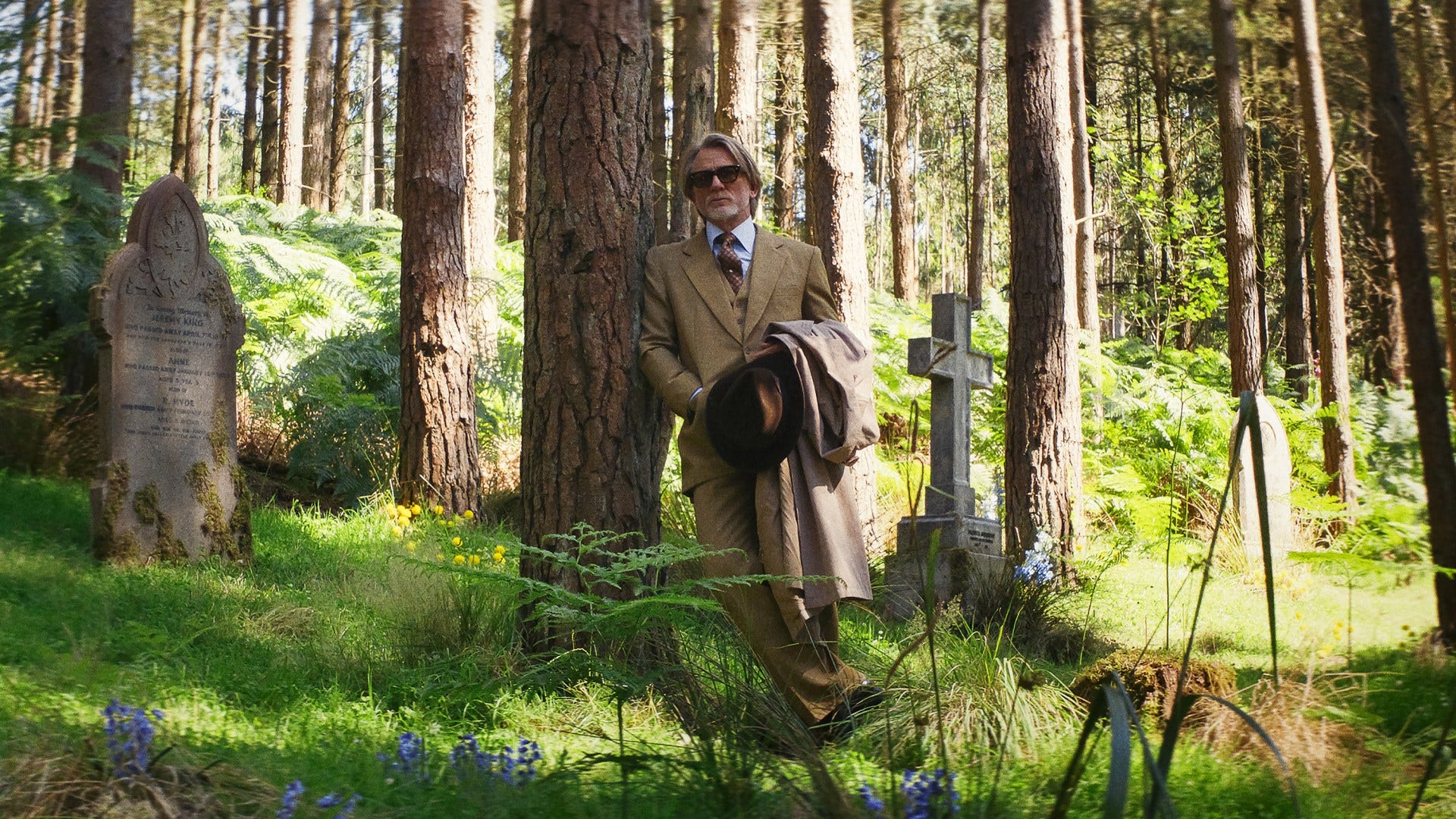
Now, Rian Johnson is back with Wake Up Dead Man. It’s a satire on religion, cults, and the post-truth media landscape, centered around a priest who leads a reactionary anti-modernity right-wing church. The priest is orbited by grifters, sycophants, and desperate people. Like the first movies in the series, the central figure is murdered, which leaves his orbiters clawing for what’s left, and the detective to figure out who did it. The murder mystery plot is a vehicle to tour the characters, who represent larger contemporary cultural archetypes. In this movie, there’s a washed up author turned Substack writer, an aspiring politician vlogger, an alcoholic divorced dad, and the central cult leader.
This is Rian Johnson’s most didactic movie in terms of being explicitly anti-right wing, but there’s hardly a culturally relevant left-wing to tease nowadays. He tries to be even-handed about religion; the detective is an atheist, but he’s aided by a catholic priest outside of the culture war who has an admirable sense of Christian vocation. That priest is the moral core of the movie; he serves as Rian Johnson’s signature purehearted character navigating the impure world. I won’t spoil the plot, but it involves resurrection, as the title implies. The resurrection makes perfect thematic sense, but not perfect literal plot sense, as Rian Johnson movies often do.
Wake Up Dead Man is a well-executed movie. The jokes are funny, feel fresh, and give depth to my understanding of the contemporary cultural landscape, which are the goals of a social satire. I like this movie, the same way I liked the prior two installments. I also like other strong contemporary social satires, like the White Lotus series and Eddington.
Social satire is important as the media landscape fractures. Art allows for sharp but empathetic dissections of the ways that media and politics change people. A thinkpiece can’t do gentle teasing as well as fictional characters on the screen can. A thinkpiece explains too much; fiction can show. Rian Johnson always remains gentle and optimistic, which is crucial. Even in this movie, which comes at a time where his worldview is very challenged, he still sees a path forward and presents it.
Social satire will rarely be lifechanging art, and by definition it has an expiration date. It describes the present; eventually the archetypes it teases won’t be as important. Still, not all art has to last. This art serves a purpose today. I recommend Wake Up Dead Man. It’s a nice thing to put on your TV for a few hours. I hope Rian Johnson keeps making movies in this series.
No posts
Comments
Nothing yet. Say the first thing.
Sign in to join the conversation.