
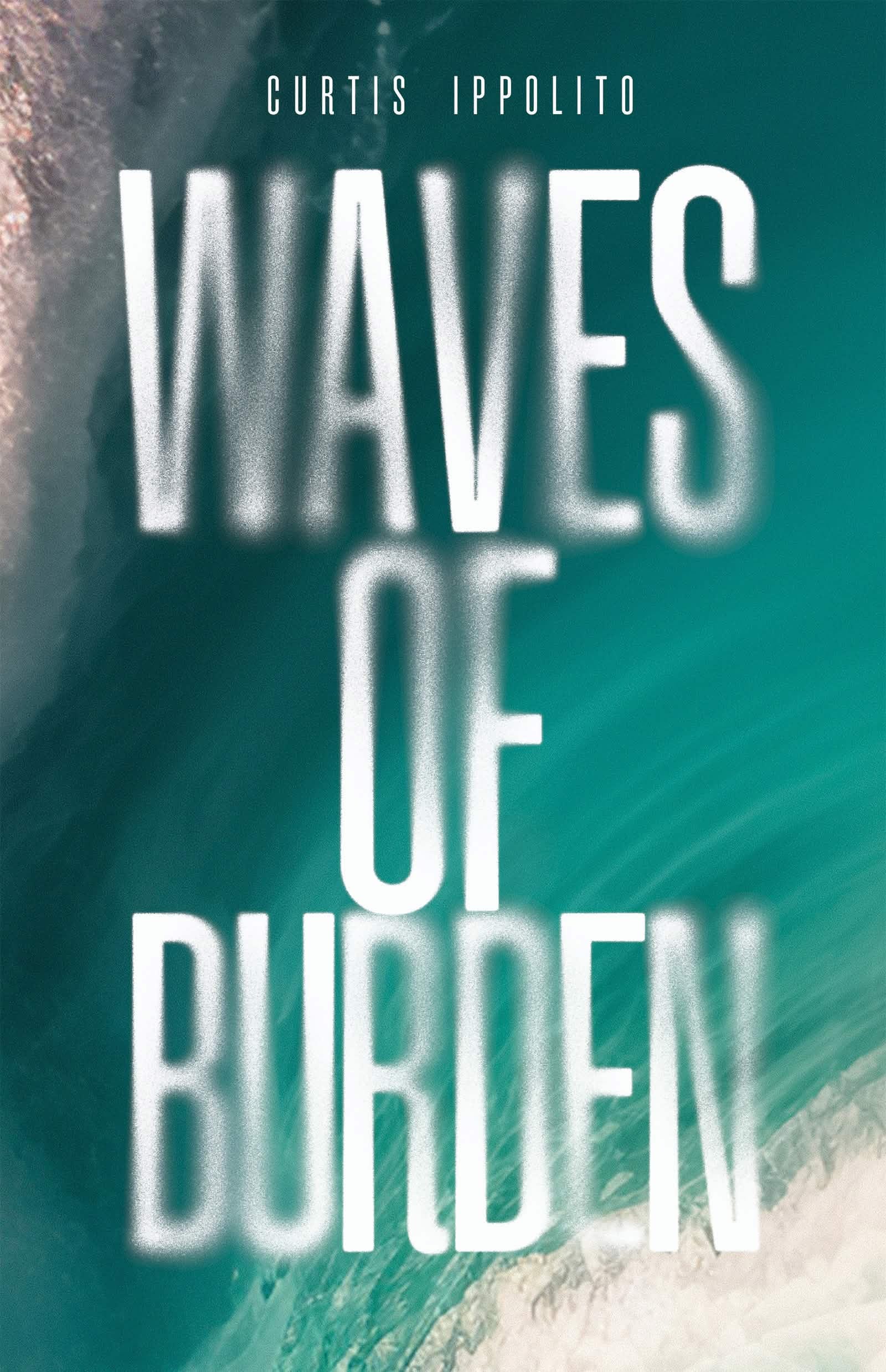
In Curtis Ippolito’s novel, Waves of Burden, a reluctant father-to-be must traverse San Diego County to recover his older, nomadic foster brother and the $100k he stole from a small-time but ruthless criminal in order to keep them both alive.
We caught up with Curtis to talk about his new book, found families, and how his time as a crime reporter translates to his fiction.
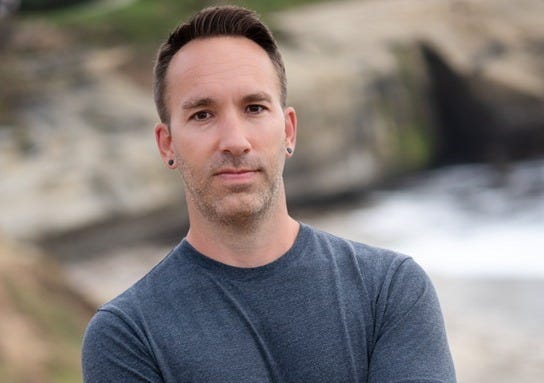
COLD CALLER MAGAZINE: Waves of Burden opens with Jake, Drew’s older brother, reuniting with Drew and his wife. Jake is charming, but it’s also clear very quickly that trouble seems to follow him wherever he goes. Tell me about the family dynamics there – who is Jake, and why does Drew seem to give him so much grace?
Jake is Drew’s older, foster care brother. The reason Drew gives Jake so much leeway is rooted in their shared history, and more specifically, what Jake represented to Drew during that time in his young life. Drew was a lifelong ward of the state. We don’t know how he became to be, but he bounced around in the foster care system his whole life until he landed with a couple in San Diego who were community heroes for their charity work. They also fostered generations of kids and Jake was living with them when Drew arrived.
The period of time Drew lived with this couple and Jake represents the most stable homelife he’d ever experienced. He finally felt safe, loved, and taken care of, and the bonds of brotherhood were formed between Drew and Jake in this new state of stability for Drew. Sibling relationships are dynamic, complicated, and strong. Drew looks up to Jake to this day. Their relationship has changed over the years, as most do, but that desire to keep his brother in his life is a major driving force in Drew forgiving Jake’s many, many indiscretions.
Sibling relationships have long provided fertile ground for crime and mystery fiction, but there’s something very fresh about the bond between Drew and Jake. Drew especially cares very deeply about his brother, and that love does a lot to redeem Jake in the reader’s eyes. What were you interested in exploring through that relationship?
Found family is an interesting phenomenon and one I myself have engaged in to an extent. While I have excellent siblings, I thought it would be interested to explore what it would mean for two young men who have no blood families of their own to form a bond as tight as blood and see how that would shape their actions. Especially for someone like Drew, who is starting a true family of his own.
Do you think Drew feels any guilt about starting that “true family” while Jake seems to be floundering? Or, alternatively, does Drew resent that Jake can’t seem to pull his shit together?
The short answer to both is I don’t think so. At the time we meet Drew he is very insecure about starting a family—it was an accident, not something planned. So he’s grappling with his feelings about becoming a father. But at the same time he does want to provide his wife and growing family with the stable life he didn’t have, and seeing Jake living his nomadic existence complicates or even compounds these feelings Drew’s having about his ability to be a father. If Jake can’t pull his life together, and he was who Drew looked up to and continues to look up to, what hope is there for Drew?
Gaby is also a great character, and she’s pulling Drew in a different direction, moving him forward to start his own family. This book invests a lot in showing the strength of their relationship, which also helps to deepen the stakes. How do you think Gaby changes over the course of the novel?
Gaby is a force. She is strong, assertive, and the moral compass of this story. But even so, I think there are things Gaby learns along the way—how Drew thinks, acts, and what insecurities shape him—so in the end, to me, she winds up an even stronger partner to Drew. There is also one thing in the book I won’t spoil that Drew pushes Gaby on that Gaby comes around on in the end, and it was my way to show that relationships are dynamic.
Were there any books or authors who particularly influenced this novel?
Oh, for sure. Dennis Lehane is on the top of my list. His character work is incredible and I think I’ll always be chasing that perfection when it comes to writing my characters. Don Winslow’s Dawn Patrol and Kem Nunn’s Tapping the Source are two books that helped me fully invest in writing gritty crime in an idyllic setting.
What about nonfiction? Are there any craft books you’ve found especially helpful when it comes to plotting and writing a novel?
Oh, sure. I’ve read a lot of the craft books that are often recommended. On Writing by Stephen King and Thrill Me by Benjamin Percy are a couple significant ones. Save the Cat! Writes a Novel is also clutch.
We should also talk about San Diego, which provides some incredibly varied settings chapter by chapter. As a San Diego resident, how did you go about working the city into this book? What makes it appealing as the backdrop for this story?
I’m an unabashed lover of San Diego. Try to make me stop talking about how great it is. I wasn’t born here and didn’t grow up here, but it’s definitely where I was meant to be. To answer your question, it wasn’t difficult to work the city into Waves of Burden, it was pretty much the point. I had the idea for the middle of the novel that Drew would have to run around the county looking for his brother, and I thought that was a great device to show off this amazing place. San Diego is incredibly diverse in the people who live here, and the neighborhoods, as well as the land and what there is to do here. We’re not just the ocean and beaches. San Diego is the most biodiverse county in the continental United States, and I wanted show a glimpse of that with where Drew takes the reader.
Tell me a little more about yourself. When did you first take a serious interest in writing? What attracts you to crime and mystery fiction in particular?
I went to college for journalism and was a newspaper reporter for a few years until 2008. While I was in college, I minored in English and took a lot of creative writing classes. As a reporter, I covered crime and police. After some different life events that eventually brought my wife and I to San Diego, I really wanted to get back to writing fiction but had only been trained in literary writing, which bored me, to be honest.
Then it clicked that I loved reading and watching crime stories and was a crime reporter, so why aren’t I writing crime? For me, crime and mystery fiction is the best way to examine the human condition and explore what drives people to do the things, good and bad, that they do to each other. Crime is also one of the best ways to reveal what those in power do to those without any power, something I love about journalism as well.
Which of your skills as a journalist have best served your work as a fiction writer? Were there any writing muscles you had to work particularly hard to develop as you focused more deeply on fiction?
One of the skills I developed as a journalist that has positively impacted my fiction writing is listening for great quotes. As a reporter, you’re always listening for that great quote, a knock-out punch, a zinger, to support the narrative and say something impactful. Same goes for dialogue in fiction writing. I believe I write pretty good dialogue because I have an ear for quotes. You want your dialogue to support the prose and say something different or in a different kind of way that you can only get by hearing it come from the character. Same with quotes. You’re listening for something the source can say that you as the reporter cannot or would not.
Did you have any teachers or mentors who encouraged you along the way?
I had great teachers, but never a true mentor. All of my mentors have come from finding my people in the crime writing community.
Where can people preorder your book? Do you have any upcoming readings or book launch events?
Right now, there is a preorder for the ebook on Amazon and Barnes & Noble, as well as a preorder for the ebook or paperback through Bookshop (support your independent bookstores and libraries, please!).
I do have some launch events I’m very excited about. I’ll be at Artifact Books, from 3 to 5 p.m. on June 20, in-conversation with Jim Ruland. And then on July 7, I’ll be at the San Diego Library Shop—the San Diego Library system’s official independent bookstore that supports library funding—in conversation with Matt Coyle. I’ll also be at Bouchercon in Calgary. More events will be added and I’ll keep them updated on my social media accounts and website.
Curtis Ippolito is an Anthony Award and Derringer Award-winning writer. He is the author of Waves of Burden and Burying the Newspaper Man. His short stories have appeared in numerous prominent publications, including Ellery Queen Mystery Magazine, Dark Yonder, Tough, Vautrin Magazine, and more, as well as being featured in several anthologies including The One Percent: Tales of the Super Wealthy and Depraved; and The Savage Waves of Spring. Curtis is the guest editor of On Fire and Under Water: A Climate Change Crime Fiction Anthology from Rock and a Hard Place Press. He is a member of Sisters in Crime, Mystery Writers of America, and serves as vice-president for the San Diego chapter of Sisters in Crime.
No posts
Comments
Nothing yet. Say the first thing.
Sign in to join the conversation.