
Hello,
Welcome! Hello if you’re new here. It’s Friday. Time for a coffee and, this week, a look back over a longer journey than the one I’m currently making. (I’m in the UK right now, in the middle of moving from Istanbul to South India, so it isn’t so much a question of living out of a suitcase as of remembering which suitcase!)
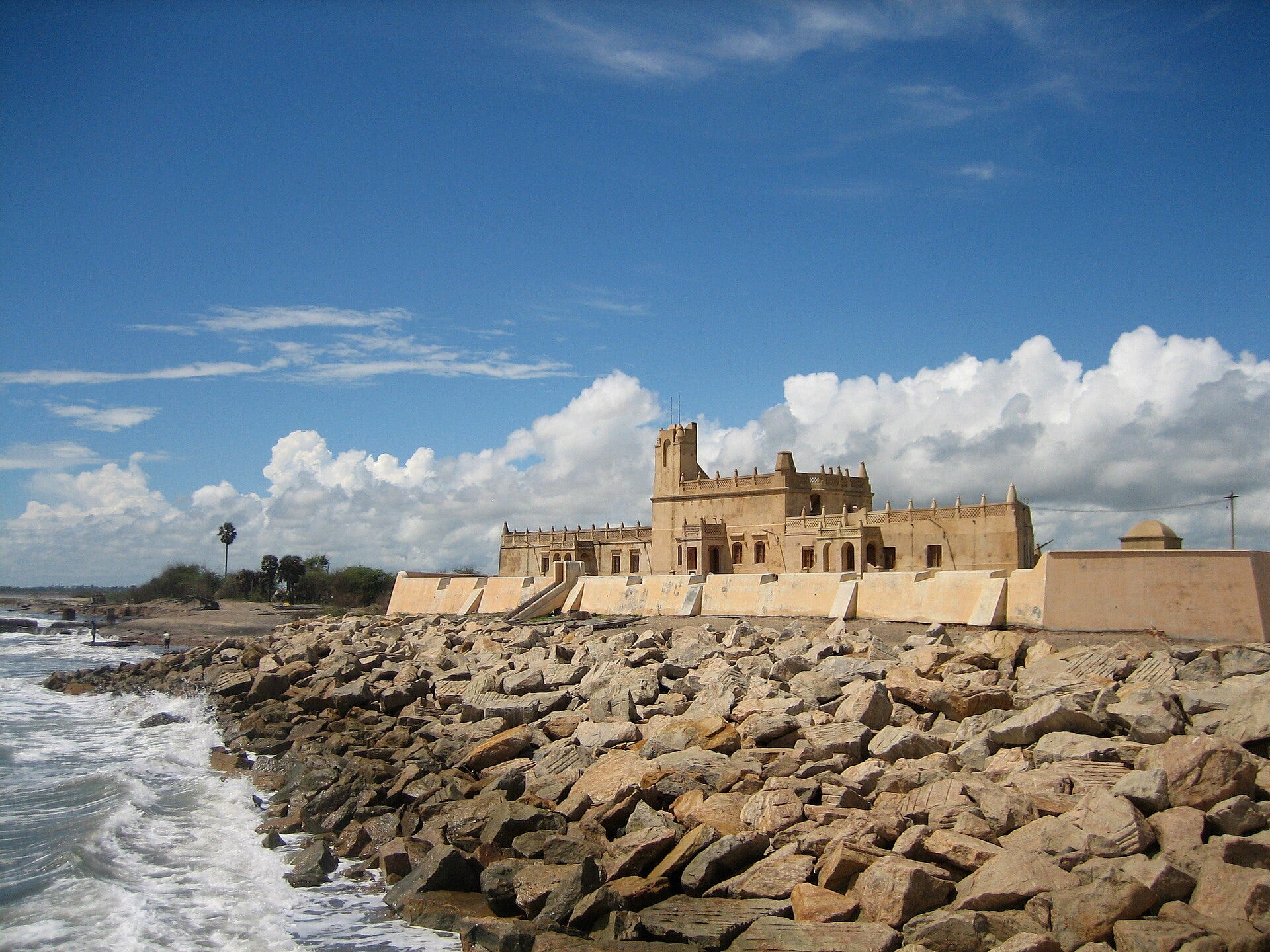
A spoiler before we begin: there seem to be a million and one articles, exhibitions and TV shows at the moment about how the Vikings went absolutely everywhere. They did not, as far as anybody is aware, go to India. So don’t expect any axe wielding Danes in Chennai. There is a Danish fort in South India that I hope to visit in the coming years: it is testament to one of the smaller European maritime empires of the last few centuries, but it has nothing much to do with Vikings. It was built centuries after the period that is often called the ‘Viking Age’.
Who were the Vikings?
I’ve written before about who the Vikings were and the debates around them: check out my earlier post here. In brief, though, Viking is usually used to talk about people (mostly men) from modern Scandinavia, who travelled widely, especially in the North Sea, Channel and Irish Sea. They were raiders and traders, soldiers and sailors. They navigated their way to North America by sea and by land and river to Constantinople (modern Istanbul). I guess it’s quite fitting then, that I’m writing this just after getting back from that fair, faraway city, and sitting in the Midlands of England, where the map is full of sites connected with Viking battles and encounters. In fact, only when writing this post did I realise, with a cry of ‘of course it is!’ that I think took my husband by surprise, that Danescourt Cemetery, where many of my family are buried, is probably called that because of… the Danes! I already knew that a major battle against Danish Viking forces in 910 happened in Tettenhall, where I went to school.
Between the 8th and 10th centuries, Vikings were some of the most feared warriors in Europe. They came up rivers into the heart of England, Ireland, France and the Low Countries. They took hostages, burned monasteries and often disappeared back into the mist and fog instead of joining battle with armies mustered by desperate kings. Sometimes they did stand and fight and won and that was worse. In the end, many rulers took to raising large quantities of silver to pay them to go away and bother somebody else for a bit. Just a month or so ago, a metal detectorist in England uncovered a hoard of 10th-century silver coins from the reign of Aethelred (often called ‘The Unready’), which were struck to pay off Vikings (even if they were also used for other things, like trade within Aethelred’s kingdom). In 845, the king of Francia (roughly, modern France) paid 2,570 kg of coined silver to Vikings who had laid siege to Paris. This policy of pay-not-to-play generated angry criticism (cowardly, unworthy, weak kingship, etc.) although it was almost certainly much cheaper than actually trying to fight. The policy also probably contributed to the development of some pretty sophisticated tax systems that, in later centuries, would enable kings of France and England to build castles, fight each other and do things like go on Crusade. But that is another story…
The Vikings were also purveyors of luxury goods, especially fancy belt buckles and pin brooches. Their excellent hygiene, artistic carvings and poetic sensibilities have embedded them in the archaeological and historical record. A medieval chronicle writer, John of Wallingford, lamented the behaviour of the Danes in England:
“They were wont, after the fashion of their country, to comb their hair every day, to bathe every Saturday, to change their garments often, and set off their persons by many frivolous devices. In this matter they laid siege to the virtue of the married woman, and persuaded the daughters even of the nobility to be their concubines.”
Cited here from an excellent post on the medievalist blog A Corner of Tenth-Century Europe, which explores why popular imagination struggles to imagine the Vikings as both very successful traders (and apparently dashing romantics) and hyper-violent raiders.
It is this contradiction that perhaps draws people back to the Vikings over and over again. That and their extensive travel: if you’re interested in the ways that the world of the deep past was more joined up than stereotypes about peasants never moving a mile from where they were born might suggest, the Vikings are a pretty excellent source of examples.
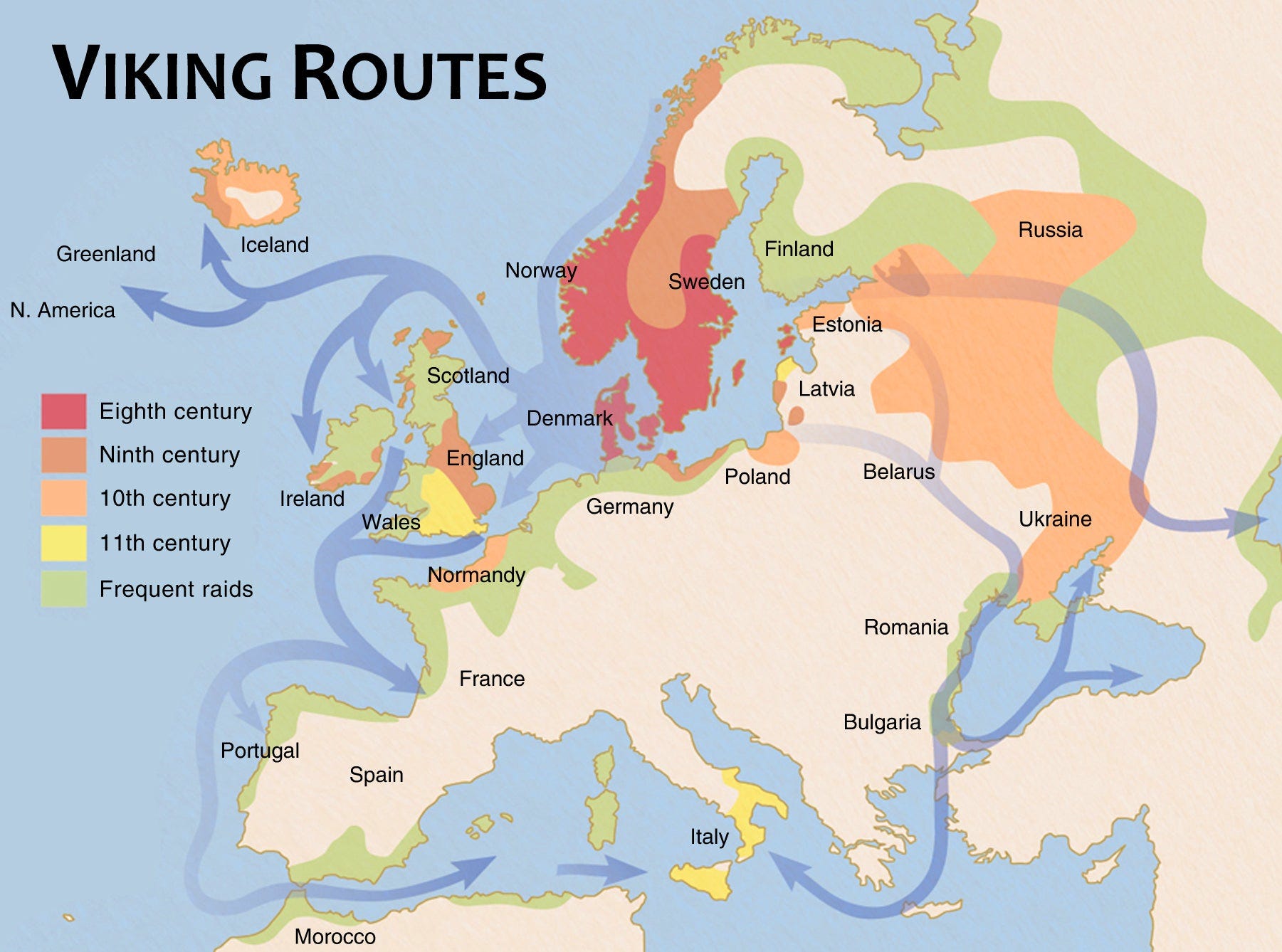
Vikings are also perhaps intriguing because they defy easy labelling. Not everybody in Scandinavia during the Viking Age was necessarily a Viking. As far as we can tell, the word seems to have had as much to do with what you did as where you were from. If you never went off raiding or trading, you probably didn’t count. But what about the descendants of Viking raiders who were born in territories they attacked? (Vikings eventually settled and even created kingdoms, so they became long-term residents, not just passing nightmares.) Those new generations might spend their whole lives where they were born without ever going anywhere to raid or trade but could still be seen by locals and may have identified themselves as 'Vikings’ or ‘Northmen’ (which usually seems to have meant the same thing). As a result, we can plausibly imagine two farmers living in the 9th century, one just outside Uppsala in modern Sweden and one just outside Lincoln in modern England, both of whom might have shared a similar language and some customs in common (like regular bathing and combing their hair!) neither of whom ever left their respective farmsteads. The one living in the land where Vikings come from might not have been regarded by anybody as being a Viking, while the one who had never seen the land where the Vikings came from might have been considered by almost everybody, including himself, to have been a Viking. Viking studies has, as a result, been at the forefront of a lot of really interesting debates about what it means to call somebody anything!
A very special subject
What, you might reasonably be wondering, does any of this have to do with my temporary sojourn in my native place (Wolverhampton, where Vikings were very present) en route from one place where Vikings occasionally were (Istanbul) to one place where they were not (South India)? There are a couple of answers. One is travel. Moving through the world always gets me thinking about other travellers who have gone before, about how we define home and distance, or ourselves or the people we meet, or what makes a port of call into an appealing stopover, a hair-raising tale or somewhere you never leave. Vikings were not the only people to move long distances in the deep past, but they are one of very few groups whose historical identity is about travelling.
The other and main reason is news that arrived right at the end of my time in Istanbul. Prof. Rosamond McKitterick died on 13th June 2026.
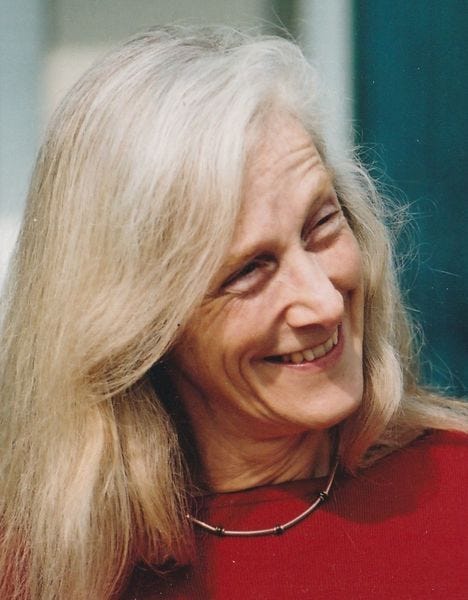
Many people this week have been sharing online, and will in coming weeks be sharing, memories of much closer working relationships with her than I shared the shock and the sadness. Long ago (in 2007), I was an earnest undergraduate, already fascinated by the period we usually call the Middle Ages, and specifically the Early Middle Ages (roughly 300-1000 CE). I took every course I could on that period and, in my final year, we had to choose something known as a ‘Special Subject’. It was a chance to dive deep into the primary sources related to something that the leader of the course researched and cared about deeply. Special Subject enrolment was a source of some stress: popular ones ‘sold out’ quickly. Groups were small for good discussion. There was one, and only one, I wanted. It was ‘Vikings’ with Rosamond McKitterick. I had attended her lectures and read her books for other courses and knew she was brilliant. It was also the only early medieval option available. By then, I loved coins, too, and knew that coins came up a lot in Viking studies, what with all of those coins they raided and traded and all those other coins kings had made to pay them to go raid and trade somewhere else.
When I found out I’d gotten a place on the course I was elated and it more than lived up to my hopes and expectations. At the start of the course we were each issued with a thick photocopied book of primary sources. Rosamond had translated a lot of them herself from their original Latin and French. The book also included pictures of objects, from carved stones to brooches. I’ve still got the book, dog-eared and scribbled on over the months that followed. Our group met twice a week and we unpicked almost every one of those sources. A monk writes about terrible things that Vikings did to a young monk at a nearby monastery, but it turns out on closer inspection that the attack could never have taken place when or where the account claims. How does this reveal the ways that Vikings became figures of horror in their world? Translators used the word ‘Viking’ in a modern edition, but the original text says ‘pagans’. What does this tell us about how the idea of ‘Vikings’ evolved in modern research? Coins from all across West Asia - from Baghdad and Samarra - are found in hoards across Central and Northern Europe, often together with silver ingots and pieces of jewellery. How do they reveal the movement of different ‘Viking’ groups and testify to the ways Viking society measured and stored value?
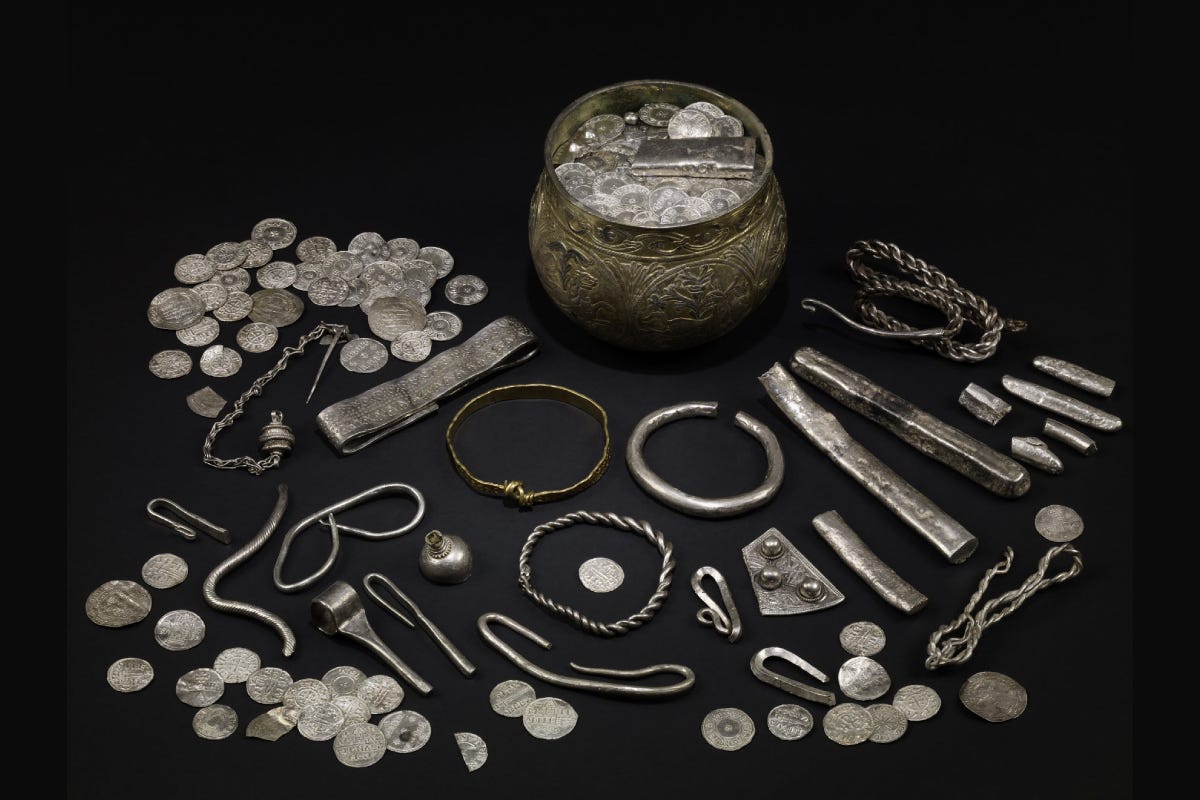
Viking studies is a fantastic, incredibly vibrant field. It benefits from a few things:
It is the study of quite a small geographical area (on a global scale) and a contained period of time;
The areas covered today belong to some of the wealthiest nations on Earth, with a keen interest in their local history. The result has been great excavations, conservation of artefacts, reconstruction projects, and numerous posts in universities, generating more and more research;
Viking studies brings together many different kinds of evidence (coins, texts, shipwrecks, building remains, jewellery…) and writing in many different languages (Latin, Greek, Old Slavonic, Irish, Welsh, Old French, Old English, Old Norse, Icelandic…) because of how the Vikings lived. Consequently, it has been (and remains) at the forefront of developing new methods for how to build a complete picture out of these diverse fragments of the past.
Over the years, I’ve applied some of those techniques and insights to the Byzantine Empire and the Western Indian Ocean. I’ve also taught Viking history to students (always popular!). I’ve lived with characters and stories and sources in my head who have enriched my idea of the deep past. I hear a lot of them in Rosamond’s voice, just as I can picture her asking us questions that are now second nature to me. When and where and why was a source written? How was an object made? Where was it found and what with?
In the years that followed, I would see Rosamond at conferences from time to time. Even though she had only taught me on that one course and even though I had gone on to study things far away from her own core interests (which included Vikings and the culture of the Carolingian Empire at the same time), she would always ask how I was getting on. Her work, especially on medieval literacy and gender, has continued to shape how I think about the past. Her enthusiasm, interest and passion for supporting the field, from organising events to encouraging early career scholars, still influences how I try to act in the classroom and in my professional networks. We understand the world of the Middle Ages so much better for Rosamond’s insights. The world of medieval studies is poorer today for her loss but richer for everything she gave to i. Personally I also remember her as one of several women I met when I was figuring out who I wanted to be who made ‘historian’ look possible, worthwhile and fun. For that and for the Vikings, and for a smile that I can call to mind in an instant just by closing my eyes and picturing that undergraduate seminar room, I will always be grateful.
Comments
Nothing yet. Say the first thing.
Sign in to join the conversation.