
Dual-use technologies, possessing both military and civilian applications, are no longer a niche concern but a strategic frontier. From the venture capitalists of Silicon Valley to the corridors of Whitehall and bunkers of the Ukrainian MoD, the race is on to harness their potential. But as startups pioneer groundbreaking solutions, they navigate a complex landscape of immense opportunity and significant risk.
The surge in dual-use technology is driven by a confluence of factors. Geopolitical instability, laid bare by the conflict in Ukraine, has prompted a widespread rearmament across Europe. NATO members are boosting defence budgets, and a new sense of urgency pervades strategic thinking. The European Union has committed €1.5 billion to defence-related R&D, while the UK has pledged £400 million for defence innovation. This injection of public funds is matched by a growing appetite from private investors, who see the vast potential of technologies that can serve both a corporal and a consumer.
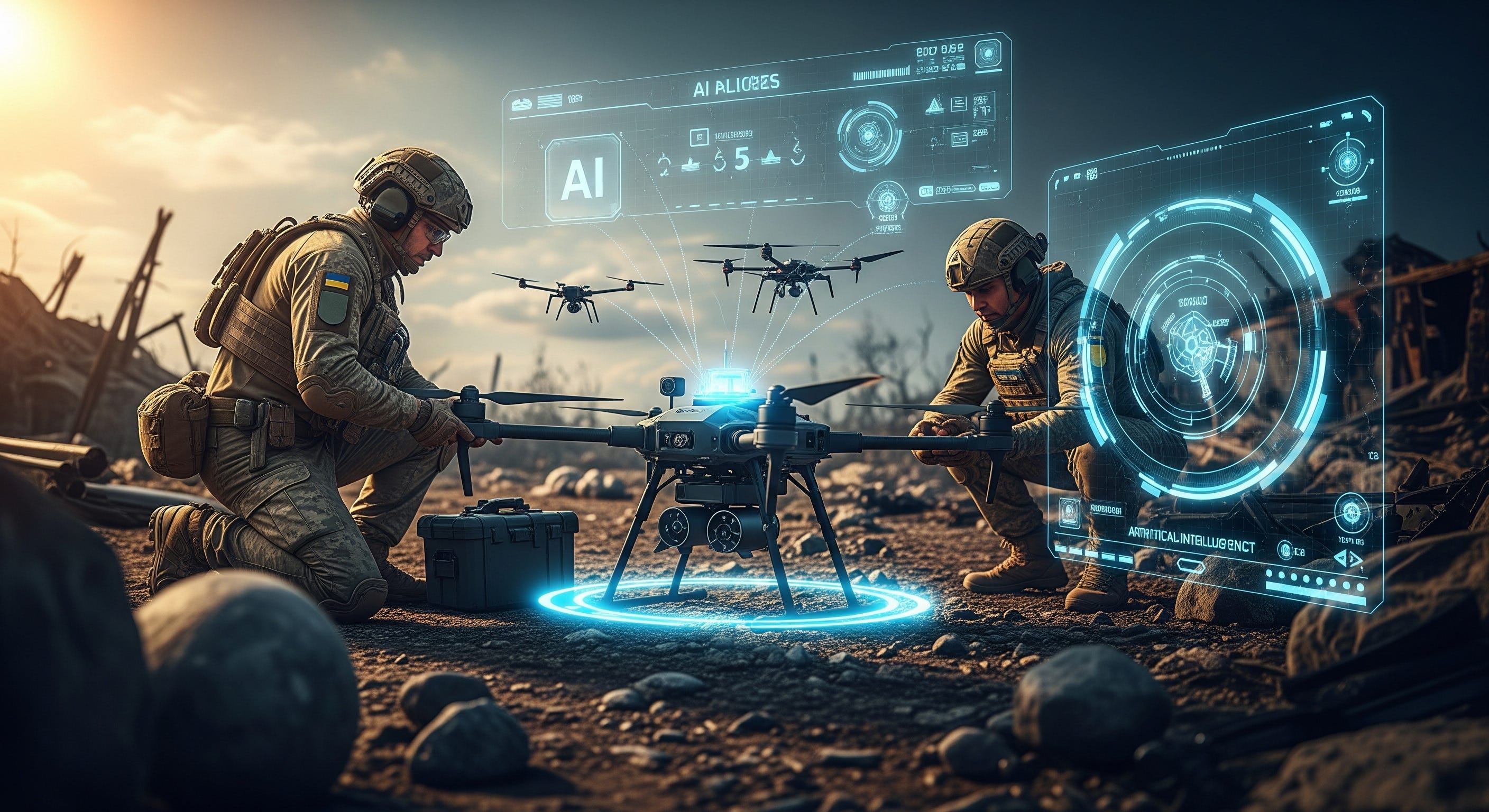
At the heart of this revolution are agile, ambitious startups. Unburdened by the legacy systems and protracted procurement cycles of traditional defence contractors, these companies are rapidly developing and deploying solutions that were once the exclusive domain of state actors. They are capitalising on the dual-use model to de-risk their business, proving a technology in the commercial sector before pursuing lucrative, long-term defence contracts—or vice-versa.
A prime example is the British-based firm Skyral, which uses advanced simulation technology to create vast, complex virtual worlds. Originally developed for the gaming industry, their platform now enables NATO-scale wargaming, allowing military planners to test strategies and simulate outcomes with unprecedented fidelity. Similarly, the German startup ARX Robotics, recently backed by the NATO Innovation Fund, is developing modular, AI-powered unmanned ground vehicles. These robots are designed for a range of military tasks, from logistics to reconnaissance, but have clear applications in disaster relief and industrial automation.
The logic is compelling. As noted in a 2025 report from the innovation advisory firm Mind the Bridge, "Revenue Diversification: Selling to both commercial and defence sectors spreads risk and stabilises income, even when one market slows down." This dual-market approach not only creates resilience but also accelerates innovation. A breakthrough in civilian AI today could be adapted for military intelligence tomorrow.
Palmer Luckey, the founder of the virtual reality company Oculus, now part of Meta as Reality Labs, exemplifies this trajectory. He is now the founder of Anduril, a defence technology firm focused on autonomous systems. Anduril’s success stems from its ability to deliver advanced capabilities, such as AI-powered surveillance systems, at a speed that traditional defence giants cannot match.
For decades, many venture capital firms were hesitant to invest in defence, wary of long development timelines, bureaucratic hurdles, and the ethical complexities of warfare. However, the dual-use model has rewritten the rules of engagement. VCs are now actively seeking opportunities in this space, attracted by the potential for scalable, resilient businesses.
According to data from Pitchbook, the defence technology sector saw 35 exits totalling $8.3 billion as of June 2024, a significant increase from the previous year. "VCs have numerous opportunities to capitalise on dual-use technology investments across diverse sectors like healthcare, agritech and the automotive industry," noted a Lisya Bahar Manoah, a Forbes Business Council member. The key is that most VCs will not invest directly in weapons systems. Instead, they back startups whose technology can be repurposed for civilian use, mitigating risk and expanding the potential market.
This shift is creating a new ecosystem of investment. In May 2025, the European Investment Fund (EIF) invested €40 million in Keen Venture Partners' European Defence and Security Tech Fund. Alexander Ribbink of Keen Venture Partners stated, “The mission to make Europe stronger and safer by empowering defence tech entrepreneurs receives a major boost with this EIF investment in our fund.” This highlights a growing consensus: venture capital is crucial for building a modern, agile defence industrial base.
However, challenges remain.
Kadi Silde of the defence AI company Helsing points out that many armed forces are "unaccustomed to working with" early-stage startups, and concerns about the "survivability" of these smaller companies can slow adoption. This creates a "Valley of Death" where promising technologies fail to transition from successful pilots to full-scale deployment.
The applications of dual-use technology are vast and transformative.
Artificial Intelligence and Spatial Computing: AI is perhaps the most significant dual-use technology. Helsing, which raised $223 million in 2023, is a leader in developing AI for intelligence, surveillance, and reconnaissance (ISR). Their software can integrate data from multiple sources—drones, satellites, ground sensors—to create a real-time, comprehensive picture of the battlefield. This same technology can be applied to civilian challenges like monitoring critical infrastructure or responding to natural disasters.
Advanced Materials and Manufacturing: The Welsh company Space Forge, backed by the NATO Innovation Fund, is pioneering in-space manufacturing. By leveraging the unique conditions of microgravity, they can produce advanced semiconductors and alloys that are impossible to create on Earth. These materials have the potential to revolutionise both military and commercial aerospace and electronics.
Biotechnology: Gene-editing tools like CRISPR, while offering hope for treating genetic diseases, also raise concerns about their potential use in biological warfare. The challenge, as outlined by Patsnap Synapse, a life sciences analytics firm, is "balancing innovation with security" through robust regulation and ethical oversight.
Drones and Robotics: Skydio, one of the largest drone manufacturers in the US, generates about half its revenue from military contracts. Its autonomous drones are used for reconnaissance by the U.S. Department of Defense, but they are also invaluable for inspecting utility lines, construction sites, and bridges.
The rapid proliferation of dual-use technologies presents a formidable challenge for governments and international bodies. How can they foster innovation while preventing advanced technologies from falling into the wrong hands? The "dual-use dilemma" is not new—the process for creating agricultural fertilizers was adapted to produce chemical weapons in the First World War—but the pace of modern technology has amplified the stakes.
Countries are scrambling to update their regulatory frameworks. In late 2024, China introduced new regulations governing the export of a wide range of dual-use items. In the West, policymakers are grappling with how to impose controls that are "targeted and precise" without stifling the innovation ecosystem. According to a report from the Newlines Institute, "too-broad regulations stifle innovation by imposing barriers to entry for new competitors."
The key lies in striking a delicate balance. This requires close collaboration between industry, government, and academia to develop standards and export controls that are both effective and adaptable. It also demands a culture of responsibility within the tech community itself, with a strong emphasis on ethical guidelines and oversight mechanisms to prevent misuse.
The future of both national security and economic competitiveness will be shaped by those who can master the dual-use landscape. For the startups at the forefront of this new industrial revolution, the challenge is immense, but the rewards—for their investors, their nations, and society at large—could be greater still.
Comments
Nothing yet. Say the first thing.
Sign in to join the conversation.