
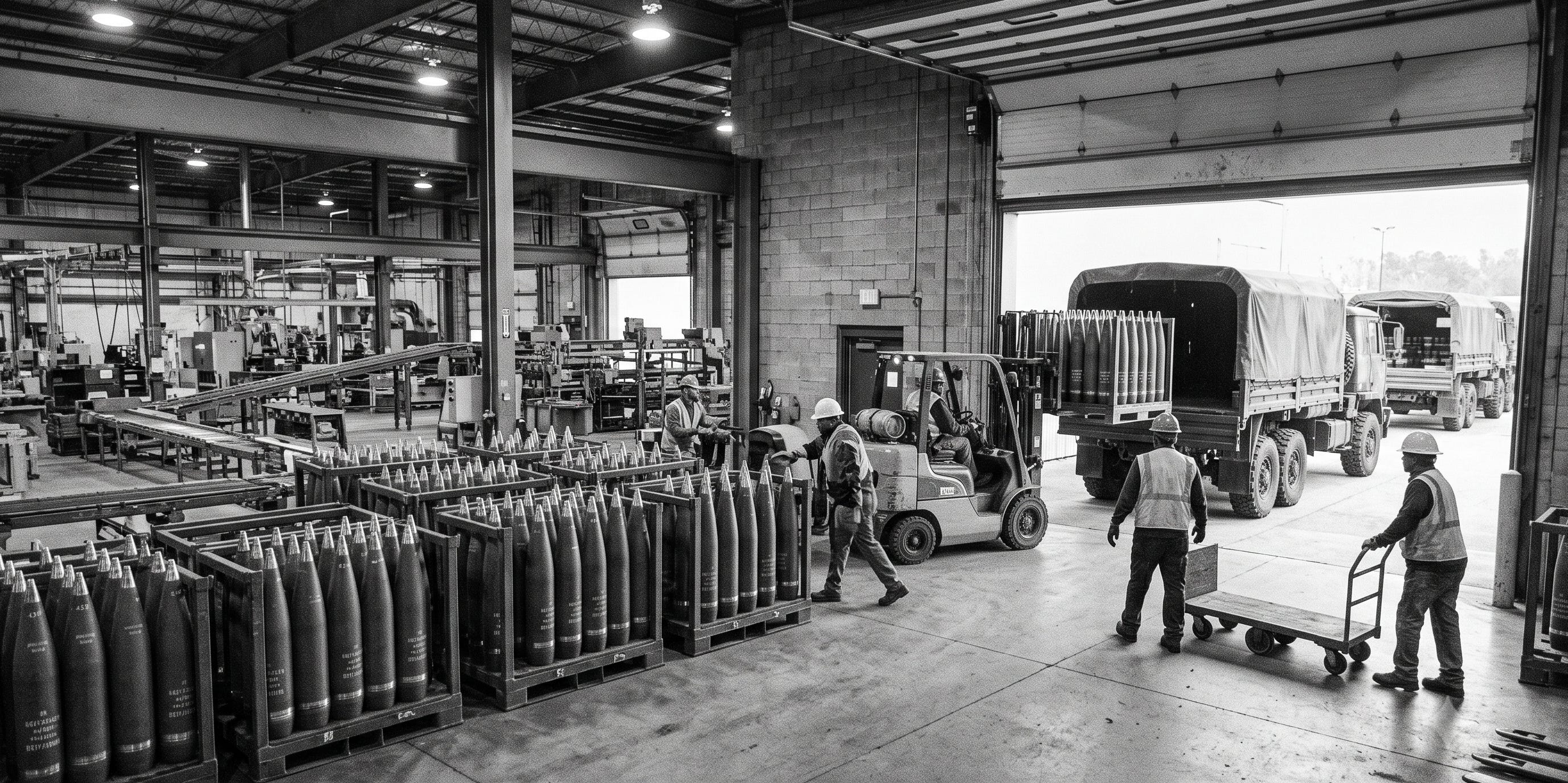
Politicians love a factory photo-op, and Europe’s recent defence spending spree has provided plenty. Last month in Lower Saxony, German Defence Minister Boris Pistorius celebrated Rheinmetall’s new Unterlüss shell plant, declaring to the assembled crowd: “We want you to be successful, because your success means security for our country.”
In London, Sir Keir Starmer has matched the rhetoric, earmarking £11 billion of the UK’s landmark £15 billion Defence Investment Plan specifically for weapons and munitions, alongside proposals for six new energetics factories.
But behind the ribbon-cutting lies a silent, chemical crisis. A newly released intelligence assessment, VitalSpec Defence Industrial Outlook 2026, warns that Europe’s grand rearmament plans are colliding with a severe shortage of the raw explosives and propellants required to actually fire these weapons. The reality is simple: a steel shell casing is useless without high-explosive fill and a propellant charge.
Right now, Europe lacks both.
The most immediate choke point is cotton linters, the raw precursor for nitrocellulose. Europe depends on China for “more than 70 per cent” of this material, according to Armin Papperger, Rheinmetall’s chief executive. With Beijing already tightening export controls on these dual-use precursors, European defence has effectively outsourced its sovereign propellant supply to its primary systemic rival.
Even if alternative chemical supply chains are secured, the sheer maths of rearmament do not add up. To build a highly conservative baseline reserve of 30 million artillery rounds, NATO-Europe requires 180,000 tonnes of RDX and 120,000 tonnes of TNT. Yet, according to calculations in the VitalSpec report, European factories would need 18 years of uninterrupted production just to meet the RDX target—assuming not a single gram is sent to Ukraine, consumed in training, or exported.
Meanwhile, what little explosive material Europe does produce is leaking out of the Continent. Poland’s state-backed Nitro-Chem, Europe’s dominant TNT supplier, has committed 18,000 tonnes of its limited output to the US market through to 2029. This export leakage leaves Europe dangerously exposed during the 2029–2030 “threat window” in which military officials warn a reconstituted Russia could threaten the alliance. “Their military build-up points in a clear direction,” NATO Secretary General Mark Rutte recently warned. “They are preparing for long-term confrontation.”
For Whitehall and Brussels, the lesson is uncomfortable.
Funding shiny new assembly lines to forge empty steel shell bodies is politically convenient, but militarily meaningless. Without a coordinated wave of public-private capital targeted at the unglamorous work of chemical synthesis, propellant plants, and loading facilities, Europe will enter the next decade with plenty of empty casings, but very little firepower.
Thanks for reading The Code Wars! This post is public so feel free to share it.
Comments
Nothing yet. Say the first thing.
Sign in to join the conversation.