The pull request outlived its obituaries and got a bigger job
More changes are flowing through pull requests than ever thanks to AI-generated code, but a human still needs to decide what ships.

AI-powered code reviews and software development insights from CodeRabbit
Live Last read · last published · next check
More changes are flowing through pull requests than ever thanks to AI-generated code, but a human still needs to decide what ships.
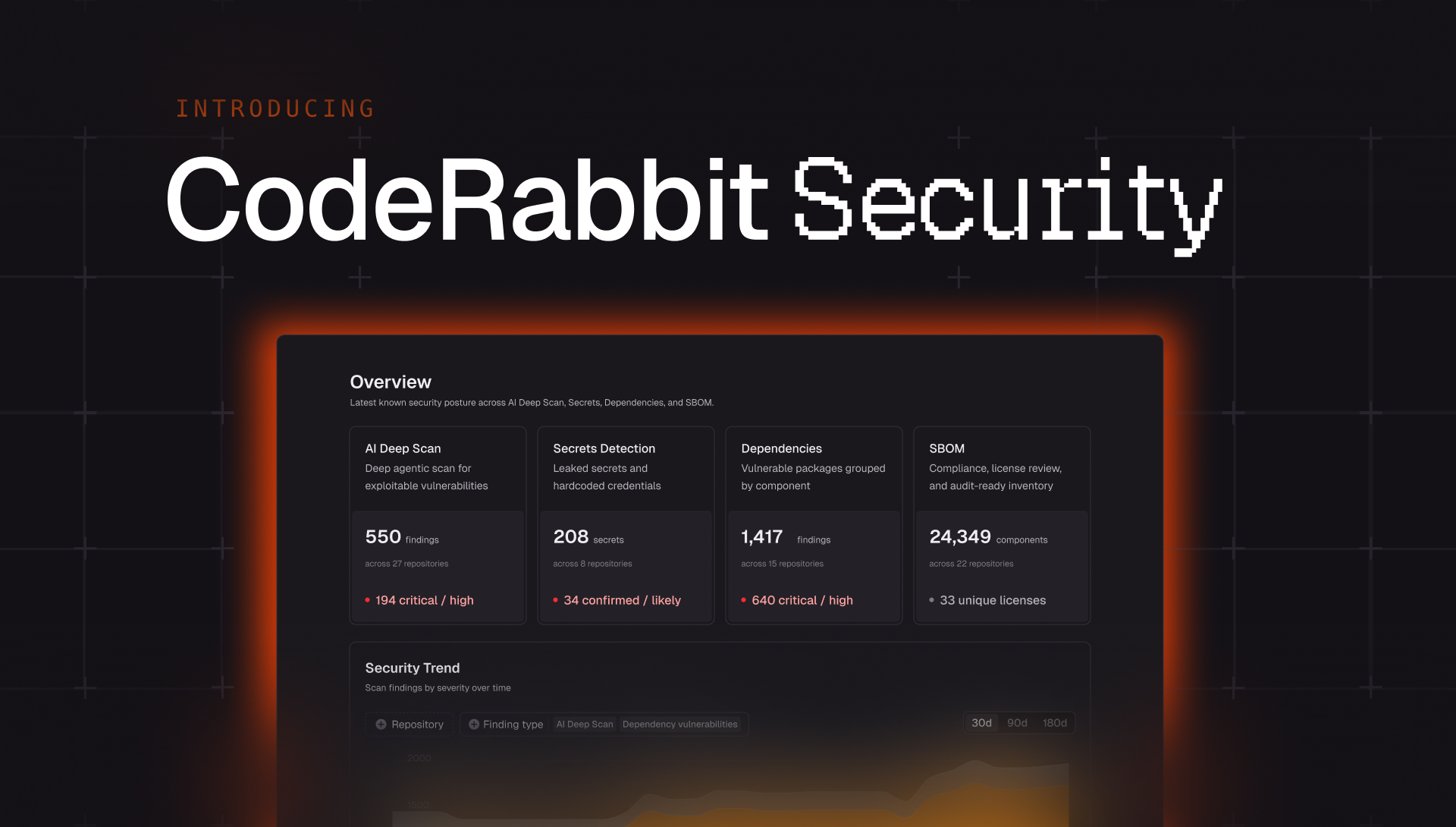
CodeRabbit Security traces suspected vulnerabilities across the codebase, evaluates reachability and the conditions required for exploitation against code evidence, and proposes reviewable fixes in the pull request workflow.
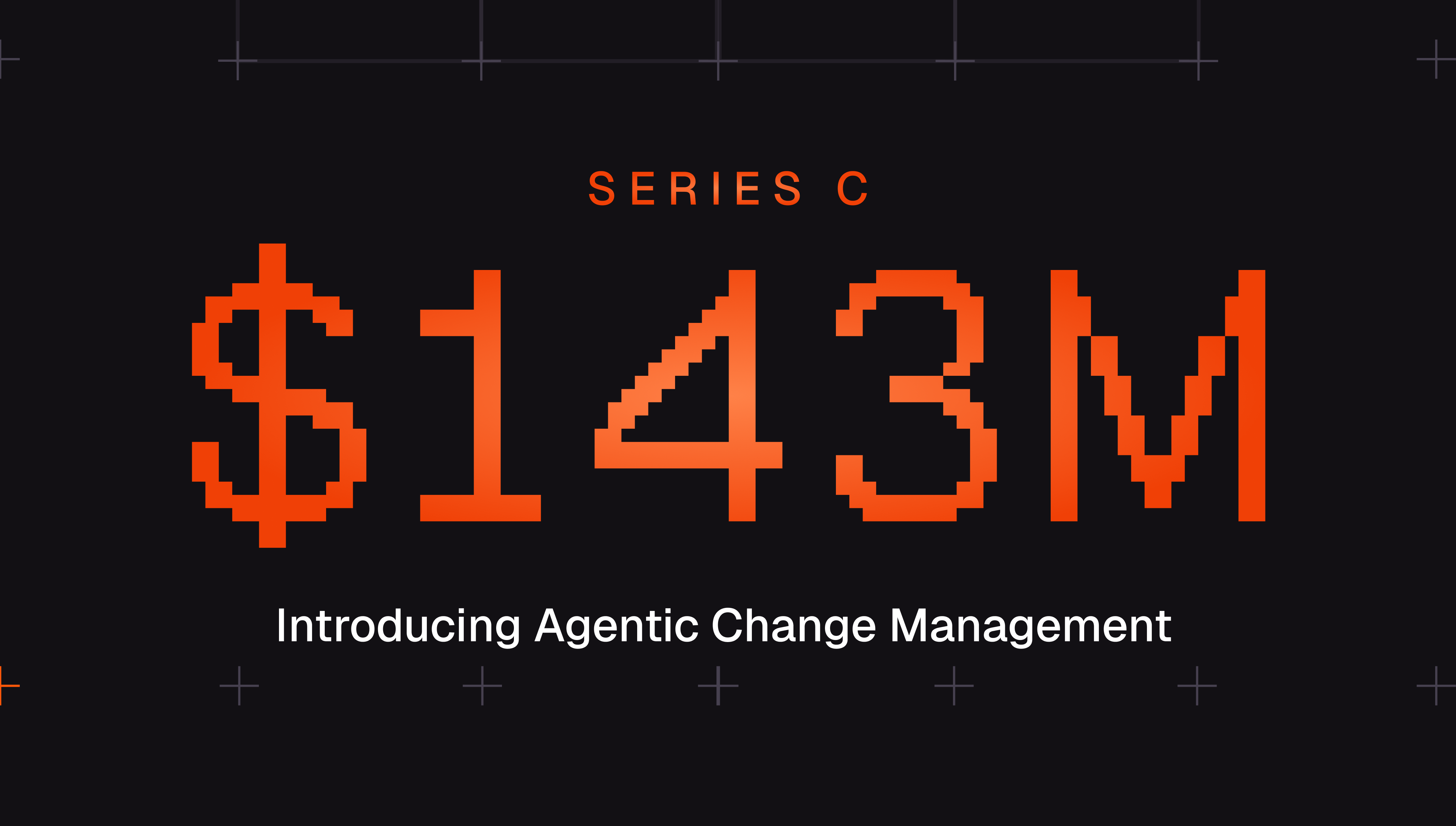
CodeRabbit raised a $143 million Series C at a $1.5 billion valuation and is introducing Agentic Change Management, the control layer for software changes created by humans and agents.
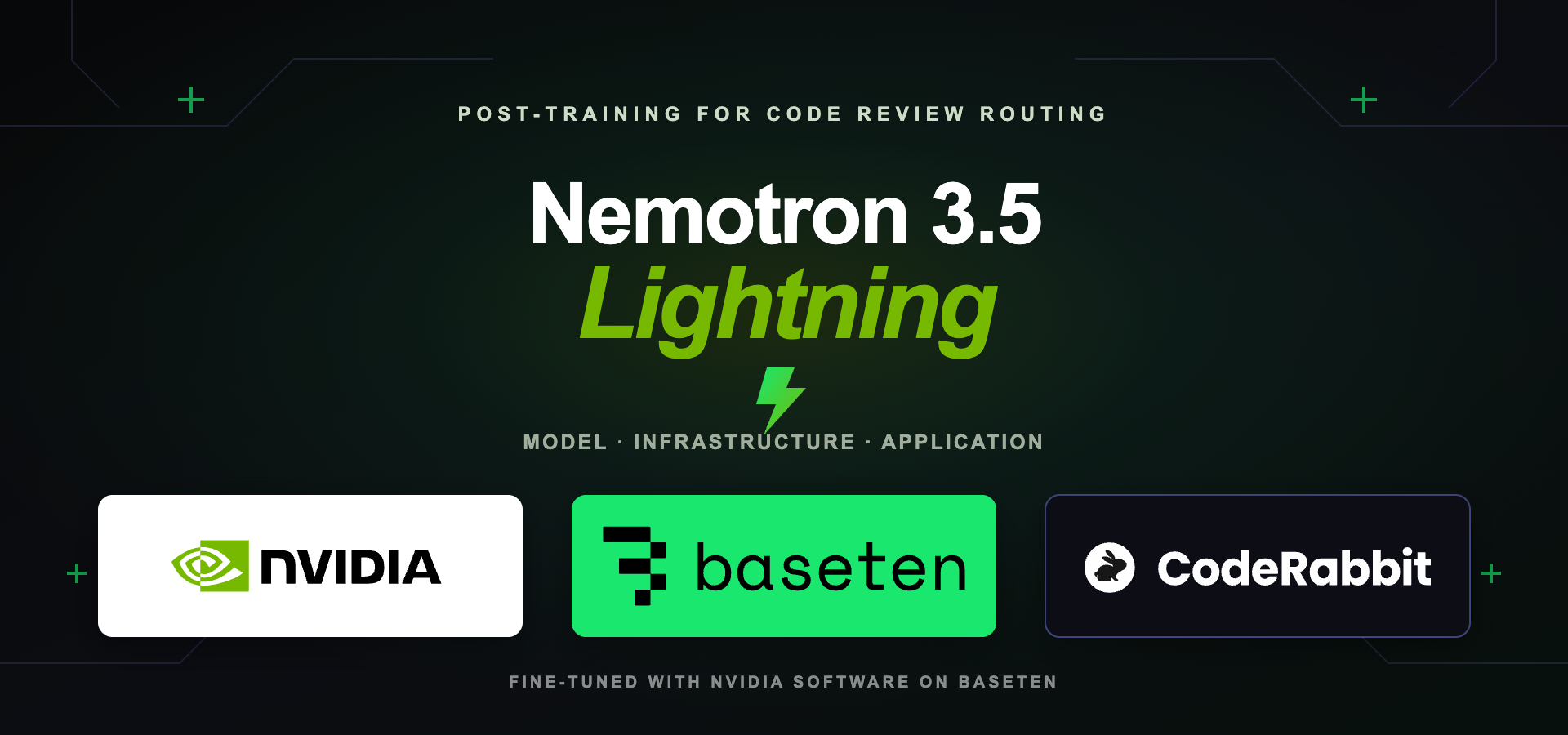
CodeRabbit worked with NVIDIA and Baseten to post-train NVIDIA Nemotron 3.5 Lightning for one of CodeRabbit's highest-volume routing tasks, improving route agreement while reducing estimated inference cost.
Reviewing every agent-generated change is becoming impossible. The next bottleneck is deciding what deserves attention, rebuilding context, and keeping code safe after merge.
Code is now plentiful, but judgment about what deserves to merge is not. Better models sharpen what agents write, but they don't make that call.
Opus 5 produced a cleaner actionable-comment stream, but caught fewer known issues and generated roughly four times the baseline's nitpicks. Here is where the model may fit — and where it does not.
Coding agents can expand change volume faster than teams can understand it. Review needs a shared path from intent to system behavior to code so people can keep shaping the system.
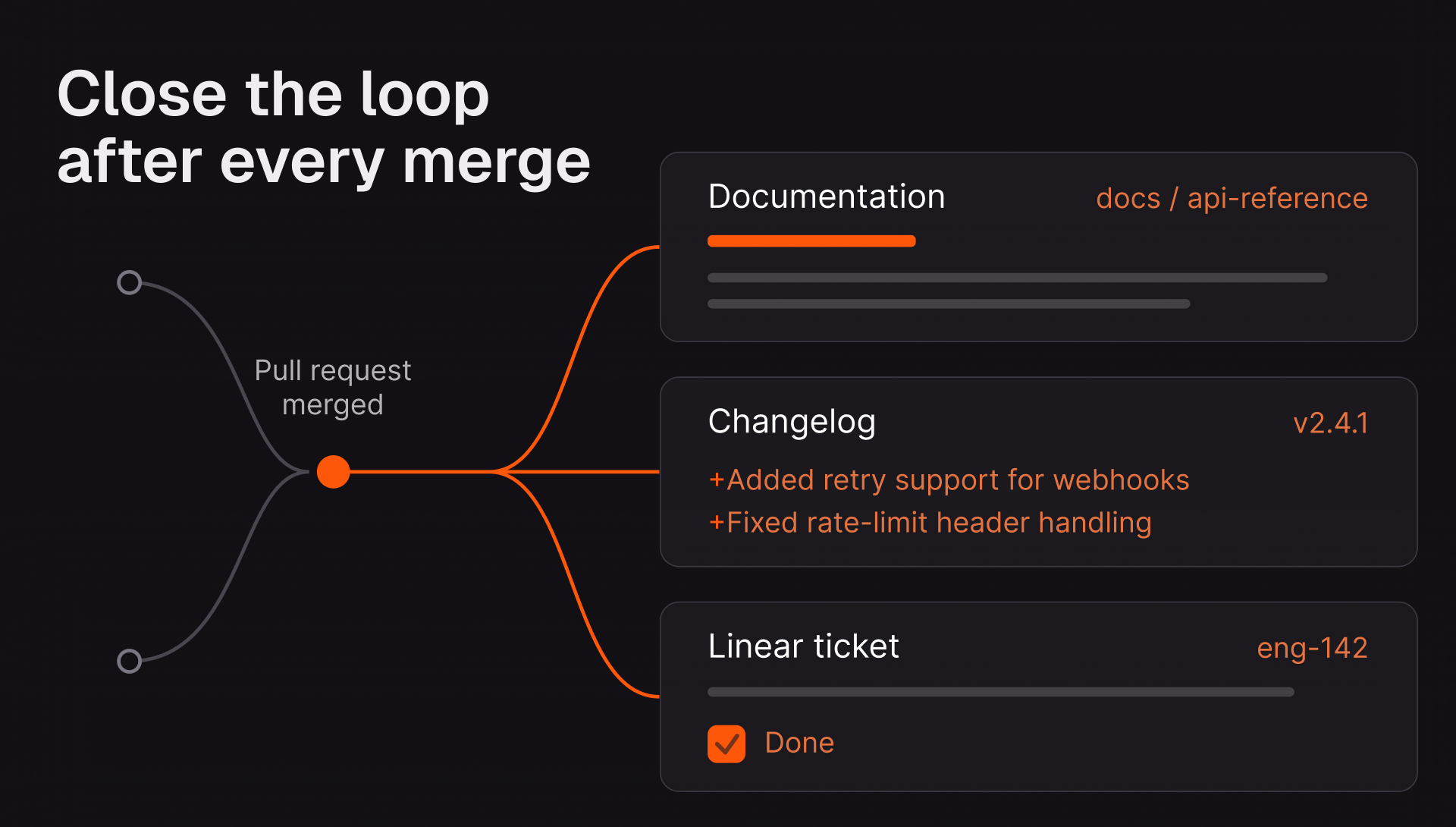
Post-Merge Actions use pull request context to handle changelogs, documentation, tickets, and other work that should happen after merge.
OpenAI’s GPT-5.6 family includes capability tiers: Sol as the flagship model, Terra as the lower-cost option, and Luna as the fastest, lowest-cost tier.
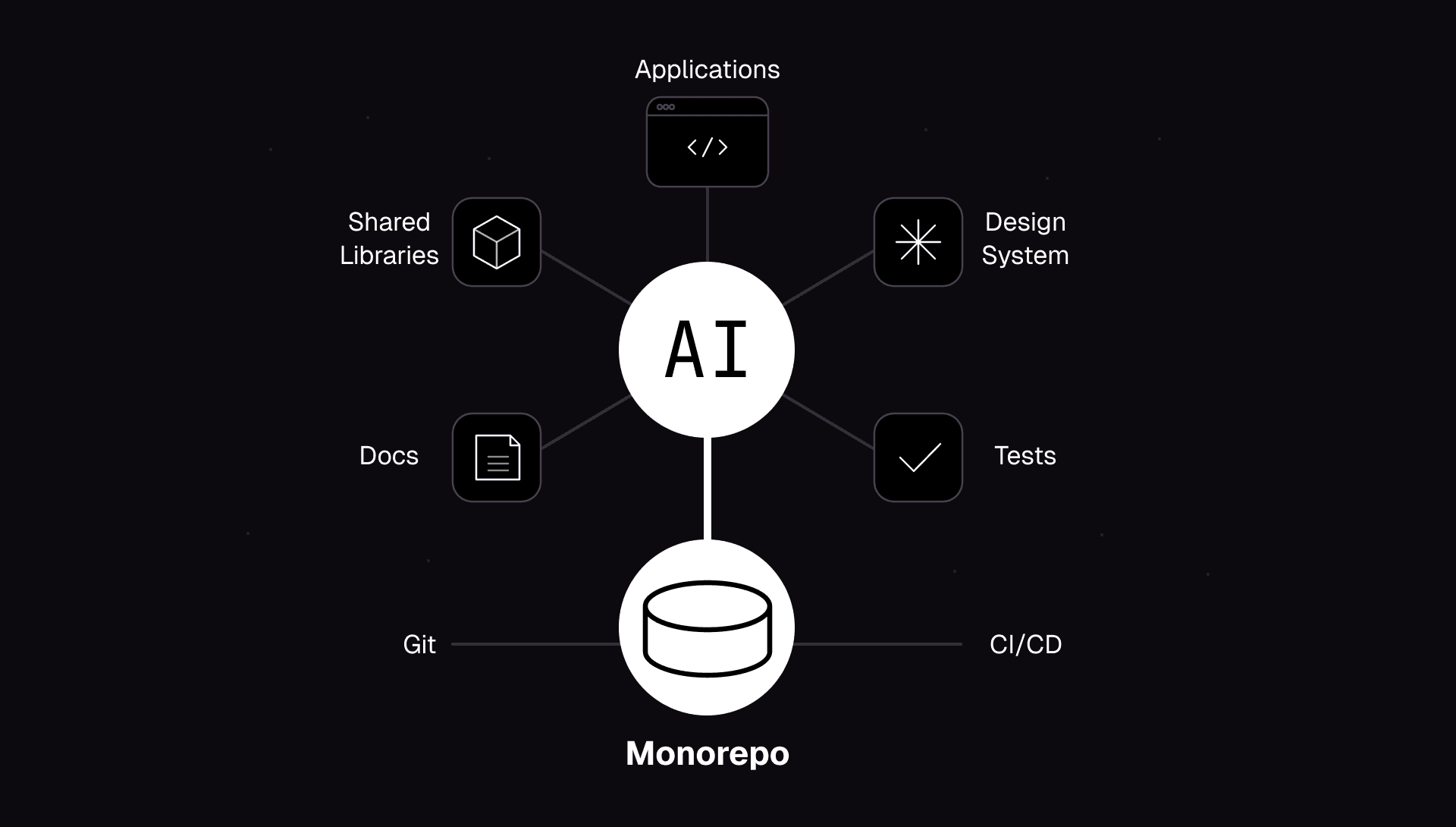
Monorepos keep shared code in sync but make every bad PR everyone's problem. Here's when to commit to one, when polyrepo wins, and how to review at scale.
A hands-on review of Claude Sonnet 5 after a week of real coding and code-review work: how it compares to Sonnet 4.6, what it costs, and who should upgrade.
Loop engineering allows you to step away completely by designing a system that operates autonomously, removing the human from the loop entirely.
How Ayush Sridhar CalHacks Hackathon project turned into an SWE internship with CodeRabbit
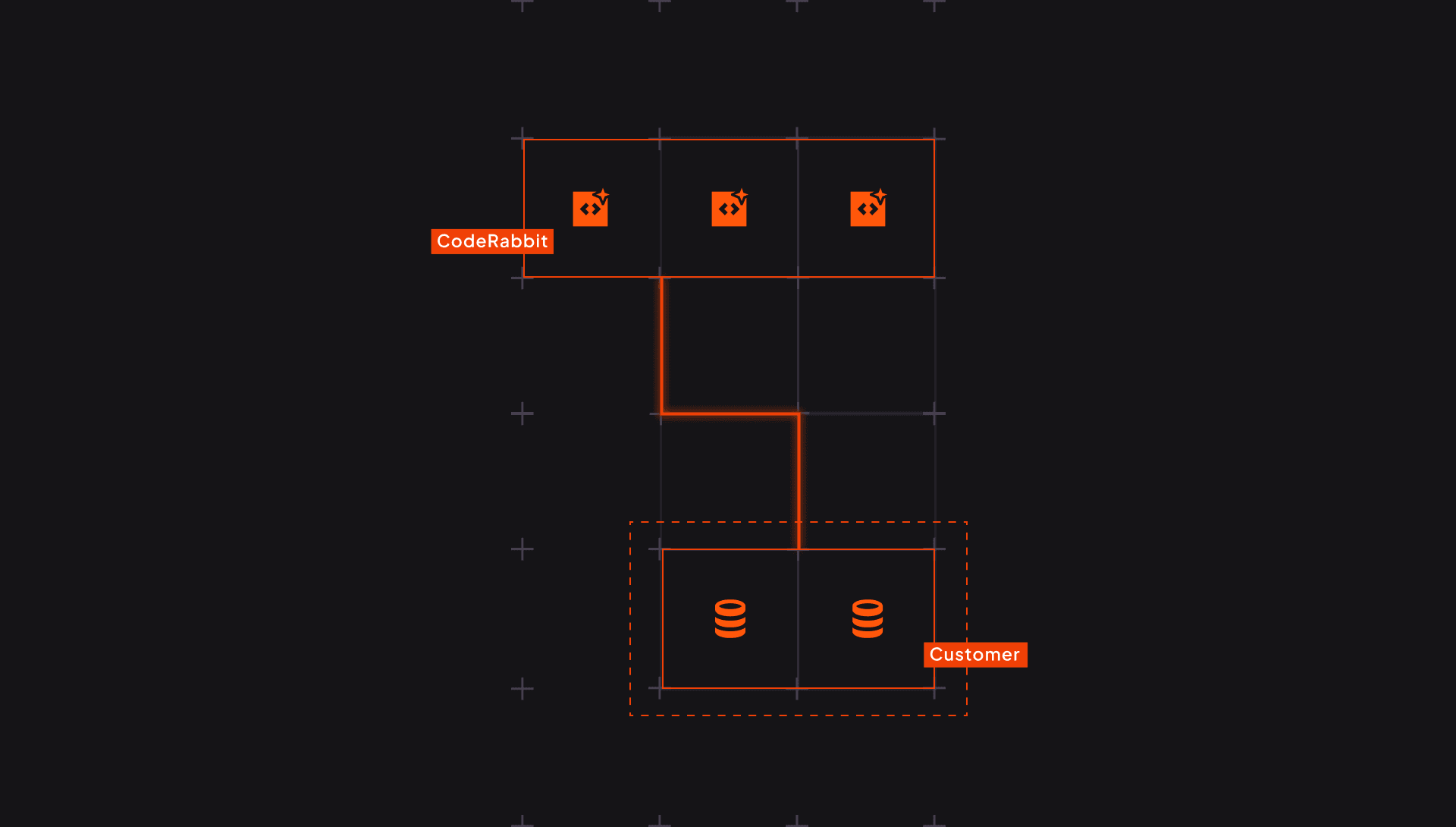
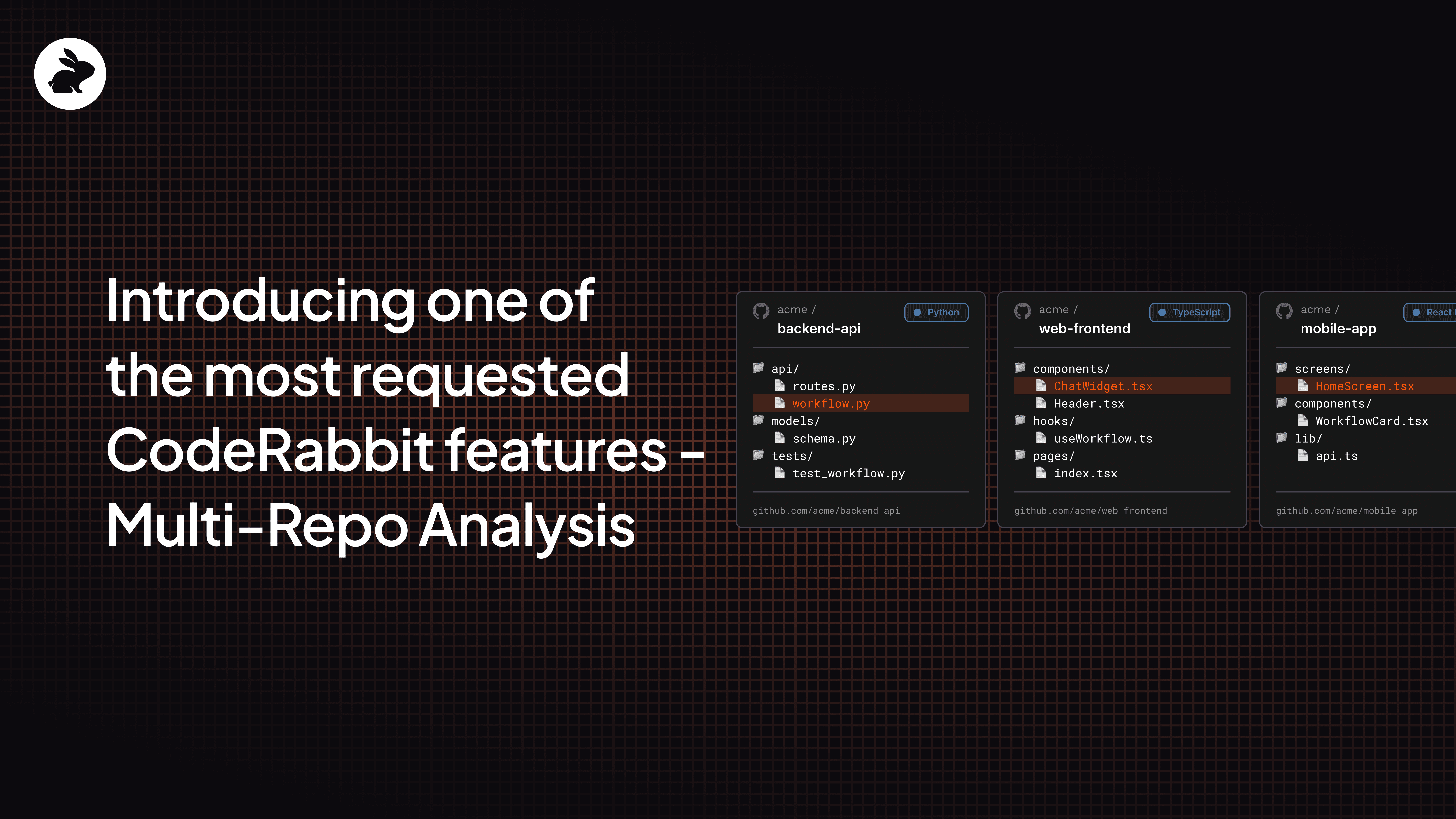
CodeRabbit can detect related repositories across your organization and use them as review context, so cross-repo impact is easier to catch before you merge.
As generative AI becomes embedded in daily work, the line between how we communicate with software and how we communicate with one another can feel less distinct than it once did.
Fable 5 is worth testing for autonomous coding work, especially when the prompt is incomplete and the agent has to discover the environment before it can build. For production code review, the current baseline and Opus 4.8 still look safer.
NVIDIA Nemotron 3 Ultra delivers accurate and fast throughput in CodeRabbit's self-hosted AI code reviews.
Nemotron 3 Ultra brings fast open-weight reasoning to dev workflows. CodeRabbit benchmarks show near-baseline review performance with retries and validation.
Developers distrust AI coding tools just enough to double-check the output, yet rely on them too much to turn them off. Here's what that dependency is actually costing engineering teams, and how to build review systems that keep up with it.
Opus 4.8 is the best model we have used for long-horizon agentic coding and code generation, and it holds its own on code review out of the box.
Anthropic customers can now apply their existing Anthropic spend commitment toward CodeRabbit.
AI has dramatically lowered that barrier, and the bottleneck is shifting toward something else entirely: reviewing the large, complex diffs that migrations inevitably produce.
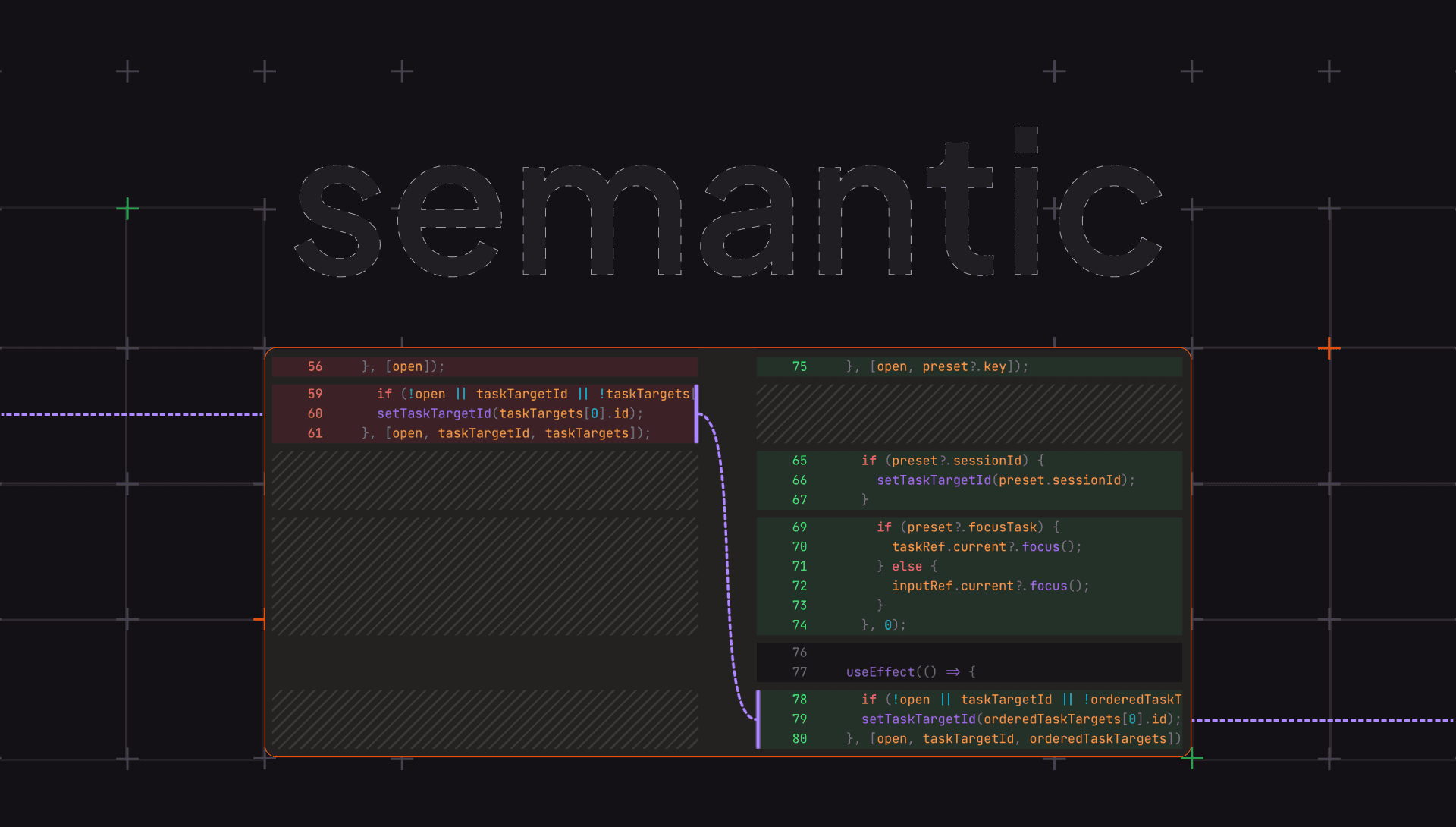
CodeRabbit Review now has a semantic diff view that groups moved blocks and surfaces token-level edits, so the actual change isn't buried inside 1,400 lines of noise.
Learn how CodeRabbit delivers explainable AI code reviews through semantic diffs, context engineering, model orchestration, and verification systems built for enterprise software teams.
CodeRabbit's PR walkthrough now organizes changes into logical layers and routes reviews to the right people automatically, so you spend less time reconstructing what happened and more time actually reviewing it.
Change Stack turns any pull request into a guided walkthrough: logical change groups, inline diagrams, and layer-by-layer navigation. Built for big PRs.
AI writes more code than humans can review. Logic errors are up 75%. Security issues nearly triple. Here's what replaces human review.
Connect CodeRabbit to private GitHub Enterprise Server, GitLab, and Gerrit instances with no inbound firewall rules, no IP allowlisting, and no PrivateLink. One outbound HTTPS connection. That's it.
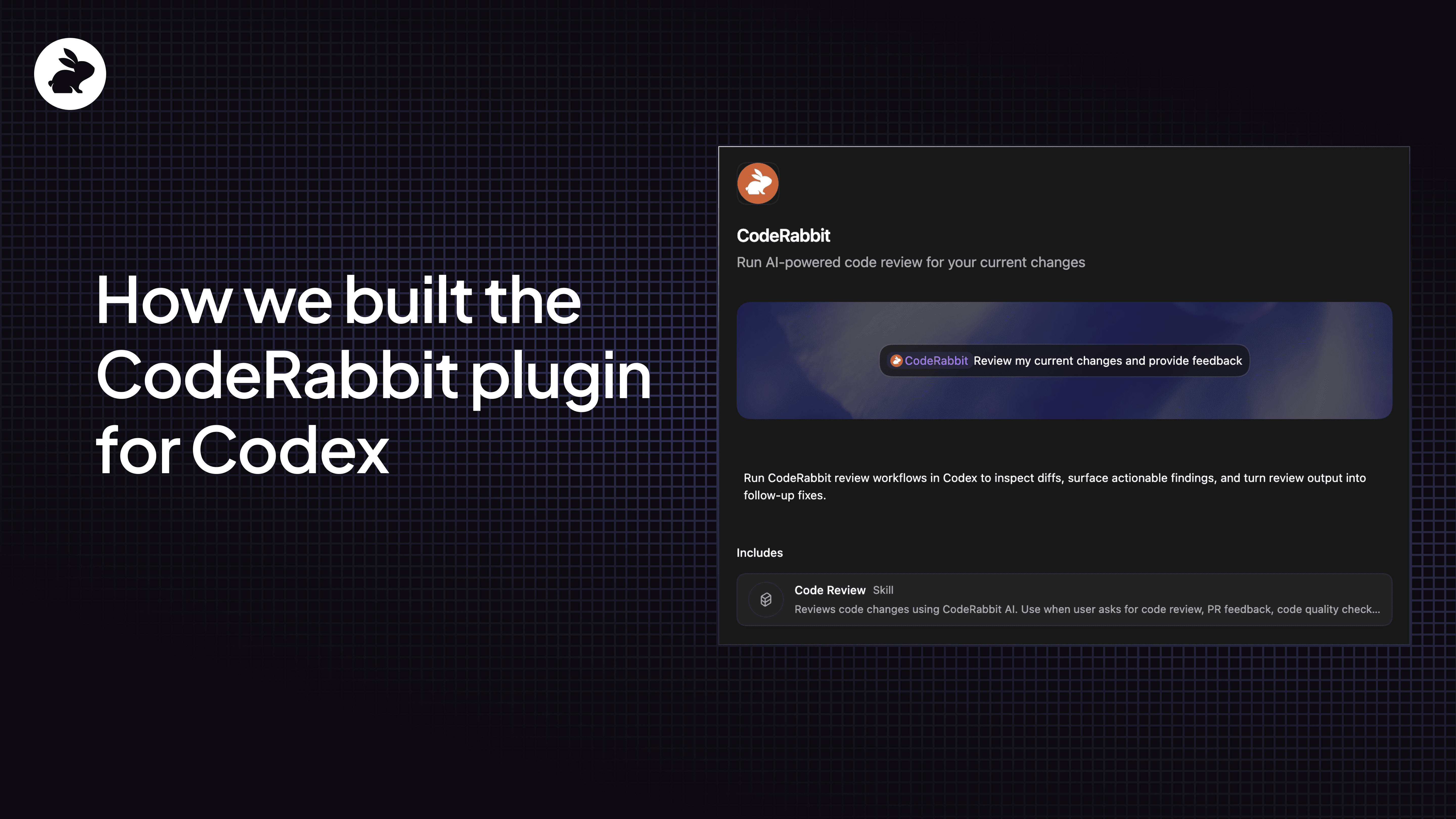
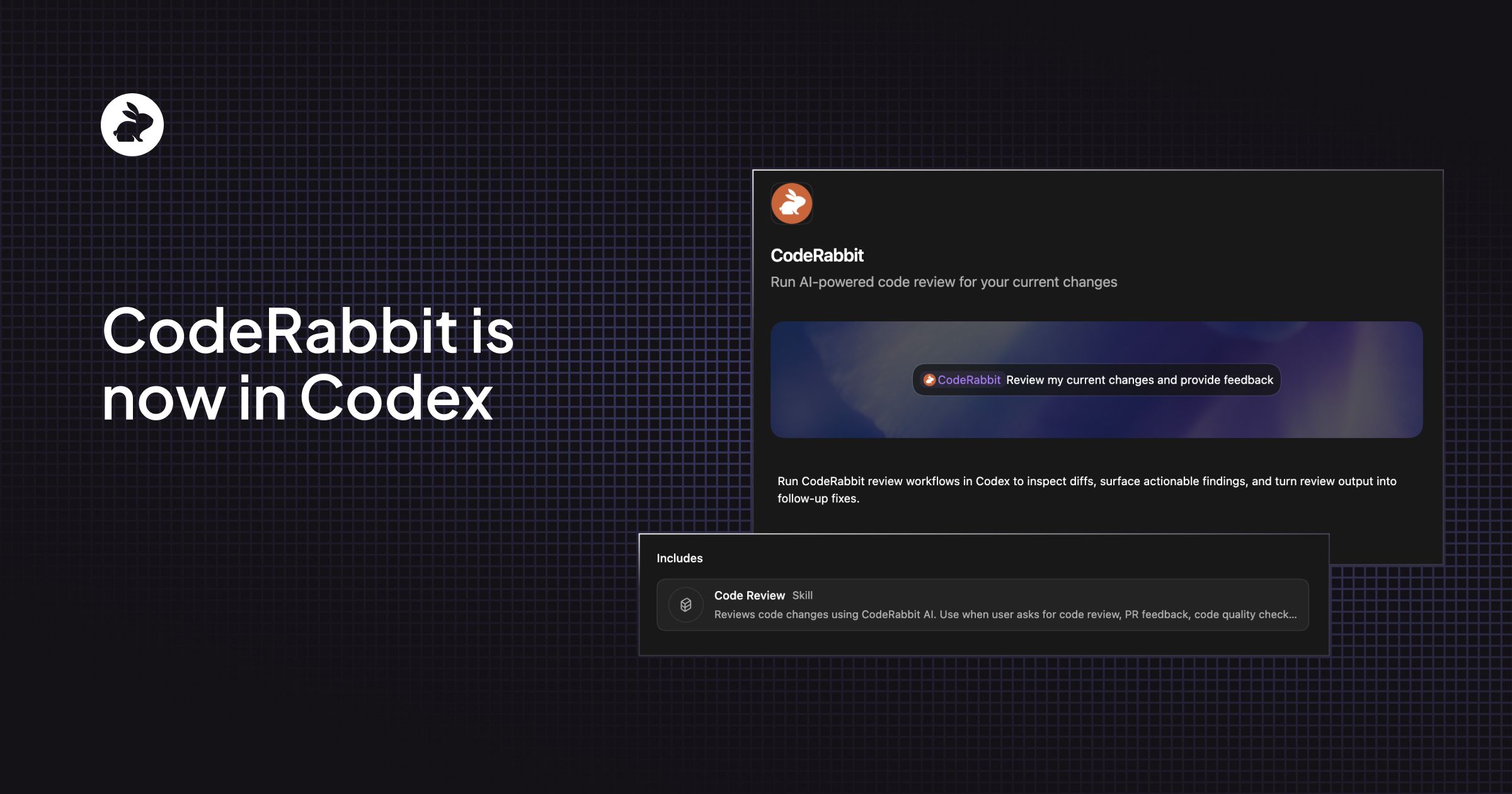
How CodeRabbit built their Codex plugin — lessons on skill design, auth handling, CLI vs app output, and keeping code review inside the developer flow.
A stolen OAuth token brought down Vercel's internal systems. Learn the three security lessons every enterprise should take from this developer supply chain attack.
GPT-5.5 benchmark results from CodeRabbit show improved code review precision, higher signal, and better performance in real workflows.
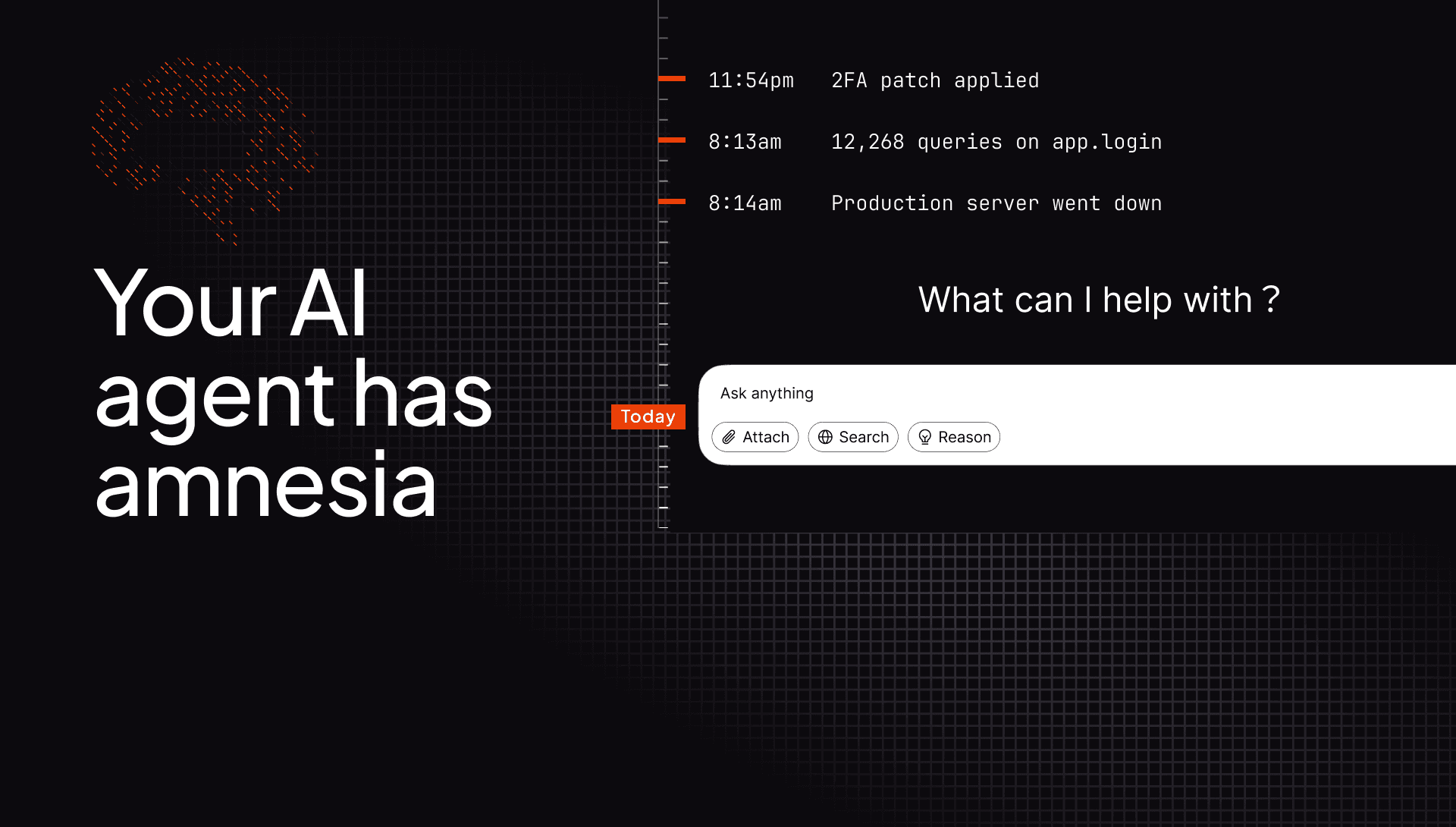
Every coding agent session starts from zero. Learn why AI agent amnesia is quietly undermining team productivity, compounding context costs, and reversing 50 years of collaborative engineering progress — and what the next generation of agents needs to fix it.
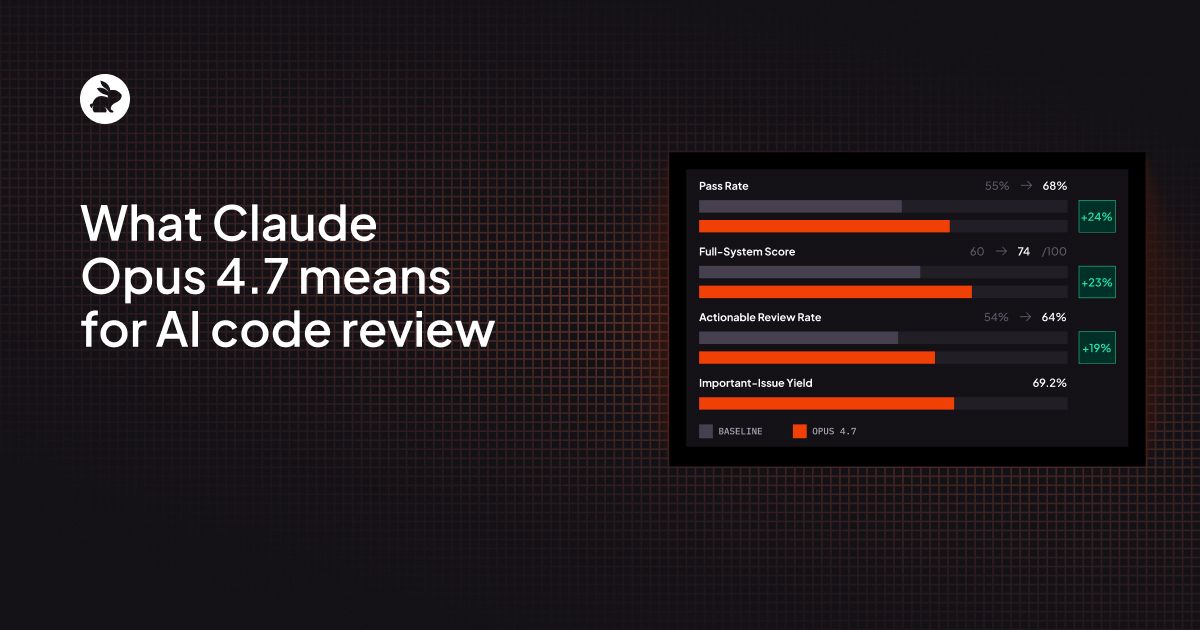
Claude Opus 4.7 outperformed in 100 evaluations across real open-source pull requests—finding more real bugs, delivering more actionable feedback, and reasoning across files better than anything we’ve tested.
Get AI-powered code reviews without leaving Codex. The CodeRabbit plugin runs reviews inside your session, catches bugs before PRs, and requires zero workflow changes to set up.
our settings page became a wall of options that overwhelmed a lot of users. Here's how we solved it and what we learned along the way.
In practice, developers experience AI code review through the comments it leaves on pull requests: how often it finds real issues, how much noise it produces, and how actionable its feedback is. To an
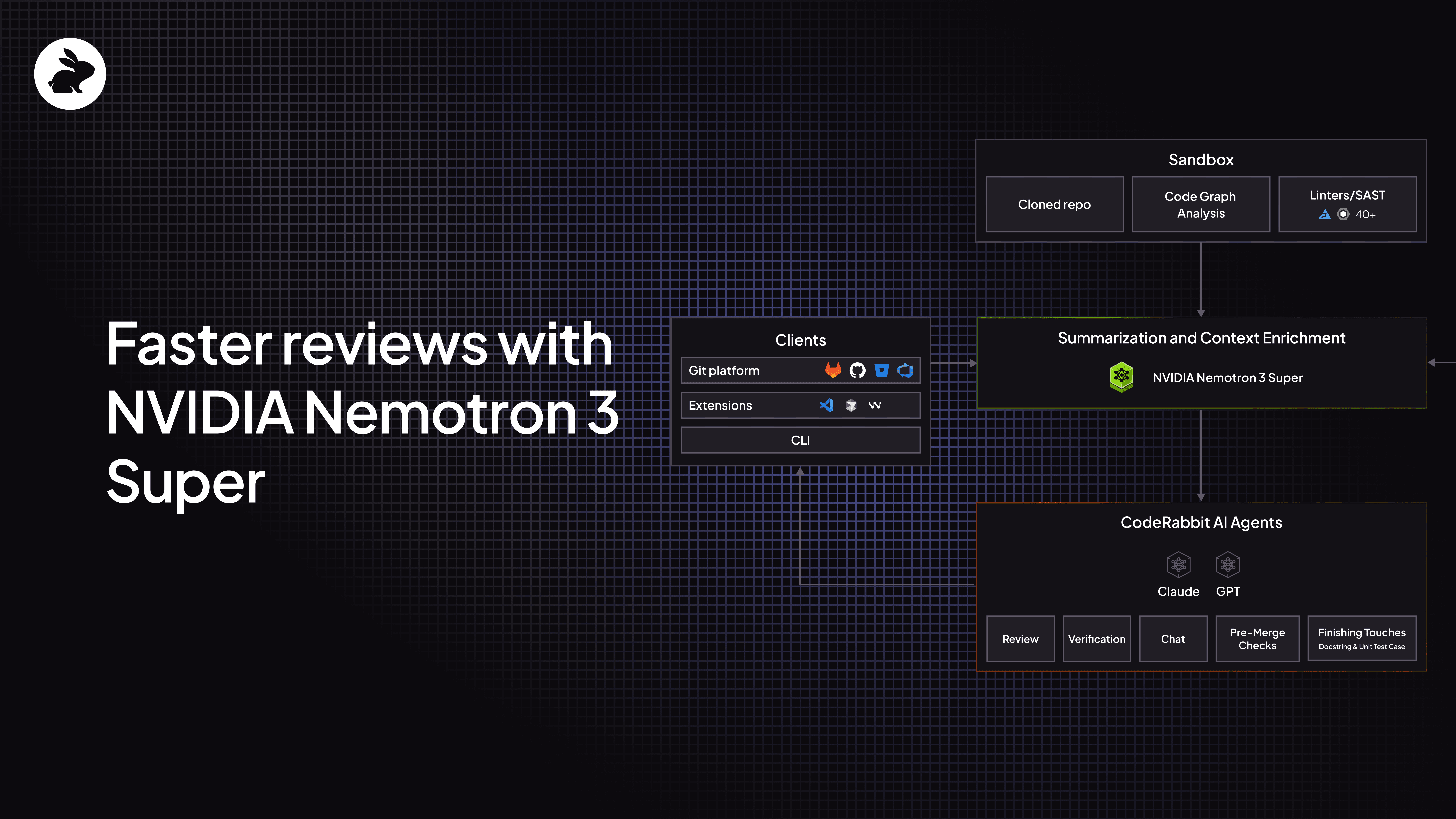
TL;DR: NVIDIA Nemotron 3 Super delivers high accuracy and faster throughput in CodeRabbit's self-hosted AI code reviews. We are happy to share that CodeRabbit is expanding its support for the NVIDIA N
If you've ever merged a pull request that passed every check, looked clean in review, and then broke a downstream service ten minutes later…you already know the problem. When your architecture spans m
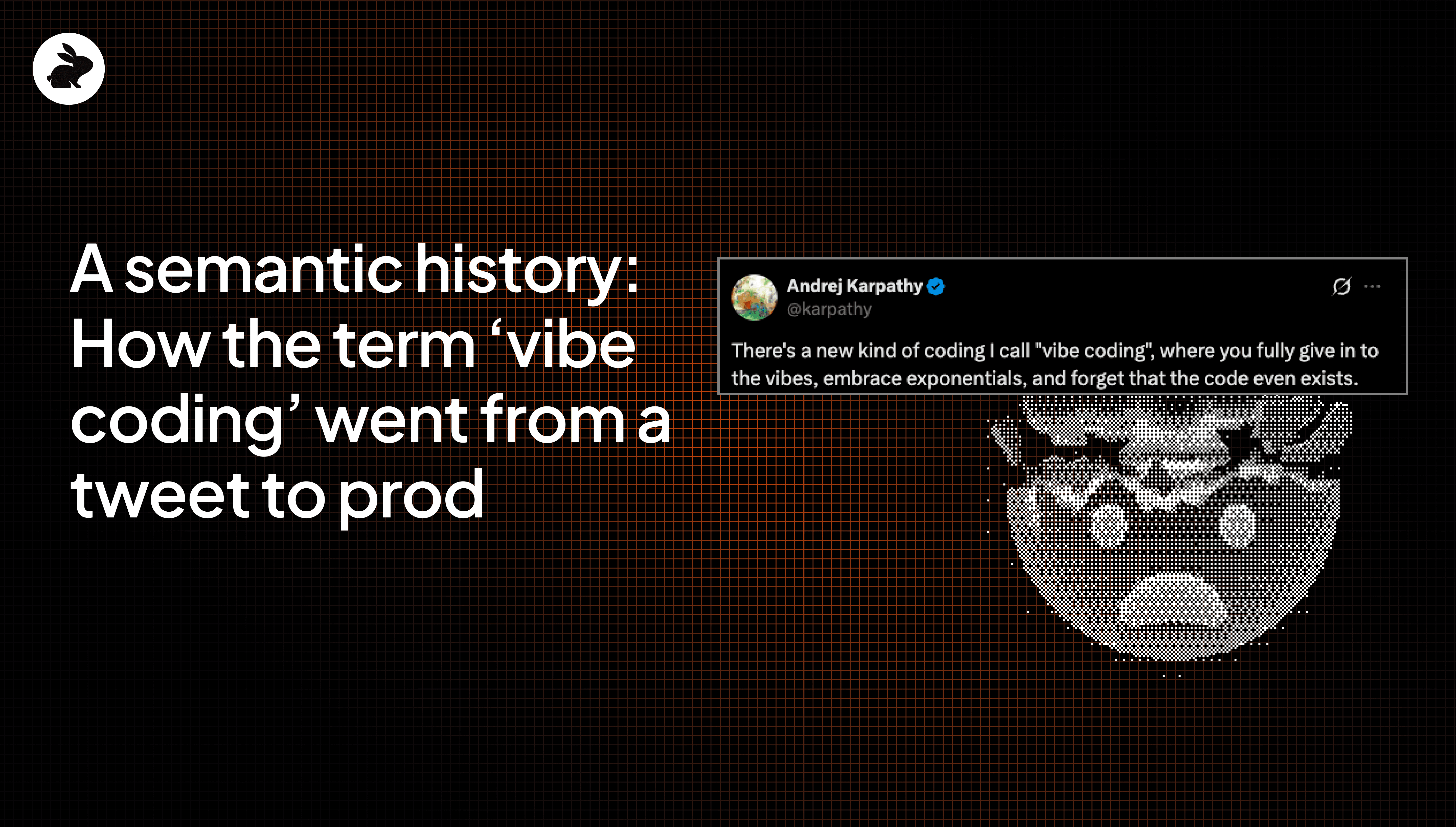
A year is an eternity in AI time. In February 2025, Andrej Karpathy dropped a tweet-sized cultural marker into the software world: “vibe coding.” The phrase stuck because it captured a visceral shift
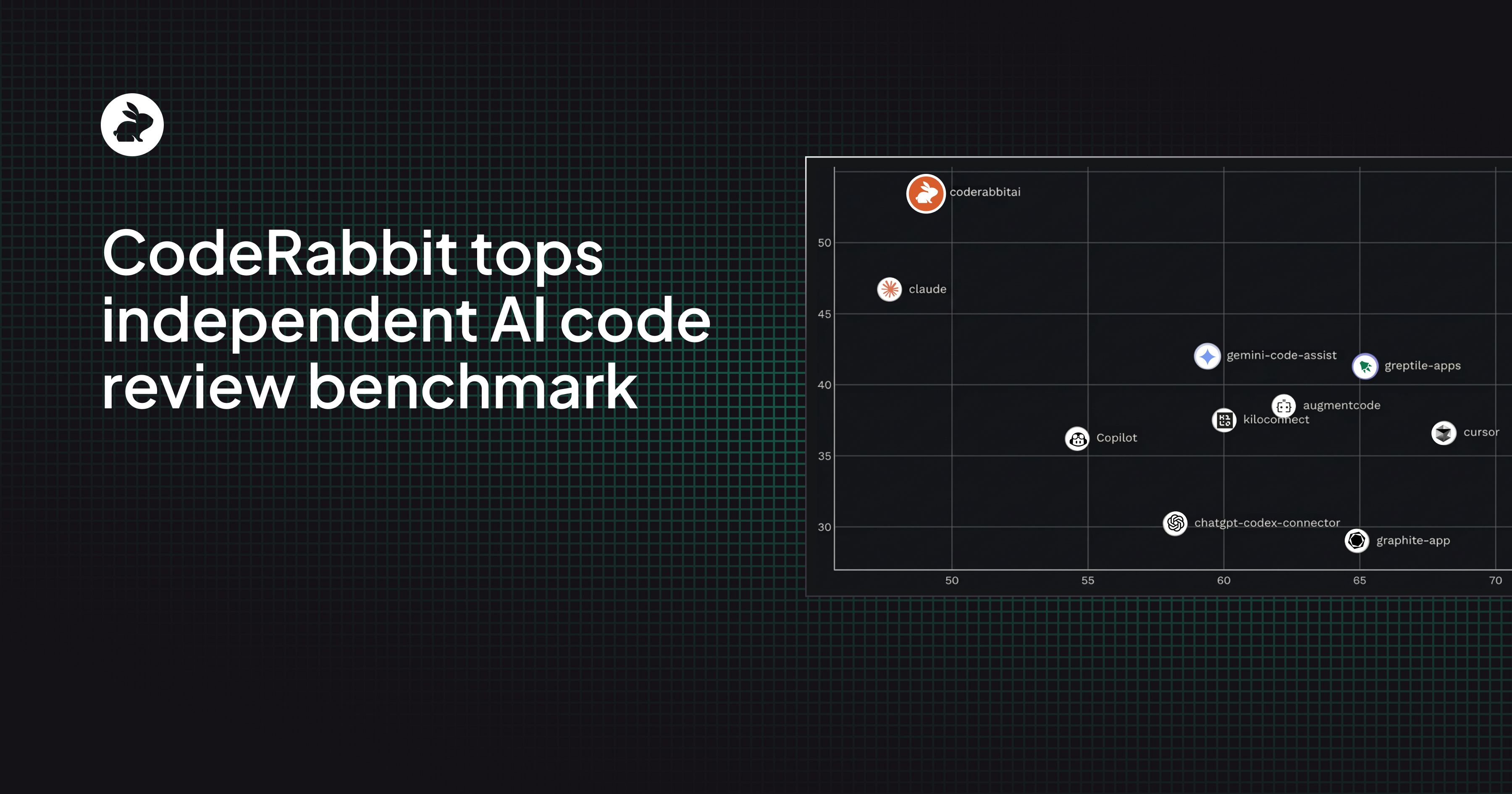
AI code review benchmarks have mostly been published by other code review vendors (whose tools always seem to come out on top in their benchmarks). We've written before about why we don’t think vendor
Over the past few months, one refrain has been heard consistently in open source communities: “AI slop.” It shows up in LinkedIn discussions from CEOs who rarely complain publicly. It shows up in Re
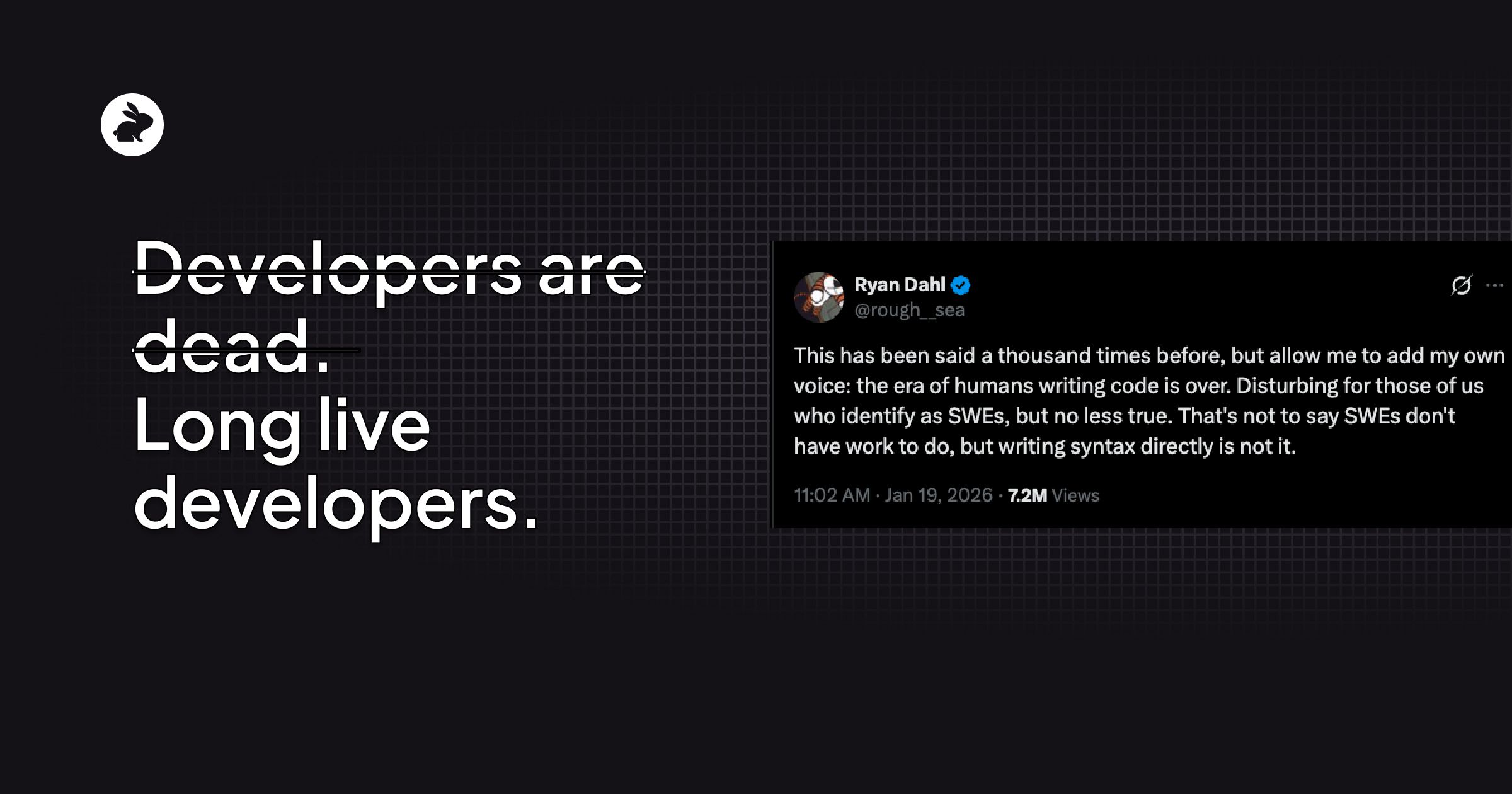
Predictions about the end of programming are nothing new. Every few years, someone confidently announces that this time developers are truly finished. If you listened to these self-proclaimed Nostradamuses, devs were previously set to be replaced by ...
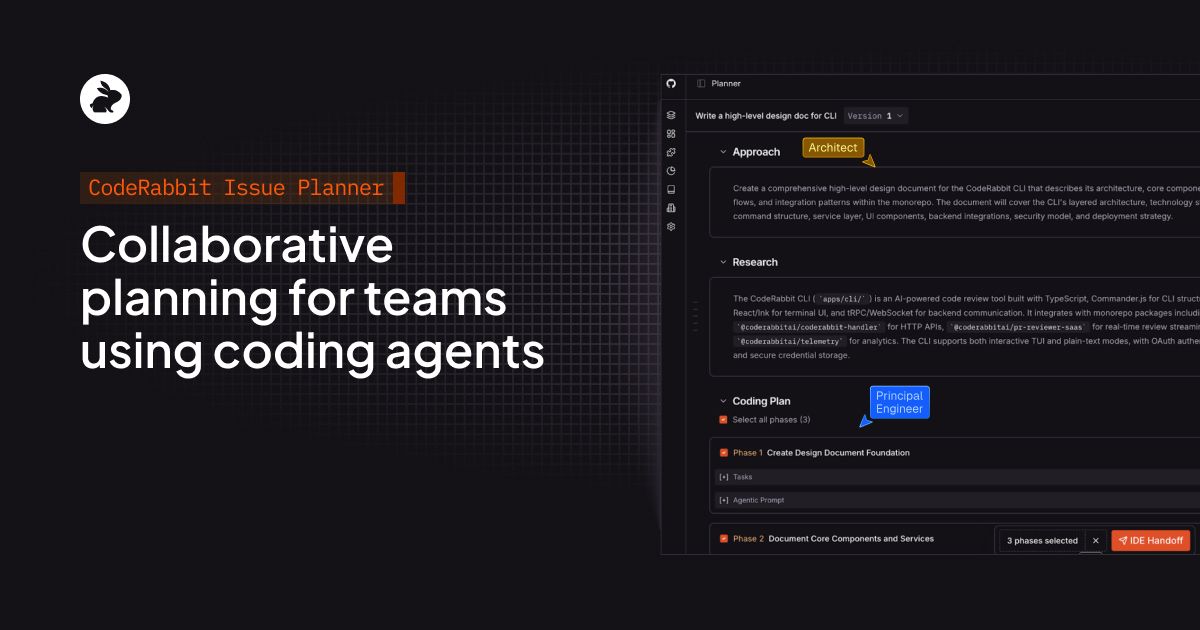
For decades, the software development lifecycle has followed a familiar timeline. You create an issue, assign the work, manually write the code, get several peers to review it, test it, and ship. Each step took a relatively predictable amount of time...
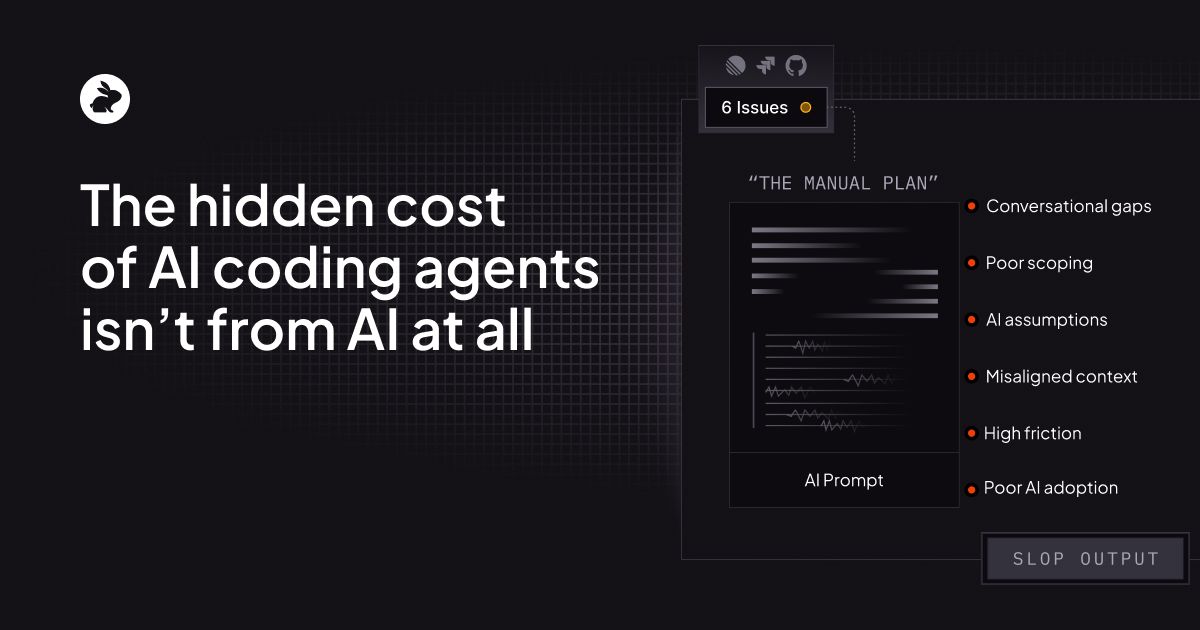
TL;DR: The real cost of AI agents isn’t tokens or tools; it’s misalignment that shows up as rework, slop, and slowed teams. The conversation everyone is having (and why it misses the point) Most conversations about AI coding agents sound like a fant...
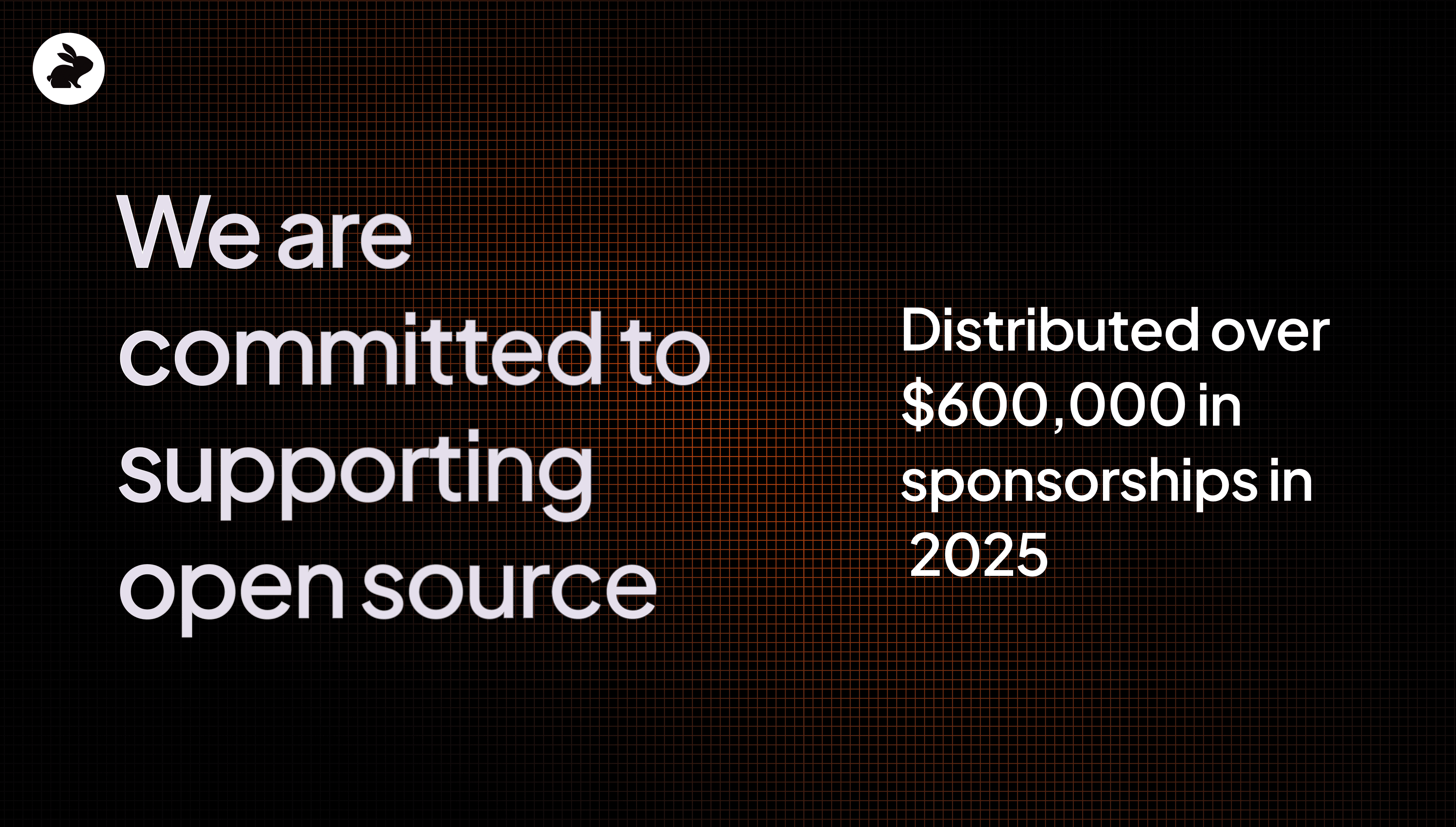
CodeRabbit recognizes the growing need to support open source software (OSS), especially as AI accelerates the development landscape. While AI makes writing code faster and increases the frequency of pull requests, the time and effort of maintainers ...
Benchmarks promise clarity. They’re supposed to reduce a complex system to a score, compare competitors side by side, and let the numbers speak for themselves. But, in practice, they rarely do. Benchmarks don’t measure “quality” in the abstract. They...
Giving users a dropdown of LLMs to choose from often seems like the right product choice. After all, users might have a favorite model or they might want to try the latest release the moment it drops. One problem: unless they’re an ML engineer runnin...
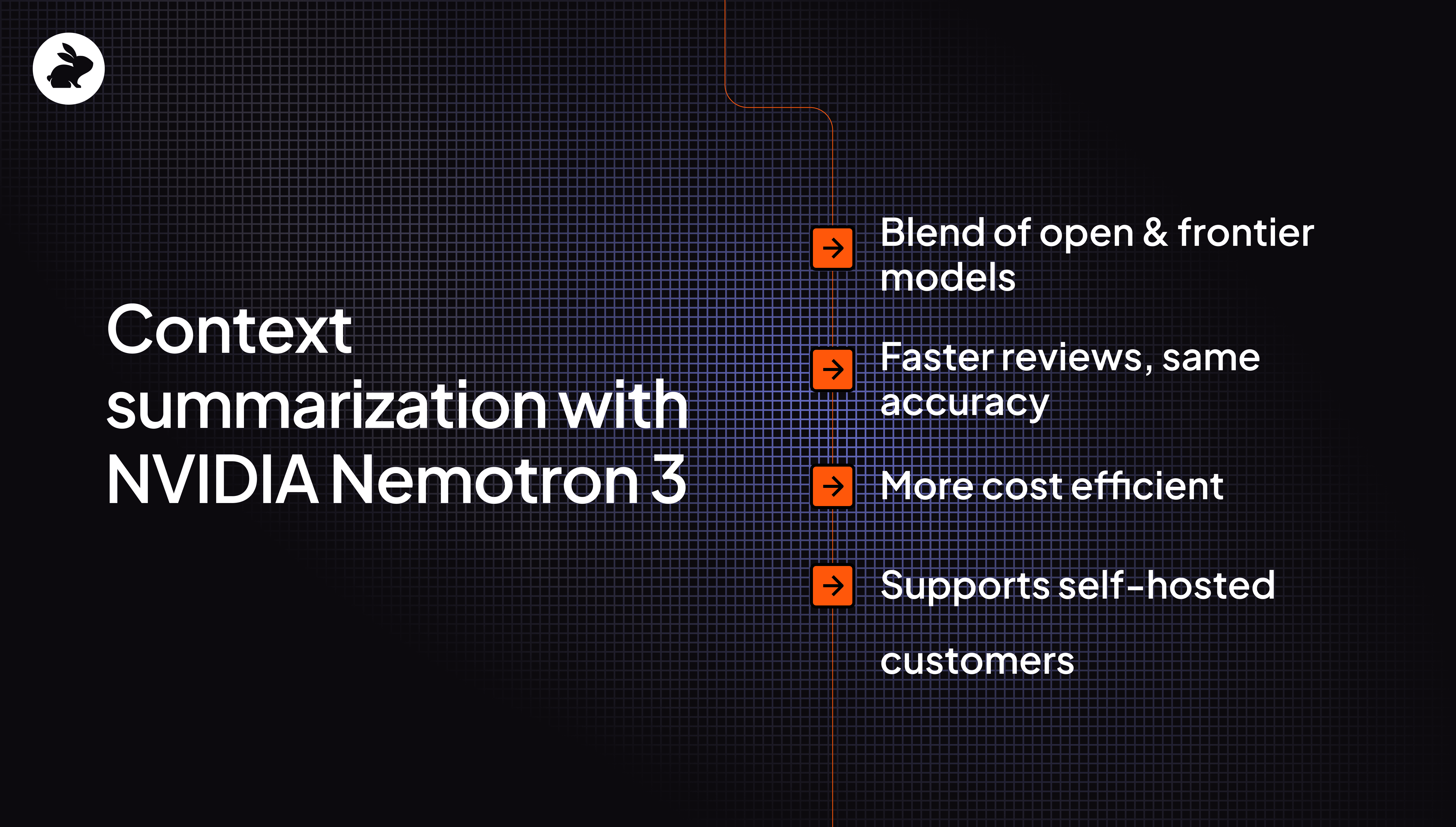
TL;DR: Blend of frontier & open models is more cost efficient and reviews faster. NVIDIA Nemotron is supported for CodeRabbit self-hosted customers. We are delighted to share that CodeRabbit now supports the NVIDIA Nemotron family of open models amon...
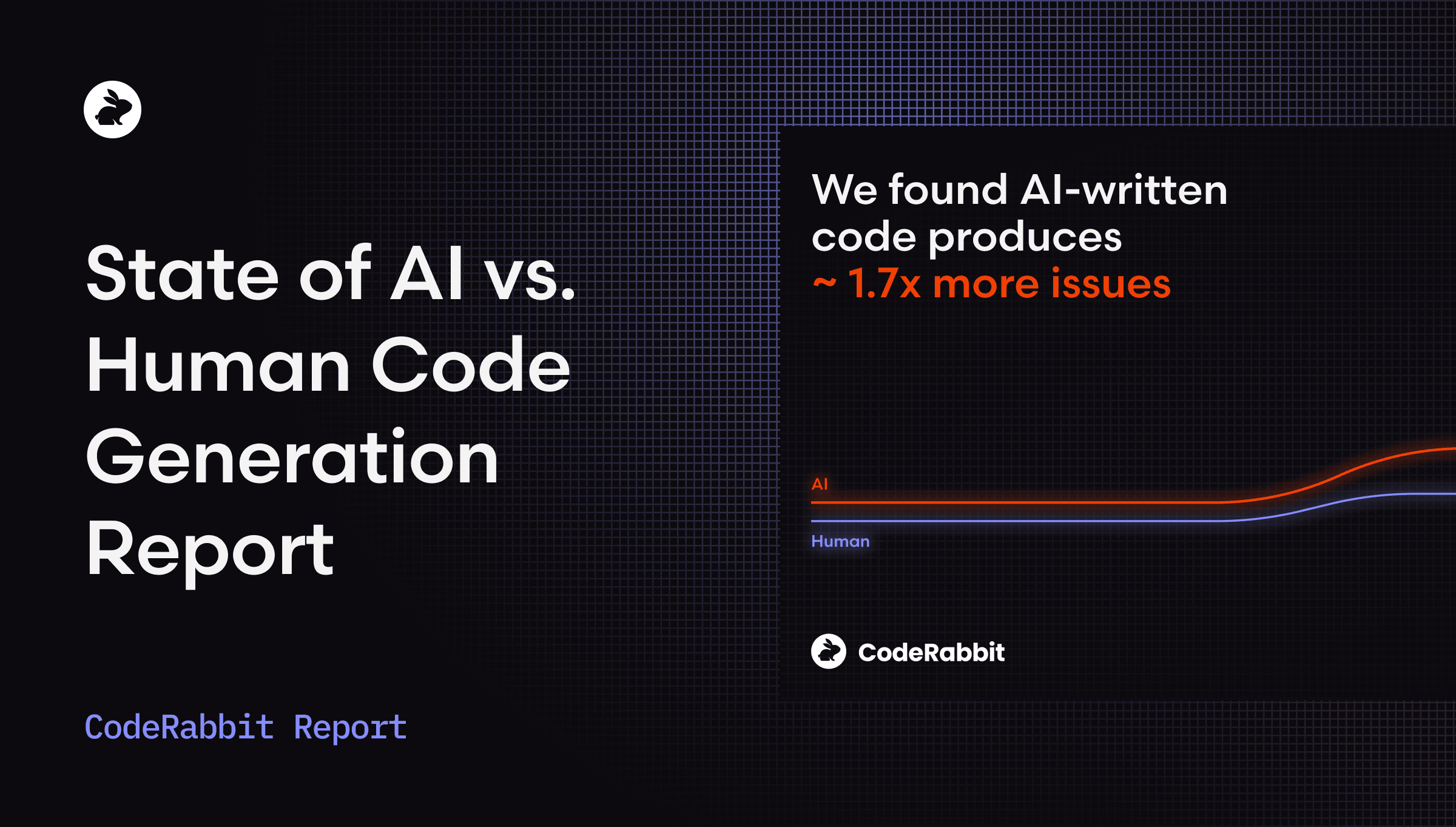
What we learned from analyzing hundreds of open-source pull requests. Over the past year, AI coding assistants have gone from emerging tools to everyday fixtures in the development workflow. At many organizations, a part of every code change is now m....