
For Catholic teachers, class preparation is more than content and pedagogy—it's an act of sanctification.
Preparation for class has many and various goals, among the most obvious are content knowledge (the teacher must know the truths they purport to teach) and pedagogical technique (the teacher must know how to most effectively impart these truths to students). There are other goals in preparation, too.
Good preparation can build in the teacher confidence in her ability to deliver her lessons, leading children to all that is true, good, and beautiful. Good preparation can also provide encouragement in difficult seasons (up here in North Idaho, we need some of that toward the end of our long winters). Ultimately, the teacher’s act of preparing is an act of love for her students.
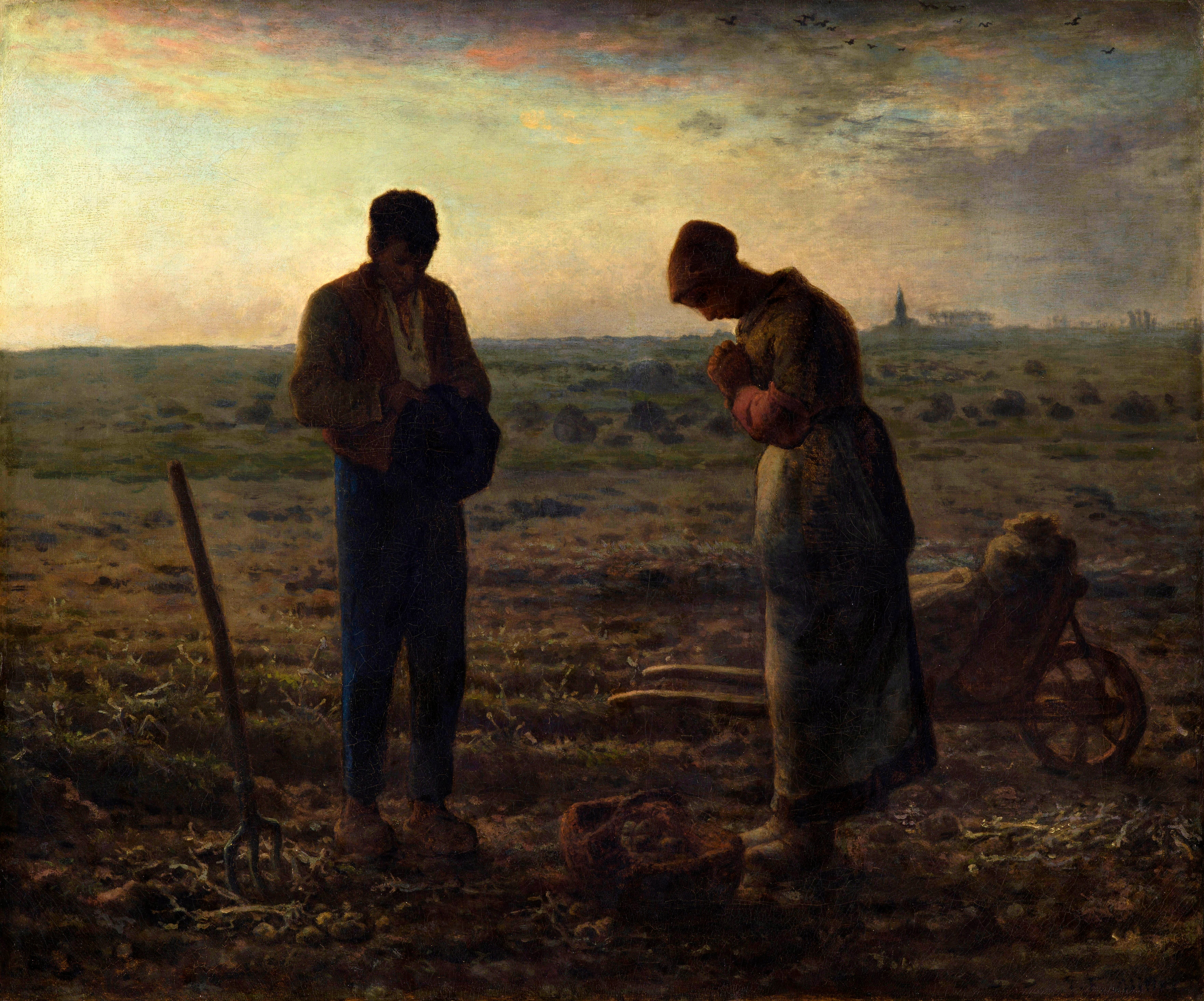
The most neglected purpose of teacher preparation, however, is the sanctification of the teacher. Regardless of what classes he has to teach, his preparation should flow out of a healthy prayer life, in which he offers prayers specifically for the individual students that he teaches, building in his heart a holy love for his students. Equally as important, the teacher’s prayer should overflow into the conformity of the teacher’s heart to the heart of Christ, the greatest teacher.
That Jesus is a teacher is true in two important ways. First, Jesus taught explicitly by his words and implicitly by his deeds. Matthew 5:2 tells us that Jesus “opened his mouth and taught” his greatest lecture, the Sermon on the Mount. Matthew 7:29 makes even clearer that he taught “as one who had authority.” Jesus taught with wisdom in a way that “astonished” his listeners (Matthew 13:54).
Our Lord also taught by his deeds and the way he lived his life. Famously, we are his disciples (i.e., students) if we take up our crosses and follow him (Luke 14:27). The Catechism says that “when Jesus prays he is already teaching us how to pray” (CCC 2607). Even Jesus’ miracles—the Catechism teaches us—were implicit teachings about the sacraments as “powers that come forth” from the body of Christ (CCC 1116, see also Luke 5:17, 6:19, 8:46).
Like us, Jesus didn’t teach anything he made up (John 7:16), but rather handed on what he had received. Such is the nature of Catholic education: to hand on what we have received.
So Jesus teaches exteriorly in ways that we can imitate. We can teach directly and explicitly (e.g., Matthew 5-7). We can teach by narrative storytelling (Luke 15). We can teach by questioning (e.g., Matthew 21:24, 22:41, Mark 2:8-9). We can also teach by both demonstration and example, as Jesus fasted, prayed, wept, washed his disciples’ feet, took up his own cross, and forgave his enemies. We can also teach by testing and allowing our students to fail (Luke 22:39-62).
The second important way that Jesus is a teacher is in his uniquely divine ability to move the hearts of his students by grace. For merely human teachers, our powers to move the hearts and minds of our students are limited by our inability to move them from the inside out. We depend on the docility and teachability of our students. We can do much, but this is a serious limitation.
By the hypostatic union, however, the man Jesus Christ is also the Second Person of the Blessed Trinity. As God, Jesus sends the Holy Spirit into the hearts of his disciples to better conform them to the truth and to teach them how to love from within their own hearts. He does this with special miracles, by the sacraments, and by grace. the Lord even teaches us to pray by the Holy Spirit’s presence in our hearts (Romans 8:26).
In each of these activities—all legitimate ways of teaching that should be deployed prudentially in the right moment—we can conform our own teaching to the greatest teacher if our teaching activities arise out of a life of prayer and preparation. It is for this reason that the spiritual life of a Catholic teacher is of the utmost importance, not only for his own soul, but for the souls of his students.
Prayerful preparation for teaching conforms the teacher to Christ, empowering his teaching with the power of Jesus’ teaching. It also unites us to him who can do what we cannot: enlighten the minds and enflame the hearts of our students from the inside.
All Catholic teachers should teach like this, with Christ as their encouragement and motivation, with Christ as their helper, and with Christ as their guide. Share this with a teacher or school leader you love.
Catholic school faculty professional development must include:
How to develop a healthy prayer life of intimacy with our Lord
How to use class preparation as prayer and how to use prayer for class preparation
What Catholic school teacher wouldn’t thrive if they were formed to turn their class preparation into prayer? What if every Catholic school teacher learned how to turn their prayer life into effective teaching? After all, aren’t we supposed to decrease that he may increase (John 3:30)? It’s not always obvious precisely how to do this, though.
With the right guidance, every Catholic teacher can leverage the Catholic tradition of prayer to grow in holiness, conform their hearts to the heart of Christ the teacher, and cooperate with grace to effect the mission of their Catholic school.
My training in Evangelization and Biblical Theology, experience in Catholic education leadership, and heart for the mission of the Church in today’s world makes me uniquely suited to join your school’s faculty professional development and help your teachers to teach from the heart of the Church and form disciples, apostles, and saints.
Send this to your school’s principal or reach out to schedule a transformative PD today! CoCrucified@Substack.com
Comments
Nothing yet. Say the first thing.
Sign in to join the conversation.