
We now live in a world where the Sardine Martini is real. What miracle will science bestow upon us next?
When we talk about bars, we tend to talk about cocktail bars, restaurant bars, dive bars, neighborhood bars, or hotel bars. But Dave & Busters, a sort of adult-friendly video game arcade that also sold booze, is also a form of bar. It is, however, a form of bar that is going out of style. Outside of the occasional Tron sequel, arcades are anachronisms, and skee ball, the greatest of all arcade attractions, sadly never became a real national sport. But raves—dance halls with DJs and lights and music—well, raves are still happening. And it seems as if Dave & Busters might be revived by a wild plan to host raves. I was never a Dave & Buster’s regular, but I had my first sip of Jack Daniels at one, around 2003 or so, and I’ve always enjoyed the booze-and-games concept. Rebooting as a rave doesn’t really appeal to me, but it’s a fun idea.
Move over, Aperol Spritz. There’s a new sheriff, or at least a new spritz, in town. As one bartender says: “Sometimes, you have to roll with the punches and give in to what is trendy.” Do you, though?
Speaking of trendy: In the future, all drinks will be dirty.
The Daiquiri is a stripped down drink. It consists of just three ingredients—rum, lime, and sugar (or syrup)—plus, if you feel like complicating things, trace amounts of flavor enhancers like salt and absinthe. It can be sweet, sour, or strong, depending on how you balance those elements, and ideally should be some perfect synthesis of all three.
Just as we think of Nirvana as a conventional guitar-bass-drums trio even though they often played with a second guitarist, Pat Smear of the Germs, and even a cellist, Lori Goldston, the Daiquiri is fundamentally a three-parter, even if some other notes come into play.
But like the three-piece rock band, the Daiquiri format is flexible and robust enough that bartenders throughout history have attempted to build on it, adding other key elements, like pineapple. (Because we’re rich.) Indeed, in some cases, the pull of the Daiquiri is so strong that drinks get reinterpreted through the lens of the Daiquiri even when the original connection is somewhat tenuous.
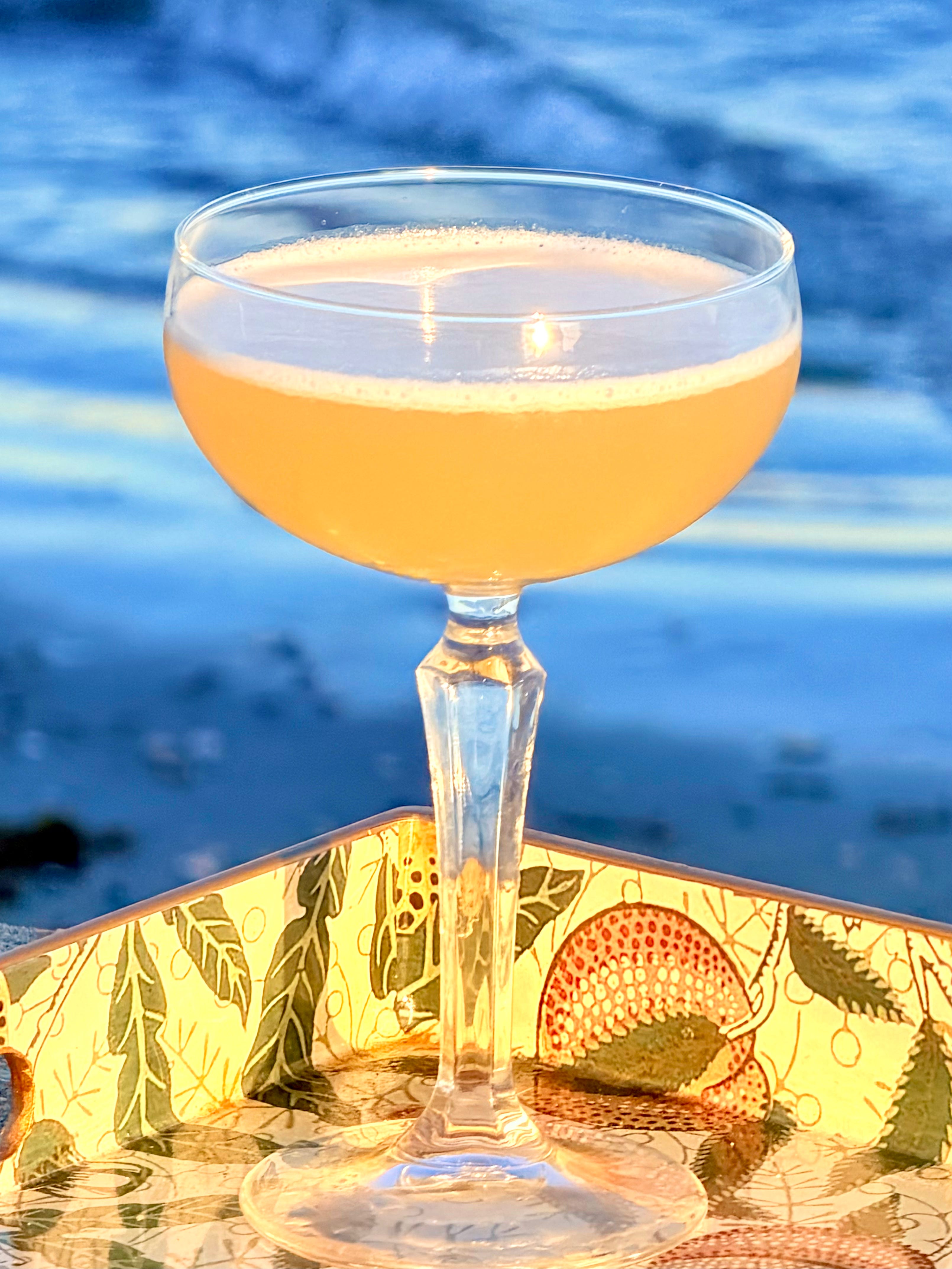
Rum heads and Daiquiri devotees can probably see where this is going: This week, we are going to make the Hotel Nacional Special, a variation on the Daiquiri that adds both pineapple and apricot to the core trio. When you take a sip, you’ll smile and think, oh, yeah, of course, this is obviously a Daiquiri with pineapple and apricot!
But it wasn’t always that way. And that’s what makes this drink so fascinating from both a historical and recipe-design perspective.
There are multiple competing claims to authorship, and the drink has evolved substantially over the years as bartenders have attempted to modernize it. And in the end, it essentially became another type of Daiquiri—rum, lime, and sugar, but with some prominent additions. If Nirvana is the stripped-down, three-part Daiquiri, this cocktail is the Pat Smear/Lori Goldston version: richer, softer, fuller, but still essentially the same idea for a drink.
This week’s drink is both a lesson about the enduring utility of classic cocktail structures and a tribute to the difference pineapple makes. Tracing its history will teach you something about how to make, modify, and adapt cocktails that aren’t quite working. And if nothing else, it’s a truly delicious drink entirely independent of any of the theoretical-historical intrigue.
Today, we think of cocktails as having definitive structures, which tend to be rooted in one of a handful of core, classic drinks. An Old Fashioned made with mezcal or a combo of rye and apple brandy is still, in spirit, an Old Fashioned. But it wasn’t always that way. While bartenders have long made iterations and adaptations of well-known drinks, many drinks were looser, less rooted in any existing idea. They were just collections of things that seemed like they should go together.
Like rum and pineapple, two of the core elements of the Hotel Nacional Special—a drink associated with the Hotel Nacional de Cuba, a luxurious Havana hotel that opened in 1930. A grand hotel has to have a grand bar, and this was its house drink.
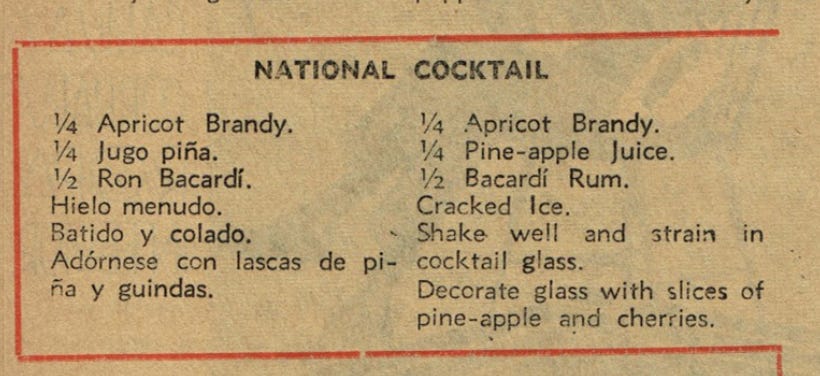
Probably the earliest printed recipe for this cocktail appears in the 1930s cocktail book Bar La Florida Cocktails. In that book, the drink was simply known as the National Cocktail, making it something more like the godparent of the current drink.
It calls for a mix of rum, pineapple, and apricot brandy—but no lime, and no added sugar. The sweetness would have come entirely from the pineapple, and there would have been no tart or sour element to balance it out.
The Daiquiri connection would become stronger, however, in the Old Waldorf-Astoria Bar Book.
Comments
Nothing yet. Say the first thing.
Sign in to join the conversation.