
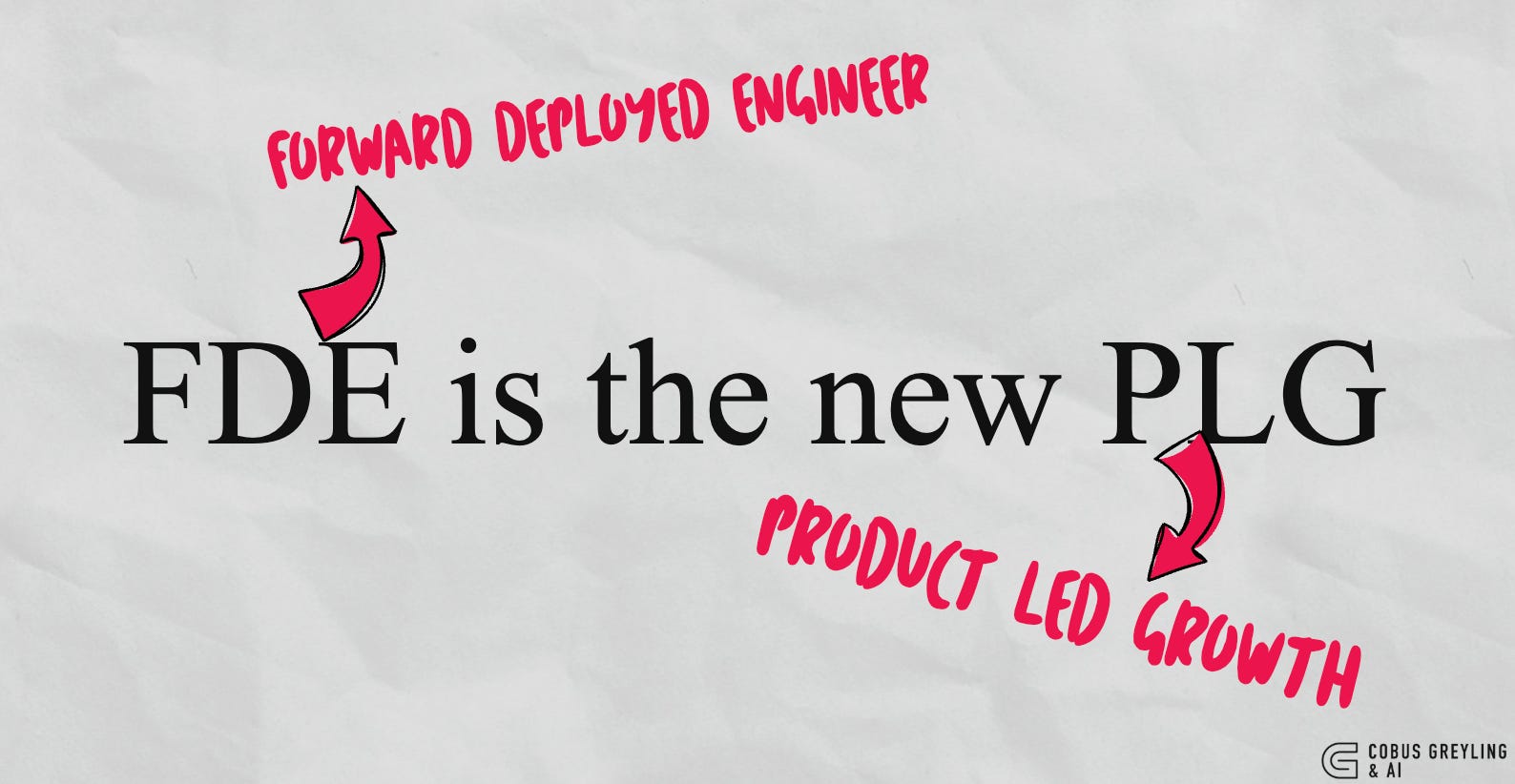
And I guess it is more about becoming a high leverage organisation….
You build a product so good that users pull it into their organisations…you let the product sell itself through free tiers, seamless onboarding etc.
And sales teams supported the motion but they largely did not drive it.
One could argue that in many respects PLG became the default playbook for modern software adoption and distribution.
Now it seems like this era is ending for the highest-value layer of software: enterprise AI.
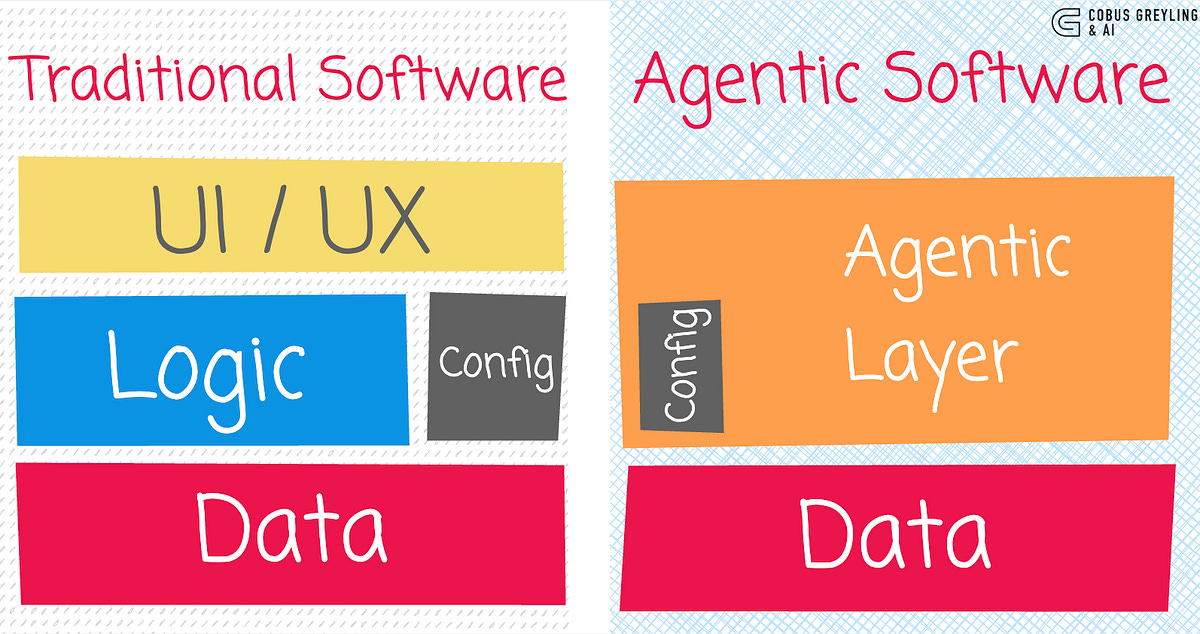
This was largely due to the fact that software was pre-recorded and deterministic…and could easily be tested and debugged.
Non-deterministic, agentic software chanted it, through a process of hill-climbing.
So, as I have mentioned, AI systems, especially agentic ones, do not behave like classic SaaS tools.
They do not drop cleanly into existing workflows…they demand context, data access, process redesign, security reviews and ongoing tuning.
I guess some enterprises have already discovered this the hard way…
And the product alone cannot close it. Andrej Karpathy Explains the Demo-to-Product Gap.
As far as I know, it is commonly accepted taht Palantir coined the title more than a decade ago.
An FDE is a software engineer who embeds with the customer, works inside their environment and constraints… also owning the outcome.
FDE is not consulting theatre.
In a perfect world, the FDE writes and ships code, surfaces patterns that should become product features and leaves the customer more capable than before.
In 2025 and 2026 the model moved from Palantir signature to industry default. OpenAI, Anthropic, Microsoft, AWS, Salesforce and others have committed billions to stand up dedicated FDE organisations.
Job postings for the role have grown several hundred percent.
Compensation has climbed accordingly. The market has spoken, I guess…
Obviously PLG is optimised for breadth and speed of adoption.
FDE optimises for depth and durability of value.
When an engineer sits inside the customer’s reality, three things happen (or should happen) that pure product cannot reliably deliver:
Real constraints surface early. Edge cases, political realities, legacy systems and data quality issues become visible instead of remaining abstract risks.
Solutions get productised. Patterns discovered across multiple deployments feed the core platform. Custom work becomes reusable capability.
Trust compounds (or should compound). The customer experiences the vendor as a partner who ships, not a supplier who hands over software and walks away. Expansion and renewal follow outcomes, not feature checklists.
This is closer to Sequoia’s recent thesis that services are becoming the new software. Or least for starters.
The highest leverage companies will not merely sell tools. They will sell reliable outcomes, using software and embedded engineering talent as the delivery mechanism.
The important distinction is what the FDE does with the learning.
Traditional professional services often maximise billable hours and leave behind bespoke systems.
Strong FDE organisations treat every engagement as both delivery and product discovery.
The goal is to reduce the need for heavy custom work over time by folding field insight back into the platform.
Done well, FDE creates a compounding advantage:
deeper customer intimacy…faster product improvement…higher switching costs.
Done poorly, it becomes an expensive human patch for incomplete product. The difference is intentional productisation discipline.
Companies selling complex AI now face a strategic choice…
They can continue optimising for self-serve metrics and watch enterprise deals stall in pilot purgatory. Or they can build the muscle to embed technical talent that turns potential into production value.
For buyers the implication is clearer still.
The vendors winning the largest, stickiest deployments will increasingly be those willing to put skin in the game through forward-deployed teams rather than those offering the flashiest model or the cleanest product UI.
PLG might not be dead. It still works brilliantly for tools with low implementation friction.
But for the systems that actually rewrite how large organisations operate, the growth motion has shifted.
The product remains essential…the people who make the product work in the real world have become the primary growth lever.
Chief Evangelist @ Kore.ai | I’m passionate about exploring the intersection of AI and language. From Language Models, AI Agents to Agentic Applications, Development Frameworks & Data-Centric Productivity Tools, I share insights and ideas on how these technologies are shaping the future.
COBUS GREYLING - At the intersection of AI & Language
Cobus Greyling is an AI Evangelist & thought leader dedicated to exploring the intersection of artificial intelligence…www.cobusgreyling.com
No posts
Comments
Nothing yet. Say the first thing.
Sign in to join the conversation.