
Oil is arguably the most consequential price in the global economy. It transmits military conflict into transportation costs, consumer inflation, corporate margins, trade balances, and ultimately Federal Reserve monetary policy.
There is a scene in The Big Short when the young managers of Brownfield Fund finally understand that they have not entered the orderly and rational financial system they imagined. They conclude that they have bought into a rigged game.
Financial social media oil bulls are now raising the same accusation as crude oil prices drop back down to $81.

Peter Schiff@PeterSchiff
The most likely explanation for Trump's Truth Social lies about Iran on Friday, is market manipulation. If so, Trump insiders must have made billions. The next likely possibility is that Trump is either delusional, incompetent, or a combination of both. Either way it's not good.
6:40 PM · Apr 18, 2026 · 643K Views
1.46K Replies · 3.8K Reposts · 19.6K Likes
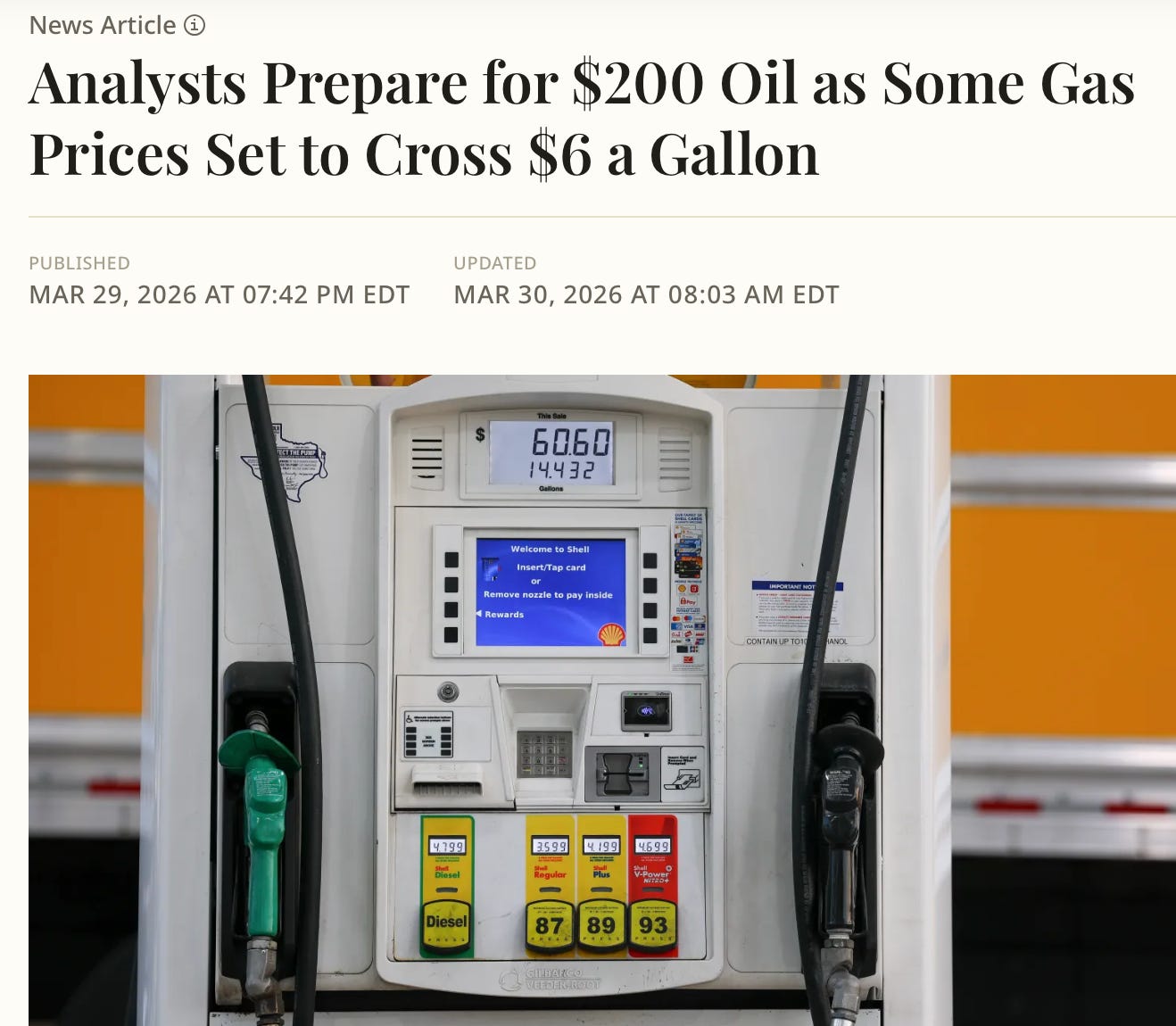
Oil bulls had argued since the March $120 high that the disruption of tanker traffic through the Strait of Hormuz would create an uninterrupted advance toward $200 per barrel by July of 2026.
When crude stopped rising and subsequently fell to $81 today, “manipulation” became the default explanation.
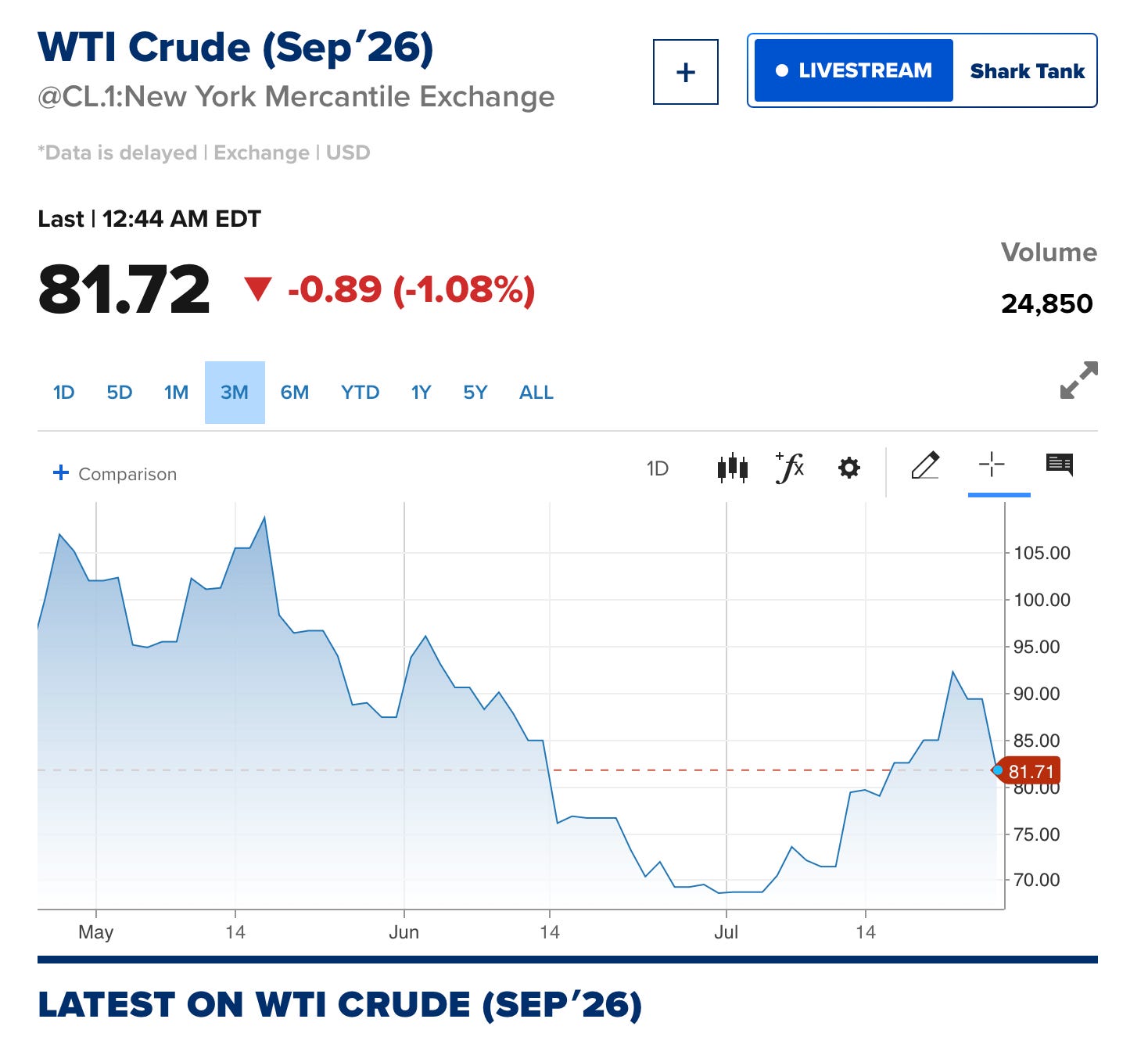
The problem for oil bulls who said buy at $120 in March/April 2026 cause it will rise to $200 is that manipulation becomes an escape hatch whenever a position or call lis wrong.
If every rally validates the thesis while every decline proves that unidentified institutions are suppressing the price, the thesis can never be falsified. That is not market research. It is faith financed with margin.
The more useful question is why a long-term investor would make a permanent allocation to an asset whose expected return depends on forecasting military escalation, peace negotiations, tanker traffic, production shut-ins, refinery utilization, inventory releases, futures-curve structure, contract expiration, producer hedging, interest rates, and the willingness of the next buyer to pay more?
The market did not ignore the Iran war. It repriced it aggressively.
WTI spot crude averaged $60.04 per barrel in January 2026.
(show below)
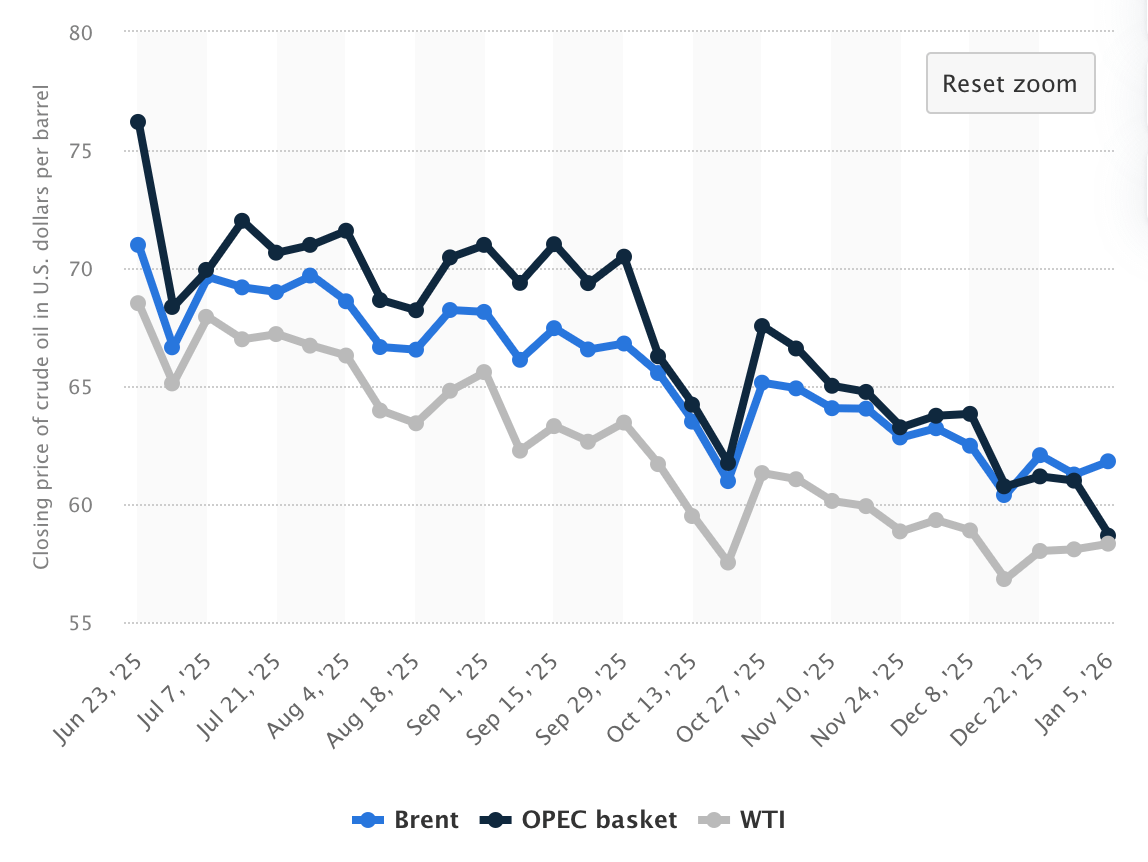
It then averaged $91.38 in March, $100.32 in April, and $102.13 in May.
The advance from January to the peak per barrel was $60, or +100%. On July 27 2026, the September WTI futures contract fell -7.5% in a single session to $82.10 as attacks paused and the probability of renewed negotiations increased. Even after that decline, crude remained +25% above its January average of $60.
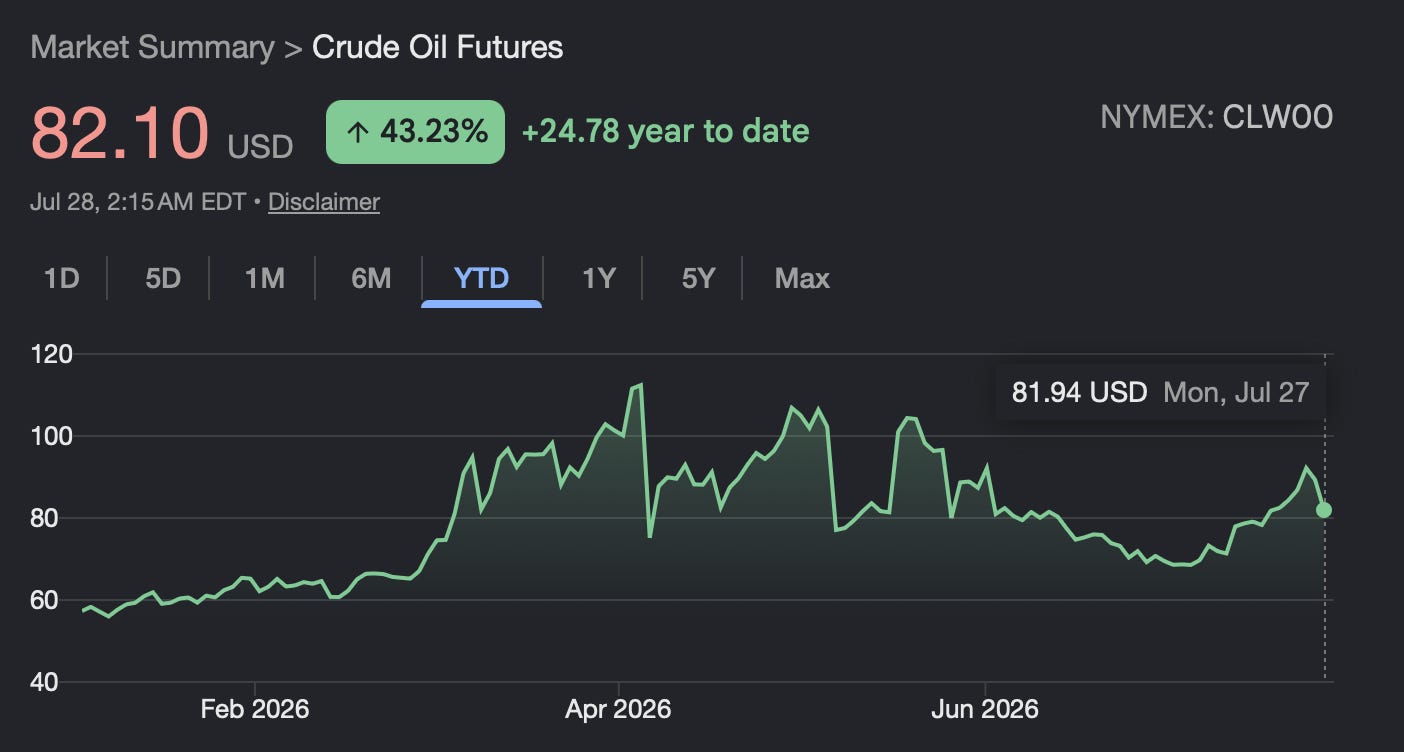
The market is not declaring that Iran, tanker traffic, or Hormuz had become irrelevant. It was revising the expected probability, magnitude, and duration of future supply losses. That is how a discounting mechanism operates. Prices react not merely to whether an event exists, but to whether the expected outcome has become better or worse than the scenario already embedded in the price.
A chokepoint is a catalyst. It is not a valuation model.
Approximately 20 million barrels per day of petroleum liquids moved through the Strait of Hormuz in 2024, equivalent to roughly 20% of global petroleum-liquids consumption. That makes Hormuz indispensable to any serious oil analysis. It does not make every oil price attractive. Once crude has appreciated +100% (like it did in spring 2026), the buyer is no longer purchasing an undiscovered risk. He is paying a substantial premium for scarcity, disruption, and fear that the market already recognizes.
This is the commodity trap: confusing something essential to civilization with an asset capable of compounding wealth.
Can oil return to $100, $110, or $120 if President Trump escalates the conflict and physical supply deteriorates? Absolutely. But hoping that a war becomes larger, longer, and more destructive is not a durable investment process.
It’s speculation. Unless you’re the President or Secretary of War with insider knowledge that we’re going to escalate on a specific date, your entire strategy is based on speculation of the worst-case scenario. Can President Trump do something crazier with Iran and send the price of oil higher? Absolutely.
Can he also decide not to attack Iran anymore and send the price of oil lower? Absolutely. The point is, betting on oil going higher or lower is about the same odds you get on betting on black or red at the roulette table, and it’s not even a clean 50/50; more like 47.4%. Except while you’re waiting to find out if oil will rise or fall to double your money, you don’t get free drinks while you’re waiting, like you do at the roulette table.
Chief Market Strategist Greg Crennan who nailed the peak in oil in March 2026 [ link here ] examines:
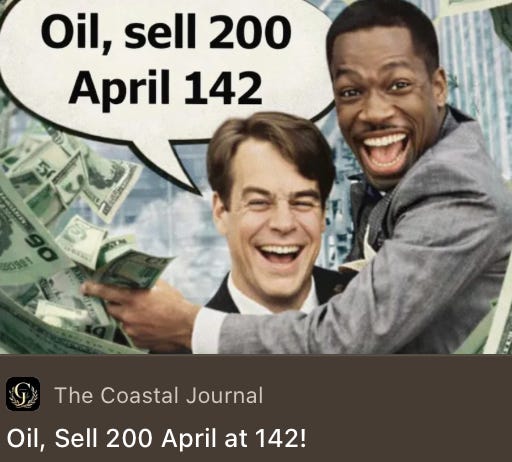
Why the 2026 oil shock may increase the probability of a Federal Reserve rate hike
How a 4.14% one-year Treasury yield creates a measurable hurdle for crude
What the oil industry itself expects approximately flat prices over 5 year
Why efficiency, electrification, & record American production are gradually reducing the scarcity value of each barrel.
CJ Market Intelligence to ask further questions!
Comments
Nothing yet. Say the first thing.
Sign in to join the conversation.