
We get obsessed with speed.
We want to do things faster, better, and smoother.
And we do this because that’s what we are taught that builders do.
The reality we all learn eventually is that moving fast doesn’t matter if our map is wrong.
The hardest part of leadership is deciding which things are worth our limited energy.
When we get it right, we often do it poorly at first. That feels like a failure.
When we get it wrong, we sometimes do it very well. That feels like a win.
So we find busywork we are good at so we can avoid the hard work we might fail at.
The insights come from looking at the intersection of two critical levers:
Standards (the level of excellence we demand)
Support (the level of backing, resources, and psychological safety we provide)
Competence is a cage when it keeps us working on the wrong thing.
When we map these dynamics out, we see exactly where our teams get trapped and where they break through.
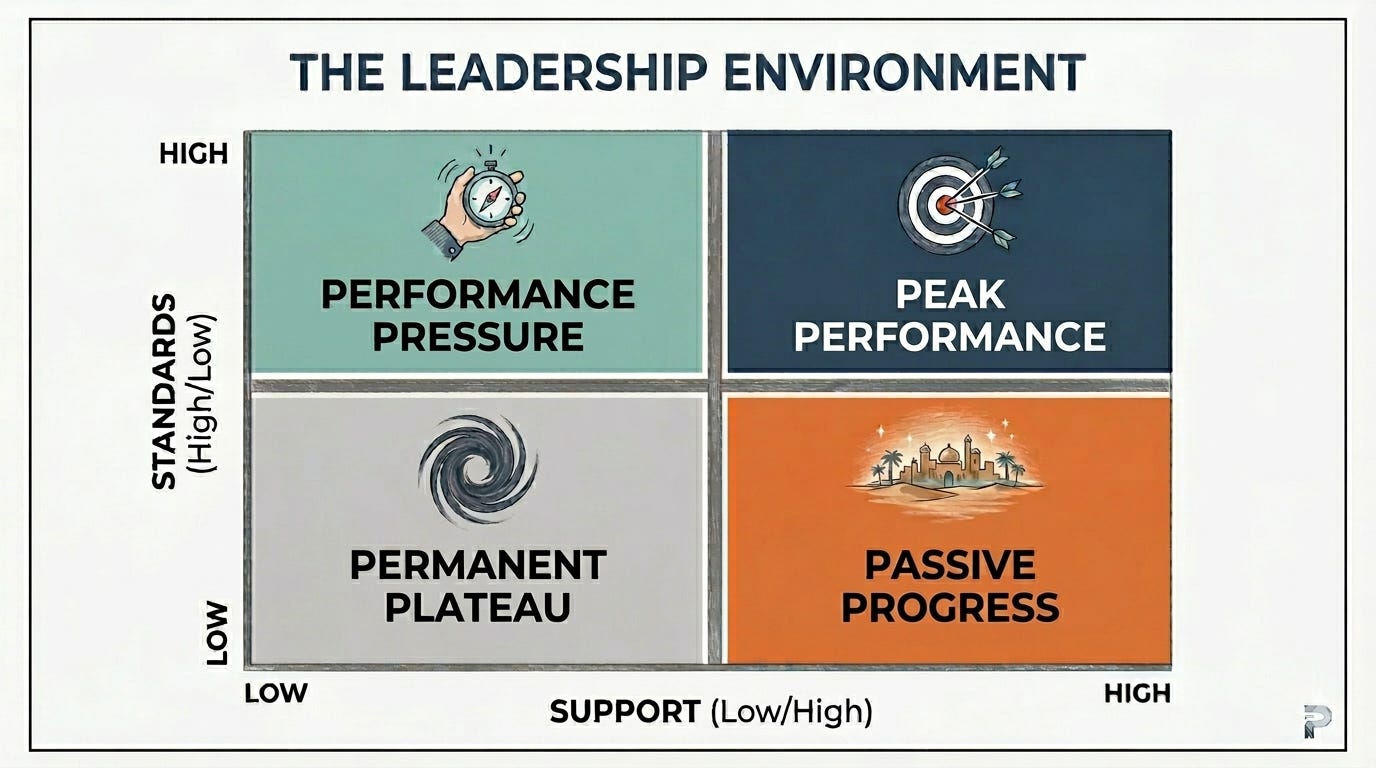
PERFORMANCE PRESSURE (High Standards, Low Support)
The most dangerous trap. We demand miracles but offer zero backing. Our people don’t innovate here; they survive. It feels like a win because the metrics look polished but it is just a place where we hide from the hard things. It drains us.
PEAK PERFORMANCE (High Standards, High Support)
This is our bullseye. High impact meets high psychological safety. We don’t lower the bar to make people feel good. We give them the absolute backing needed to climb over it. This is where we make our real mark as leaders.
PERMANENT PLATEAU (Low Standards, Low Support)
Total friction. Zero growth, zero results, just noise. There is no drive to excel and no safety net if things go sideways. It’s the void where people do just enough to avoid being noticed.
PASSIVE PROGRESS (Low Standards, High Support)
The messy middle of growth. Everyone is comfortable, the culture is friendly, and mistakes are brushed aside. It feels like a win, but we are winning a game that doesn’t matter. Without friction, progress stalls.
Here is a 15-minute practice we can use to stop polishing the wrong stones.
1. The Quick Inventory (5 mins):
List your top five top of mind things from the last seven days. Skip small tasks like emails. Look at how you spent your time managing your people.
2. The Honest Plot (5 mins):
Take those items and be brutally honest about which quadrant they fit in:
If we are operating in Performance Pressure: We are demanding speed without giving direction. Stop immediately. Lean into the mess and give them the tools they need.
If we are operating in Passive Progress: We are avoiding the hard work we might fail at. Identify the difficult feedback you are withholding to keep the peace, and deliver it.
3. The Big Swap (5 mins):
Identify the main habit keeping your team in a Permanent Plateau or Passive Progress. Drop it.
Move all that energy and time to a project that demands High Standards, even if it forces your team to operate in the messy middle while finding their footing.
What is your biggest takeaway from this exercise?
Comments
Nothing yet. Say the first thing.
Sign in to join the conversation.