
On May 19, 2021 I published a simple piece: “Why Athletica.” It laid out a hope—that science, thoughtfully encoded, could help everyday athletes train well, stay healthy, and perform.
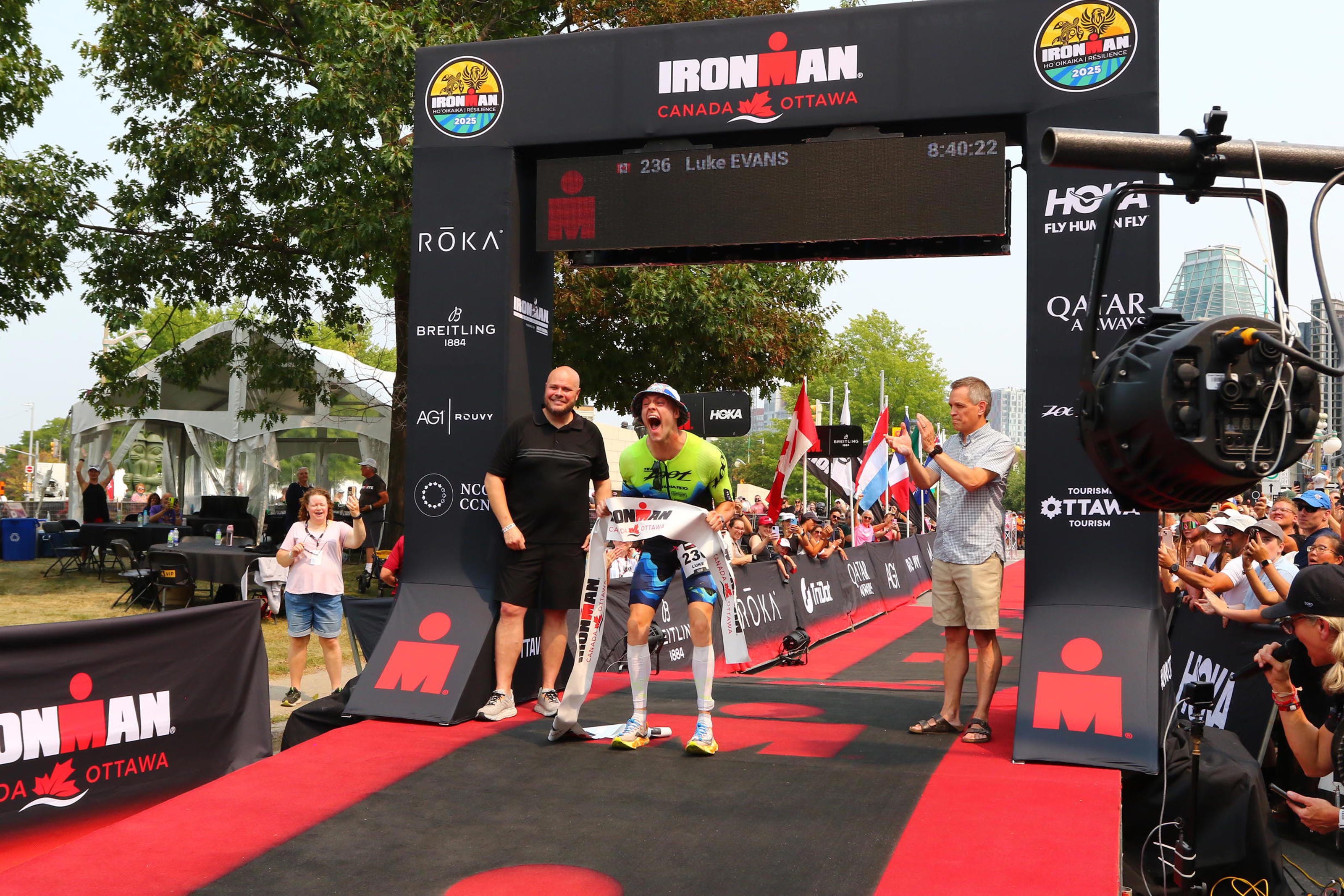
Today that hope feels a little surreal. Luke Evans, a Toronto-based engineer who started triathlon five years ago, just used Athletica to self-coach his way to the overall win at IRONMAN Canada–Ottawa (8:40:22).
Below are the podcast, the deep-dive blog, and the principles behind the result—transferable to any motivated athlete or coach.
“Self-Coached to an Ironman Win: Luke Evans on Consistency, Load & Readiness” We cover:
The path from hockey/water polo to triathlon during COVID
How he uses Athletica week-to-week (load management, workout alternates, taper cues)
Race execution: smart swim into the current, steady aero pacing, and managing the day around a full-time job
What changes as he builds toward Arizona
Listen: How AI Coaching Helped Everyday Engineer Win Ironman Ottawa
Watch: How AI Coaching Helped an Everyday Engineer Win Ironman Ottawa
“How a Self-Coached Athlete Won IRONMAN Canada–Ottawa with Athletica AI”
Key charts: Performance Potential, Recovery/HRV, and the over–under long-ride strategy
Training blueprint you can copy (progressive intensity, consistency over perfection)
Race-day execution, compressed
Read the blog here.
These are the same principles available to any motivated athlete or coach:
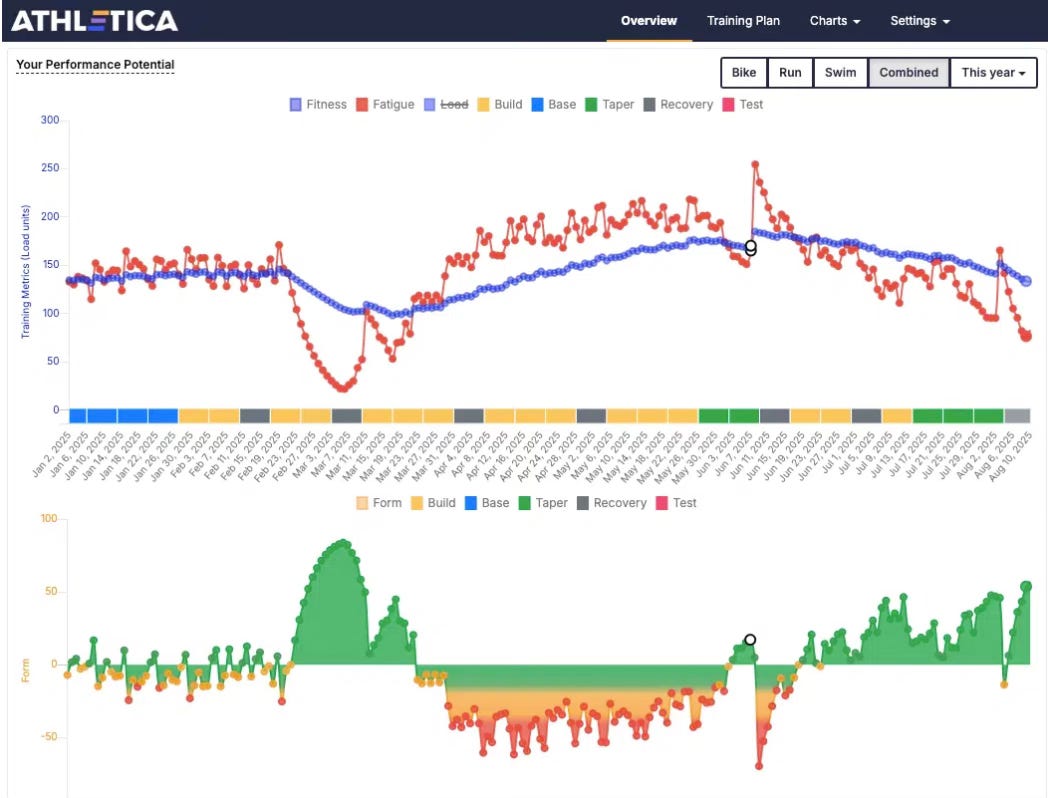
Load management you can follow — A clear progression curve (Performance Potential) to calibrate stress across the build, then a taper that lets freshness rise on time.
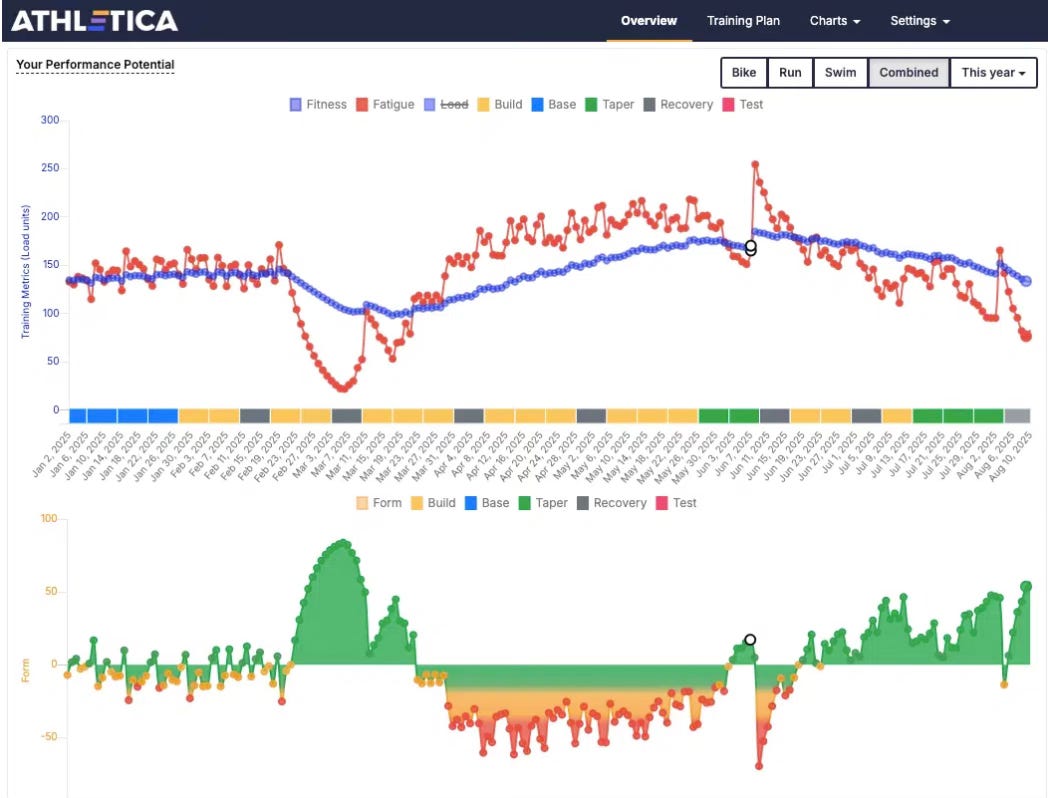
Athletica’s Performance Potential charts help you track your Fitness, Fatigue and Load. Progressive intensity — Threshold sets extend over the cycle; VO₂ density increases; late-phase long runs include quality.
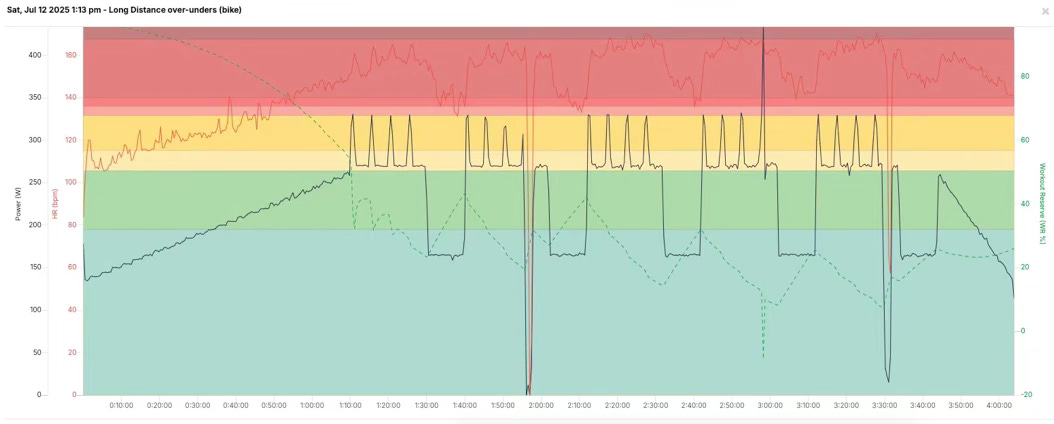
Consistency over perfection — A fixed 4-hour Saturday ride every week. The work (e.g., over–unders, 2×40′ at race pace) stays sacred; warm-up/cool-down flex with life.

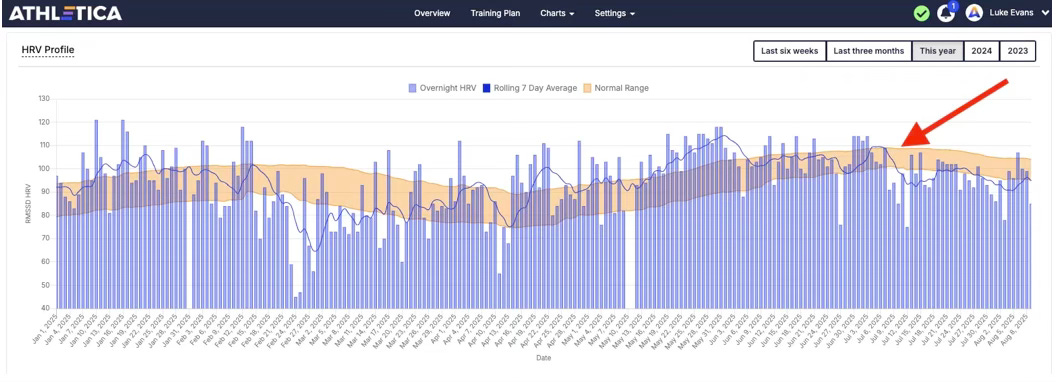
Over–under session from Luke Evans’ Ottawa build. Athletica prescribed the exact work (e.g., 2×40′ steady or over/unders) and Luke locked it inside a consistent 4-hour Saturday ride by flexing warm-up/cool-down—consistency over perfection. HRV-guided readiness — Recovery trends used to green-light or down-shift key sessions, and to confirm taper freshness—especially after a July 5 car collision.
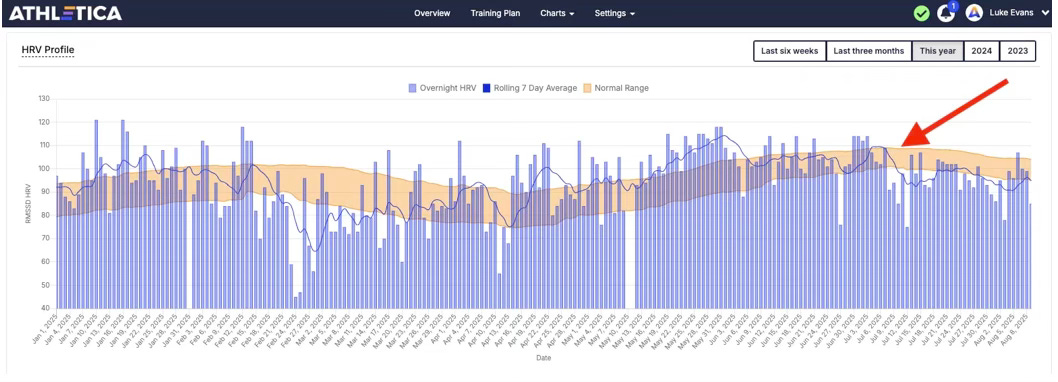
HRV-guided readiness to protect the adaptations: a July 5 stress blip (red arrow) after a car collision, then a clear rebound into race week—evidence Luke used to gatekeep intensity and confirm freshness. Simple gear, clear intent — An older Felt IA and sensible wheels; execution and planning trump fancy equipment.
If you have the desire, a bit of time, and can access the tech, these principles are learnable. They’re not reserved for elites.
Pick one anchor habit: protect a consistent long-ride or long-run slot for the next 4–6 weeks.
Make the work explicit: write the key intervals you’ll keep even if the clock changes.
Track one readiness signal: HRV or morning resting HR, plus a quick 1–5 “how I feel” check-in.
Use performance-potential style load charts to align athlete perception with plan intent.
Gate high-intensity days with HRV + athlete narrative, not the calendar.
Document one case study per quarter for yourself with the specific sessions that moved the needle for you.
Why Athletica (May 19, 2021) → https://athletica.ai/why-athletica/
Self-Coached Athlete Guide → https://athletica.ai/self-coached-athlete-guide/
Thanks for reading. It’s been a long arc from the initial idea to an athlete breaking the tape with these tools. I’m grateful for everyone contributing to the science and the product—and for athletes like Luke who put it into practice.
—Paul
P.S. If this resonated, consider forwarding it to a training partner or a coach who might benefit.
Comments
Nothing yet. Say the first thing.
Sign in to join the conversation.