
This newsletter took a long hiatus because of a fire.
It was early in the morning back in the fall of 2023, and I sat in my office writing while I thought the rest of the house was sleeping. Suddenly, I heard my wife’s voice. She walked into the room and set her phone to speakerphone. That is when the fire marshal described the scene. Everyone was safe, the fire had not spread significantly, but the smoke damage was extensive.
What had preceded this moment was months of missed rent, tearful promises, property damage, and heartbreak. What came next was another nearly yearlong process of working with the insurance company, restoring our old home, and finally selling the property. Thus ended nearly a year-long saga of trying to provide housing for two formerly homeless women who had been, at least for a time, in recovery.
While the details of this experience are unique, most people who have known, loved, and worked with those who are addicted to drugs or are early in some kind of recovery will be familiar with some of the patterns. My wife and I moved from New Hampshire to North Carolina a few years back, and we had hoped to rent out our old home at a below-market rate to help those in need.
The whole process started with the best of intentions. We connected with two women who had the odds stacked against them their entire lives, victims of multiple forms of trauma, and navigating a system that was not built for their flourishing. They had found recovery and were working to give back to their community at a local day shelter. Renting to them, we believed, would be a good way to live out our values.
As the months dragged on and our old house became a center for local drug dealing, we were left with an empty savings account and mounting credit card debt. Mediation through the court did nothing, and by the time the eviction finally went through, the sheriffs who carried it out recommended that no one enter the premises without a hazmat suit. After the locks were changed, someone broke back into our old home and tried to burn it down.
I’ve spent the past decade writing about addiction and the overdose crisis and doing my best to help others see those who use drugs and struggle with addiction in a more compassionate light. Not that there haven’t been challenges before, but never had my life and the well-being of my family been thrown into such chaos and financial distress. So, rather unceremoniously, I stopped writing about these issues publicly.
Honestly, I wasn’t sure how to process this entire experience in front of others. Practically, it was also a busy time, and as all my work with Clergy for a New Drug Policy is as a volunteer, something in my life had to give. So, the work of CNDP went dormant, and I mostly stopped using social media as we worked to restore and sell our old home and wait for life to return to some semblance of normalcy.
Well, life never really did return to normal, but that’s something that I think a lot of people can relate to at the moment. While I stopped writing publicly, I didn’t stop writing, thinking, and processing both what was happening in the world and in my life. This whole experience changed me, my thinking, and my approach to drugs.
This was not a change from one point of view to its opposite, but a deeper appreciation for the complexity of the challenges we face as a society when it comes to drug use and addiction. I would be lying to you if I pretended I always responded from a place of compassion. I spent a lot of time not just angry and wanting justice, but in a place where I desired revenge and to meet destruction with even greater destruction. As I observed these tendencies in myself, it became far clearer where our culture of punishment comes from.
It is not without a great sense of irony that I can share that, before this fire occurred, I had been working on a book entitled What Are Drugs For? An Exploration of Stolen Fire. The very same fire that warms our homes can burn them down, just as the drugs that can ease pain can destroy life. It was an apt analogy before this experience, and then it became a very personal one.
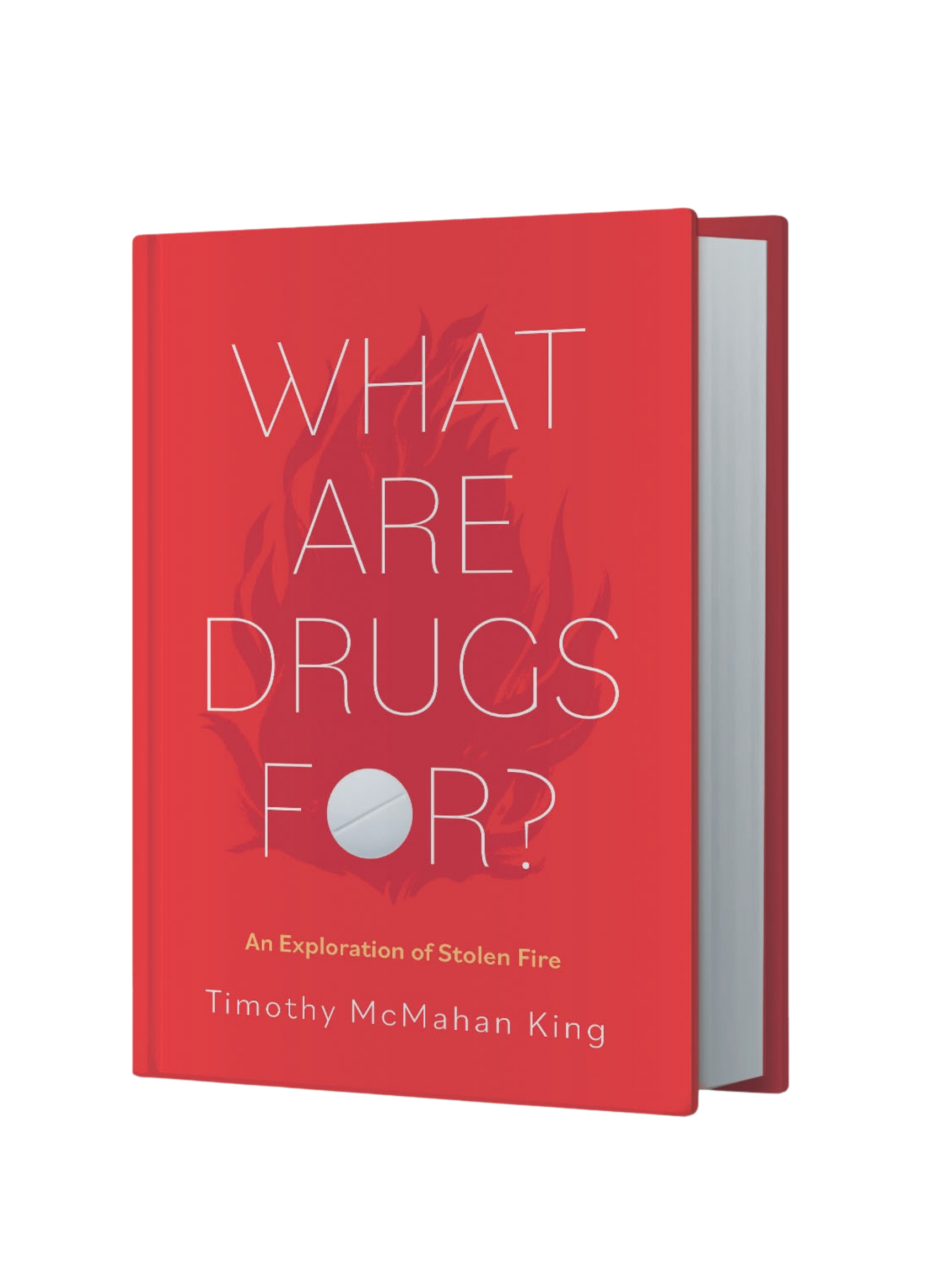
In Addiction Nation, I wanted to explore: how did we get into this drug crisis? What Are Drugs For? Is in search of something different. It begins with the premise that if we were to make a complete catalog of all of the destructive powers of drugs, we still would not answer the question as to what drugs are for. No matter how painful the experience of having our old home nearly burned down was, it is only one possible view of what fire is and can do. Furthermore, all the properties of fire that make it potentially useful are the exact qualities that make it potentially dangerous.
I had initially imagined that my next book would be a polemic against the war on drugs, but that isn’t what this book became. Instead, it is now much more accurately described as an exploration. It isn’t that I have come to support the war on drugs; I most certainly haven’t. But I did come to realize my greatest contribution would be to try to tell a compelling story of the long human (and prehuman) story of drugs and how we’ve used them as a way to help us see our present challenges in a new light.
What Are Drugs For? is finally done and only two years behind schedule. It took a lot longer than I expected, was harder than I could have planned for, and changed me more than I anticipated. That, I think, is how it should be. The book is available for preorder now, and I’ll be sharing more of what’s in it here in the weeks ahead, along with its connections to and what it means for the work of CNDP. But more than promoting a book, I’m hoping to restart a conversation — one that has enough room in it for the complexity that life keeps insisting on.
It’s good to be back.
No posts
Comments
Nothing yet. Say the first thing.
Sign in to join the conversation.