
Imagine a country where one in every seven people will be displaced due to climate change by the year 2051. Bangladesh ranks 7th among the world’s most vulnerable countries, and the government estimates that 13.3 million people will be running from their places. Like you and me, these people have dreams and aspirations for a good life too.
Natural disasters like cyclones and floods visit the country annually, and millions bear the unbearable consequences. The population living along the country’s 441-mile (710km) low-lying coastal region has been particularly impacted due to the geographical vulnerability. An estimated 2,000 people moving to the country’s capital Dhaka every single day.
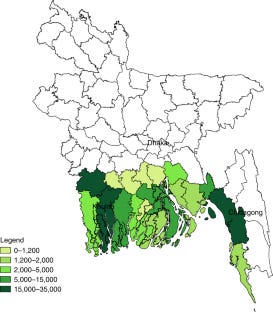
Fig. 1: Projected additional within-district migrants in the coastal region of Bangladesh because of an increase in salinity from the first to fifth quintile. Source here
According to the International Organization for Migration (IOM), climate migration refers to “the movement of a person or groups of persons who, predominantly for reasons of sudden or progressive change in the environment due to climate change, are obliged to leave their habitual place of residence, or choose to do so, either temporarily or permanently, within a State or across an international border”
Climate migrants are people who are not willing to leave their ancestral place but have no choice but to leave their homes due to the adverse effects of climate change. The effects include rising sea levels, extreme weather events, droughts, and other environmental changes that make living conditions untenable. Bangladesh is particularly vulnerable to climate change due to its low-lying geography and high population density.
The key trends and stories of climate migration in Bangladesh are described below:
Coastal Erosion and Flooding:
Amina, a mother of three from the Sundarbans, watched helplessly as her home was swallowed by the rising tides. Cyclone after cyclone battered her village, leaving it uninhabitable. With no other option, Amina and her family moved to Mongla, where they found refuge in a community designed to withstand such disasters. Mongla has developed climate-resilient infrastructure and special economic zones to support migrants like Amina. Many people from coastal areas, such as the Sundarbans, have been displaced due to rising sea levels and increased frequency of cyclones. These areas are prone to flooding and erosion, which destroy homes and agricultural land1.
The town of Mongla has become a refuge for many climate migrants. Once vulnerable to floods and river erosion, Mongla has now developed climate-resilient infrastructure and special economic zones to support these migrants.
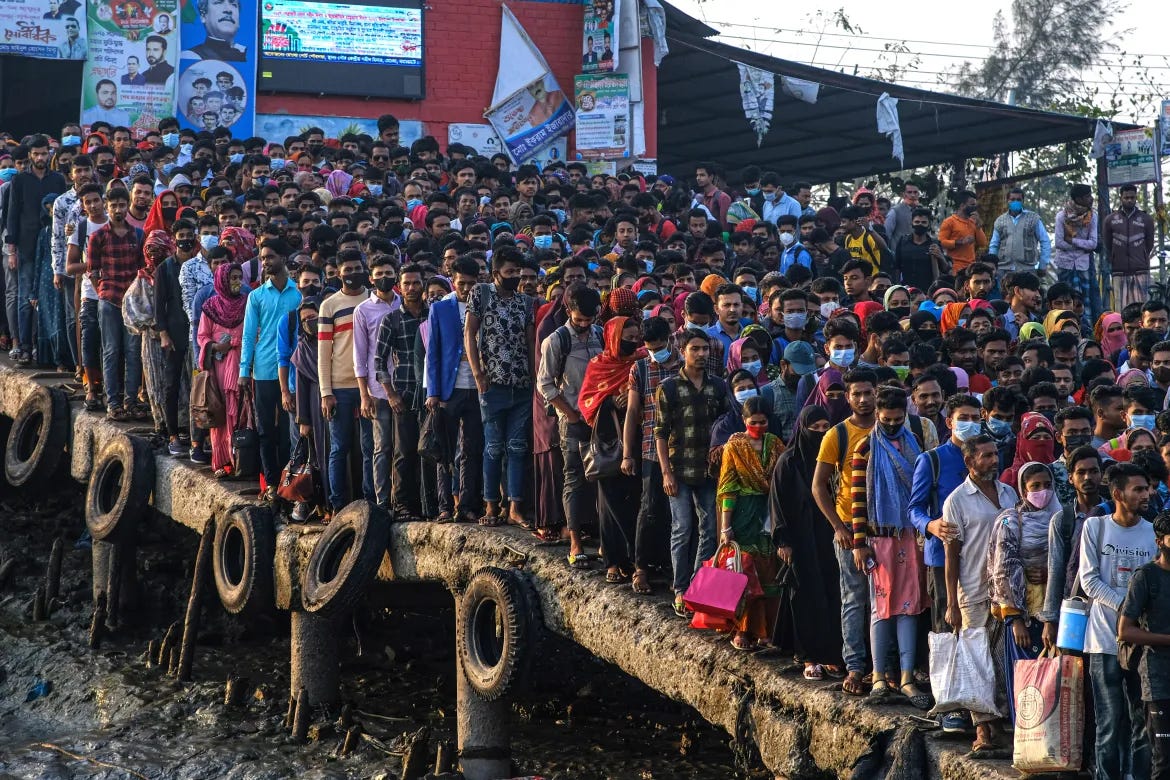
Fig 2. Workers gather in the morning at a boat terminal, waiting to cross the Mongla River, in Mongla. The World Bank in a new report said last year that Bangladesh will have more than 19 million internal climate refugees by 2050, almost half the projected number for the entire South Asian region. [Mahmud Hossain Opu/AP Photo]
Urban Migration:
Rafiq, a farmer from a rural village, saw his fields turn barren due to increased salinity from rising sea levels. Unable to sustain his livelihood, he moved to Dhaka in search of work. The bustling city, already crowded, is now home to many like Rafiq, who live in informal settlements and work in low-paying jobs to survive. Cities like Dhaka and Khulna are experiencing rapid urbanization partly due to climate-induced migration. People from rural areas affected by natural disasters move to these cities in search of better opportunities. In Khulna, many low-income climate migrants live just outside the city and commute daily for work.
Loss of Livelihoods:
Shirin, a young woman from Khulna, used to help her family with farming. As the soil became too salty for crops, her family’s income dwindled. Shirin moved to the outskirts of Khulna city, where she now works in a garment factory. Her story is a common one, as many agricultural communities are forced to seek alternative livelihoods. Agricultural communities are particularly affected. Increased salinity in soil and water due to sea-level rise makes farming difficult, forcing farmers to migrate to urban areas or other regions.
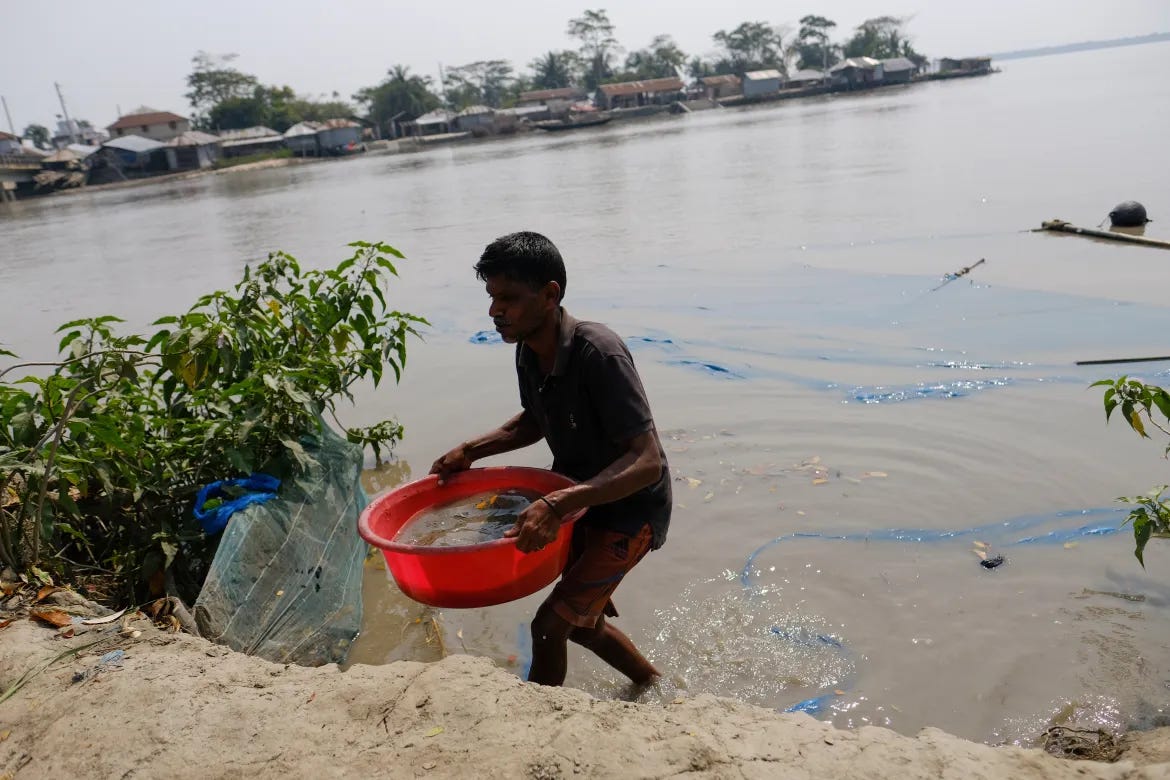
Fig 3. Punur Daan, a fisherman, catches baby shrimp from the Pasur River in Mongla. Climate scientists say low-lying Bangladesh is extremely vulnerable to the effects of climate change and millions are at risk of being displaced — becoming climate refugees because of sea-level rise, river erosion, cyclonic storms, and intrusion of saline water. [Mahmud Hossain Opu/AP Photo]
Read more on the pathways to address the climate migration in the blog
Comments
Nothing yet. Say the first thing.
Sign in to join the conversation.